Customs Policies and International Law: Legislation, Procedures & Compliance
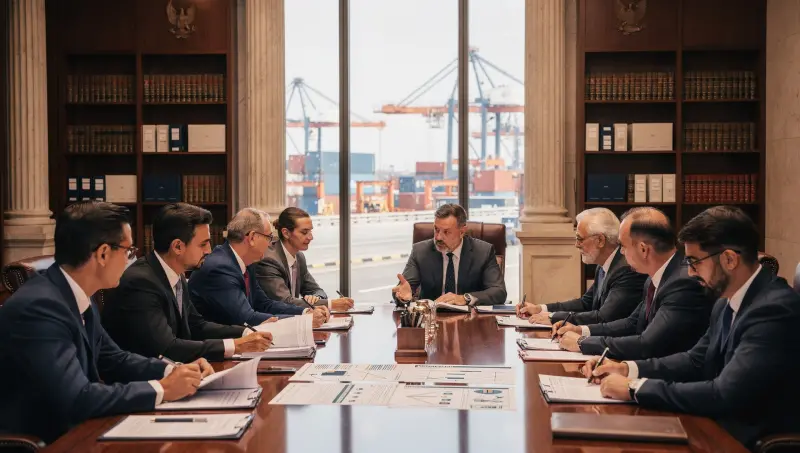
Course Details
-
# 103600624_82007
-
15 – 19 March 2027 19.Mar.2027
-
Milan
-
5700 €
Course Overview:
The Customs Policies and International Law: Legislation, Procedures & Compliance course is an advanced corporate training program designed for professionals responsible for customs policy development, customs procedures, legislation, compliance, and international trade regulation. The course examines how modern customs administrations operate at the intersection of national sovereignty, international law, trade facilitation, revenue protection, border security, and regulatory compliance.
Modern customs administrations are no longer limited to collecting customs duties. Their responsibilities now include facilitating legitimate trade, protecting society, managing customs risks, supporting resilient supply chains, enforcing import and export controls, and responding to the increasing complexity of cross-border trade.
Participants will explore Customs Policy, Customs Procedures, International Law, Customs Legislation, Customs Regulations, Customs Policy Management, Customs Procedure Management, Customs Governance, Customs Compliance, and Customs Control. The course also addresses Customs Valuation, Customs Tariffs, Rules of Origin, HS Classification, Trade Facilitation, Border Procedures, Customs Clearance, and Import and Export Controls.
A distinctive feature of the course is its integration of International Customs Law and International Trade Law with the operational realities of customs administrations. Participants will examine the influence of the World Trade Organization, the World Customs Organization, international customs agreements, trade agreements, and the WTO Trade Facilitation Agreement on national customs policies and procedures. The course also reflects contemporary approaches to customs modernization, including integrated risk management, governance, enforcement, institutional reform, and digital transformation.
Target Audience:
- Directors of Customs Policies and Procedures
- Heads of Customs Policy Departments
- Heads of Customs Procedures Departments
- Senior Customs Managers and Customs Administrators
- Customs Legislation and Regulatory Affairs Professionals
- Customs Compliance Managers
- Customs Governance Professionals
- Customs Risk Management Professionals
- Customs Audit and Control Professionals
- Legal Advisers working in Customs Authorities
- International Trade and Trade Policy Professionals
- Import and Export Control Managers
- Trade Facilitation and Border Management Professionals
Targeted Organizational Departments:
- Customs Policies and Procedures Departments
- Customs Legislation and Legal Affairs Departments
- Strategy and Institutional Development Departments
- Customs Operations and Clearance Departments
- Customs Risk Management Departments
- Customs Compliance and Audit Departments
- Customs Enforcement and Control Departments
- Tariff, Valuation and Origin Departments
- International Relations and Agreements Departments
- Trade Facilitation Departments
- Import and Export Control Departments
- Border Management and Inspection Departments
Targeted Industries:
- Customs Authorities and Border Administrations
- Government and Quasi-Government Entities
- Ministries of Finance, Economy and Trade
- Regulatory and Enforcement Authorities
- Ports, Airports and Free Zones
- Logistics and Supply Chain Organizations
- Import and Export Companies
- International Trade Organizations
- Freight Forwarding and Customs Brokerage Companies
- Manufacturing and Distribution Companies
- Shipping and Transportation Organizations
- Cross-Border E-Commerce Operations
Course Offerings:
By the end of this course, participants will be able to:
- Analyze Customs Policies within their economic, legal, trade, and regulatory context.
- Develop and formulate effective Customs Policies and Customs Procedures.
- Evaluate Customs Legislation, Customs Regulations, and implementation frameworks.
- Explain the relationship between International Law, International Customs Law, and International Trade Law.
- Assess the impact of international customs agreements and trade agreements on national customs systems.
- Align customs procedures with relevant WTO and WCO principles and international obligations.
- Apply Customs Governance, transparency, accountability, and Customs Compliance principles.
- Simplify and modernize Customs Procedures while maintaining effective Customs Control.
- Apply risk-based thinking to Customs Risk Management and Customs Enforcement.
- Analyze Customs Tariffs, Customs Valuation, Rules of Origin, and HS Classification issues.
- Evaluate Trade Facilitation measures and cross-border procedures.
- Strengthen Customs Audit and Compliance approaches.
- Address Customs Disputes, Customs Violations, and Customs Offences more systematically.
- Balance Trade Facilitation with enforcement, revenue protection, and border security.
- Develop practical priorities for updating Customs Policies and Procedures.
- Customs policy is a key instrument of trade and economic policy, supporting trade regulation, revenue collection, border monitoring, protection of society, and the facilitation of legitimate trade.
Training Methodology:
The training methodology is designed for senior professionals responsible for Customs Policy Management, Customs Procedure Management, legislation, compliance, and institutional development. Rather than treating International Law as a purely academic subject or Customs Procedures as isolated operational processes, the course connects legal obligations, policy decisions, and practical implementation.
Instructor-led sessions introduce the principles of Customs Policies, Customs Legislation, International Customs Law, International Trade Law, and international trade obligations. These sessions are followed by case studies examining how policy decisions are translated into Customs Regulations, operational procedures, control mechanisms, and compliance requirements.
Participants will work through practical scenarios involving Trade Facilitation, Customs Risk Management, Customs Audit and Compliance, Customs Valuation, Tariff Classification, Rules of Origin, import and export controls, and Customs Disputes. Group discussions will examine how customs administrations can simplify procedures while maintaining effective enforcement and border control.
The methodology also includes policy analysis exercises, comparative discussions, guided problem-solving, scenario analysis, and structured feedback sessions. Participants will examine examples of how customs legislation is translated into operational requirements, eligibility conditions, guarantees, payment arrangements, compliance obligations, and enforcement measures.
Daily Reflection & Review sessions will consolidate learning and enable participants to connect legal, strategic, regulatory, and operational perspectives to their own organizational responsibilities.
Course Toolbox:
No physical tools, software, workbooks, or proprietary resources are provided as part of this course. Instead, participants are introduced to practical insights and examples of tools and approaches relevant to Customs Policy and International Law, including:
- Examples of Customs Policy analysis frameworks
- Examples of Customs Procedure review approaches
- Illustrative Customs Compliance and audit considerations
- Examples of Customs Risk Management methodologies
- Illustrative policy impact assessment approaches
- Examples of Customs Governance and accountability practices
- Practical scenarios involving Customs Tariffs, Valuation, and Rules of Origin
- Examples of Trade Facilitation and procedure simplification approaches
- Illustrative frameworks for aligning national procedures with international obligations
- Examples of policy and procedure modernization roadmaps
Course Agenda:
Day 1: Strategic Foundations of Customs Policy and International Law
- Topic 1: The Strategic Role of Customs Policies in Modern Government
- Topic 2: Economic, Revenue, Security, and Trade Functions of Customs Administrations
- Topic 3: Foundations and Sources of International Law
- Topic 4: International Law and Its Relationship with National Legal Systems
- Topic 5: International Customs Law and International Trade Law
- Topic 6: The Relationship Between Trade Policy and Customs Policy
- Reflection & Review: Reviewing how Customs Policies operate between national priorities and international obligations
Day 2: Developing Customs Legislation, Policies, and Procedures
- Topic 1: Principles of Customs Policy Development and Formulation
- Topic 2: Customs Policy Analysis and Regulatory Impact
- Topic 3: Translating Customs Legislation into Operational Procedures
- Topic 4: Reviewing Customs Laws, Regulations, and Administrative Rules
- Topic 5: Simplifying, Standardizing, and Updating Customs Procedures
- Topic 6: Customs Governance, Transparency, Accountability, and Institutional Integrity
- Reflection & Review: Evaluating a Customs Policy and Procedure from legal and operational perspectives
Day 3: International Agreements, Trade Facilitation, and Customs Operations
- Topic 1: The World Trade Organization and Its Influence on Customs Policies
- Topic 2: The World Customs Organization and International Customs Cooperation
- Topic 3: The WTO Trade Facilitation Agreement and Border Procedure Reform
- Topic 4: International Trade Agreements and Customs Obligations
- Topic 5: Customs Tariffs, Customs Valuation, and Rules of Origin
- Topic 6: HS Classification, Customs Clearance, and Import and Export Controls
- Reflection & Review: Aligning national Customs Procedures with international trade requirements
Day 4: Customs Risk Management, Compliance, Control, and Enforcement
- Topic 1: Integrated Customs Risk Management
- Topic 2: Designing Risk-Based Customs Controls
- Topic 3: Customs Audit and Compliance Management
- Topic 4: Customs Violations, Offences, Fraud, and Illicit Trade
- Topic 5: Balancing Trade Facilitation with Customs Enforcement
- Topic 6: Interagency Cooperation and Information Exchange at the Border
- Reflection & Review: Analyzing a scenario combining risk, compliance, facilitation, and enforcement
Day 5: Customs Disputes, Policy Modernization, and Future Development
- Topic 1: Customs Disputes and Administrative Resolution Mechanisms
- Topic 2: International Trade Disputes and Their Customs Implications
- Topic 3: Evaluating the Effectiveness of Customs Policies and Procedures
- Topic 4: Developing Performance Indicators for Customs Policy and Operations
- Topic 5: Customs Modernization, Institutional Reform, and Digital Transformation
- Topic 6: Building a Roadmap for Customs Policy and Procedure Development
- Reflection & Review: Defining practical priorities for modernizing Customs Policies, Procedures, and Compliance
FAQ:
What specific qualifications or prerequisites are needed for participants before enrolling in the course?
There are no mandatory academic qualifications required. However, participants will benefit from previous professional experience in customs administration, Customs Policies, Customs Procedures, legislation, international trade, compliance, risk management, border management, or regulatory affairs. The course is particularly suitable for managers and senior professionals responsible for developing or implementing customs policies and procedures.
How long is each day's session, and is there a total number of hours required for the entire course?
Each day's session is generally structured to last around 4-5 hours, with breaks and interactive activities included. The total course duration spans one week, approximately 20-25 hours of instruction.
How can national customs sovereignty be reconciled with obligations arising from international agreements?
National customs authorities retain responsibility for designing and implementing domestic Customs Policies and Customs Procedures within their legal systems. However, international treaties, trade agreements, and international legal obligations may influence the content and application of national Customs Legislation. International law includes binding legal rules governing relations among international actors and draws on sources including treaties, customary law, and general legal principles.
The practical challenge is therefore to translate international obligations into national laws, regulations, and procedures while preserving legitimate national objectives relating to revenue, security, economic policy, and border control. The course examines this relationship through practical customs policy and regulatory examples.
How This Course is Different from Other Customs Policies and International Law Courses:
This course stands out because it does not treat Customs Policy as a purely administrative subject or International Law as an abstract academic discipline. Instead, it integrates three interconnected dimensions: policy development, legal and international obligations, and operational implementation.
Participants examine the complete lifecycle of Customs Policy, beginning with identifying a policy need and analyzing its economic, legal, and operational implications. They then explore how policies are formulated, aligned with Customs Legislation and international agreements, translated into procedures, implemented through Customs Controls, and subsequently evaluated and updated.
The course also brings together topics that are frequently taught separately, including Customs Tariffs, Customs Valuation, Rules of Origin, HS Classification, Trade Facilitation, Customs Risk Management, Customs Compliance, Customs Audit, Customs Disputes, and Customs Enforcement.
A further distinction is its focus on the modern customs administration as a multifunctional institution required to balance competing objectives. Customs authorities must facilitate legitimate trade while protecting revenue, enforcing restrictions, maintaining border security, supporting supply chains, and meeting international obligations.
The course is therefore particularly relevant to Directors of Customs Policies and Procedures and senior professionals responsible for modernization, policy reform, regulatory alignment, and institutional performance. It provides practical perspectives for improving Customs Policy Management while maintaining legal consistency, operational effectiveness, and alignment with international trade requirements.
Legal Training, Procurement and Contracting Courses
Customs Policies and International Law Training Course (103600624_82007)
Course Details
# 103600624_82007
15 – 19 March 2027
Milan
Fees : 5700 €