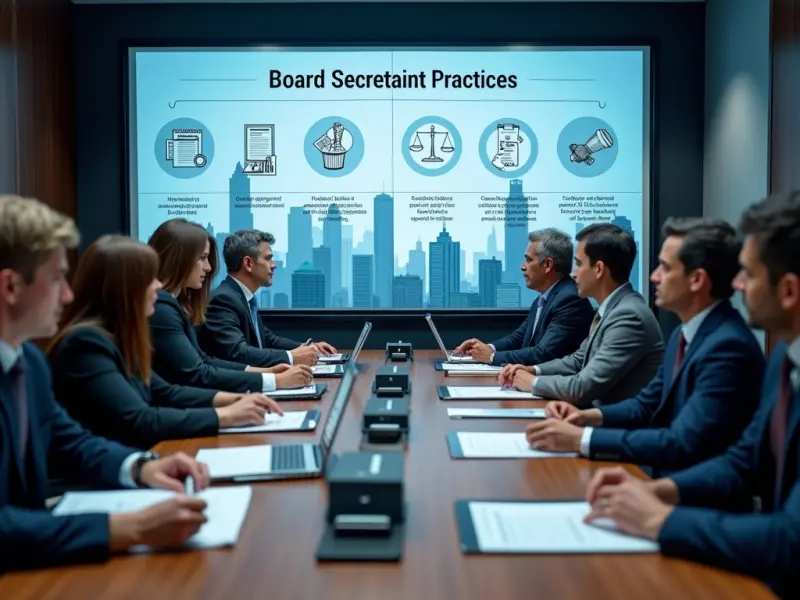
Advanced Executive Secretariat & Family Business Leadership Management

Course Details
-
# 103600626_82072
-
29 August – 2 September 2027 02.Sep.2027
-
Cape town
-
4500 €
Course Overview:
The Advanced Executive Secretariat and Leadership Office Management in Family Businesses course is a specialized corporate training programme designed for executive office managers, senior executive secretaries, and professionals who work closely with Chairpersons, Vice Chairpersons, board members, and senior executives.
The course develops the capabilities required to manage a high-level executive office beyond traditional administrative responsibilities. It focuses on executive office management, managing the Office of the Vice Chairperson, prioritizing sensitive assignments, coordinating with senior stakeholders, supporting board-related activities, managing executive correspondence, handling confidential documents, and applying executive protocol.
A key feature of the programme is its focus on the distinctive environment of family businesses, where family, ownership, the board of directors, and executive management may intersect. Participants will develop a practical understanding of Family Business Governance and learn how to maintain professional boundaries, manage communication channels, protect confidentiality, and support senior leadership without overstepping formal roles and authorities.
The course also reflects recognized governance practices relating to coordination among board members and senior management, timely access to relevant information, proper record keeping, meeting organization, and structured communication. It further addresses the importance of separating family interests from corporate interests and clarifying the respective roles of ownership, governance bodies, and executive management in family businesses.
Target Audience:
- Executive Office Managers
- Office Managers supporting Chairpersons and Vice Chairpersons
- Executive Assistants to Senior Leaders
- Senior Executive Secretaries
- Board Office Coordinators
- Board and Committee Support Professionals
- Executive Coordination and Liaison Officers
- Professionals supporting leadership offices in family businesses
- Employees preparing to assume senior executive office management responsibilities
Targeted Organizational Departments:
- Offices of Chairpersons and Vice Chairpersons
- Offices of Board Members and Senior Executives
- Executive Office Management
- Executive Secretariat
- Board and Committee Secretariats
- Governance and Corporate Affairs
- Corporate Communications and Protocol
- Legal and Compliance Functions supporting board activities
Targeted Industries:
- Family-Owned Businesses and Business Groups
- Holding Companies and Diversified Groups
- Private and Publicly Listed Companies
- Banking and Financial Services
- Investment, Asset Management, and Wealth Management
- Real Estate and Property Development
- Manufacturing, Energy, and Trading
- Professional Services and Consulting Firms
Course Objectives:
By the end of this course, participants will be able to:
- Apply Advanced Executive Secretariat practices in senior leadership offices.
- Manage the Office of the Vice Chairperson with greater structure and professionalism.
- Organize priorities, schedules, and sensitive executive assignments.
- Distinguish between the roles of the family, ownership, board, and executive management.
- Support Board Members while remaining within appropriate professional boundaries.
- Organize Board Meetings and committee meetings effectively.
- Coordinate agendas, board papers, supporting documents, and meeting information.
- Manage Executive Correspondence according to priority, confidentiality, and relevance.
- Apply appropriate practices for Confidential Document Management and executive records.
- Improve communication between senior leadership, board members, management, and stakeholders.
- Handle sensitive situations in family businesses with discretion and sound judgment.
Training Methodology:
The course uses an applied and highly interactive methodology that connects the principles of Advanced Executive Secretariat and Executive Office Management with the practical realities of supporting senior leaders in family businesses.
Each module begins with a focused explanation of relevant concepts, responsibilities, and governance considerations before moving into realistic executive office scenarios. Participants will examine practical cases involving the Office of the Vice Chairperson, competing priorities, sensitive information flows, executive correspondence, board meetings, confidential documents, and high-level stakeholder coordination.
Group discussions will be used to explore the challenges that can arise when family, ownership, the board of directors, and executive management intersect. Participants will analyze how to maintain appropriate professional boundaries, use formal communication channels, and support leadership while respecting established governance structures.
The programme also includes practical exercises in prioritization, stakeholder mapping, meeting preparation, executive communication, confidential information handling, and Executive Protocol. Board-related activities will reflect recognized practices in meeting organization, timely provision of information, documentation, record keeping, and decision follow-up.
Course Resources:
The course does not provide physical tools, software, or take-away materials. Instead, it focuses on practical insights and examples, including:
- Practical insights into senior Executive Office Management
- Realistic examples of leadership office coordination
- Case scenarios related to family businesses
- Examples of Board Meeting Management
- Illustrations of agenda preparation and decision follow-up
- Examples of Executive Correspondence classification
- Scenarios involving confidential information and documents
- Practical examples of priority and assignment management
- Situations involving Executive Protocol
Course Content:
Day 1: The Strategic Role of the Executive Office Manager in Family Businesses
- Topic 1: The Evolving Role of the Advanced Executive Secretariat
- Topic 2: Responsibilities of the Executive Office Manager Supporting Senior Leadership
- Topic 3: The Distinctive Administrative Environment of Family Businesses
- Topic 4: Distinguishing Between Family, Ownership, the Board, and Executive Management
- Topic 5: Managing the Office of the Vice Chairperson and Understanding Role Boundaries
- Topic 6: Building Trust, Credibility, Discretion, and Professional Judgment
- Review: Reviewing the Executive Office Manager’s Role within Leadership and Governance Structures
Day 2: Executive Office Management, Priorities, and High-Level Communication
- Topic 1: Organizing Workflow in Senior Leadership Offices
- Topic 2: Managing Time and Competing Priorities
- Topic 3: Managing the Vice Chairperson’s Schedule and Executive Agenda
- Topic 4: Coordinating Communication with Board Members and Executive Management
- Topic 5: Managing Executive Correspondence and Incoming Information
- Topic 6: Handling Stakeholders and Sensitive Requests
- Review: Practical Analysis of Priority Management and Executive Coordination Cases
Day 3: Board Administration and Board Meeting Management
- Topic 1: Understanding the Roles of the Board and Its Committees
- Topic 2: Supporting Board Members Without Exceeding Role Boundaries
- Topic 3: Planning Board and Senior Leadership Meetings
- Topic 4: Preparing Agendas, Documents, and Supporting Information
- Topic 5: Organizing Decision and Action Follow-Up
- Topic 6: Coordinating Between the Board, Management, and Key Stakeholders
- Review: Simulation of a High-Level Meeting and Follow-Up Process
Day 4: Confidentiality, Governance, and Sensitive Information Management
- Topic 1: Family Business Governance Principles for Executive Office Managers
- Topic 2: Managing Confidential Documents and Executive Records
- Topic 3: Classifying Information and Controlling Its Distribution
- Topic 4: Handling Conflicts of Interest and Sensitive Situations
- Topic 5: Protecting Privacy in the Relationship Between the Family and the Business
- Topic 6: Professional Confidentiality and Sound Information Judgment
- Review: Analysis of Governance and Confidential Information Scenarios
Day 5: Executive Protocol and Excellence in Leadership Office Management
- Topic 1: Principles of Executive Protocol in Senior Leadership Offices
- Topic 2: Receiving VIP Guests and Organizing High-Level Meetings
- Topic 3: Managing Difficult and Sensitive Situations Professionally
- Topic 4: Diplomatic Communication with Family Members and Senior Executives
- Topic 5: Strengthening the Professional Presence and Influence of the Executive Office Manager
- Topic 6: Building an Integrated Model for Senior Leadership Office Management
- Review: Comprehensive Review and Workplace Application Planning
FAQ:
What qualifications or prerequisites are required before enrolling in the course?
There are no mandatory academic prerequisites. However, prior experience in Executive Secretariat, Executive Office Management, senior leadership support, or Board Administration will help participants gain greater practical value from the programme. The course is also suitable for professionals preparing to move into an Executive Office Manager role or support the office of a Chairperson or Vice Chairperson.
How long is each daily session, and what is the total duration of the course?
Each daily session lasts approximately 4–5 hours, including breaks and interactive activities. The full course runs for one week, with a total duration of approximately 20–25 training hours.
How does the role of an Executive Office Manager change when family, ownership, the board, and executive management overlap?
The challenge arises because one individual may simultaneously be a family member, shareholder, board member, or executive. The Executive Office Manager must therefore understand the capacity in which each person is acting in a given situation and use the appropriate communication channel, level of confidentiality, and authority structure. Family Business Governance guidance emphasizes the importance of maintaining clear distinctions between family forums, ownership structures, boards of directors, and executive management while ensuring effective coordination among them.
How This Course Differs from Other Courses:
This course differs from conventional secretarial training because it goes beyond calendar management, correspondence, and routine administration. It focuses on the advanced responsibilities of an Executive Office Manager working directly with a Vice Chairperson, Chairperson, board member, or other senior leader within a family business environment.
The programme combines Advanced Executive Secretariat, Executive Office Management, Board Office Management, and an applied understanding of Family Business Governance. It does not aim to turn participants into corporate governance specialists or Board Secretaries. Instead, it provides the level of governance awareness required to perform a senior executive support role effectively and professionally.
Professional board-support guidance highlights the need for organized information flows, meeting coordination, record keeping, communication, and support to board members. At the same time, family business governance guidance emphasizes clear role boundaries, separation between family and corporate interests, and structured relationships among family members, shareholders, the board, and management.
The course therefore focuses on realistic situations such as competing priorities, sensitive requests, confidential documents, Supporting Board Members, communication with family stakeholders, Executive Protocol, and high-level coordination. This makes it a practical and integrated programme for Executive Office Managers operating in complex leadership and family business environments.
Secretarial and Administration Training Courses
Executive Secretariat and Leadership Management Course (103600626_82072)
Course Details
# 103600626_82072
29 August – 2 September 2027
Cape town
Fees : 4500 €
Advanced Executive Secretariat & Family Business Leadership Management runs in Cape town over 5 days, with 1 upcoming date in Cape town. The course fee is 4,500 €.
All dates in Cape town
| Dates | Price | Actions |
|---|---|---|
| 29 August – 2 September 2027 | 4,500 € | Register |
Training in Cape town
Aerial view of Cape Town with Table Mountain, Cape Town Stadium, and the coastline under clear blue skies.
All courses in Cape townThis course in other cities
- Abu Dhabi
- Accra
- Amman
- Amsterdam
- Athens
- Baku
- Bali
- Bangkok
- Barcelona
- Berlin
- Cairo
- Casablanca
- Chicago
- Doha
- Dubai
- Frankfurt
- Geneva
- Istanbul
- Jakarta
- Johannesburg
- Kuala Lumpur
- Kuwait
- Lagos
- Langkawi
- Lisbon
- London
- Madrid
- Manama
- Marbella
- Milan
- Montreux
- Munich
- Muscat
- Nairobi
- New York
- Nice
- Paris
- Phuket
- Porto
- Prague
- Rome
- San Diego
- Seoul
- Sharm El-Sheikh
- Singapore
- Tashkent
- Tbilisi
- Tokyo
- Toronto
- Trabzon
- Vienna
- Zanzibar
- Zoom