Museum Facility Management: Operations, Maintenance & BMS
Course Details
-
# 103600669_83598
-
16 – 20 November 2026 20.Nov.2026
-
Seoul
-
12000 €
Course Overview:
Museum Facility Management: Operations, Maintenance & BMS is a specialized one-week corporate training course designed for professionals responsible for the operation, maintenance, technical performance, safety, and sustainability of modern museum buildings. Unlike a conventional Facility Management Training or Facility Management Course, this program addresses the distinctive responsibilities of Museum Facility Management, where building systems must simultaneously support visitors, staff, exhibitions, digital infrastructure, valuable collections, and long-term preservation.
The course is strongly informed by cultural-facility guidance covering facility systems, environmental conditions, long-term maintenance programs, O&M manuals, benchmarking, capital improvement, sustainability, risk, safety, and personnel development. It also incorporates museum-management principles related to Building Management Systems, facility planning, Asset Management, Lifecycle Costing, security, emergency procedures, and infrastructure management.
Participants examine Museum Operations, Museum Maintenance, Building Operations and Maintenance, Preventive Maintenance, CMMS Training, Building Management Systems, BMS Training, Asset Management, HVAC Maintenance, HVAC Operations, and Maintenance Planning and Scheduling. Museum-specific requirements include Museum Environmental Control, Museum HVAC, Temperature and Humidity Control, Preventive Conservation, Museum Collection Environment, Museum Safety Management, Museum Risk Management, and Museum Security Management.
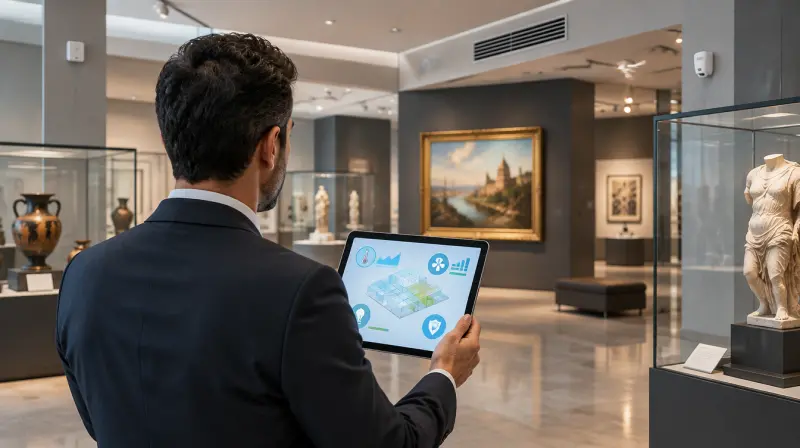
The program culminates in a structured technical museum visit, allowing participants to connect classroom learning with actual museum building systems, environmental controls, visitor infrastructure, maintenance practices, safety systems, and sustainability opportunities.
Target Audience:
- Museum Facility Managers
- Museum Operations Managers
- Museum Maintenance Managers
- Facilities and Maintenance Engineers
- Building Operations Managers
- Technical Services Managers
- Museum Engineering Managers
- MEP Managers and Engineers
- HVAC Engineers and Supervisors
- Electrical Engineers
- Mechanical Engineers
- Asset Management Professionals
- Maintenance Planners and Schedulers
- CMMS Administrators
- BMS Operators and Building Automation Specialists
- Museum Safety Managers
- Museum Security Managers
- Cultural Facility Managers
- Facilities Supervisors
- Technical Department Heads
- Museum Project Managers
- Professionals responsible for operation and maintenance of modern museum buildings
Targeted Organizational Departments:
- Facilities Management
- Operations and Maintenance
- Engineering and Technical Services
- Asset Management
- Conservation and Collections
- Health, Safety and Security
- Sustainability and Energy Management
- Capital Projects and Development
- Digital and Visitor Experience
Targeted Industries:
- Museums and cultural institutions
- Art museums and galleries
- National and regional museums
- Heritage museums
- Archaeological museums
- Science and technology museums
- Natural history museums
- Cultural heritage centers
- Exhibition and visitor attractions
- Cultural districts and museum campuses
- Government cultural authorities
- Heritage and preservation organizations
- Cultural foundations
- Libraries and archives with specialized environmental requirements
- Historic properties and cultural facilities
- Public-sector organizations managing cultural assets
- Visitor attractions
- Foundations responsible for museums and cultural facilities
Course Offerings:
By the end of this course, participants will be able to:
- Define the responsibilities and priorities of Museum Facility Management in a modern cultural institution.
- Integrate Museum Building Management with museum functions, visitor requirements, preservation priorities, and operational continuity.
- Evaluate key mechanical, electrical, HVAC, lighting, plumbing, fire-protection, security, and building-control systems.
- Understand how Building Management Systems support monitoring and management of mechanical, electrical, and electromechanical services.
- Apply Preventive Maintenance principles to critical museum equipment and infrastructure.
- Develop effective Maintenance Planning and Scheduling practices based on criticality, condition, operational requirements, and museum activities.
- Understand how CMMS applications support asset records, work orders, planned maintenance, maintenance history, backlog management, and reporting.
- Coordinate Museum HVAC and HVAC Operations with temperature, relative humidity, filtration, ventilation, visitor comfort, and preservation requirements.
- Apply Museum Environmental Control concepts to the management of temperature, relative humidity, pollutants, and lighting.
- Recognize how environmental conditions support Preventive Conservation and the protection of the Museum Collection Environment.
- Apply Asset Management and condition-assessment principles to museum building equipment.
- Use Lifecycle Costing concepts when considering asset renewal and replacement decisions.
- Identify and manage operational risks through Museum Risk Management and Museum Safety Management practices.
- Coordinate building operations with Museum Security Management, access control, CCTV, alarms, and emergency systems.
- Apply Energy Management and Energy Efficiency concepts without compromising collection preservation or museum operations.
- Identify opportunities for Sustainable Facility Management, Museum Sustainability, and Sustainable Building Operations.
- Evaluate visitor circulation, occupancy, interactive technologies, digital installations, and their implications for facility operations.
- Conduct a structured technical assessment during a museum visit covering HVAC, BMS, maintenance, assets, environmental controls, safety, security, visitor systems, and sustainability.
- Translate observations from a technical museum visit into prioritized facility improvement opportunities.
- Develop meaningful maintenance, energy, environmental, safety, asset, and service-performance indicators.
Training Methodology:
The training combines instructor-led learning, technical discussions, case studies, facility scenarios, group activities, analytical exercises, examples of professional tools, and a structured technical museum visit. The methodology is designed around the real responsibilities of professionals managing Museum Operations and Building Operations and Maintenance rather than around theoretical museum administration.
Participants work through practical situations involving HVAC failures, environmental deviations, BMS alarms, Preventive Maintenance requirements, CMMS records, asset condition, maintenance backlog, safety incidents, security considerations, visitor circulation, Energy Management, and Museum Environmental Control.
The cultural-facility reference gives particular attention to air pollution, lighting, temperature, relative humidity, monitoring, maintenance, O&M manuals, benchmarking, sustainability, risk, and safety. These subjects are therefore translated into applied museum-building scenarios.
The methodology also recognizes the growing technical complexity of modern museums. Research on museum visitor systems shows that cameras, spatial tracking, trajectory analysis, and heatmaps can support the understanding of visitor flow. Research on interactive museums also demonstrates the expanding role of AR, information screens, mobile systems, and digital technologies within the physical museum environment.
The technical visit allows participants to observe actual building systems, operating conditions, maintenance arrangements, visitor technologies, and environmental controls. The visit is educational and observational and does not constitute a formal facility audit or certification assessment.
Course Toolbox:
The course introduces participants to practical examples, reference structures, and professional approaches relevant to museum facilities. Software, licenses, monitoring devices, BMS platforms, CMMS systems, or physical tools are not supplied as part of the course. Where relevant, participants receive insights into how such tools are typically used:
- Museum Facility Management responsibility map
- Museum building systems overview
- Asset register example
- Asset criticality matrix
- Facility condition-assessment example
- Preventive Maintenance planning example
- Maintenance Planning and Scheduling framework
- Sample maintenance work-order structure
- CMMS workflow examples
- CMMS maintenance KPI examples
- BMS monitoring examples
- BMS alarm-management examples
- HVAC operational-parameter examples
- Temperature and Humidity Control monitoring examples
- Museum Environmental Control checklist
- Preventive Conservation facility-support checklist
- Museum Collection Environment indicators
- Lifecycle Costing framework
- Asset renewal prioritization example
- Museum Risk Management matrix
- Museum Safety Management checklist
- Museum Security Management coordination example
- Emergency-response planning framework
- Energy Management review framework
- Energy Efficiency opportunity checklist
- Sustainable Facility Management framework
- Sustainable Building Operations checklist
- Capital improvement prioritization example
- O&M manual structure
- Benchmarking examples
- Visitor-flow and occupancy observation guide
- Digital and interactive museum systems observation guide
- Technical Museum Visit Observation Guide
- Technical Museum Visit Findings Template
- Facility Improvement Prioritization Matrix
The reference material specifically identifies development of an Operations and Maintenance Manual, maintenance tracking, cultural-facility benchmarking, capital improvement planning, and sustainable facility practices as core facility-management activities.
Course Agenda:
Day 1: Museum Facility Management and Building Systems
- Topic 1: Museum Facility Management Roles and Operational Priorities
- Topic 2: Museum Operations and Building Management
- Topic 3: Critical Mechanical, Electrical and Building Systems
- Topic 4: Building Management Systems and BMS Operations
- Topic 5: Asset Registers and Criticality Analysis
- Topic 6: Facility Strategy, Service Performance and Museum Operations KPIs
- Reflection & Review: Connecting museum functions, building systems, critical assets, and operational priorities
Day 2: Museum Environmental Control and HVAC Operations
- Topic 1: Museum Environmental Control and Preventive Conservation
- Topic 2: Museum HVAC Systems and Environmental Stability
- Topic 3: Temperature and Humidity Control
- Topic 4: Indoor Air Quality, Pollutants and Filtration
- Topic 5: Lighting Control and the Museum Collection Environment
- Topic 6: Environmental Monitoring Through BMS and Specialist Systems
- Reflection & Review: Balancing collection preservation, visitor comfort, HVAC performance, and energy efficiency
Day 3: Preventive Maintenance, CMMS and Asset Performance
- Topic 1: Museum Maintenance Strategy and Maintenance Prioritization
- Topic 2: Preventive and Condition-Based Maintenance for Critical Assets
- Topic 3: Maintenance Planning and Scheduling
- Topic 4: CMMS for Work Orders, Asset History and Maintenance Control
- Topic 5: Asset Condition Assessment and Criticality-Based Maintenance
- Topic 6: Lifecycle Costing, Renewal and Replacement Planning
- Reflection & Review: Using maintenance, CMMS, asset condition, and lifecycle information to improve reliability
Day 4: Museum Risk, Safety, Security and Smart Visitor Systems
- Topic 1: Museum Risk Management and Operational Risk Identification
- Topic 2: Museum Safety Management and Life-Safety Systems
- Topic 3: Fire Detection, Protection and Emergency Systems
- Topic 4: Museum Security Management, CCTV and Access Control
- Topic 5: Visitor Flow Monitoring, Occupancy and Space Utilization
- Topic 6: Interactive, Digital and Smart Systems in Modern Museums
- Reflection & Review: Integrating safety, security, visitor movement, digital systems, and operational resilience
Day 5: Technical Museum Visit, Sustainability and Facility Performance
- Topic 1: Technical Museum Visit Briefing and Facility Observation Framework
- Topic 2: Technical Museum Visit: HVAC, Building Services and BMS
- Topic 3: Technical Museum Visit: Maintenance, Assets, Safety and Security Systems
- Topic 4: Technical Museum Visit: Environmental Control, Visitor Flow and Digital Systems
- Topic 5: Sustainable Facility Management, Energy Management and Energy Efficiency
- Topic 6: Facility Benchmarking, Performance Improvement and Capital Priorities
- Reflection & Review: Translating technical visit observations into practical Museum Facility Management improvement actions
FAQ:
What specific qualifications or prerequisites are needed for participants before enrolling in the course?
No specific professional certification is required. The course is most beneficial for participants with responsibility or experience in museum facilities, operations, engineering, maintenance, technical services, building systems, safety, asset management, or cultural-facility management. A basic understanding of building services or facility operations is helpful but not mandatory, as the course establishes the museum-specific context before progressing into technical maintenance, BMS, CMMS, HVAC, environmental control, risk, and sustainability topics.
How long is each day's session, and is there a total number of hours required for the entire course?
Each day's session is generally structured to last around 4-5 hours, with breaks and interactive activities included. The total course duration spans one week, approximately 20-25 hours of instruction.
Why is environmental control more critical in a museum than in a conventional commercial building?
In a conventional facility, HVAC and environmental controls are primarily designed around occupant comfort, building functionality, indoor air quality, and energy performance. In museums, these requirements must also support the preservation of collections. Temperature, relative humidity, pollutants, and lighting can contribute to deterioration, making the Museum Collection Environment a core facilities-management responsibility. The cultural-facility reference therefore addresses air pollution, lighting, temperature, relative humidity, environmental monitoring, and environmental control alongside maintenance and operations. Effective Museum Facility Management must therefore balance Preventive Conservation, visitor comfort, equipment reliability, Energy Efficiency, and operational cost rather than optimizing any one factor independently.
How This Course is Different from Other Museum Facility Management Courses:
Museum Facility Management: Building Operations and Maintenance is designed around the reality that a museum building is not simply another commercial facility. It is simultaneously a public building, a controlled environment for collections, a technical infrastructure platform, an exhibition environment, a workplace, and an important cultural asset.
Rather than treating Facility Management Training as a generic discussion of maintenance services, this course integrates Preventive Maintenance, CMMS Training, Building Management Systems, BMS Training, Asset Management, HVAC Maintenance, HVAC Operations, Maintenance Planning and Scheduling, and Lifecycle Costing directly with museum-specific operational requirements.
Its distinguishing feature is the connection between technical building performance and Preventive Conservation. Participants examine how Museum HVAC, Temperature and Humidity Control, lighting, pollutants, environmental monitoring, and BMS operations influence the Museum Collection Environment. This reflects specialist cultural-facility guidance that places environmental systems, maintenance operations, O&M planning, sustainability, risk, and safety within the facility manager's responsibilities.
The program also extends beyond routine Museum Maintenance by incorporating Museum Risk Management, Museum Safety Management, Museum Security Management, Sustainable Facility Management, Energy Management, Energy Efficiency, Museum Sustainability, capital improvement, and performance indicators. Participants therefore leave with an integrated management perspective connecting technical reliability, preservation, risk, operational efficiency, sustainability, and long-term asset performance rather than viewing them as separate facility functions.
Maintenance Training and Engineering Training Courses
Museum Facility Management: Operations, Maintenance & BMS (103600669_83598)
Course Details
# 103600669_83598
16 – 20 November 2026
Seoul
Fees : 12000 €
Museum Facility Management: Operations, Maintenance & BMS runs in Seoul over 5 days, with 1 upcoming date in Seoul. The course fee is 12,000 €.
All dates in Seoul
| Dates | Price | Actions |
|---|---|---|
| 16 – 20 November 2026 | 12,000 € | Register |
Training in Seoul
Experience our top-notch training courses in Seoul in South Korea, Join one of our training courses in Seoul Today!
All courses in Seoul