The verdict: broader ISO capability is worth developing when standards shape how your organisation governs work, tests evidence, manages risk or improves a management system. The value comes from better decisions and repeatable practice, not from knowing clauses by memory.
Managers, auditors, compliance specialists and system owners benefit most because they can apply the learning to live processes, reviews and corrective actions.
What will you be able to do afterwards?
- Translate a standard into practical responsibilities, controls, evidence requirements and review points.
- Distinguish a genuine management-system weakness from a document that merely needs tidying.
- Plan reviews and audits around risk, process importance and the quality of available evidence.
- Ask clearer questions of process owners without turning the conversation into a clause-by-clause interrogation.
- Connect findings to root causes, corrective actions, ownership and follow-up.
- Explain to senior managers what a conformity issue means for operations, risk and stakeholder confidence.
- Build a common language across quality, compliance, safety, cybersecurity and governance teams.
- Select a learning route that matches the role instead of sending everyone to the same generic programme.
These skills matter because ISO work often fails at the handover between specialists and operational managers. A compliance team may understand a requirement, while the process owner does not know what evidence is expected. An auditor may identify a gap, while the responsible manager receives a vague finding and cannot decide what to fix first. Better capability closes that gap.
Who is it for, and who is it not for?
It is for people who already own, review or influence a management process. That includes internal auditors, compliance managers, risk professionals, safety leaders, cybersecurity assurance teams, governance specialists and managers who must respond to findings. It also suits organisations that use several standards and need teams to work with a shared method for evidence, control and improvement.
It is not for someone who only wants a badge or a quick introduction with no workplace responsibility. It is also a poor fit when the organisation has not identified the system, process or decision the learner will support. Training cannot compensate for missing ownership, weak executive direction or a process that nobody is authorised to change.
The audience should also match the level. A process owner may need implementation and control-design skills. An internal auditor needs evidence, sampling, interviewing and reporting skills. A lead auditor needs the judgement to direct an audit team, manage difficult evidence and communicate findings. Sending all three people to the same course usually produces uneven results.
How do you choose the right ISO skills for each role?
Start with the workplace problem, not the standard number. Ask what the person must do differently after training. If the need is to embed responsible business conduct, stakeholder engagement and ethical governance, the ISO 26000: Mastering Social Responsibility Standards Training Course provides a relevant route through governance, human rights, labour practices and environmental responsibility.
If the priority is evaluating a compliance management system, the Certified ISO 37301 Lead Auditor Training: Compliance Management System Mastery focuses on compliance-system auditing, governance, risk management and the discipline needed for a lead-auditor role.
For information-security assurance, the PECB ISO/IEC 27001 Lead Auditor Training Course develops the ability to lead ISMS audits, test security evidence, report findings and work with risk treatment and the Statement of Applicability.
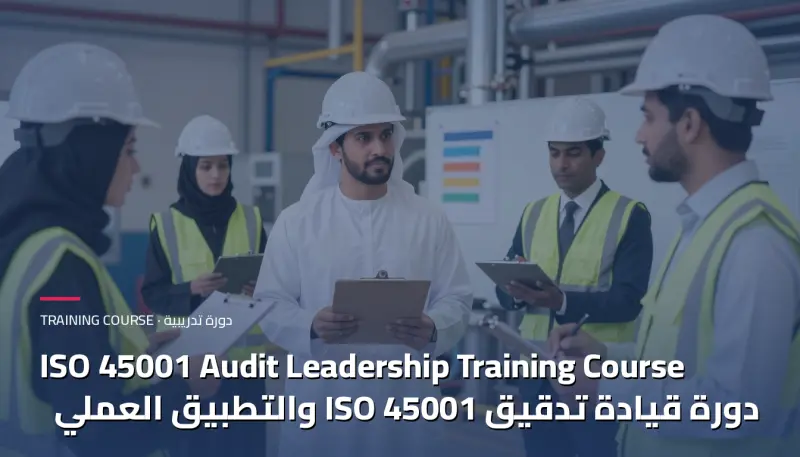
Where occupational health and safety is the operational concern, the ISO 45001 Audit Leadership and Practical Application Course concentrates on audit programmes, team direction, evidence, nonconformity reporting and corrective-action follow-up.
These are different jobs. A social-responsibility practitioner, compliance lead auditor, information-security auditor and safety audit leader may share a management-system mindset, but their evidence, risks and stakeholders are not interchangeable. A useful learning plan respects that difference while building a common approach to governance and assurance.
What does effective application look like at work?
Consider a company whose internal reviews repeatedly produce long lists of observations but little improvement. Each department uses different language. Process owners treat findings as paperwork, and senior managers cannot see which weaknesses create material exposure.
After targeted development, the audit and compliance team changes the review process. Before fieldwork, it defines the purpose, key risks, expected evidence and decision criteria. During interviews, reviewers ask how the control operates, who owns exceptions and what happens when the control fails. Findings separate missing evidence from ineffective design and inconsistent execution.
The team then groups issues by cause and impact rather than by clause order. One manager receives a clear action to redesign an approval point. Another must improve evidence retention. A third needs to monitor whether a corrective action actually prevents recurrence. The report becomes easier for an executive committee to use because it explains the operational consequence of each priority.
This is the practical return from ISO capability: fewer abstract debates, better evidence, clearer ownership and more defensible decisions. The standard becomes a working framework rather than a document brought out before an audit.
How should a manager make the learning stick?
Give each participant an application assignment before training. It might be to revise an audit plan, map a process against requirements, improve a finding template or review a corrective-action workflow. The task should sit inside the learner's real authority.
After training, ask for a short working output, not a presentation about what was learned. Review the output with the process owner and agree what will change. Pair less experienced staff with someone who can challenge evidence and judgement. Use the next internal review to test whether the new method improves the quality of findings and actions.
Avoid measuring success by attendance alone. Look for clearer audit scopes, stronger evidence trails, findings that distinguish symptoms from causes, and actions with accountable owners. If those changes are not visible, the problem may be application support rather than course content.
Bottom line: broader ISO skills are worthwhile when they are assigned to the right roles, tied to a defined management-system need and followed by practical application. Build a shared foundation, then choose specialist paths according to the evidence, controls and decisions each role owns. Check the course page for the full syllabus, upcoming dates and fees.
Frequently asked questions
Should every team member learn the same ISO standard?
No. Build a shared understanding of management systems, evidence and improvement, then match specialist learning to each person's responsibilities and the risks they manage.
Do ISO skills help outside formal audits?
Yes. They support process design, control reviews, supplier oversight, corrective action, governance reporting and management decisions whenever consistent evidence is required.
What should a manager prepare before someone attends?
Define the workplace problem, the learner's authority, the expected output and the process owner who will review the result after training.
Can one auditor cover compliance, cybersecurity and safety equally well?
A strong audit method transfers, but subject knowledge and evidence differ. Specialist competence is still needed for the system and risk area being reviewed.
How can HR or L&D judge whether the training worked?
Look for improved audit plans, clearer findings, stronger evidence trails, better corrective actions and more useful management reporting rather than attendance alone.