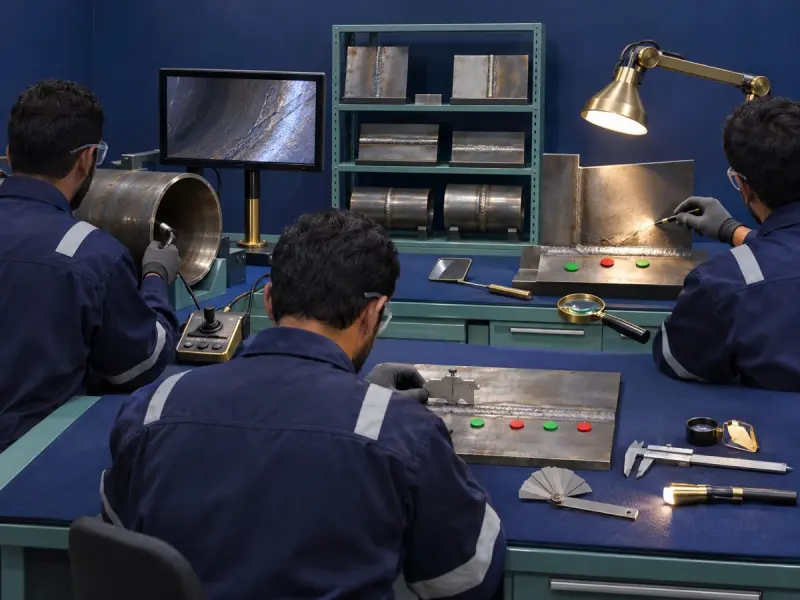
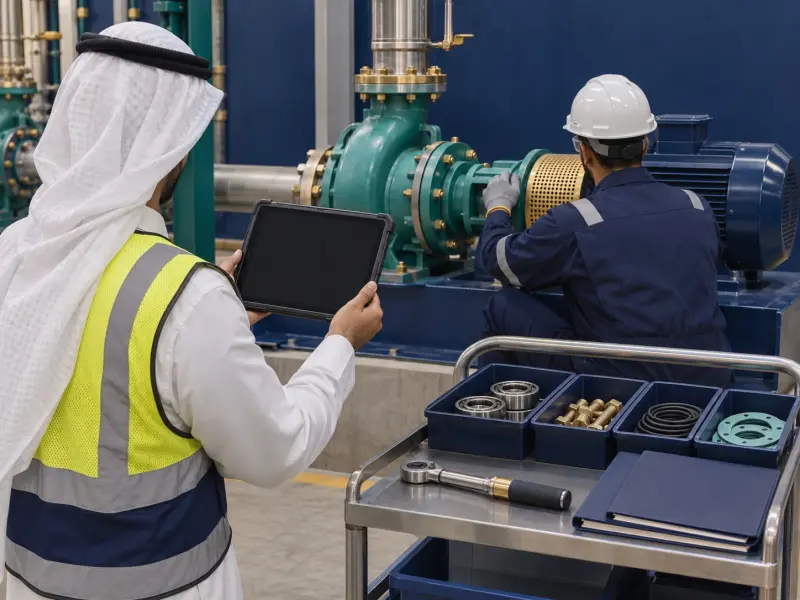
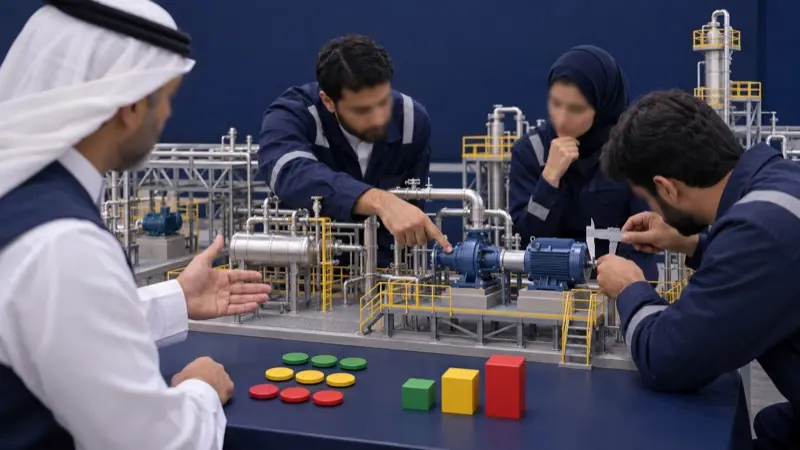
Visual testing is the most hands-on of the non-destructive testing methods: no probes, no film, just trained eyes, the right light and a defined procedure. Building this skill pays off quickly for anyone who inspects welds, pressure equipment, pipework or structural steel as part of their job. It benefits technicians moving into inspection work, welding inspectors who sign off joints before and after fabrication, and quality staff who have to defend their findings when an auditor or a client asks how a decision was reached. Structured training built around this specific skill, such as the NDT Visual Testing Level 2 Practice Training Course, turns habits that are usually picked up slowly on the job into a defined, repeatable practice.
What will you be able to do afterwards?
The practical value of visual testing practice sits in a handful of habits that are easy to describe and surprisingly hard to do consistently without structured training: choosing the right lighting and viewing angle before you even start, knowing when a direct look is enough and when you need a remote technique such as a borescope or camera, and treating equipment checks and surface preparation as part of the inspection rather than an afterthought. A programme that works through lighting, optics, direct and remote techniques, discontinuity characterisation, measurement, acceptance criteria and reporting in sequence, the way the NDT Visual Testing Level 2 Practice Training Course does, gives a technician a checklist to fall back on instead of relying purely on memory and experience.
- Setting up lighting, viewing distance and angle correctly for direct and remote inspection
- Choosing between direct and remote viewing techniques depending on access and the component
- Checking optics and inspection equipment before relying on a result
- Preparing a surface so that a discontinuity is not hidden by dirt, coating or glare
- Characterising and measuring what you find against a defined scale, not a guess
- Applying the governing acceptance criteria consistently, case after case
- Writing work instructions and traceable reports that someone else can follow and verify later
None of this makes someone a certified, independently authorised inspector on its own. Depth of practice and certification are two different things, and a short course builds the first, not the second.
Who is it for, and who is it not for?
This kind of training suits NDT technicians who are building intermediate visual-testing practice, welding inspectors who review joints before, during and after welding, quality personnel who own inspection records and need those records to stand up to scrutiny, maintenance inspectors who examine components and accessible surfaces as part of routine work, and supervisors who need to judge whether the right technique, instruction and report were used for a given job. Most participants already have some grounding in materials, fabrication or welding, which lets the training focus on practice rather than first principles.
It is a poor fit for anyone who is not expected to touch an inspection record, a weld, or a piece of equipment directly. It also will not hand anyone independent acceptance authority or employer certification by itself; if that is the goal, visual testing practice is a step on the way, not the destination. Someone with no grounding at all in materials, fabrication or welding basics will get more out of starting there first, then returning to a practice-focused course once the fundamentals are familiar.
How do these skills show up in daily maintenance work?
Picture a routine inspection round on a process plant. A technician with solid visual-testing practice spots a suspicious indication at a weld toe, picks the right light and angle to confirm it is not just surface dirt, measures it against the governing acceptance criteria, and writes it up in a way that a supervisor can act on without needing to walk the line again. That single habit, writing a report someone else can trust, is often the difference between a finding that gets fixed and one that gets lost in a stack of paperwork.
From there, the finding rarely stays isolated. Many sites log it as a work order inside a computerised maintenance system, which is exactly the discipline built in the CMMS Fundamentals and Maintenance Workflows Training Course: turning an inspection result into a tracked work request, with the asset history, spare-parts record and labour capture to match. Without that link, a well-written visual inspection report can still sit unread until the next shutdown.
A supervisor then has to weigh the finding against everything else competing for the maintenance schedule, which is the territory covered by the Total Productive Maintenance Training Course For Supervisors — building a culture where inspection findings, planned maintenance and production needs are balanced rather than fought over case by case, instead of letting whichever complaint is loudest decide what gets fixed first.
If the same kind of indication keeps turning up across a fleet of equipment, it stops being a single repair decision and becomes an investment question: repair again, replace the component, or change the inspection interval. That comparison, weighing lifecycle cost, risk and the evidence an inspection programme generates, is what the Engineering and Maintenance Project Evaluation Training Course is built around. Visual testing practice supplies the raw evidence; these other skills decide what gets done with it, and without that evidence the investment case has nothing solid to stand on.
None of this requires one person to hold every skill. A technician with strong visual-testing practice, a supervisor comfortable with CMMS workflows, and an engineer who can build a lifecycle case together turn a single weld indication into a defensible, auditable decision instead of a guess made under pressure.
Bottom line: visual testing practice is worth building for anyone who inspects, signs off, or has to defend inspection records at work. It will not replace formal certification, and it is not useful for people outside inspection and quality roles, but for the right audience it closes a real gap between spotting a defect and proving the decision made about it. Check the course page for the full syllabus, upcoming dates and fees.
Frequently asked questions
Does completing visual-testing practice training make someone a certified NDT inspector?
No. Depth of practice and formal certification are separate things. Training builds the practical skills — lighting, technique selection, measurement, reporting — while certification and independent acceptance authority are granted separately by an employer or a certifying body.
How is visual testing different from other non-destructive testing methods?
Visual testing relies on trained observation, lighting and viewing technique rather than equipment that penetrates or images below the surface. It is usually the first check applied, and it often decides whether a more specialised NDT method is needed at all.
What should someone already know before starting this kind of training?
A working grounding in materials, fabrication or welding basics helps a lot, since the course builds on recognising how welds and surfaces normally look before teaching how to characterise what is abnormal.
Who usually makes the final acceptance decision after an inspection?
That depends on the organisation's procedures and the authority assigned to specific roles. Visual-testing practice prepares someone to inspect, measure and report consistently; it does not by itself grant independent acceptance authority.
How does one inspector's finding connect to a plant's wider maintenance planning?
A single finding usually becomes a work order, gets weighed against other maintenance priorities by a supervisor, and — if the same issue recurs — turns into a longer-term engineering or investment decision rather than a one-off repair.
Can a supervisor who never does hands-on inspection still benefit from understanding this skill set?
Yes. Supervisors do not need to perform the inspection themselves, but understanding what a sound visual-testing report should contain helps them judge the quality of the work their team hands them and decide what to do with it.