Advanced Chemical Reactor Design Training Course

At a glance
- Duration
- 1 Week
- Format
- Classroom
- Cities
- Lagos, Lisbon, Seoul, Accra, Doha, Singapore and more
- Next session
- 8 – 12 November 2026, Lagos
- Average fee
- 7,500 €
Overview
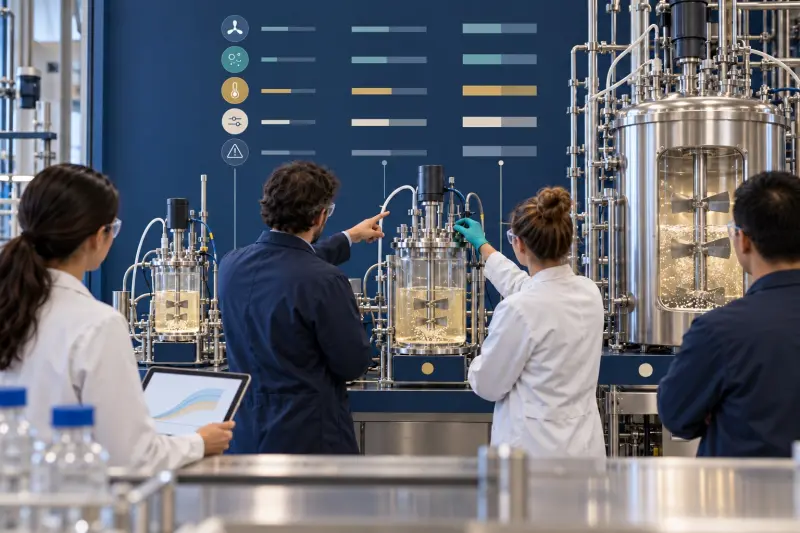
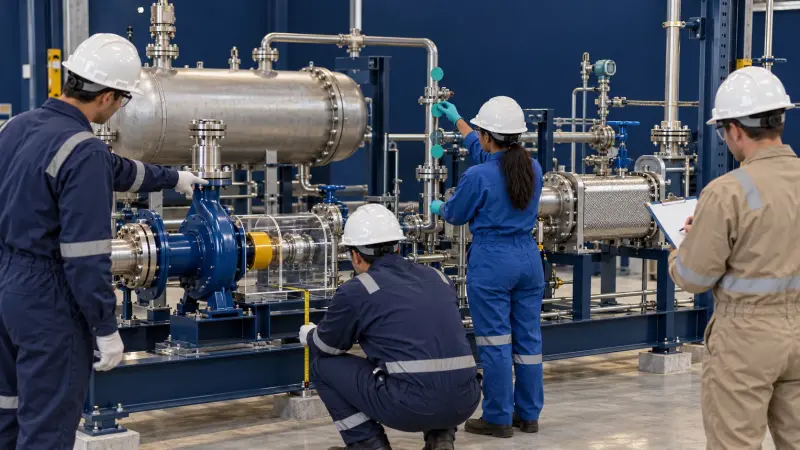
Advanced Chemical Reactor Design and Operations Training Course is a one-week advanced programme for chemical and process engineers, reactor specialists, production technologists, operations leaders and process-safety professionals. Participants connect reaction kinetics, stoichiometry, equilibrium, mass and energy balances with reactor selection, sizing, scale-up and plant performance. The course covers ideal and non-ideal behaviour, batch, continuous stirred-tank, plug-flow, packed-bed, catalytic and multiphase systems, then links design assumptions to heat removal, stability, control, catalyst condition and troubleshooting. Participants leave with a Reactor Performance and Improvement File. Agile Leaders Training Center develops advanced chemical reaction engineering capability.
Who Should Attend
- Chemical, process and reaction engineers
- Plant production and operations engineers
- Process development, scale-up and technology teams
- Control, reliability and troubleshooting specialists
- Process-safety and technical assurance professionals
Participants should understand material and energy balances and basic reaction kinetics. The course is educational and does not replace process licensor requirements, management of change or site engineering approval.
Departments and Industries
The course supports process engineering, operations, production technology, research and development, scale-up, process control, reliability and safety teams in chemicals, petrochemicals, refining, polymers, pharmaceuticals, biotechnology, water treatment and related process industries.
Learning Objectives
- Translate kinetic and thermodynamic information into reactor design decisions
- Compare batch, CSTR, PFR, packed-bed and multiphase reactor behaviour
- Use residence-time distribution to diagnose non-ideal flow
- Link heat and mass transfer limits to conversion and selectivity
- Assess thermal stability, runaway risk and control requirements
- Structure reactor scale-up, monitoring and troubleshooting
- Develop a prioritised reactor performance improvement plan
Course Methodology
The programme uses technical briefings, design equations, simplified calculations, reactor-selection cases, residence-time plots, heat-balance exercises, operating data, cause maps and improvement workshops. Daily outputs combine into a Reactor Performance and Improvement File containing assumptions, indicators, constraints, safeguards and actions.
Day 1: Reaction Engineering Foundations and Reactor Selection
- Reaction rate, stoichiometry, equilibrium, conversion and selectivity
- Rate laws, temperature dependence and kinetic-data quality
- Material and energy balances for reacting systems
- Batch, CSTR and PFR characteristics and selection boundaries
- Building the reactor design basis and assumption register
Day 2: Non-Ideal Flow, Transport and Reactor Performance
- Residence-time distribution and tracer-response interpretation
- Dead zones, bypassing, back-mixing and axial dispersion
- Internal and external heat and mass transfer limitations
- Observed versus intrinsic kinetics and effectiveness
- Diagnosing conversion and selectivity gaps from plant data
Day 3: Catalytic, Packed-Bed and Multiphase Reactors
- Heterogeneous catalysis and surface-reaction considerations
- Packed-bed pressure drop, flow distribution and hot spots
- Catalyst deactivation, poisoning, fouling and regeneration
- Gas-liquid and gas-liquid-solid contacting behaviour
- Selecting performance indicators for advanced reactor systems
Day 4: Thermal Stability, Control and Process Safety
- Heat generation, heat removal and temperature sensitivity
- Multiple steady states, instability and runaway scenarios
- Measurement, manipulated variables and control structure
- Safeguards, alarms, interlocks and emergency response boundaries
- Managing change in reactor feed, catalyst and operating conditions
Day 5: Scale-Up, Troubleshooting and Optimisation
- Geometric, kinetic, mixing and heat-transfer scale-up constraints
- Moving from laboratory and pilot evidence to plant decisions
- Structured troubleshooting using data, hypotheses and tests
- Balancing throughput, conversion, selectivity, energy and safety
- Completing a reactor improvement roadmap and review plan
Practical Outputs
- Reactor-selection decision matrix
- Kinetic and design-assumption register
- Residence-time and non-ideal-flow diagnostic worksheet
- Thermal stability and safeguard review
- Catalyst performance cause map
- Reactor improvement roadmap
Frequently Asked Questions
Does the course focus on one reactor type?
No. It compares common ideal and industrial reactor configurations and their operating constraints.
Is advanced mathematics required?
Participants use practical engineering relationships and simplified calculations; prior familiarity with balances and kinetics is recommended.
Does the course cover process safety?
Yes. Thermal stability, runaway scenarios, safeguards, alarms and management-of-change boundaries are integrated.
Will participants use proprietary simulation software?
No. The programme is platform-neutral and focuses on engineering logic and interpretation.
What is the main workplace output?
Participants complete a Reactor Performance and Improvement File for adaptation to their plant.
credits: 5 credit per day
Course Mode: full-time
Provider: Agile Leaders Training Center
-
Events for this Course
-
Lagos 8 – 12 November 2026
-
Lisbon 16 – 20 November 2026
-
Seoul 23 – 27 November 2026
-
Accra 29 November – 3 December 2026
-
Doha 6 – 10 December 2026
-
Singapore 7 – 11 December 2026
-
Tokyo 14 – 18 December 2026
-
Abu Dhabi 14 – 18 December 2026
-
Nairobi 20 – 24 December 2026
-
Sharm El-Sheikh 21 – 25 December 2026
-
Istanbul 28 December 2026 – 1 January 2027
-
Frankfurt 4 – 8 January 2027
-
Kuala Lumpur 11 – 15 January 2027
-
Zoom 18 – 22 January 2027
-
Casablanca 25 – 29 January 2027
-
San Diego 1 – 5 February 2027
-
Toronto 7 – 11 February 2027
-
London 8 – 12 February 2027
-
Chicago 14 – 18 February 2027
-
Cairo 15 – 19 February 2027
-
Bangkok 21 – 25 February 2027
-
Dubai 22 – 26 February 2027
-
Phuket 28 February – 4 March 2027
-
Baku 1 – 5 March 2027
-
Manama 7 – 11 March 2027
-
Amman 14 – 18 March 2027
-
Nice 15 – 19 March 2027
-
Vienna 29 March – 2 April 2027
-
Athens 5 – 9 April 2027
-
Jakarta 12 – 16 April 2027
-
Cape town 18 – 22 April 2027
-
Langkawi 25 – 29 April 2027
-
Madrid 26 – 30 April 2027
-
Bali 9 – 13 May 2027
-
Abu Dhabi 17 – 21 May 2027
-
Addis Ababa 31 May – 4 June 2027
-
Muscat 6 – 10 June 2027
-
Barcelona 7 – 11 June 2027
-
Johannesburg 13 – 17 June 2027
-
Tashkent 20 – 24 June 2027
-
Prague 21 – 25 June 2027
-
Amsterdam 28 June – 2 July 2027
-
New York 28 June – 2 July 2027
-
Geneva 18 – 22 July 2027
-
Munich 26 – 30 July 2027
-
Zanzibar 8 – 12 August 2027
-
Dubai 9 – 13 August 2027
-
Milan 16 – 20 August 2027
-
Paris 23 – 27 August 2027
-
Kuwait 29 August – 2 September 2027
-
Rome 6 – 10 September 2027
-
Porto 6 – 10 September 2027
-
Marbella 12 – 16 September 2027
-
Berlin 20 – 24 September 2027
-
Tbilisi 4 – 8 October 2027
-
Trabzon 17 – 21 October 2027
-
Montreux 25 – 29 October 2027
-
London 8 – 12 November 2027
| Image | Location | Dates | Duration | Mode | Price | Actions |
|---|---|---|---|---|---|---|

|
Prague |
Week 25, 2027 21 – 25 June 2027 |
1 Week | Onsite | €7,500 | |

|
Amsterdam |
Week 26, 2027 28 June – 2 July 2027 |
1 Week | Onsite | €6,500 | |

|
New York |
Week 26, 2027 28 June – 2 July 2027 |
1 Week | Onsite | €16,000 | |

|
Geneva |
Week 28, 2027 18 – 22 July 2027 |
1 Week | Onsite | €8,000 | |

|
Munich |
Week 30, 2027 26 – 30 July 2027 |
1 Week | Onsite | €6,500 | |

|
Zanzibar |
Week 31, 2027 8 – 12 August 2027 |
1 Week | Onsite | €6,000 | |

|
Dubai |
Week 32, 2027 9 – 13 August 2027 |
1 Week | Onsite | €6,500 | |

|
Milan |
Week 33, 2027 16 – 20 August 2027 |
1 Week | Onsite | €7,000 | |

|
Paris |
Week 34, 2027 23 – 27 August 2027 |
1 Week | Onsite | €6,500 | |

|
Kuwait |
Week 34, 2027 29 August – 2 September 2027 |
1 Week | Onsite | €7,000 | |

|
Rome |
Week 36, 2027 6 – 10 September 2027 |
1 Week | Onsite | €6,500 | |

|
Porto |
Week 36, 2027 6 – 10 September 2027 |
1 Week | Onsite | €6,500 | |

|
Marbella |
Week 36, 2027 12 – 16 September 2027 |
1 Week | Onsite | €6,500 | |

|
Berlin |
Week 38, 2027 20 – 24 September 2027 |
1 Week | Onsite | €6,500 | |

|
Tbilisi |
Week 40, 2027 4 – 8 October 2027 |
1 Week | Onsite | €5,700 | |

|
Trabzon |
Week 41, 2027 17 – 21 October 2027 |
1 Week | Onsite | €8,000 | |

|
Montreux |
Week 43, 2027 25 – 29 October 2027 |
1 Week | Onsite | €8,000 | |

|
London |
Week 45, 2027 8 – 12 November 2027 |
1 Week | Onsite | €6,500 |
Frequently asked questions
What does this course cover?
OverviewAdvanced Chemical Reactor Design and Operations Training Course is a one-week advanced programme for chemical and process engineers, reactor specialists, production technologists, operations leaders and process-safety professionals. Participants connect reaction kinetics, stoichiometry, equilibrium, mass and energy balances with reactor selection,…
Are training dates available?
Yes. Available dates and destinations are listed in the course dates section on this page.
How can I register?
Choose an available date on this page and complete the registration form, or send a programme enquiry.
Can I download the course brochure?
Yes. Use the brochure download link provided on this page.
This course by city
- Oil & Gas Training and Other Technical Courses in Abu Dhabi
- Oil & Gas Training and Other Technical Courses in Accra
- Oil & Gas Training and Other Technical Courses in Addis Ababa
- Oil & Gas Training and Other Technical Courses in Amman
- Oil & Gas Training and Other Technical Courses in Amsterdam
- Oil & Gas Training and Other Technical Courses in Athens
- Oil & Gas Training and Other Technical Courses in Baku
- Oil & Gas Training and Other Technical Courses in Bali
- Oil & Gas Training and Other Technical Courses in Bangkok
- Oil & Gas Training and Other Technical Courses in Barcelona
- Oil & Gas Training and Other Technical Courses in Berlin
- Oil & Gas Training and Other Technical Courses in Cairo
- Oil & Gas Training and Other Technical Courses in Cape town
- Oil & Gas Training and Other Technical Courses in Casablanca
- Oil & Gas Training and Other Technical Courses in Chicago
- Oil & Gas Training and Other Technical Courses in Doha
- Oil & Gas Training and Other Technical Courses in Dubai
- Oil & Gas Training and Other Technical Courses in Frankfurt
- Oil & Gas Training and Other Technical Courses in Geneva
- Oil & Gas Training and Other Technical Courses in Istanbul
- Oil & Gas Training and Other Technical Courses in Jakarta
- Oil & Gas Training and Other Technical Courses in Johannesburg
- Oil & Gas Training and Other Technical Courses in Kuala Lumpur
- Oil & Gas Training and Other Technical Courses in Kuwait
- Oil & Gas Training and Other Technical Courses in Lagos
- Oil & Gas Training and Other Technical Courses in Langkawi
- Oil & Gas Training and Other Technical Courses in Lisbon
- Oil & Gas Training and Other Technical Courses in London
- Oil & Gas Training and Other Technical Courses in Madrid
- Oil & Gas Training and Other Technical Courses in Manama
- Oil & Gas Training and Other Technical Courses in Marbella
- Oil & Gas Training and Other Technical Courses in Milan
- Oil & Gas Training and Other Technical Courses in Montreux
- Oil & Gas Training and Other Technical Courses in Munich
- Oil & Gas Training and Other Technical Courses in Muscat
- Oil & Gas Training and Other Technical Courses in Nairobi
- Oil & Gas Training and Other Technical Courses in New York
- Oil & Gas Training and Other Technical Courses in Nice
- Oil & Gas Training and Other Technical Courses in Paris
- Oil & Gas Training and Other Technical Courses in Phuket
- Oil & Gas Training and Other Technical Courses in Porto
- Oil & Gas Training and Other Technical Courses in Prague
- Oil & Gas Training and Other Technical Courses in Rome
- Oil & Gas Training and Other Technical Courses in San Diego
- Oil & Gas Training and Other Technical Courses in Seoul
- Oil & Gas Training and Other Technical Courses in Sharm El-Sheikh
- Oil & Gas Training and Other Technical Courses in Singapore
- Oil & Gas Training and Other Technical Courses in Tashkent
- Oil & Gas Training and Other Technical Courses in Tbilisi
- Oil & Gas Training and Other Technical Courses in Tokyo
- Oil & Gas Training and Other Technical Courses in Toronto
- Oil & Gas Training and Other Technical Courses in Trabzon
- Oil & Gas Training and Other Technical Courses in Vienna
- Oil & Gas Training and Other Technical Courses in Zanzibar
- Oil & Gas Training and Other Technical Courses in Zoom