Advanced FLNG Technology Integrated Operations Course

At a glance
- Duration
- 1 Week
- Format
- Classroom
- Cities
- Geneva, Dubai, Frankfurt, Tokyo, Zanzibar, Addis Ababa and more
- Next session
- 15 – 19 November 2026, Geneva
- Average fee
- 7,500 €
Overview
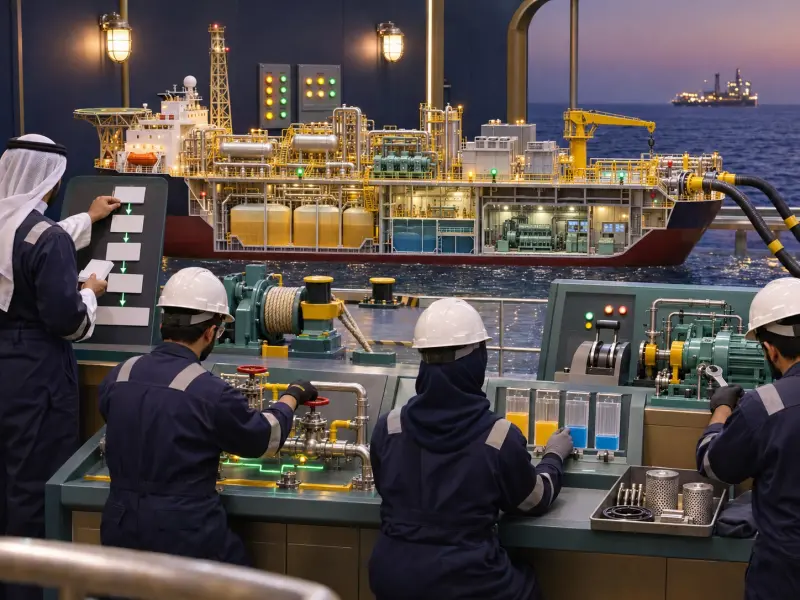
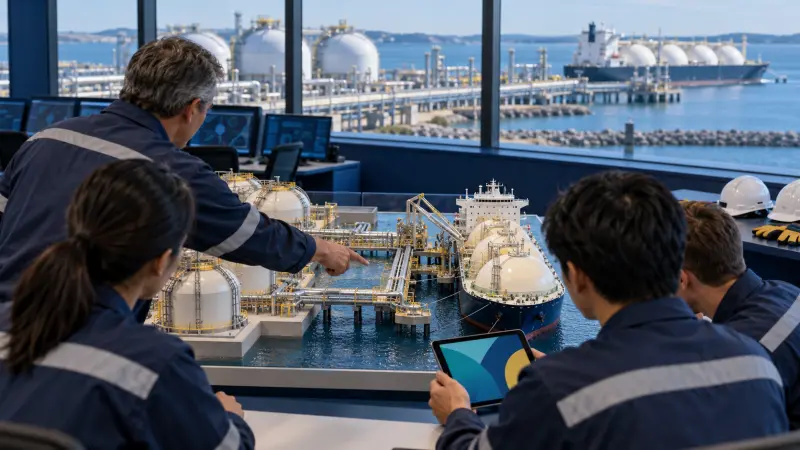
Advanced FLNG Technology and Integrated Operations Training Course is a one-week course for FLNG process, marine, operations, maintenance, HSE, and assurance personnel who leave with an FLNG Integrated Operations and Assurance File. Participants connect feed-gas treatment, liquefaction, storage, marine systems, offloading, utilities, controls, reliability, and emergency coordination across topsides-hull interfaces. The course resolves fragmented operating decisions through system mapping, operating envelopes, interface controls, and scenario practice. Agile Leaders Training Center presents advanced FLNG integrated operations.
Who Should Attend
- Process and production functions responsible for gas treatment, liquefaction, refrigeration, and production optimization
- Marine and cargo functions responsible for station keeping, storage, offloading, and transfer coordination
- Operations functions responsible for start-up, shutdown, control-room response, and shift handover
- Maintenance and reliability functions responsible for equipment strategy, availability, and defect prioritization
- HSE and assurance functions responsible for barriers, SIMOPS, emergency coordination, and integrity evidence
The course assumes participants already work with LNG or offshore process systems, and it leaves out LNG finance, trading, land-based fueling stations, and basic terminal design.
Departments and Industries
The course supports departments and industries that operate or assure floating gas-processing and marine production assets.
- Offshore oil and gas production and floating production facilities
- LNG production, liquefaction, storage, and export operations
- Marine operations, cargo transfer, and vessel-interface coordination
- Process engineering, automation, utilities, and technical assurance
- Maintenance, reliability, asset integrity, and emergency management
Learning Objectives
By the end of this course, participants will be able to:
- Analyze integrated FLNG process and marine system interactions
- Apply operating envelopes to liquefaction, storage, and utilities
- Build controls for SIMOPS and topsides-hull interfaces
- Diagnose abnormal conditions and barrier degradation
- Prioritize reliability, maintenance, and integrity actions
- Evaluate start-up, shutdown, offloading, and emergency readiness
Course Agenda
Day 1: Map the Integrated FLNG Facility
- FLNG Value Stream and System Boundary Map
- Feed-Gas Reception and Pretreatment Operating Envelope
- Liquefaction Cycle and Refrigerant Compression Model
- LNG and Condensate Storage Inventory Balance
- Topsides-Hull Interface Responsibility Matrix
Day 2: Control Process and Utility Performance
- Liquefaction Train Constraint and Bottleneck Map
- Boil-Off Gas Generation and Recovery Balance
- Power Generation and Electrical Load-Shedding Logic
- Cooling, Heating, Flare, and Utility Dependency Matrix
- Production Optimization and Energy Performance Dashboard
Day 3: Coordinate Marine and Offloading Operations
- Mooring, Motion, and Weather Operating-Limit Matrix
- Cargo Tank Management and Rollover Prevention Method
- LNG Carrier Approach and Compatibility Checklist
- Offloading Sequence and Emergency Release Logic
- SIMOPS Permit and Marine Coordination Plan
Day 4: Assure Reliability and Abnormal Response
- Safety-Critical Element and Performance Standard Register
- Reliability-Centered Maintenance Decision Worksheet
- Process Alarm, Trip, and Cause-and-Effect Review
- Abnormal Situation and Emergency Coordination Matrix
- Start-up, Shutdown, and Shift-Handover Assurance Checklist
Day 5: Practice Integrated FLNG Assurance
- Suggested Exercise: Diagnose a Refrigeration and Utility Interaction
- Suggested Exercise: Reconcile Storage, Boil-Off Gas, and Offloading Constraints
- Suggested Exercise: Control a SIMOPS and Marine-Motion Scenario
- Suggested Exercise: Prioritize Reliability and Integrity Actions
- Capstone Exercise: Complete the FLNG Integrated Operations and Assurance File
Practical Exercises
The course uses suggested activities to connect process performance, marine limits, operating discipline, and assurance decisions.
- Suggested activity: map feed-gas, refrigerant, LNG, condensate, utility, flare, and electrical dependencies across the facility.
- Suggested activity: evaluate a storage and offloading scenario against marine limits, boil-off gas capacity, and SIMOPS controls.
- Suggested activity: diagnose an abnormal process condition using alarms, trips, barriers, and cause-and-effect information.
- Suggested activity: assemble readiness evidence, reliability priorities, interface controls, and emergency actions into the capstone file.
FAQs
Who suits advanced FLNG technology and integrated operations training, and what does it assume?
Advanced FLNG training suits process, marine, operations, maintenance, HSE, project, and assurance personnel. It assumes prior exposure to LNG or offshore process systems and established work-control practices.
How does advanced FLNG operations training differ from LNG terminal operations training?
Advanced FLNG operations training integrates onboard liquefaction, floating storage, marine motion, hull interfaces, utilities, and offshore offloading. LNG terminal operations training normally centers on fixed-facility receipt, storage, send-out, or ship-shore transfer.
How are process and marine constraints managed during FLNG offloading?
Process and marine constraints are managed through agreed weather and motion limits, cargo compatibility, storage margins, boil-off gas capacity, communications, SIMOPS controls, transfer sequences, and emergency release logic.
What drives FLNG reliability and production optimization?
FLNG reliability and production optimization depend on process constraints, refrigerant compression, utility availability, equipment condition, storage capacity, marine limits, maintenance priorities, and disciplined response to alarms and degrading barriers.
How does FLNG emergency coordination connect topsides and marine teams?
FLNG emergency coordination connects detection, alarms, shutdown logic, marine position, cargo transfer status, muster, communications, command roles, and recovery criteria through shared scenarios and verified interfaces.
Conclusion
Participants take back an FLNG Integrated Operations and Assurance File linking system boundaries, operating envelopes, marine constraints, interface controls, reliability actions, and emergency coordination. The file changes separate technical records into a shared operating picture. It supports readiness reviews, shift decisions, maintenance priorities, abnormal response, offloading assurance, and production improvement.
credits: 5 credit per day
Course Mode: full-time
Provider: Agile Leaders Training Center
-
Events for this Course
-
Geneva 15 – 19 November 2026
-
Dubai 23 – 27 November 2026
-
Frankfurt 7 – 11 December 2026
-
Tokyo 21 – 25 December 2026
-
Zanzibar 27 – 31 December 2026
-
Addis Ababa 28 December 2026 – 1 January 2027
-
Amsterdam 11 – 15 January 2027
-
San Diego 11 – 15 January 2027
-
Montreux 18 – 22 January 2027
-
Johannesburg 24 – 28 January 2027
-
New York 1 – 5 February 2027
-
Abu Dhabi 8 – 12 February 2027
-
Lisbon 22 – 26 February 2027
-
Paris 1 – 5 March 2027
-
Baku 8 – 12 March 2027
-
Nice 8 – 12 March 2027
-
Manama 14 – 18 March 2027
-
Muscat 14 – 18 March 2027
-
Trabzon 21 – 25 March 2027
-
Marbella 28 March – 1 April 2027
-
Tbilisi 29 March – 2 April 2027
-
Langkawi 4 – 8 April 2027
-
Porto 5 – 9 April 2027
-
London 12 – 16 April 2027
-
Kuala Lumpur 19 – 23 April 2027
-
Bangkok 25 – 29 April 2027
-
Milan 3 – 7 May 2027
-
Nairobi 9 – 13 May 2027
-
Accra 16 – 20 May 2027
-
Kuwait 23 – 27 May 2027
-
Cairo 24 – 28 May 2027
-
Casablanca 31 May – 4 June 2027
-
London 7 – 11 June 2027
-
Athens 14 – 18 June 2027
-
Zoom 21 – 25 June 2027
-
Phuket 27 June – 1 July 2027
-
Istanbul 5 – 9 July 2027
-
Madrid 12 – 16 July 2027
-
Vienna 19 – 23 July 2027
-
Dubai 26 – 30 July 2027
-
Lagos 1 – 5 August 2027
-
Sharm El-Sheikh 9 – 13 August 2027
-
Rome 16 – 20 August 2027
-
Seoul 23 – 27 August 2027
-
Barcelona 6 – 10 September 2027
-
Doha 12 – 16 September 2027
-
Chicago 12 – 16 September 2027
-
Bali 19 – 23 September 2027
-
Cape town 19 – 23 September 2027
-
Toronto 26 – 30 September 2027
-
Prague 27 September – 1 October 2027
-
Singapore 4 – 8 October 2027
-
Jakarta 11 – 15 October 2027
-
Munich 11 – 15 October 2027
-
Berlin 25 – 29 October 2027
-
Abu Dhabi 1 – 5 November 2027
-
Amman 7 – 11 November 2027
-
Tashkent 7 – 11 November 2027
| Image | Location | Dates | Duration | Mode | Price | Actions |
|---|---|---|---|---|---|---|

|
Geneva |
Week 46, 2026 15 – 19 November 2026 |
1 Week | Onsite | €8,000 | |

|
Dubai |
Week 48, 2026 23 – 27 November 2026 |
1 Week | Onsite | €6,500 | |

|
Frankfurt |
Week 50, 2026 7 – 11 December 2026 |
1 Week | Onsite | €6,500 | |

|
Tokyo |
Week 52, 2026 21 – 25 December 2026 |
1 Week | Onsite | €12,000 | |

|
Zanzibar |
Week 52, 2026 27 – 31 December 2026 |
1 Week | Onsite | €6,000 | |

|
Addis Ababa |
Week 53, 2026 28 December 2026 – 1 January 2027 |
1 Week | Onsite | €6,000 | |

|
Amsterdam |
Week 02, 2027 11 – 15 January 2027 |
1 Week | Onsite | €6,500 | |

|
San Diego |
Week 02, 2027 11 – 15 January 2027 |
1 Week | Onsite | €16,000 | |

|
Montreux |
Week 03, 2027 18 – 22 January 2027 |
1 Week | Onsite | €8,000 | |

|
Johannesburg |
Week 03, 2027 24 – 28 January 2027 |
1 Week | Onsite | €6,000 | |

|
New York |
Week 05, 2027 1 – 5 February 2027 |
1 Week | Onsite | €16,000 | |

|
Abu Dhabi |
Week 06, 2027 8 – 12 February 2027 |
1 Week | Onsite | €6,500 | |

|
Lisbon |
Week 08, 2027 22 – 26 February 2027 |
1 Week | Onsite | €6,500 | |

|
Paris |
Week 09, 2027 1 – 5 March 2027 |
1 Week | Onsite | €6,500 | |

|
Baku |
Week 10, 2027 8 – 12 March 2027 |
1 Week | Onsite | €8,000 | |

|
Nice |
Week 10, 2027 8 – 12 March 2027 |
1 Week | Onsite | €8,000 | |

|
Manama |
Week 10, 2027 14 – 18 March 2027 |
1 Week | Onsite | €6,500 | |

|
Muscat |
Week 10, 2027 14 – 18 March 2027 |
1 Week | Onsite | €6,500 | |

|
Trabzon |
Week 11, 2027 21 – 25 March 2027 |
1 Week | Onsite | €8,000 | |

|
Marbella |
Week 12, 2027 28 March – 1 April 2027 |
1 Week | Onsite | €6,500 |
Frequently asked questions
What does this course cover?
OverviewAdvanced FLNG Technology and Integrated Operations Training Course is a one-week course for FLNG process, marine, operations, maintenance, HSE, and assurance personnel who leave with an FLNG Integrated Operations and Assurance File. Participants connect feed-gas treatment, liquefaction, storage, marine systems, offloading, utilities, controls, rel…
Are training dates available?
Yes. Available dates and destinations are listed in the course dates section on this page.
How can I register?
Choose an available date on this page and complete the registration form, or send a programme enquiry.
Can I download the course brochure?
Yes. Use the brochure download link provided on this page.
This course by city
- Oil & Gas Training and Other Technical Courses in Abu Dhabi
- Oil & Gas Training and Other Technical Courses in Accra
- Oil & Gas Training and Other Technical Courses in Addis Ababa
- Oil & Gas Training and Other Technical Courses in Amman
- Oil & Gas Training and Other Technical Courses in Amsterdam
- Oil & Gas Training and Other Technical Courses in Athens
- Oil & Gas Training and Other Technical Courses in Baku
- Oil & Gas Training and Other Technical Courses in Bali
- Oil & Gas Training and Other Technical Courses in Bangkok
- Oil & Gas Training and Other Technical Courses in Barcelona
- Oil & Gas Training and Other Technical Courses in Berlin
- Oil & Gas Training and Other Technical Courses in Cairo
- Oil & Gas Training and Other Technical Courses in Cape town
- Oil & Gas Training and Other Technical Courses in Casablanca
- Oil & Gas Training and Other Technical Courses in Chicago
- Oil & Gas Training and Other Technical Courses in Doha
- Oil & Gas Training and Other Technical Courses in Dubai
- Oil & Gas Training and Other Technical Courses in Frankfurt
- Oil & Gas Training and Other Technical Courses in Geneva
- Oil & Gas Training and Other Technical Courses in Istanbul
- Oil & Gas Training and Other Technical Courses in Jakarta
- Oil & Gas Training and Other Technical Courses in Johannesburg
- Oil & Gas Training and Other Technical Courses in Kuala Lumpur
- Oil & Gas Training and Other Technical Courses in Kuwait
- Oil & Gas Training and Other Technical Courses in Lagos
- Oil & Gas Training and Other Technical Courses in Langkawi
- Oil & Gas Training and Other Technical Courses in Lisbon
- Oil & Gas Training and Other Technical Courses in London
- Oil & Gas Training and Other Technical Courses in Madrid
- Oil & Gas Training and Other Technical Courses in Manama
- Oil & Gas Training and Other Technical Courses in Marbella
- Oil & Gas Training and Other Technical Courses in Milan
- Oil & Gas Training and Other Technical Courses in Montreux
- Oil & Gas Training and Other Technical Courses in Munich
- Oil & Gas Training and Other Technical Courses in Muscat
- Oil & Gas Training and Other Technical Courses in Nairobi
- Oil & Gas Training and Other Technical Courses in New York
- Oil & Gas Training and Other Technical Courses in Nice
- Oil & Gas Training and Other Technical Courses in Paris
- Oil & Gas Training and Other Technical Courses in Phuket
- Oil & Gas Training and Other Technical Courses in Porto
- Oil & Gas Training and Other Technical Courses in Prague
- Oil & Gas Training and Other Technical Courses in Rome
- Oil & Gas Training and Other Technical Courses in San Diego
- Oil & Gas Training and Other Technical Courses in Seoul
- Oil & Gas Training and Other Technical Courses in Sharm El-Sheikh
- Oil & Gas Training and Other Technical Courses in Singapore
- Oil & Gas Training and Other Technical Courses in Tashkent
- Oil & Gas Training and Other Technical Courses in Tbilisi
- Oil & Gas Training and Other Technical Courses in Tokyo
- Oil & Gas Training and Other Technical Courses in Toronto
- Oil & Gas Training and Other Technical Courses in Trabzon
- Oil & Gas Training and Other Technical Courses in Vienna
- Oil & Gas Training and Other Technical Courses in Zanzibar
- Oil & Gas Training and Other Technical Courses in Zoom