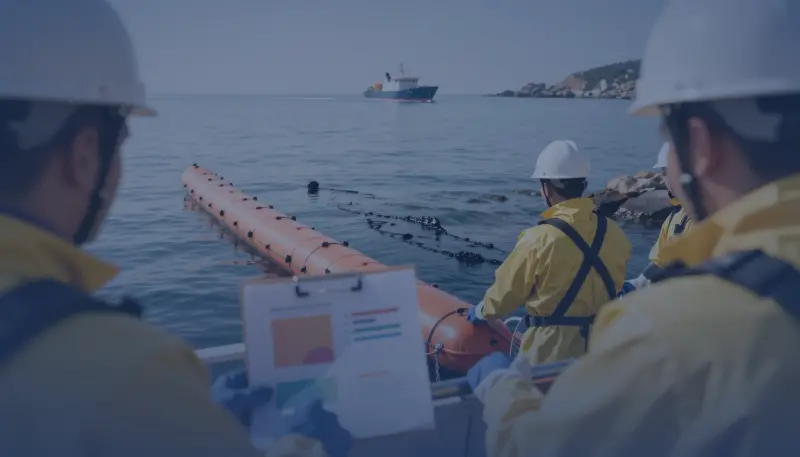
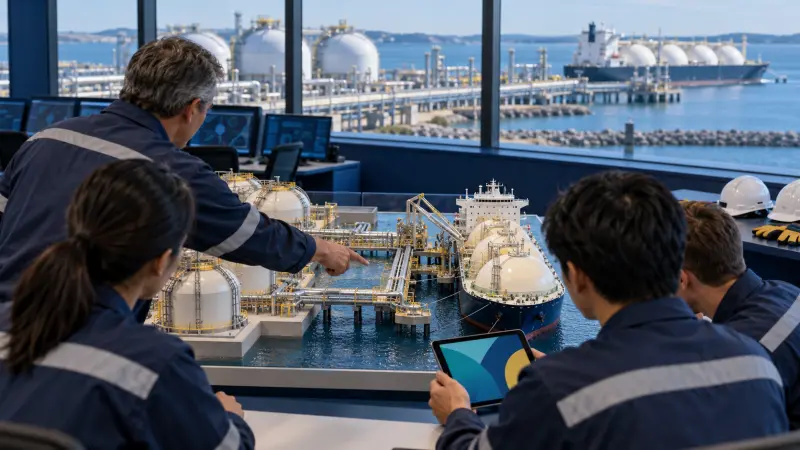
FPSO Operations and Maintenance Training Course

At a glance
- Duration
- 1 Week
- Format
- Classroom
- Cities
- Vienna, Kuala Lumpur, Montreux, Barcelona, Kuwait, Cairo and more
- Next session
- 9 – 13 November 2026, Vienna
- Average fee
- 7,500 €
Overview
FPSO Operations and Maintenance Training Course is a one-week intermediate course for production, marine, control-room, maintenance, planning, and offshore supervision teams who leave with an FPSO Operations and Maintenance Coordination File. The course connects FPSO production operations, FPSO marine systems, cargo offloading operations, control-room coordination, FPSO maintenance planning, and abnormal-operation recovery. Participants use operating boundaries, shift records, permits, isolation evidence, work orders, and recovery checks to coordinate safe day-to-day decisions. Agile Leaders Training Center delivers this course on FPSO operations and maintenance.
Who Should Attend
- Functions responsible for offshore production, process stability, utility availability, and operating limits
- Teams responsible for marine systems, ballast, station keeping, cargo storage, and offloading interfaces
- Functions responsible for control-room monitoring, alarms, handovers, and operating coordination
- Teams responsible for planned and corrective maintenance, work preparation, spares, and closeout evidence
- Supervisory groups responsible for permits, isolations, simultaneous work, shutdowns, and recovery decisions
The course assumes participants already use offshore operating procedures, shift records, equipment histories, or maintenance work orders and leaves out live-vessel operation, detailed integrity assessment, subsea engineering, vendor certification, and repair execution.
Departments and Industries
The course supports coordinated FPSO operations and maintenance across offshore production and marine service environments.
- Offshore production, process operations, control rooms, and utilities
- Marine operations, cargo handling, ballast, mooring, and deck services
- Maintenance, reliability, work planning, materials, and technical services
- Oil and gas production, offshore logistics, marine support, and terminal interfaces
- Safety, permit control, emergency response, and operations technology support
Learning Objectives
By the end of this course, participants will be able to:
- Analyze FPSO production, marine, cargo, and utility interfaces.
- Use shift, alarm, permit, isolation, and handover evidence.
- Build planned and corrective maintenance work controls.
- Evaluate ballast, mooring, storage, and offloading conditions.
- Prioritize production continuity, safety, and maintenance actions.
- Apply shutdown and recovery decision checks.
Course Agenda
Day 1: Map the FPSO Operating Model
- FPSO Hull, Topsides, Marine, and Production Interface Map
- Process Train, Utility, Flare, and Support-System Operating Boundary
- Control Room, Field Team, Marine Team, and Maintenance Responsibility Matrix
- Operating Envelope, Alarm, Trip, and Escalation Register
- Shift Log, Handover, and Production Evidence File Structure
Day 2: Coordinate Production and Marine Systems
- Separator, Treatment, Compression, and Export Flow Path Diagram
- Power Generation, Water, Air, Fuel, and Utility Availability Checklist
- Ballast, Trim, Stability, and Tank-Status Coordination Sheet
- Station-Keeping, Mooring, Weather, and Marine Condition Review
- Control-Room Trend, Alarm, and Field Verification Method
Day 3: Control Storage, Cargo, and Offloading
- Cargo Tank Level, Pressure, Temperature, and Transfer Status Board
- Cargo Pump, Valve, Inert-Gas, and Lineup Verification Checklist
- Offloading Readiness, Communication, and Interface Confirmation Sheet
- Simultaneous Operations and Exclusion-Boundary Coordination Map
- Cargo Deviation, Stop-Transfer, and Safe-State Decision Tree
Day 4: Plan Maintenance and Recovery
- Equipment Criticality, Defect, and Work-Priority Screening Matrix
- Permit-to-Work, Isolation, Verification, and Handover Record
- Planned Maintenance, Corrective Work, Spares, and Backlog Control Board
- Operations-Maintenance Window and Production Impact Assessment
- Abnormal Operation, Shutdown, Restart, and Recovery Checklist
Day 5: Practice Coordinated FPSO Decisions
- Exercise: Reconcile Production, Utility, and Alarm Evidence
- Exercise: Coordinate Ballast, Mooring, and Marine Conditions
- Exercise: Verify Cargo Storage and Offloading Readiness
- Exercise: Plan a Maintenance Isolation and Recovery Sequence
- Capstone Exercise: Build the FPSO Operations and Maintenance Coordination File
Practical Exercises
The course uses suggested activities to connect operating evidence with coordinated offshore decisions.
- Suggested activity: map production, utility, marine, cargo, control-room, and maintenance interfaces for a shift scenario.
- Suggested activity: review alarms, tank status, weather, work permits, and maintenance constraints before an offloading decision.
- Suggested activity: prioritize defects and work orders while protecting production continuity and operating boundaries.
- Suggested activity: document a controlled shutdown, handover, restart, verification, and recovery sequence.
FAQs
Who suits FPSO operations and maintenance training and what does it assume?
FPSO operations and maintenance training suits offshore production, marine, control-room, maintenance, planning, and supervisory teams that already use procedures, shift records, equipment histories, or work orders.
How does FPSO operations and maintenance differ from FPSO asset integrity management?
FPSO operations and maintenance focuses on daily production, marine, cargo, control-room, work-control, shutdown, and recovery coordination, while asset integrity management focuses on degradation threats, inspection evidence, anomaly assessment, repair assurance, and lifecycle decisions.
How are FPSO cargo offloading operations coordinated?
FPSO cargo offloading operations are coordinated through tank status, pump and valve lineup, inert-gas condition, communication checks, interface confirmation, weather and marine limits, exclusion boundaries, stop criteria, and recorded handovers.
How does FPSO maintenance planning protect production continuity?
FPSO maintenance planning protects production continuity by screening criticality, confirming permits and isolations, coordinating work windows, checking spares and dependencies, assessing production impact, and defining restart and verification steps.
Conclusion
Participants take back an FPSO Operations and Maintenance Coordination File. The file connects operating boundaries, production and utility status, marine and cargo conditions, shift evidence, permits, isolations, work priorities, spares, shutdowns, and recovery checks. It changes disconnected operating and maintenance records into a traceable basis for coordinated day-to-day decisions and technical supervision.
credits: 5 credit per day
Course Mode: full-time
Provider: Agile Leaders Training Center
-
Events for this Course
-
Vienna 9 – 13 November 2026
-
Kuala Lumpur 16 – 20 November 2026
-
Montreux 23 – 27 November 2026
-
Barcelona 7 – 11 December 2026
-
Kuwait 13 – 17 December 2026
-
Cairo 21 – 25 December 2026
-
Abu Dhabi 21 – 25 December 2026
-
Munich 28 December 2026 – 1 January 2027
-
Bali 3 – 7 January 2027
-
Muscat 10 – 14 January 2027
-
Accra 17 – 21 January 2027
-
New York 1 – 5 February 2027
-
Singapore 1 – 5 February 2027
-
Tashkent 7 – 11 February 2027
-
Geneva 14 – 18 February 2027
-
Nairobi 21 – 25 February 2027
-
Lisbon 22 – 26 February 2027
-
Toronto 28 February – 4 March 2027
-
London 1 – 5 March 2027
-
Amsterdam 8 – 12 March 2027
-
Lagos 21 – 25 March 2027
-
Baku 22 – 26 March 2027
-
Tbilisi 29 March – 2 April 2027
-
Seoul 5 – 9 April 2027
-
Dubai 12 – 16 April 2027
-
Prague 19 – 23 April 2027
-
Manama 25 – 29 April 2027
-
Johannesburg 2 – 6 May 2027
-
London 10 – 14 May 2027
-
Zanzibar 16 – 20 May 2027
-
Doha 23 – 27 May 2027
-
Phuket 30 May – 3 June 2027
-
Milan 7 – 11 June 2027
-
Rome 14 – 18 June 2027
-
Addis Ababa 14 – 18 June 2027
-
Chicago 20 – 24 June 2027
-
Abu Dhabi 21 – 25 June 2027
-
Madrid 28 June – 2 July 2027
-
Sharm El-Sheikh 5 – 9 July 2027
-
Athens 12 – 16 July 2027
-
Zoom 19 – 23 July 2027
-
Trabzon 25 – 29 July 2027
-
Tokyo 2 – 6 August 2027
-
Bangkok 8 – 12 August 2027
-
Nice 16 – 20 August 2027
-
San Diego 23 – 27 August 2027
-
Porto 23 – 27 August 2027
-
Casablanca 30 August – 3 September 2027
-
Jakarta 6 – 10 September 2027
-
Berlin 6 – 10 September 2027
-
Dubai 13 – 17 September 2027
-
Langkawi 19 – 23 September 2027
-
Cape town 26 – 30 September 2027
-
Istanbul 4 – 8 October 2027
-
Marbella 17 – 21 October 2027
-
Frankfurt 25 – 29 October 2027
-
Amman 31 October – 4 November 2027
-
Paris 8 – 12 November 2027
| Image | Location | Dates | Duration | Mode | Price | Actions |
|---|---|---|---|---|---|---|

|
Vienna |
Week 46, 2026 9 – 13 November 2026 |
1 Week | Onsite | €7,500 | |

|
Kuala Lumpur |
Week 47, 2026 16 – 20 November 2026 |
1 Week | Onsite | €6,500 | |

|
Montreux |
Week 48, 2026 23 – 27 November 2026 |
1 Week | Onsite | €8,000 | |

|
Barcelona |
Week 50, 2026 7 – 11 December 2026 |
1 Week | Onsite | €6,500 | |

|
Kuwait |
Week 50, 2026 13 – 17 December 2026 |
1 Week | Onsite | €7,000 | |

|
Cairo |
Week 52, 2026 21 – 25 December 2026 |
1 Week | Onsite | €5,200 | |

|
Abu Dhabi |
Week 52, 2026 21 – 25 December 2026 |
1 Week | Onsite | €6,500 | |

|
Munich |
Week 53, 2026 28 December 2026 – 1 January 2027 |
1 Week | Onsite | €6,500 | |

|
Bali |
Week 53, 2027 3 – 7 January 2027 |
1 Week | Onsite | €6,500 | |

|
Muscat |
Week 01, 2027 10 – 14 January 2027 |
1 Week | Onsite | €6,500 | |

|
Accra |
Week 02, 2027 17 – 21 January 2027 |
1 Week | Onsite | €6,000 | |

|
New York |
Week 05, 2027 1 – 5 February 2027 |
1 Week | Onsite | €16,000 | |

|
Singapore |
Week 05, 2027 1 – 5 February 2027 |
1 Week | Onsite | €6,500 | |

|
Tashkent |
Week 05, 2027 7 – 11 February 2027 |
1 Week | Onsite | €8,000 | |

|
Geneva |
Week 06, 2027 14 – 18 February 2027 |
1 Week | Onsite | €8,000 | |

|
Nairobi |
Week 07, 2027 21 – 25 February 2027 |
1 Week | Onsite | €6,000 | |

|
Lisbon |
Week 08, 2027 22 – 26 February 2027 |
1 Week | Onsite | €6,500 | |

|
Toronto |
Week 08, 2027 28 February – 4 March 2027 |
1 Week | Onsite | €16,000 | |

|
London |
Week 09, 2027 1 – 5 March 2027 |
1 Week | Onsite | €6,500 | |

|
Amsterdam |
Week 10, 2027 8 – 12 March 2027 |
1 Week | Onsite | €6,500 |
Frequently asked questions
What does this course cover?
OverviewFPSO Operations and Maintenance Training Course is a one-week intermediate course for production, marine, control-room, maintenance, planning, and offshore supervision teams who leave with an FPSO Operations and Maintenance Coordination File. The course connects FPSO production operations, FPSO marine systems, cargo offloading operations, control-…
Are training dates available?
Yes. Available dates and destinations are listed in the course dates section on this page.
How can I register?
Choose an available date on this page and complete the registration form, or send a programme enquiry.
Can I download the course brochure?
Yes. Use the brochure download link provided on this page.
This course by city
- Oil & Gas Training and Other Technical Courses in Abu Dhabi
- Oil & Gas Training and Other Technical Courses in Accra
- Oil & Gas Training and Other Technical Courses in Addis Ababa
- Oil & Gas Training and Other Technical Courses in Amman
- Oil & Gas Training and Other Technical Courses in Amsterdam
- Oil & Gas Training and Other Technical Courses in Athens
- Oil & Gas Training and Other Technical Courses in Baku
- Oil & Gas Training and Other Technical Courses in Bali
- Oil & Gas Training and Other Technical Courses in Bangkok
- Oil & Gas Training and Other Technical Courses in Barcelona
- Oil & Gas Training and Other Technical Courses in Berlin
- Oil & Gas Training and Other Technical Courses in Cairo
- Oil & Gas Training and Other Technical Courses in Cape town
- Oil & Gas Training and Other Technical Courses in Casablanca
- Oil & Gas Training and Other Technical Courses in Chicago
- Oil & Gas Training and Other Technical Courses in Doha
- Oil & Gas Training and Other Technical Courses in Dubai
- Oil & Gas Training and Other Technical Courses in Frankfurt
- Oil & Gas Training and Other Technical Courses in Geneva
- Oil & Gas Training and Other Technical Courses in Istanbul
- Oil & Gas Training and Other Technical Courses in Jakarta
- Oil & Gas Training and Other Technical Courses in Johannesburg
- Oil & Gas Training and Other Technical Courses in Kuala Lumpur
- Oil & Gas Training and Other Technical Courses in Kuwait
- Oil & Gas Training and Other Technical Courses in Lagos
- Oil & Gas Training and Other Technical Courses in Langkawi
- Oil & Gas Training and Other Technical Courses in Lisbon
- Oil & Gas Training and Other Technical Courses in London
- Oil & Gas Training and Other Technical Courses in Madrid
- Oil & Gas Training and Other Technical Courses in Manama
- Oil & Gas Training and Other Technical Courses in Marbella
- Oil & Gas Training and Other Technical Courses in Milan
- Oil & Gas Training and Other Technical Courses in Montreux
- Oil & Gas Training and Other Technical Courses in Munich
- Oil & Gas Training and Other Technical Courses in Muscat
- Oil & Gas Training and Other Technical Courses in Nairobi
- Oil & Gas Training and Other Technical Courses in New York
- Oil & Gas Training and Other Technical Courses in Nice
- Oil & Gas Training and Other Technical Courses in Paris
- Oil & Gas Training and Other Technical Courses in Phuket
- Oil & Gas Training and Other Technical Courses in Porto
- Oil & Gas Training and Other Technical Courses in Prague
- Oil & Gas Training and Other Technical Courses in Rome
- Oil & Gas Training and Other Technical Courses in San Diego
- Oil & Gas Training and Other Technical Courses in Seoul
- Oil & Gas Training and Other Technical Courses in Sharm El-Sheikh
- Oil & Gas Training and Other Technical Courses in Singapore
- Oil & Gas Training and Other Technical Courses in Tashkent
- Oil & Gas Training and Other Technical Courses in Tbilisi
- Oil & Gas Training and Other Technical Courses in Tokyo
- Oil & Gas Training and Other Technical Courses in Toronto
- Oil & Gas Training and Other Technical Courses in Trabzon
- Oil & Gas Training and Other Technical Courses in Vienna
- Oil & Gas Training and Other Technical Courses in Zanzibar
- Oil & Gas Training and Other Technical Courses in Zoom