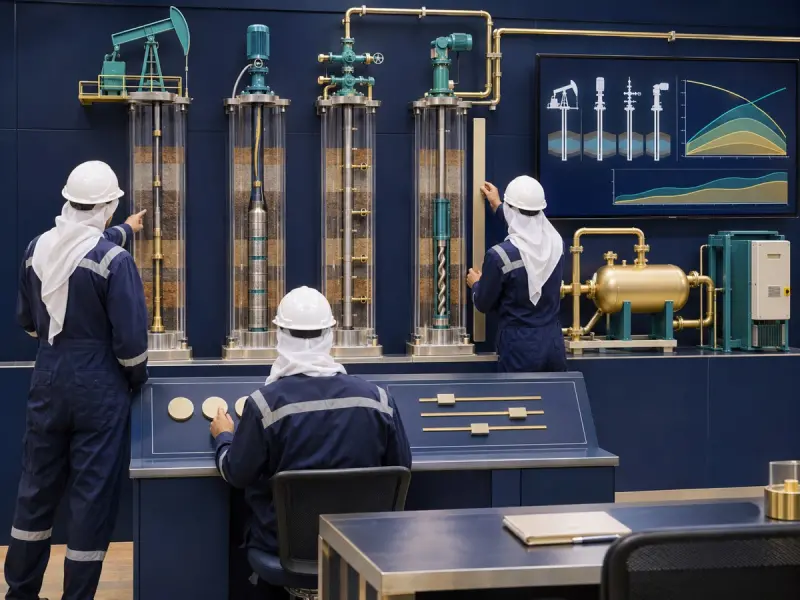
Advanced Nodal Analysis and Well Performance Course

At a glance
- Duration
- 2 Weeks
- Format
- Classroom
- Cities
- Toronto, Dubai, San Diego, Singapore, Paris, Vienna and more
- Next session
- 8 – 19 November 2026, Toronto
- Average fee
- 13,950 €
Overview
Advanced Nodal Analysis and Well Performance Training Course is a two-week course for production engineers, petroleum engineers, well performance specialists, artificial lift engineers, and asset teams who leave with an Integrated Well Performance Diagnosis and Optimization Pack. Participants connect inflow performance, vertical lift performance, fluid behavior, wellbore pressure losses, and surface constraints in a calibrated production-system model. The course converts surveillance data into defensible intervention and operating decisions. Agile Leaders Training Center presents this course on advanced nodal analysis and well performance.
Who Should Attend
- Teams responsible for production-system modeling and well deliverability
- Functions responsible for production surveillance and performance diagnostics
- Personnel responsible for artificial lift design and operating changes
- Groups responsible for well interventions and production enhancement
- Asset teams responsible for integrated reservoir-to-surface decisions
The course assumes participants can interpret well, pressure, rate, completion, and fluid data at work; it leaves out introductory petroleum engineering and basic fluid mechanics.
Departments and Industries
The course supports departments and industries that manage fluid production through wells and connected surface systems.
- Oil and gas production engineering departments
- Reservoir and well performance teams
- Artificial lift and well intervention groups
- Geothermal production and operations teams
- Subsurface consulting and energy service companies
- Asset optimization and operations functions
Learning Objectives
By the end of this course, participants will be able to:
- Build an integrated nodal analysis model
- Analyze IPR and VLP curve intersections
- Diagnose reservoir, wellbore, and surface constraints
- Evaluate fluid, completion, choke, and lift sensitivities
- Prioritize production optimization and intervention options
- Use surveillance evidence to calibrate recommendations
Course Agenda
Day 1: Frame the Production System
- Reservoir-to-Separator Pressure Balance Map
- Nodal Analysis Node Selection Method
- Production-System Boundary Condition Register
- Energy-Loss Component Classification
- Well Deliverability Problem Definition Sheet
Day 2: Prepare Fluid and Field Data
- PVT Input Quality Review Checklist
- Black-Oil Fluid Property Model
- Well Geometry and Completion Data Sheet
- Pressure, Rate, and Temperature Validation Method
- Production Test Reconciliation Table
Day 3: Model Reservoir Inflow
- Productivity Index Deliverability Model
- Vogel Inflow Performance Relationship
- Gas-Well Backpressure Deliverability Method
- Composite IPR Construction for Multiphase Wells
- Reservoir Pressure and Skin Sensitivity Matrix
Day 4: Calculate Vertical Lift Performance
- Multiphase Pressure-Gradient Calculation
- Hydrostatic, Friction, and Acceleration Loss Profile
- Flow-Regime and Holdup Correlation Review
- Vertical Lift Performance Curve Construction
- Wellhead Pressure Boundary Sensitivity
Day 5: Diagnose the Operating Point
- IPR-VLP Operating Point Intersection
- Stable and Unstable Flow Diagnostic
- Tubing Diameter Sensitivity Plot
- Choke Performance and Backpressure Model
- Reservoir-Well-Surface Bottleneck Map
Day 6: Build and Calibrate the Model
- Steady-State Well Model Architecture
- Measured Pressure Traverse Match
- Flow Correlation Selection Protocol
- Model Calibration Error Register
- Uncertainty and Assumption Control Log
Day 7: Evaluate Natural-Flow Options
- Completion Restriction Sensitivity Analysis
- Water Cut and Gas-Liquid Ratio Scenario Grid
- Separator Pressure Debottlenecking Case
- Tubing and Choke Change Comparison
- Natural-Flow Intervention Ranking Matrix
Day 8: Integrate Artificial Lift
- Gas-Lift Injection Sensitivity Curve
- Electric Submersible Pump Operating Envelope
- Lift-System Interaction with IPR and VLP
- Artificial Lift Constraint Register
- Lift Option Screening Decision Matrix
Day 9: Link Surveillance to Decisions
- Well Performance Surveillance Dashboard
- Model-to-Test Variance Diagnostic
- Production Opportunity Register
- Intervention Value and Feasibility Matrix
- Operating Recommendation Evidence Pack
Day 10: Practice Integrated Well Optimization
- Suggested Exercise: Validate a Well Data Set
- Suggested Exercise: Match an IPR-VLP Model
- Suggested Exercise: Diagnose a Production Constraint
- Suggested Exercise: Rank Lift and Debottlenecking Options
- Capstone Exercise: Present an Integrated Well Performance Diagnosis and Optimization Pack
Practical Exercises
The course uses suggested activities to turn production data and model results into traceable field decisions.
- Suggested activity: assemble PVT, completion, pressure, rate, and temperature inputs and document data-quality limitations.
- Suggested activity: construct and calibrate inflow and outflow curves against a production test.
- Suggested activity: compare tubing, choke, separator-pressure, water-cut, and artificial-lift sensitivities.
- Suggested activity: prioritize operating changes and interventions using technical evidence, uncertainty, and feasibility.
FAQs
Who suits advanced nodal analysis and well performance training, and what does it assume?
Production and petroleum engineers, well performance specialists, artificial lift engineers, and integrated asset teams suit the training. It assumes working ability with well, pressure, rate, completion, and fluid data.
How does advanced nodal analysis differ from introductory well performance training?
Advanced nodal analysis emphasizes calibrated reservoir-to-surface models, sensitivity analysis, artificial lift interactions, uncertainty, bottleneck diagnosis, and decision evidence. Introductory training generally emphasizes basic pressure-flow concepts and simple curve construction.
How do IPR and VLP determine a well operating point?
The IPR and VLP curves intersect where reservoir inflow equals the production system outflow capacity. Changes in reservoir pressure, fluids, tubing, choke, lift, or backpressure move the curves and alter the predicted rate.
How is a nodal analysis model calibrated with field data?
A nodal analysis model is calibrated by reconciling geometry, PVT, production tests, pressures, temperatures, and flow correlations, then documenting residual error and uncertainty before sensitivity cases are accepted.
How does nodal analysis support production optimization?
Nodal analysis separates reservoir, wellbore, completion, lift, and surface effects so teams can locate constraints, compare feasible changes, and rank interventions using a consistent pressure-flow model.
Conclusion
Participants take an Integrated Well Performance Diagnosis and Optimization Pack back to their organization. It links validated data, calibrated IPR and VLP models, sensitivity cases, constraints, uncertainties, and ranked actions. Teams can use the pack to challenge production assumptions, select interventions, and document reservoir-to-surface operating decisions.
credits: 5 credit per day
Course Mode: full-time
Provider: Agile Leaders Training Center
-
Events for this Course
-
Toronto 8 – 19 November 2026
-
Dubai 9 – 20 November 2026
-
San Diego 23 November – 4 December 2026
-
Singapore 30 November – 11 December 2026
-
Paris 7 – 18 December 2026
-
Vienna 14 – 25 December 2026
-
Montreux 14 – 25 December 2026
-
Muscat 20 – 31 December 2026
-
Geneva 27 December 2026 – 7 January 2027
-
Abu Dhabi 4 – 15 January 2027
-
Doha 10 – 21 January 2027
-
Nice 11 – 22 January 2027
-
New York 25 January – 5 February 2027
-
Bangkok 31 January – 11 February 2027
-
London 1 – 12 February 2027
-
Madrid 8 – 19 February 2027
-
Trabzon 14 – 25 February 2027
-
Barcelona 15 – 26 February 2027
-
Prague 1 – 12 March 2027
-
Frankfurt 1 – 12 March 2027
-
Addis Ababa 8 – 19 March 2027
-
Rome 22 March – 2 April 2027
-
Berlin 29 March – 9 April 2027
-
Manama 4 – 15 April 2027
-
Lagos 4 – 15 April 2027
-
Abu Dhabi 12 – 23 April 2027
-
Sharm El-Sheikh 19 – 30 April 2027
-
Nairobi 25 April – 6 May 2027
-
Dubai 3 – 14 May 2027
-
Seoul 3 – 14 May 2027
-
Langkawi 9 – 20 May 2027
-
Istanbul 10 – 21 May 2027
-
Kuala Lumpur 17 – 28 May 2027
-
Kuwait 23 May – 3 June 2027
-
Porto 31 May – 11 June 2027
-
Bali 6 – 17 June 2027
-
Tbilisi 14 – 25 June 2027
-
Zanzibar 20 June – 1 July 2027
-
Marbella 27 June – 8 July 2027
-
Tokyo 28 June – 9 July 2027
-
London 5 – 16 July 2027
-
Zoom 12 – 23 July 2027
-
Milan 19 – 30 July 2027
-
Athens 19 – 30 July 2027
-
Baku 26 July – 6 August 2027
-
Amsterdam 2 – 13 August 2027
-
Amman 8 – 19 August 2027
-
Phuket 8 – 19 August 2027
-
Lisbon 16 – 27 August 2027
-
Chicago 22 August – 2 September 2027
-
Cape town 29 August – 9 September 2027
-
Johannesburg 5 – 16 September 2027
-
Munich 20 September – 1 October 2027
-
Accra 3 – 14 October 2027
-
Casablanca 11 – 22 October 2027
-
Tashkent 24 October – 4 November 2027
-
Cairo 25 October – 5 November 2027
-
Jakarta 8 – 19 November 2027
| Image | Location | Dates | Duration | Mode | Price | Actions |
|---|---|---|---|---|---|---|

|
Addis Ababa |
Week 10, 2027 8 – 19 March 2027 |
2 Weeks | Onsite | €10,000 | |

|
Rome |
Week 12, 2027 22 March – 2 April 2027 |
2 Weeks | Onsite | €14,000 | |

|
Berlin |
Week 13, 2027 29 March – 9 April 2027 |
2 Weeks | Onsite | €14,000 | |

|
Manama |
Week 13, 2027 4 – 15 April 2027 |
2 Weeks | Onsite | €14,000 | |

|
Lagos |
Week 13, 2027 4 – 15 April 2027 |
2 Weeks | Onsite | €10,000 | |

|
Abu Dhabi |
Week 15, 2027 12 – 23 April 2027 |
2 Weeks | Onsite | €14,000 | |

|
Sharm El-Sheikh |
Week 16, 2027 19 – 30 April 2027 |
2 Weeks | Onsite | €10,000 | |

|
Nairobi |
Week 16, 2027 25 April – 6 May 2027 |
2 Weeks | Onsite | €10,000 | |

|
Dubai |
Week 18, 2027 3 – 14 May 2027 |
2 Weeks | Onsite | €13,000 | |

|
Seoul |
Week 18, 2027 3 – 14 May 2027 |
2 Weeks | Onsite | €18,000 | |

|
Langkawi |
Week 18, 2027 9 – 20 May 2027 |
2 Weeks | Onsite | €15,000 | |

|
Istanbul |
Week 19, 2027 10 – 21 May 2027 |
2 Weeks | Onsite | €14,000 | |

|
Kuala Lumpur |
Week 20, 2027 17 – 28 May 2027 |
2 Weeks | Onsite | €14,000 | |

|
Kuwait |
Week 20, 2027 23 May – 3 June 2027 |
2 Weeks | Onsite | €14,000 | |

|
Porto |
Week 22, 2027 31 May – 11 June 2027 |
2 Weeks | Onsite | €14,000 | |

|
Bali |
Week 22, 2027 6 – 17 June 2027 |
2 Weeks | Onsite | €14,000 | |

|
Tbilisi |
Week 24, 2027 14 – 25 June 2027 |
2 Weeks | Onsite | €15,000 | |

|
Zanzibar |
Week 24, 2027 20 June – 1 July 2027 |
2 Weeks | Onsite | €10,000 | |

|
Marbella |
Week 25, 2027 27 June – 8 July 2027 |
2 Weeks | Onsite | €14,000 | |

|
Tokyo |
Week 26, 2027 28 June – 9 July 2027 |
2 Weeks | Onsite | €18,000 |
Frequently asked questions
What does this course cover?
OverviewAdvanced Nodal Analysis and Well Performance Training Course is a two-week course for production engineers, petroleum engineers, well performance specialists, artificial lift engineers, and asset teams who leave with an Integrated Well Performance Diagnosis and Optimization Pack. Participants connect inflow performance, vertical lift performance,…
Are training dates available?
Yes. Available dates and destinations are listed in the course dates section on this page.
How can I register?
Choose an available date on this page and complete the registration form, or send a programme enquiry.
Can I download the course brochure?
Yes. Use the brochure download link provided on this page.
This course by city
- Oil & Gas Training and Other Technical Courses in Abu Dhabi
- Oil & Gas Training and Other Technical Courses in Accra
- Oil & Gas Training and Other Technical Courses in Addis Ababa
- Oil & Gas Training and Other Technical Courses in Amman
- Oil & Gas Training and Other Technical Courses in Amsterdam
- Oil & Gas Training and Other Technical Courses in Athens
- Oil & Gas Training and Other Technical Courses in Baku
- Oil & Gas Training and Other Technical Courses in Bali
- Oil & Gas Training and Other Technical Courses in Bangkok
- Oil & Gas Training and Other Technical Courses in Barcelona
- Oil & Gas Training and Other Technical Courses in Berlin
- Oil & Gas Training and Other Technical Courses in Cairo
- Oil & Gas Training and Other Technical Courses in Cape town
- Oil & Gas Training and Other Technical Courses in Casablanca
- Oil & Gas Training and Other Technical Courses in Chicago
- Oil & Gas Training and Other Technical Courses in Doha
- Oil & Gas Training and Other Technical Courses in Dubai
- Oil & Gas Training and Other Technical Courses in Frankfurt
- Oil & Gas Training and Other Technical Courses in Geneva
- Oil & Gas Training and Other Technical Courses in Istanbul
- Oil & Gas Training and Other Technical Courses in Jakarta
- Oil & Gas Training and Other Technical Courses in Johannesburg
- Oil & Gas Training and Other Technical Courses in Kuala Lumpur
- Oil & Gas Training and Other Technical Courses in Kuwait
- Oil & Gas Training and Other Technical Courses in Lagos
- Oil & Gas Training and Other Technical Courses in Langkawi
- Oil & Gas Training and Other Technical Courses in Lisbon
- Oil & Gas Training and Other Technical Courses in London
- Oil & Gas Training and Other Technical Courses in Madrid
- Oil & Gas Training and Other Technical Courses in Manama
- Oil & Gas Training and Other Technical Courses in Marbella
- Oil & Gas Training and Other Technical Courses in Milan
- Oil & Gas Training and Other Technical Courses in Montreux
- Oil & Gas Training and Other Technical Courses in Munich
- Oil & Gas Training and Other Technical Courses in Muscat
- Oil & Gas Training and Other Technical Courses in Nairobi
- Oil & Gas Training and Other Technical Courses in New York
- Oil & Gas Training and Other Technical Courses in Nice
- Oil & Gas Training and Other Technical Courses in Paris
- Oil & Gas Training and Other Technical Courses in Phuket
- Oil & Gas Training and Other Technical Courses in Porto
- Oil & Gas Training and Other Technical Courses in Prague
- Oil & Gas Training and Other Technical Courses in Rome
- Oil & Gas Training and Other Technical Courses in San Diego
- Oil & Gas Training and Other Technical Courses in Seoul
- Oil & Gas Training and Other Technical Courses in Sharm El-Sheikh
- Oil & Gas Training and Other Technical Courses in Singapore
- Oil & Gas Training and Other Technical Courses in Tashkent
- Oil & Gas Training and Other Technical Courses in Tbilisi
- Oil & Gas Training and Other Technical Courses in Tokyo
- Oil & Gas Training and Other Technical Courses in Toronto
- Oil & Gas Training and Other Technical Courses in Trabzon
- Oil & Gas Training and Other Technical Courses in Vienna
- Oil & Gas Training and Other Technical Courses in Zanzibar
- Oil & Gas Training and Other Technical Courses in Zoom