API 571 Damage Mechanisms Investigation Course

At a glance
- Duration
- 1 Week
- Format
- Classroom
- Cities
- Cairo, Seoul, Singapore, Jakarta, Abu Dhabi, Frankfurt and more
- Next session
- 9 – 13 November 2026, Cairo
- Average fee
- 7,500 €
Overview
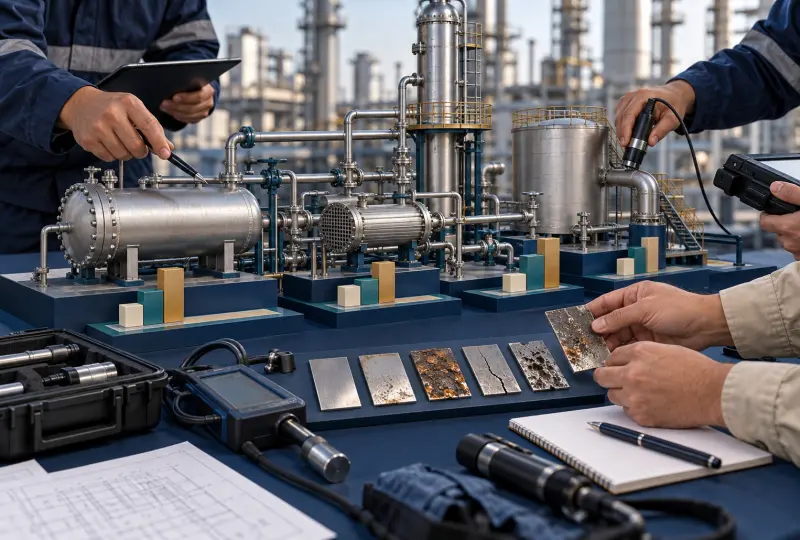
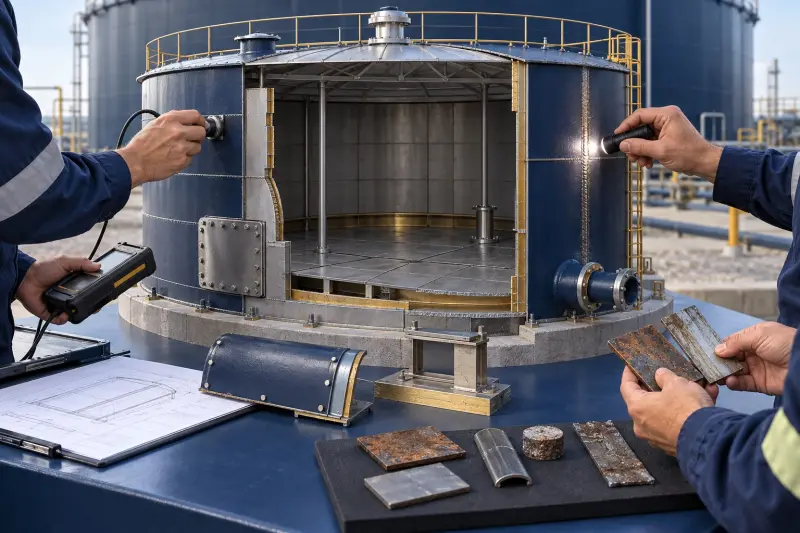
Advanced API 571 Damage Mechanisms Investigation Training Course is a one-week advanced course for corrosion, inspection, materials, reliability, maintenance, and process functions who leave with a Damage Mechanism and Materials Investigation File. Participants connect service conditions, susceptible materials, damage morphology, inspection evidence, and mitigation. The course applies API RP 571 mechanism descriptions to fixed-equipment investigations while separating damage assessment from general materials selection and risk-based inspection planning. Agile Leaders Training Center presents evidence-based damage-mechanism investigation.
Who Should Attend
- Corrosion functions responsible for mechanism identification and monitoring
- Inspection functions responsible for examination evidence and condition assessment
- Materials functions responsible for metallurgy and susceptibility evaluation
- Reliability functions responsible for recurrence and mitigation actions
- Process functions responsible for operating history and exposure conditions
- Technical authorities responsible for integrity decisions and escalation
The course assumes participants interpret process conditions, equipment records, materials data, and inspection findings, and it leaves out certification-exam preparation, detailed laboratory procedures, and quantitative fitness-for-service calculations.
Departments and Industries
The course supports departments and industries that investigate degradation in fixed process equipment.
- Refining and petrochemical operations
- Gas processing and chemical manufacturing
- Power and industrial utility facilities
- Inspection, corrosion, and materials engineering
- Maintenance, reliability, and technical assurance
Learning Objectives
By the end of this course, participants will be able to:
- Analyze service conditions and susceptible materials
- Classify damage morphology and credible mechanisms
- Evaluate inspection and laboratory evidence
- Compare competing damage hypotheses
- Prioritize monitoring and mitigation actions
- Build a traceable investigation file
Course Agenda
Day 1: Frame the Investigation
- API RP 571 Damage-Mechanism Classification Map
- Equipment Boundary and Service-History Sheet
- Process Condition and Excursion Timeline
- Materials-of-Construction Verification Register
- Damage Evidence Quality and Gap Matrix
Day 2: Assess Corrosion and Thinning
- Aqueous Corrosion Environment Screening Matrix
- Sulfidation and High-Temperature Corrosion Susceptibility Map
- Localized Corrosion and Under-Deposit Evidence Checklist
- Erosion, Cavitation, and Mechanical Wear Diagnostic Tree
- Corrosion Circuit and Monitoring Location Plan
Day 3: Investigate Cracking and Hydrogen Damage
- Stress-Corrosion Cracking Condition Comparator
- Wet H2S Damage Morphology Decision Guide
- High-Temperature Hydrogen Attack Evidence Map
- Hydrogen Embrittlement and Blistering Review Sheet
- Crack Detection Method and Coverage Matrix
Day 4: Evaluate Metallurgical Degradation
- Creep and Stress-Rupture Assessment Evidence Table
- Temper Embrittlement and Brittle-Fracture Screening Method
- Thermal Fatigue and Mechanical Fatigue Causal Map
- Carburization, Decarburization, and Oxidation Comparator
- Mechanism Monitoring, Mitigation, and Escalation Register
Day 5: Practice Damage Investigation
- Suggested Exercise: Reconstruct Service and Excursion History
- Suggested Exercise: Classify Morphology and Susceptible Materials
- Suggested Exercise: Test Competing Damage Mechanisms
- Suggested Exercise: Select Inspection and Mitigation Actions
- Capstone Exercise: Complete the Damage Mechanism and Materials Investigation File
Practical Exercises
The course uses suggested activities to convert field evidence into traceable integrity decisions.
- Suggested activity: assemble process, materials, inspection, and failure-history evidence.
- Suggested activity: compare morphology and operating conditions against credible mechanisms.
- Suggested activity: select examination methods and define evidence limitations.
- Suggested activity: document mitigation, monitoring, ownership, and escalation actions.
FAQs
Who suits API 571 damage mechanisms investigation training, and what does it assume?
API 571 damage mechanisms investigation training suits corrosion, inspection, materials, reliability, maintenance, process, and assurance functions. It assumes practical use of process conditions, materials data, equipment histories, and inspection evidence.
How does API 571 damage investigation differ from materials selection training?
API 571 damage investigation identifies degradation from service and evidence, while materials selection training compares candidate materials before or during design and replacement decisions.
What evidence supports an API 571 damage-mechanism decision?
The decision uses service history, process excursions, materials verification, morphology, thickness and crack data, examination coverage, laboratory findings, comparable failures, and uncertainty.
How does API 571 support risk-based inspection?
API 571 supports risk-based inspection by identifying credible damage mechanisms, susceptible materials, critical factors, morphology, examination options, and mitigation controls used as inputs to inspection planning.
How are competing fixed-equipment damage mechanisms tested?
Competing mechanisms are tested by comparing required conditions, material susceptibility, location, morphology, progression, inspection response, and contradictory evidence.
Conclusion
Participants take back a Damage Mechanism and Materials Investigation File linking service history, materials, morphology, inspection evidence, competing mechanisms, uncertainty, and actions. It changes disconnected observations into a defensible investigation path. The file supports monitoring, mitigation, inspection, escalation, and integrity decisions.
credits: 5 credit per day
Course Mode: full-time
Provider: Agile Leaders Training Center
-
Events for this Course
-
Cairo 9 – 13 November 2026
-
Seoul 9 – 13 November 2026
-
Singapore 16 – 20 November 2026
-
Jakarta 23 – 27 November 2026
-
Abu Dhabi 30 November – 4 December 2026
-
Frankfurt 7 – 11 December 2026
-
Nice 14 – 18 December 2026
-
Milan 21 – 25 December 2026
-
Tbilisi 28 December 2026 – 1 January 2027
-
Bangkok 3 – 7 January 2027
-
Bali 10 – 14 January 2027
-
Chicago 17 – 21 January 2027
-
Paris 25 – 29 January 2027
-
Manama 31 January – 4 February 2027
-
Kuwait 7 – 11 February 2027
-
San Diego 15 – 19 February 2027
-
Tokyo 22 – 26 February 2027
-
Geneva 28 February – 4 March 2027
-
Baku 8 – 12 March 2027
-
Rome 15 – 19 March 2027
-
Muscat 21 – 25 March 2027
-
Marbella 28 March – 1 April 2027
-
London 29 March – 2 April 2027
-
Barcelona 5 – 9 April 2027
-
Langkawi 11 – 15 April 2027
-
Porto 19 – 23 April 2027
-
Athens 26 – 30 April 2027
-
New York 3 – 7 May 2027
-
Toronto 9 – 13 May 2027
-
Nairobi 16 – 20 May 2027
-
Madrid 24 – 28 May 2027
-
Cape town 30 May – 3 June 2027
-
Amsterdam 7 – 11 June 2027
-
Berlin 14 – 18 June 2027
-
Dubai 21 – 25 June 2027
-
Munich 21 – 25 June 2027
-
Kuala Lumpur 5 – 9 July 2027
-
Zanzibar 11 – 15 July 2027
-
Sharm El-Sheikh 12 – 16 July 2027
-
Accra 18 – 22 July 2027
-
Vienna 26 – 30 July 2027
-
Prague 2 – 6 August 2027
-
Doha 8 – 12 August 2027
-
Addis Ababa 16 – 20 August 2027
-
Tashkent 29 August – 2 September 2027
-
London 30 August – 3 September 2027
-
Montreux 6 – 10 September 2027
-
Johannesburg 12 – 16 September 2027
-
Amman 19 – 23 September 2027
-
Lagos 26 – 30 September 2027
-
Dubai 27 September – 1 October 2027
-
Lisbon 4 – 8 October 2027
-
Abu Dhabi 11 – 15 October 2027
-
Zoom 18 – 22 October 2027
-
Istanbul 25 – 29 October 2027
-
Phuket 31 October – 4 November 2027
-
Trabzon 7 – 11 November 2027
-
Casablanca 8 – 12 November 2027
| Image | Location | Dates | Duration | Mode | Price | Actions |
|---|---|---|---|---|---|---|

|
Muscat |
Week 11, 2027 21 – 25 March 2027 |
1 Week | Onsite | €6,500 | |

|
Marbella |
Week 12, 2027 28 March – 1 April 2027 |
1 Week | Onsite | €6,500 | |

|
London |
Week 13, 2027 29 March – 2 April 2027 |
1 Week | Onsite | €6,500 | |

|
Barcelona |
Week 14, 2027 5 – 9 April 2027 |
1 Week | Onsite | €6,500 | |

|
Langkawi |
Week 14, 2027 11 – 15 April 2027 |
1 Week | Onsite | €8,000 | |

|
Porto |
Week 16, 2027 19 – 23 April 2027 |
1 Week | Onsite | €6,500 | |

|
Athens |
Week 17, 2027 26 – 30 April 2027 |
1 Week | Onsite | €7,500 | |

|
New York |
Week 18, 2027 3 – 7 May 2027 |
1 Week | Onsite | €16,000 | |

|
Toronto |
Week 18, 2027 9 – 13 May 2027 |
1 Week | Onsite | €16,000 | |

|
Nairobi |
Week 19, 2027 16 – 20 May 2027 |
1 Week | Onsite | €6,000 | |

|
Madrid |
Week 21, 2027 24 – 28 May 2027 |
1 Week | Onsite | €6,500 | |

|
Cape town |
Week 21, 2027 30 May – 3 June 2027 |
1 Week | Onsite | €6,000 | |

|
Amsterdam |
Week 23, 2027 7 – 11 June 2027 |
1 Week | Onsite | €6,500 | |

|
Berlin |
Week 24, 2027 14 – 18 June 2027 |
1 Week | Onsite | €6,500 | |

|
Dubai |
Week 25, 2027 21 – 25 June 2027 |
1 Week | Onsite | €6,500 | |

|
Munich |
Week 25, 2027 21 – 25 June 2027 |
1 Week | Onsite | €6,500 | |

|
Kuala Lumpur |
Week 27, 2027 5 – 9 July 2027 |
1 Week | Onsite | €6,500 | |

|
Zanzibar |
Week 27, 2027 11 – 15 July 2027 |
1 Week | Onsite | €6,000 | |

|
Sharm El-Sheikh |
Week 28, 2027 12 – 16 July 2027 |
1 Week | Onsite | €5,200 | |

|
Accra |
Week 28, 2027 18 – 22 July 2027 |
1 Week | Onsite | €6,000 |
Frequently asked questions
What does this course cover?
OverviewAdvanced API 571 Damage Mechanisms Investigation Training Course is a one-week advanced course for corrosion, inspection, materials, reliability, maintenance, and process functions who leave with a Damage Mechanism and Materials Investigation File. Participants connect service conditions, susceptible materials, damage morphology, inspection eviden…
Are training dates available?
Yes. Available dates and destinations are listed in the course dates section on this page.
How can I register?
Choose an available date on this page and complete the registration form, or send a programme enquiry.
Can I download the course brochure?
Yes. Use the brochure download link provided on this page.
This course by city
- Oil & Gas Training and Other Technical Courses in Abu Dhabi
- Oil & Gas Training and Other Technical Courses in Accra
- Oil & Gas Training and Other Technical Courses in Addis Ababa
- Oil & Gas Training and Other Technical Courses in Amman
- Oil & Gas Training and Other Technical Courses in Amsterdam
- Oil & Gas Training and Other Technical Courses in Athens
- Oil & Gas Training and Other Technical Courses in Baku
- Oil & Gas Training and Other Technical Courses in Bali
- Oil & Gas Training and Other Technical Courses in Bangkok
- Oil & Gas Training and Other Technical Courses in Barcelona
- Oil & Gas Training and Other Technical Courses in Berlin
- Oil & Gas Training and Other Technical Courses in Cairo
- Oil & Gas Training and Other Technical Courses in Cape town
- Oil & Gas Training and Other Technical Courses in Casablanca
- Oil & Gas Training and Other Technical Courses in Chicago
- Oil & Gas Training and Other Technical Courses in Doha
- Oil & Gas Training and Other Technical Courses in Dubai
- Oil & Gas Training and Other Technical Courses in Frankfurt
- Oil & Gas Training and Other Technical Courses in Geneva
- Oil & Gas Training and Other Technical Courses in Istanbul
- Oil & Gas Training and Other Technical Courses in Jakarta
- Oil & Gas Training and Other Technical Courses in Johannesburg
- Oil & Gas Training and Other Technical Courses in Kuala Lumpur
- Oil & Gas Training and Other Technical Courses in Kuwait
- Oil & Gas Training and Other Technical Courses in Lagos
- Oil & Gas Training and Other Technical Courses in Langkawi
- Oil & Gas Training and Other Technical Courses in Lisbon
- Oil & Gas Training and Other Technical Courses in London
- Oil & Gas Training and Other Technical Courses in Madrid
- Oil & Gas Training and Other Technical Courses in Manama
- Oil & Gas Training and Other Technical Courses in Marbella
- Oil & Gas Training and Other Technical Courses in Milan
- Oil & Gas Training and Other Technical Courses in Montreux
- Oil & Gas Training and Other Technical Courses in Munich
- Oil & Gas Training and Other Technical Courses in Muscat
- Oil & Gas Training and Other Technical Courses in Nairobi
- Oil & Gas Training and Other Technical Courses in New York
- Oil & Gas Training and Other Technical Courses in Nice
- Oil & Gas Training and Other Technical Courses in Paris
- Oil & Gas Training and Other Technical Courses in Phuket
- Oil & Gas Training and Other Technical Courses in Porto
- Oil & Gas Training and Other Technical Courses in Prague
- Oil & Gas Training and Other Technical Courses in Rome
- Oil & Gas Training and Other Technical Courses in San Diego
- Oil & Gas Training and Other Technical Courses in Seoul
- Oil & Gas Training and Other Technical Courses in Sharm El-Sheikh
- Oil & Gas Training and Other Technical Courses in Singapore
- Oil & Gas Training and Other Technical Courses in Tashkent
- Oil & Gas Training and Other Technical Courses in Tbilisi
- Oil & Gas Training and Other Technical Courses in Tokyo
- Oil & Gas Training and Other Technical Courses in Toronto
- Oil & Gas Training and Other Technical Courses in Trabzon
- Oil & Gas Training and Other Technical Courses in Vienna
- Oil & Gas Training and Other Technical Courses in Zanzibar
- Oil & Gas Training and Other Technical Courses in Zoom