Applied Biostratigraphy and Sequence Stratigraphy Course

At a glance
- Duration
- 1 Week
- Format
- Classroom
- Cities
- Abu Dhabi, Addis Ababa, Athens, Kuwait, Trabzon, Berlin and more
- Next session
- 16 – 20 November 2026, Abu Dhabi
- Average fee
- 7,500 €
Overview
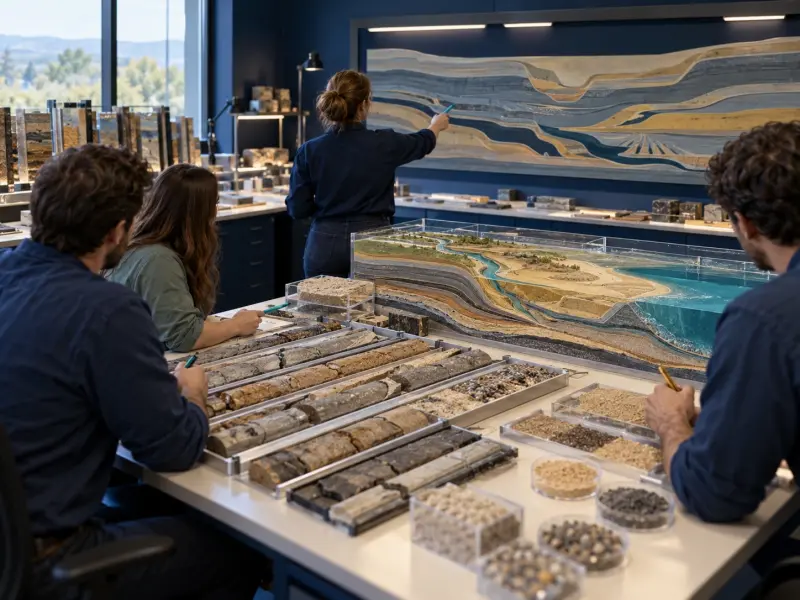
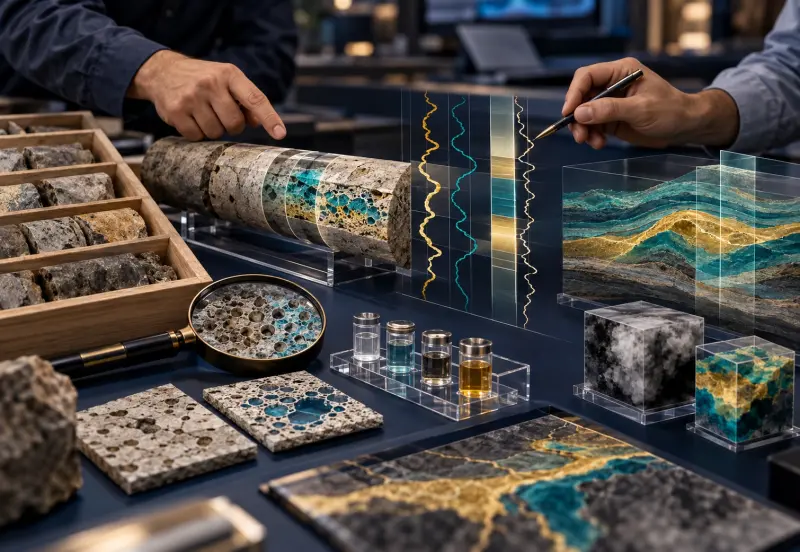
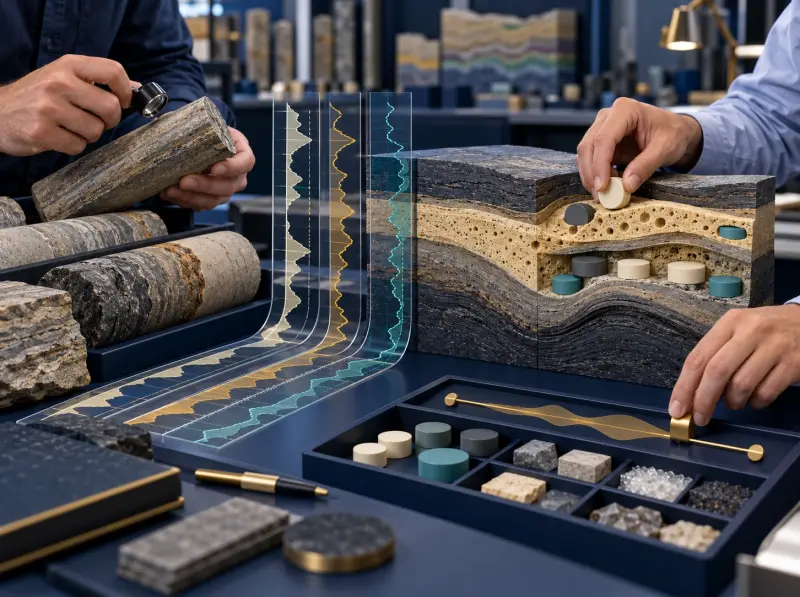
Applied Biostratigraphy and Sequence Stratigraphy Training Course is a one-week advanced course for exploration, development, biostratigraphy, sedimentology, wellsite, and subsurface-integration functions who leave with a Stratigraphic Correlation and Exploration Decision File. Participants connect microfossil and bioevent evidence with chronostratigraphy, paleoenvironment, sequence surfaces, systems tracts, well logs, core, and seismic markers. The course applies data-quality checks, correlation methods, alternative frameworks, and uncertainty records to exploration and development decisions. Agile Leaders Training Center presents integrated applied stratigraphy.
Who Should Attend
- Exploration functions responsible for play, prospect, and correlation evidence
- Development functions responsible for reservoir continuity and field frameworks
- Biostratigraphy functions responsible for fossil events, ages, and environments
- Sedimentology functions responsible for facies and depositional interpretation
- Wellsite functions responsible for sampling and operational stratigraphic decisions
- Technical-review functions responsible for integration and uncertainty
The course assumes participants interpret geological, well, core, log, or seismic evidence, and it leaves out fossil taxonomy specialization, laboratory preparation procedures, seismic processing, and reservoir simulation.
Departments and Industries
The course supports departments and industries that build stratigraphic frameworks for subsurface decisions.
- Oil and gas exploration, appraisal, and development
- Geothermal and subsurface-storage projects
- Geological and geophysical consulting
- Biostratigraphy, sedimentology, and reservoir geology
- Subsurface integration and technical assurance
Learning Objectives
By the end of this course, participants will be able to:
- Evaluate sample and biostratigraphic data quality
- Analyze bioevents, biozones, ages, and paleoenvironments
- Build chronostratigraphic and sequence frameworks
- Integrate well, core, log, and seismic evidence
- Compare correlation alternatives and uncertainty
- Build an exploration and development decision file
Course Agenda
Day 1: Establish Biostratigraphic Evidence
- Sample Provenance and Data-Quality Checklist
- Microfossil Group and Preservation Screening Matrix
- First and Last Occurrence Bioevent Register
- Reworking, Caving, and Hiatus Diagnostic Guide
- Biostratigraphic Confidence and Uncertainty Scale
Day 2: Interpret Age and Environment
- Biozone Definition and Correlation Panel
- Chronostratigraphic Age-Control Chart
- Biofacies and Paleoenvironment Interpretation Matrix
- Paleobathymetry and Water-Depth Evidence Record
- Well-to-Well Bioevent Correlation Method
Day 3: Build the Sequence Framework
- Accommodation and Sediment-Supply Concept Model
- Sequence Boundary and Unconformity Evidence Map
- Maximum Flooding and Condensed-Section Indicator Set
- Systems Tract and Stacking-Pattern Framework
- Chronostratigraphic Wheeler-Style Correlation Chart
Day 4: Integrate Exploration and Development Evidence
- Well Log, Core, and Bioevent Integration Board
- Seismic Marker and Stratigraphic Surface Tie Sheet
- Reservoir, Source, and Seal Distribution Prediction Map
- Stratigraphic Trap and Play-Element Evaluation Matrix
- Correlation Alternative and Geological-Risk Register
Day 5: Practice Integrated Stratigraphy
- Suggested Exercise: Validate Samples and Rank Bioevents
- Suggested Exercise: Correlate Biozones and Paleoenvironments
- Suggested Exercise: Pick Sequence Surfaces and Systems Tracts
- Suggested Exercise: Challenge Reservoir and Play Predictions
- Capstone Exercise: Complete the Stratigraphic Correlation and Exploration Decision File
Practical Exercises
The course uses suggested activities to convert fossil, well, core, log, and seismic evidence into traceable stratigraphic decisions.
- Suggested activity: distinguish reliable bioevents from caving, reworking, preservation, and sampling effects.
- Suggested activity: construct an age and paleoenvironment correlation across several wells.
- Suggested activity: integrate sequence surfaces, systems tracts, facies, and seismic markers.
- Suggested activity: document correlation alternatives, uncertainty, predictions, and data priorities.
FAQs
Who suits applied biostratigraphy and sequence stratigraphy training, and what does it assume?
Applied biostratigraphy and sequence stratigraphy training suits exploration, development, biostratigraphy, sedimentology, wellsite, and integration functions. It assumes practical use of geological, well, core, log, or seismic evidence.
How does applied biostratigraphy differ from general development geology training?
Applied biostratigraphy concentrates on fossil events, biozones, age, paleoenvironment, and their integration with sequence surfaces. Development geology spans structure, facies, mapping, volumetrics, uncertainty, and field planning.
How do bioevents improve stratigraphic correlation?
Bioevents improve correlation by supplying independent age and environmental markers that can connect intervals where log or seismic patterns are ambiguous, structurally disrupted, or facies dependent.
How does biostratigraphy support sequence stratigraphy?
Biostratigraphy supports sequence stratigraphy through age control, paleoenvironment trends, biofacies changes, event abundance, condensed-section recognition, and correlation of sequence boundaries and flooding surfaces.
How should stratigraphic uncertainty be recorded?
Stratigraphic uncertainty should record sample quality, preservation, reworking, caving, event confidence, age range, facies dependence, alternative correlations, seismic or log ties, and the decisions each uncertainty affects.
Conclusion
Participants take back a Stratigraphic Correlation and Exploration Decision File linking samples, bioevents, ages, environments, sequence surfaces, systems tracts, integrated evidence, alternatives, and uncertainty. It changes disconnected interpretations into one traceable framework. The file supports exploration, appraisal, development, wellsite, and technical-review decisions.
credits: 5 credit per day
Course Mode: full-time
Provider: Agile Leaders Training Center
-
Events for this Course
-
Abu Dhabi 16 – 20 November 2026
-
Addis Ababa 16 – 20 November 2026
-
Zoom 23 – 27 November 2026
-
Athens 30 November – 4 December 2026
-
Kuwait 6 – 10 December 2026
-
Trabzon 13 – 17 December 2026
-
Berlin 14 – 18 December 2026
-
Kuala Lumpur 21 – 25 December 2026
-
Tokyo 28 December 2026 – 1 January 2027
-
Amman 3 – 7 January 2027
-
Muscat 10 – 14 January 2027
-
Cape town 17 – 21 January 2027
-
Madrid 25 – 29 January 2027
-
Barcelona 1 – 5 February 2027
-
Casablanca 8 – 12 February 2027
-
Langkawi 14 – 18 February 2027
-
Jakarta 22 – 26 February 2027
-
Milan 1 – 5 March 2027
-
Baku 8 – 12 March 2027
-
Accra 14 – 18 March 2027
-
Bali 21 – 25 March 2027
-
Abu Dhabi 22 – 26 March 2027
-
London 29 March – 2 April 2027
-
Montreux 5 – 9 April 2027
-
Porto 5 – 9 April 2027
-
San Diego 12 – 16 April 2027
-
Sharm El-Sheikh 19 – 23 April 2027
-
Rome 26 – 30 April 2027
-
Tashkent 2 – 6 May 2027
-
Nice 10 – 14 May 2027
-
Paris 24 – 28 May 2027
-
Chicago 30 May – 3 June 2027
-
Dubai 7 – 11 June 2027
-
Zanzibar 13 – 17 June 2027
-
Johannesburg 27 June – 1 July 2027
-
Amsterdam 5 – 9 July 2027
-
Tbilisi 12 – 16 July 2027
-
Seoul 19 – 23 July 2027
-
Prague 26 – 30 July 2027
-
London 2 – 6 August 2027
-
Doha 8 – 12 August 2027
-
Cairo 16 – 20 August 2027
-
Istanbul 23 – 27 August 2027
-
Phuket 29 August – 2 September 2027
-
Vienna 6 – 10 September 2027
-
Dubai 13 – 17 September 2027
-
Bangkok 19 – 23 September 2027
-
Toronto 19 – 23 September 2027
-
Manama 26 – 30 September 2027
-
Lagos 26 – 30 September 2027
-
New York 4 – 8 October 2027
-
Munich 11 – 15 October 2027
-
Singapore 18 – 22 October 2027
-
Frankfurt 18 – 22 October 2027
-
Nairobi 24 – 28 October 2027
-
Lisbon 25 – 29 October 2027
-
Geneva 31 October – 4 November 2027
-
Marbella 7 – 11 November 2027
| Image | Location | Dates | Duration | Mode | Price | Actions |
|---|---|---|---|---|---|---|

|
Doha |
Week 31, 2027 8 – 12 August 2027 |
1 Week | Onsite | €7,000 | |

|
Cairo |
Week 33, 2027 16 – 20 August 2027 |
1 Week | Onsite | €5,200 | |

|
Istanbul |
Week 34, 2027 23 – 27 August 2027 |
1 Week | Onsite | €6,000 | |

|
Phuket |
Week 34, 2027 29 August – 2 September 2027 |
1 Week | Onsite | €8,000 | |

|
Vienna |
Week 36, 2027 6 – 10 September 2027 |
1 Week | Onsite | €7,500 | |

|
Dubai |
Week 37, 2027 13 – 17 September 2027 |
1 Week | Onsite | €6,500 | |

|
Bangkok |
Week 37, 2027 19 – 23 September 2027 |
1 Week | Onsite | €8,000 | |

|
Toronto |
Week 37, 2027 19 – 23 September 2027 |
1 Week | Onsite | €16,000 | |

|
Manama |
Week 38, 2027 26 – 30 September 2027 |
1 Week | Onsite | €6,500 | |

|
Lagos |
Week 38, 2027 26 – 30 September 2027 |
1 Week | Onsite | €6,000 | |

|
New York |
Week 40, 2027 4 – 8 October 2027 |
1 Week | Onsite | €16,000 | |

|
Munich |
Week 41, 2027 11 – 15 October 2027 |
1 Week | Onsite | €6,500 | |

|
Singapore |
Week 42, 2027 18 – 22 October 2027 |
1 Week | Onsite | €6,500 | |

|
Frankfurt |
Week 42, 2027 18 – 22 October 2027 |
1 Week | Onsite | €6,500 | |

|
Nairobi |
Week 42, 2027 24 – 28 October 2027 |
1 Week | Onsite | €6,000 | |

|
Lisbon |
Week 43, 2027 25 – 29 October 2027 |
1 Week | Onsite | €6,500 | |

|
Geneva |
Week 43, 2027 31 October – 4 November 2027 |
1 Week | Onsite | €8,000 | |

|
Marbella |
Week 44, 2027 7 – 11 November 2027 |
1 Week | Onsite | €6,500 |
Frequently asked questions
What does this course cover?
OverviewApplied Biostratigraphy and Sequence Stratigraphy Training Course is a one-week advanced course for exploration, development, biostratigraphy, sedimentology, wellsite, and subsurface-integration functions who leave with a Stratigraphic Correlation and Exploration Decision File. Participants connect microfossil and bioevent evidence with chronostra…
Are training dates available?
Yes. Available dates and destinations are listed in the course dates section on this page.
How can I register?
Choose an available date on this page and complete the registration form, or send a programme enquiry.
Can I download the course brochure?
Yes. Use the brochure download link provided on this page.
This course by city
- Oil & Gas Training and Other Technical Courses in Abu Dhabi
- Oil & Gas Training and Other Technical Courses in Accra
- Oil & Gas Training and Other Technical Courses in Addis Ababa
- Oil & Gas Training and Other Technical Courses in Amman
- Oil & Gas Training and Other Technical Courses in Amsterdam
- Oil & Gas Training and Other Technical Courses in Athens
- Oil & Gas Training and Other Technical Courses in Baku
- Oil & Gas Training and Other Technical Courses in Bali
- Oil & Gas Training and Other Technical Courses in Bangkok
- Oil & Gas Training and Other Technical Courses in Barcelona
- Oil & Gas Training and Other Technical Courses in Berlin
- Oil & Gas Training and Other Technical Courses in Cairo
- Oil & Gas Training and Other Technical Courses in Cape town
- Oil & Gas Training and Other Technical Courses in Casablanca
- Oil & Gas Training and Other Technical Courses in Chicago
- Oil & Gas Training and Other Technical Courses in Doha
- Oil & Gas Training and Other Technical Courses in Dubai
- Oil & Gas Training and Other Technical Courses in Frankfurt
- Oil & Gas Training and Other Technical Courses in Geneva
- Oil & Gas Training and Other Technical Courses in Istanbul
- Oil & Gas Training and Other Technical Courses in Jakarta
- Oil & Gas Training and Other Technical Courses in Johannesburg
- Oil & Gas Training and Other Technical Courses in Kuala Lumpur
- Oil & Gas Training and Other Technical Courses in Kuwait
- Oil & Gas Training and Other Technical Courses in Lagos
- Oil & Gas Training and Other Technical Courses in Langkawi
- Oil & Gas Training and Other Technical Courses in Lisbon
- Oil & Gas Training and Other Technical Courses in London
- Oil & Gas Training and Other Technical Courses in Madrid
- Oil & Gas Training and Other Technical Courses in Manama
- Oil & Gas Training and Other Technical Courses in Marbella
- Oil & Gas Training and Other Technical Courses in Milan
- Oil & Gas Training and Other Technical Courses in Montreux
- Oil & Gas Training and Other Technical Courses in Munich
- Oil & Gas Training and Other Technical Courses in Muscat
- Oil & Gas Training and Other Technical Courses in Nairobi
- Oil & Gas Training and Other Technical Courses in New York
- Oil & Gas Training and Other Technical Courses in Nice
- Oil & Gas Training and Other Technical Courses in Paris
- Oil & Gas Training and Other Technical Courses in Phuket
- Oil & Gas Training and Other Technical Courses in Porto
- Oil & Gas Training and Other Technical Courses in Prague
- Oil & Gas Training and Other Technical Courses in Rome
- Oil & Gas Training and Other Technical Courses in San Diego
- Oil & Gas Training and Other Technical Courses in Seoul
- Oil & Gas Training and Other Technical Courses in Sharm El-Sheikh
- Oil & Gas Training and Other Technical Courses in Singapore
- Oil & Gas Training and Other Technical Courses in Tashkent
- Oil & Gas Training and Other Technical Courses in Tbilisi
- Oil & Gas Training and Other Technical Courses in Tokyo
- Oil & Gas Training and Other Technical Courses in Toronto
- Oil & Gas Training and Other Technical Courses in Trabzon
- Oil & Gas Training and Other Technical Courses in Vienna
- Oil & Gas Training and Other Technical Courses in Zanzibar
- Oil & Gas Training and Other Technical Courses in Zoom