Archaeological Construction Site Safety Course
This 1-week course has 76 dates from November 2026 to November 2027 in 54 cities and live online. The next date runs 22 – 26 November 2026 in Bali. Fees per participant run from €4,100 (Sharm El-Sheikh) to €14,000 (San Diego) in a classroom, and from €1,500 live online.
- Duration
- 1 Week5 days
- Next start
- Bali
- Scheduled dates
- 76
- Classroom cities
- 54Bali, Toronto, Sharm El-Sheikh, Baku and more
- Format
- Classroom and live online
- Fee per participant
- €1,500–€14,000Average €5,750
What does this course cover?
Overview
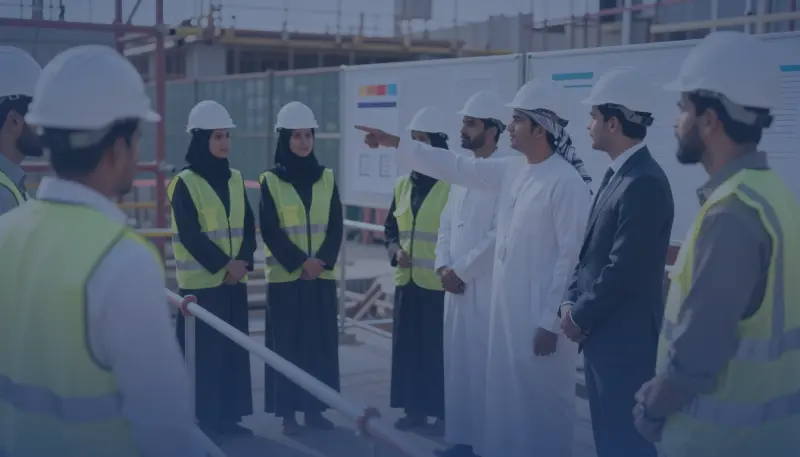
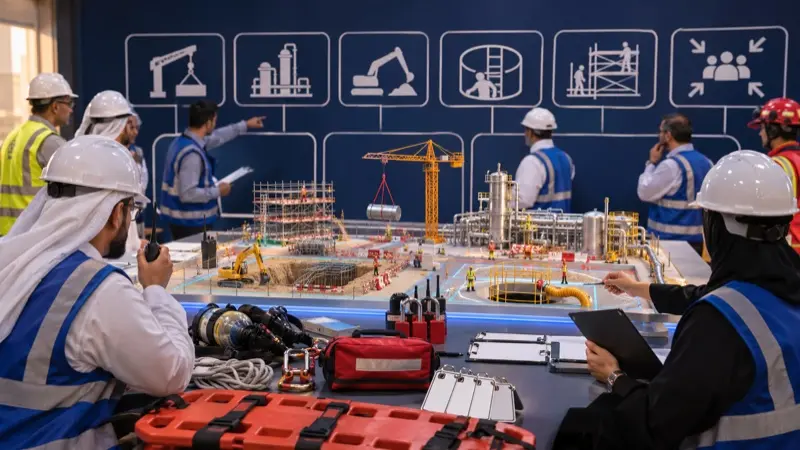
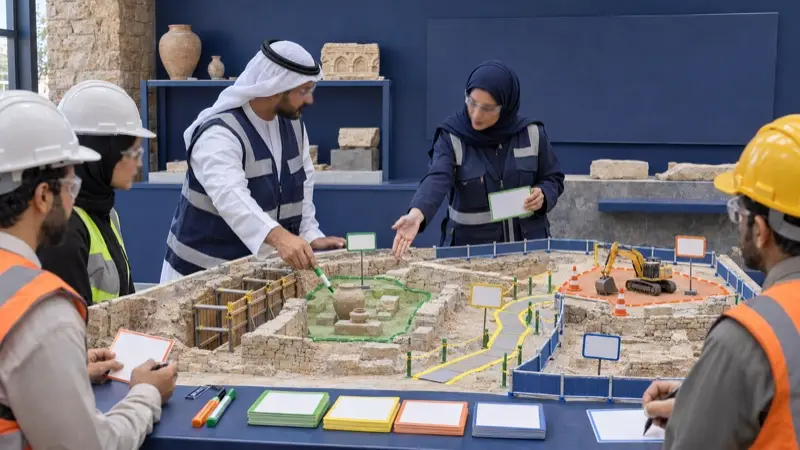
Advanced Archaeological Construction Site Safety Training Course is a one-week course for archaeologists, field teams, heritage contractors, and site supervisors who leave with an Archaeological Site Access and Safety Plan. Participants connect role classification, induction evidence, field hazards, work interfaces, emergency arrangements, and site-card route awareness. The approach turns project information into defensible access and safe-work decisions. Agile Leaders Training Center presents archaeological construction site safety as a coordinated field discipline.
Who Should Attend
- Teams responsible for archaeological investigation within active construction areas
- Functions responsible for heritage work planning and contractor coordination
- Supervisors responsible for induction, access, and field safety controls
- Practitioners responsible for risk assessments and method statements
- Assurance teams responsible for competence evidence and site records
The course assumes participants already perform or supervise archaeological fieldwork, and it leaves out introductory excavation methods and card application administration.
Departments and Industries
The course supports departments and industries where archaeological work interfaces with controlled construction environments.
- Archaeology and cultural heritage services
- Construction, infrastructure, and civil engineering projects
- Environmental and planning consultancies
- Utilities, transport, and land development teams
- Health, safety, and contractor assurance functions
Learning Objectives
By the end of this course, participants will be able to:
- Analyze archaeological roles against site access requirements
- Build an archaeological construction site induction evidence pack
- Apply field hazard and interface controls
- Evaluate risk assessments and method statements
- Diagnose emergency and communication gaps
- Compare recognized site-card routes without assuming eligibility
Course Agenda
Day 1: Roles, Access and Accountability
- Archaeological Role Classification Decision Tree
- Construction and Non-Construction Activity Boundary Map
- Principal Contractor Interface Responsibility Matrix
- Site Access Requirement Verification Checklist
- Competence and Evidence Gap Register
Day 2: Field Hazards and Risk Controls
- Archaeological Work Area Hazard Profile
- Plant-Pedestrian Interface Control Map
- Excavation Edge and Ground Stability Checklist
- Occupational Health and Welfare Control Review
- Dynamic Risk Assessment Decision Method
Day 3: Safe Work Planning and Induction
- Risk Assessment and Method Statement Review Grid
- Archaeological Task Sequence Interface Map
- Site Induction Evidence Pack
- Permit and Authorization Dependency Matrix
- Toolbox Talk and Briefing Record
Day 4: Emergencies, Evidence and Card Routes
- Archaeological Incident Escalation Flowchart
- Emergency Muster and Rescue Interface Plan
- Health, Safety and Environment Knowledge Review Matrix
- Recognized Site-Card Route Comparison Tool
- Access Refusal and Resolution Evidence Log
Day 5: Archaeological Site Safety Practice
- Exercise: Role and Access Classification Case
- Exercise: Field Hazard and Interface Control Review
- Exercise: Induction and Method Statement Evidence Audit
- Exercise: Emergency and Access Decision Simulation
- Capstone Exercise: Archaeological Site Access and Safety Plan
Practical Exercises
The course uses suggested activities based on archaeology, infrastructure, utilities, and land-development scenarios.
- Suggested activity: classify archaeological tasks and identify which access evidence requires confirmation.
- Suggested activity: map plant, excavation, public, and environmental interfaces around a fieldwork zone.
- Suggested activity: audit an induction pack and method statement for missing controls and unclear responsibilities.
- Suggested activity: integrate role, hazard, emergency, evidence, and escalation decisions into one plan.
FAQs
What is archaeological construction site safety?
Archaeological construction site safety coordinates fieldwork hazards, construction interfaces, access controls, induction evidence, emergency arrangements, and accountable communication so archaeological tasks can be planned and supervised safely.
Do archaeologists always need a CSCS card for site access?
Archaeologists performing non-construction archaeological work are not normally expected to hold a CSCS card, while construction activities may require an appropriate role-specific route. The principal contractor remains responsible for access, induction, and supervision decisions.
Who suits archaeological site safety training and what does it assume?
Archaeological site safety training suits experienced field practitioners, heritage contractors, supervisors, and assurance staff. It assumes participants already understand archaeological fieldwork and project responsibilities.
How does archaeological site safety differ from general construction safety training?
Archaeological site safety focuses on heritage fieldwork, task boundaries, evidence, and interfaces with construction operations. General construction safety training addresses a broader workforce and wider range of construction activities.
How should archaeological site access readiness be evaluated?
Archaeological site access readiness should combine role classification, induction evidence, task controls, competence records, emergency arrangements, communication routes, and confirmation from the responsible site authority.
Conclusion
The course integrates role classification, field hazards, safe-work planning, induction, emergencies, and route awareness. Participants take back an Archaeological Site Access and Safety Plan containing decision tools, maps, checklists, records, and escalation controls. The plan improves how teams prepare evidence, coordinate interfaces, and make defensible safety and access decisions.
credits: 5 credit per day
Course Mode: full-time
Provider: Agile Leaders Training Center
-
Events for this Course
-
Bali 22 – 26 November 2026
-
Toronto 29 November – 3 December 2026
-
Sharm El-Sheikh 30 November – 4 December 2026
-
Baku 30 November – 4 December 2026
-
Amsterdam 7 – 11 December 2026
-
Zanzibar 13 – 17 December 2026
-
Nairobi 20 – 24 December 2026
-
Muscat 27 – 31 December 2026
-
Frankfurt 28 December 2026 – 1 January 2027
-
Kuala Lumpur 4 – 8 January 2027
-
New York 4 – 8 January 2027
-
Manama 10 – 14 January 2027
-
Dubai 11 – 15 January 2027
-
Nice 18 – 22 January 2027
-
Abu Dhabi 18 – 22 January 2027
-
Zoom 25 – 29 January 2027
-
Kuwait 31 January – 4 February 2027
-
London 8 – 12 February 2027
-
Vienna 8 – 12 February 2027
-
Montreux 15 – 19 February 2027
-
San Diego 22 – 26 February 2027
-
Paris 1 – 5 March 2027
-
Barcelona 8 – 12 March 2027
-
Dubai 15 – 19 March 2027
-
Seoul 15 – 19 March 2027
-
Madrid 22 – 26 March 2027
-
Manama 28 March – 1 April 2027
-
London 5 – 9 April 2027
-
Singapore 5 – 9 April 2027
-
Istanbul 12 – 16 April 2027
-
Kuala Lumpur 19 – 23 April 2027
-
Abu Dhabi 19 – 23 April 2027
-
Tbilisi 26 – 30 April 2027
-
Phuket 2 – 6 May 2027
-
Cairo 3 – 7 May 2027
-
Cape town 9 – 13 May 2027
-
Tashkent 16 – 20 May 2027
-
Lagos 16 – 20 May 2027
-
Dubai 24 – 28 May 2027
-
Madrid 24 – 28 May 2027
-
Munich 31 May – 4 June 2027
-
Langkawi 6 – 10 June 2027
-
Tokyo 14 – 18 June 2027
-
Chicago 20 – 24 June 2027
-
Geneva 27 June – 1 July 2027
-
Casablanca 28 June – 2 July 2027
-
Istanbul 5 – 9 July 2027
-
Milan 12 – 16 July 2027
-
Rome 19 – 23 July 2027
-
Amsterdam 26 – 30 July 2027
-
Abu Dhabi 26 – 30 July 2027
-
Doha 1 – 5 August 2027
-
Trabzon 8 – 12 August 2027
-
Amman 15 – 19 August 2027
-
Lisbon 16 – 20 August 2027
-
Jakarta 23 – 27 August 2027
-
London 30 August – 3 September 2027
-
Johannesburg 5 – 9 September 2027
-
Prague 13 – 17 September 2027
-
Vienna 20 – 24 September 2027
-
Barcelona 27 September – 1 October 2027
-
Addis Ababa 27 September – 1 October 2027
-
Amsterdam 4 – 8 October 2027
-
Rome 11 – 15 October 2027
-
Dubai 18 – 22 October 2027
-
Paris 18 – 22 October 2027
-
Abu Dhabi 18 – 22 October 2027
-
Accra 25 – 29 October 2027
-
Bangkok 31 October – 4 November 2027
-
Berlin 1 – 5 November 2027
-
Marbella 7 – 11 November 2027
-
London 8 – 12 November 2027
-
Porto 8 – 12 November 2027
-
Milan 15 – 19 November 2027
-
Cairo 22 – 26 November 2027
-
Athens 22 – 26 November 2027
When and where does this course run?
| Image | Location | Dates | Duration | Mode | Price | Actions |
|---|---|---|---|---|---|---|

|
Bali |
Week 47, 2026 22 – 26 November 2026 |
1 Week | Onsite | €5,700 | |

|
Toronto |
Week 48, 2026 29 November – 3 December 2026 |
1 Week | Onsite | €12,000 | |

|
Sharm El-Sheikh |
Week 49, 2026 30 November – 4 December 2026 |
1 Week | Onsite | €4,100 | |

|
Baku |
Week 49, 2026 30 November – 4 December 2026 |
1 Week | Onsite | €5,000 | |

|
Amsterdam |
Week 50, 2026 7 – 11 December 2026 |
1 Week | Onsite | €5,700 | |

|
Zanzibar |
Week 50, 2026 13 – 17 December 2026 |
1 Week | Onsite | €5,500 | |

|
Nairobi |
Week 51, 2026 20 – 24 December 2026 |
1 Week | Onsite | €4,500 | |

|
Muscat |
Week 52, 2026 27 – 31 December 2026 |
1 Week | Onsite | €5,700 | |

|
Frankfurt |
Week 53, 2026 28 December 2026 – 1 January 2027 |
1 Week | Onsite | €5,700 | |

|
Kuala Lumpur |
Week 01, 2027 4 – 8 January 2027 |
1 Week | Onsite | €5,200 | |

|
New York |
Week 01, 2027 4 – 8 January 2027 |
1 Week | Onsite | €12,000 | |

|
Manama |
Week 01, 2027 10 – 14 January 2027 |
1 Week | Onsite | €4,700 | |

|
Dubai |
Week 02, 2027 11 – 15 January 2027 |
1 Week | Onsite | €4,500 | |

|
Nice |
Week 03, 2027 18 – 22 January 2027 |
1 Week | Onsite | €5,700 | |

|
Abu Dhabi |
Week 03, 2027 18 – 22 January 2027 |
1 Week | Onsite | €4,700 | |

|
Zoom |
Week 04, 2027 25 – 29 January 2027 |
1 Week | Online | €1,500 | |

|
Kuwait |
Week 04, 2027 31 January – 4 February 2027 |
1 Week | Onsite | €5,500 | |

|
London |
Week 06, 2027 8 – 12 February 2027 |
1 Week | Onsite | €5,700 | |

|
Vienna |
Week 06, 2027 8 – 12 February 2027 |
1 Week | Onsite | €5,700 | |

|
Montreux |
Week 07, 2027 15 – 19 February 2027 |
1 Week | Onsite | €7,500 |
Frequently asked questions
When does this course next run?
The next date runs 22 – 26 November 2026 in Bali. It is one of 76 dates scheduled up to November 2027.
Where is this course held?
In a classroom in 54 cities: Bali, Toronto, Sharm El-Sheikh, Baku, Amsterdam, Zanzibar, Nairobi, Muscat, and more. It is also scheduled as live online sessions.
Can I attend this course online?
Yes. One date is scheduled as a live online session: 25 – 29 January 2027, from €1,500 per participant.
How long is the course?
1 Week. Each date shows its start and end dates.
How much does the course cost?
Fees per participant run from €4,100 (Sharm El-Sheikh) to €14,000 (San Diego) in a classroom, and from €1,500 live online. Each date shows its own fee.
What does this course cover?
OverviewAdvanced Archaeological Construction Site Safety Training Course is a one-week course for archaeologists, field teams, heritage contractors, and site supervisors who leave with an Archaeological Site Access and Safety Plan. Participants connect role classification, induction evidence, field hazards, work interfaces, emergency arrangements, and sit…
Are training dates available?
Yes. Available dates and destinations are listed in the course dates section on this page.
How can I register?
Choose an available date on this page and complete the registration form, or send a programme enquiry.
Can I download the course brochure?
Yes. Use the brochure download link provided on this page.
Can this course be run for our team?
Yes. Tell us the number of participants and your preferred dates and city through our training request form.
This course by city
- Occupational Health, Safety and Security Training Courses in Abu Dhabi
- Occupational Health, Safety and Security Training Courses in Accra
- Occupational Health, Safety and Security Training Courses in Addis Ababa
- Occupational Health, Safety and Security Training Courses in Amman
- Occupational Health, Safety and Security Training Courses in Amsterdam
- Occupational Health, Safety and Security Training Courses in Athens
- Occupational Health, Safety and Security Training Courses in Baku
- Occupational Health, Safety and Security Training Courses in Bali
- Occupational Health, Safety and Security Training Courses in Bangkok
- Occupational Health, Safety and Security Training Courses in Barcelona
- Occupational Health, Safety and Security Training Courses in Berlin
- Occupational Health, Safety and Security Training Courses in Cairo
- Occupational Health, Safety and Security Training Courses in Cape town
- Occupational Health, Safety and Security Training Courses in Casablanca
- Occupational Health, Safety and Security Training Courses in Chicago
- Occupational Health, Safety and Security Training Courses in Doha
- Occupational Health, Safety and Security Training Courses in Dubai
- Occupational Health, Safety and Security Training Courses in Frankfurt
- Occupational Health, Safety and Security Training Courses in Geneva
- Occupational Health, Safety and Security Training Courses in Istanbul
- Occupational Health, Safety and Security Training Courses in Jakarta
- Occupational Health, Safety and Security Training Courses in Johannesburg
- Occupational Health, Safety and Security Training Courses in Kuala Lumpur
- Occupational Health, Safety and Security Training Courses in Kuwait
- Occupational Health, Safety and Security Training Courses in Lagos
- Occupational Health, Safety and Security Training Courses in Langkawi
- Occupational Health, Safety and Security Training Courses in Lisbon
- Occupational Health, Safety and Security Training Courses in London
- Occupational Health, Safety and Security Training Courses in Madrid
- Occupational Health, Safety and Security Training Courses in Manama
- Occupational Health, Safety and Security Training Courses in Marbella
- Occupational Health, Safety and Security Training Courses in Milan
- Occupational Health, Safety and Security Training Courses in Montreux
- Occupational Health, Safety and Security Training Courses in Munich
- Occupational Health, Safety and Security Training Courses in Muscat
- Occupational Health, Safety and Security Training Courses in Nairobi
- Occupational Health, Safety and Security Training Courses in New York
- Occupational Health, Safety and Security Training Courses in Nice
- Occupational Health, Safety and Security Training Courses in Paris
- Occupational Health, Safety and Security Training Courses in Phuket
- Occupational Health, Safety and Security Training Courses in Porto
- Occupational Health, Safety and Security Training Courses in Prague
- Occupational Health, Safety and Security Training Courses in Rome
- Occupational Health, Safety and Security Training Courses in San Diego
- Occupational Health, Safety and Security Training Courses in Seoul
- Occupational Health, Safety and Security Training Courses in Sharm El-Sheikh
- Occupational Health, Safety and Security Training Courses in Singapore
- Occupational Health, Safety and Security Training Courses in Tashkent
- Occupational Health, Safety and Security Training Courses in Tbilisi
- Occupational Health, Safety and Security Training Courses in Tokyo
- Occupational Health, Safety and Security Training Courses in Toronto
- Occupational Health, Safety and Security Training Courses in Trabzon
- Occupational Health, Safety and Security Training Courses in Vienna
- Occupational Health, Safety and Security Training Courses in Zanzibar
- Occupational Health, Safety and Security Training Courses in Zoom
More ways to train
- Every date of this courseAll cities and months, with fees
- Occupational Health, Safety and Security Training CoursesEvery course in this subject
- Live online coursesTrain from wherever you are
- Training citiesCourses in each city
- All upcoming datesThe course calendar by month
- Training for your teamTell us the course, the number of participants and your dates
- Contact usAsk us about this course