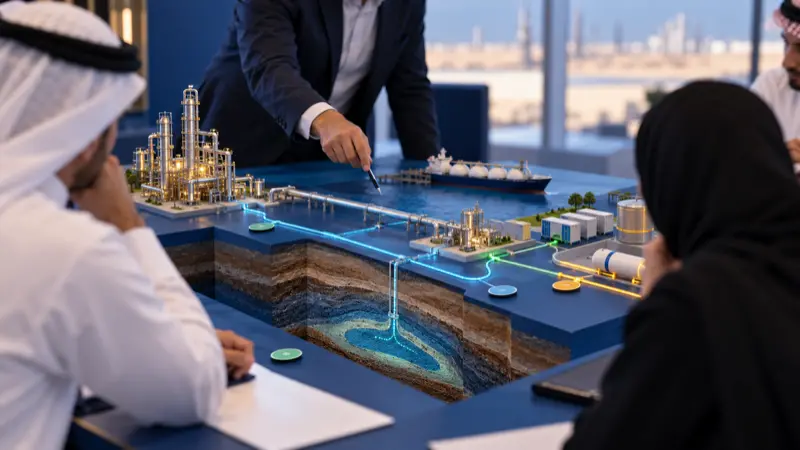
CO2 Geological Storage Site Characterisation Course

At a glance
- Duration
- 1 Week
- Format
- Classroom
- Cities
- Sharm El-Sheikh, Bangkok, Paris, Geneva, Toronto, Lagos and more
- Next session
- 9 – 13 November 2026, Sharm El-Sheikh
- Average fee
- 7,500 €
Overview
CO2 Geological Storage Site Characterisation and Assurance Training Course is a one-week advanced course for subsurface specialists and CCS project teams who leave with a CO2 Storage Site Characterisation and Assurance Dossier. Participants integrate geological CO2 storage evidence, storage complex characterization, seismic and well data, CO2 storage capacity and injectivity, containment risk, pressure and plume behavior, and monitoring baselines into defensible site decisions. Agile Leaders Training Center presents subsurface CO2 storage assurance through traceable technical evidence.
Who Should Attend
- Functions responsible for screening geological CO2 storage opportunities and ranking candidate sites
- Teams responsible for seismic interpretation, structural mapping, petrophysics, and geological modeling
- Functions responsible for reservoir simulation, capacity, injectivity, pressure, and plume forecasts
- Teams responsible for caprock, fault, geomechanical, well-integrity, and containment evidence
- Project assurance functions responsible for technical risk, uncertainty, monitoring baselines, and decision records
The course assumes participants already interpret subsurface datasets and technical models, and it leaves out capture-process design, surface compression, pipeline engineering, and routine injection operations.
Departments and Industries
The course supports departments and industries that appraise, develop, finance, regulate, or assure subsurface storage assets.
- Carbon storage development and subsurface assurance
- Energy, petroleum, and industrial decarbonization projects
- Geological surveys, geoscience consultancies, and technical services
- Reservoir engineering, geophysics, petrophysics, and geomechanics departments
- Project investment, risk, environmental assurance, and monitoring teams
Learning Objectives
By the end of this course, participants will be able to:
- Apply screening criteria to candidate storage complexes
- Analyze seismic, well, petrophysical, and geological evidence
- Evaluate storage capacity, injectivity, pressure, and plume uncertainty
- Diagnose caprock, fault, geomechanical, and legacy-well risks
- Build monitoring baselines and containment assurance evidence
- Prioritize appraisal work through a traceable decision dossier
Course Agenda
Day 1: Screen Storage Complexes
- ISO 27914 Geological Storage Lifecycle Map
- Saline Aquifer and Depleted Reservoir Comparison Matrix
- Storage Formation, Confining Zone, and Complex Boundary Model
- Trapping Mechanism and Containment Concept Diagram
- Site Screening Criteria and Evidence-Gap Register
Day 2: Integrate Characterization Data
- Regional Geology and Basin Evolution Evidence Map
- Seismic Interpretation, Depth Conversion, and Uncertainty Sheet
- Well Log, Core, Pressure, and Fluid Data Integration Matrix
- Petrophysical Property and Heterogeneity Model
- Static Geological Model Quality-Control Checklist
Day 3: Test Capacity and Injectivity
- Probabilistic Pore-Volume and Storage-Capacity Model
- Relative Permeability and Multiphase Flow Assumption Register
- Well Deliverability and Injectivity Assessment Workflow
- Pressure Buildup and Hydraulic Connectivity Diagnostic Map
- Dynamic Plume Forecast and Scenario Comparison
Day 4: Assure Containment and Monitoring
- Caprock Capillary Entry Pressure and Seal-Capacity Review
- Fault Juxtaposition, Seal, and Reactivation Risk Matrix
- Geomechanical Stress and Fracture-Pressure Assessment
- Legacy Well Integrity and Leakage-Pathway Register
- Monitoring Baseline, Trigger, and Corrective-Response Plan
Day 5: Practice Site Assurance Decisions
- Suggested Exercise: Rank Candidate Storage Complexes
- Suggested Exercise: Reconcile Seismic, Well, and Petrophysical Uncertainty
- Suggested Exercise: Challenge Capacity, Injectivity, and Pressure Scenarios
- Suggested Exercise: Build a Containment and Monitoring Risk Case
- Capstone Exercise: Complete the CO2 Storage Site Characterisation and Assurance Dossier
Practical Exercises
The course uses suggested activities to turn subsurface evidence into controlled storage-site decisions.
- Suggested activity: screen saline aquifer and depleted-reservoir candidates against common geological and project criteria.
- Suggested activity: trace uncertainty from seismic interpretation and petrophysical properties into capacity and plume forecasts.
- Suggested activity: connect faults, caprock, geomechanics, and legacy wells to containment controls.
- Suggested activity: defend an appraisal recommendation using evidence gaps, risk ranking, and monitoring baselines.
FAQs
Who suits CO2 geological storage site characterisation training, and what does it assume?
Subsurface specialists and CCS assurance teams suit the course. It assumes practical experience with geological, geophysical, petrophysical, reservoir, or technical-risk evidence.
How does CO2 storage site characterisation differ from a general CCUS course?
CO2 storage site characterization concentrates on subsurface screening, capacity, injectivity, containment, and monitoring evidence. General CCUS training surveys capture, transport, utilization, storage, policy, and commercial interfaces.
How is CO2 geological storage capacity estimated?
CO2 geological storage capacity is estimated from mapped pore volume, porosity, fluid saturation, density, displacement behavior, pressure limits, storage efficiency, uncertainty ranges, and dynamic modeling evidence.
What controls CO2 storage containment assurance?
Containment assurance depends on reservoir and seal properties, structural closure, capillary behavior, faults, geomechanical limits, pressure management, legacy-well integrity, plume forecasts, monitoring evidence, and credible corrective responses.
Why are monitoring baselines needed for geological CO2 storage?
Monitoring baselines establish pre-injection conditions against which later changes can be interpreted. They connect predicted plume and pressure behavior with measurable indicators, thresholds, investigation routes, and corrective actions.
Conclusion
Participants take back a CO2 Storage Site Characterisation and Assurance Dossier linking subsurface data, models, uncertainties, containment risks, monitoring baselines, and appraisal priorities. It changes separate studies into one traceable site-decision basis. Teams can update the dossier as new seismic, well, laboratory, modeling, and monitoring evidence becomes available.
credits: 5 credit per day
Course Mode: full-time
Provider: Agile Leaders Training Center
-
Events for this Course
-
Sharm El-Sheikh 9 – 13 November 2026
-
Bangkok 15 – 19 November 2026
-
Paris 23 – 27 November 2026
-
Geneva 29 November – 3 December 2026
-
Toronto 29 November – 3 December 2026
-
Lagos 6 – 10 December 2026
-
London 7 – 11 December 2026
-
Dubai 14 – 18 December 2026
-
Amsterdam 21 – 25 December 2026
-
Zoom 28 December 2026 – 1 January 2027
-
Abu Dhabi 4 – 8 January 2027
-
Istanbul 11 – 15 January 2027
-
Baku 18 – 22 January 2027
-
Singapore 25 – 29 January 2027
-
Kuwait 31 January – 4 February 2027
-
Langkawi 7 – 11 February 2027
-
Porto 8 – 12 February 2027
-
Muscat 21 – 25 February 2027
-
Addis Ababa 22 – 26 February 2027
-
Jakarta 1 – 5 March 2027
-
Lisbon 1 – 5 March 2027
-
Nairobi 7 – 11 March 2027
-
Cape town 14 – 18 March 2027
-
Berlin 15 – 19 March 2027
-
Abu Dhabi 22 – 26 March 2027
-
Bali 28 March – 1 April 2027
-
Madrid 5 – 9 April 2027
-
Seoul 12 – 16 April 2027
-
Nice 19 – 23 April 2027
-
Tokyo 26 – 30 April 2027
-
Milan 3 – 7 May 2027
-
Casablanca 10 – 14 May 2027
-
Johannesburg 16 – 20 May 2027
-
Dubai 24 – 28 May 2027
-
Doha 30 May – 3 June 2027
-
Montreux 7 – 11 June 2027
-
Chicago 13 – 17 June 2027
-
Marbella 20 – 24 June 2027
-
Munich 28 June – 2 July 2027
-
Tbilisi 5 – 9 July 2027
-
Accra 11 – 15 July 2027
-
Tashkent 18 – 22 July 2027
-
Amman 25 – 29 July 2027
-
Kuala Lumpur 2 – 6 August 2027
-
Prague 9 – 13 August 2027
-
London 16 – 20 August 2027
-
Athens 23 – 27 August 2027
-
Vienna 30 August – 3 September 2027
-
Manama 5 – 9 September 2027
-
Rome 13 – 17 September 2027
-
Cairo 20 – 24 September 2027
-
Phuket 3 – 7 October 2027
-
Trabzon 10 – 14 October 2027
-
New York 18 – 22 October 2027
-
Barcelona 25 – 29 October 2027
-
Zanzibar 31 October – 4 November 2027
-
Frankfurt 1 – 5 November 2027
-
San Diego 8 – 12 November 2027
| Image | Location | Dates | Duration | Mode | Price | Actions |
|---|---|---|---|---|---|---|

|
Accra |
Week 27, 2027 11 – 15 July 2027 |
1 Week | Onsite | €6,000 | |

|
Tashkent |
Week 28, 2027 18 – 22 July 2027 |
1 Week | Onsite | €8,000 | |

|
Amman |
Week 29, 2027 25 – 29 July 2027 |
1 Week | Onsite | €6,000 | |

|
Kuala Lumpur |
Week 31, 2027 2 – 6 August 2027 |
1 Week | Onsite | €6,500 | |

|
Prague |
Week 32, 2027 9 – 13 August 2027 |
1 Week | Onsite | €7,500 | |

|
London |
Week 33, 2027 16 – 20 August 2027 |
1 Week | Onsite | €6,500 | |

|
Athens |
Week 34, 2027 23 – 27 August 2027 |
1 Week | Onsite | €7,500 | |

|
Vienna |
Week 35, 2027 30 August – 3 September 2027 |
1 Week | Onsite | €7,500 | |

|
Manama |
Week 35, 2027 5 – 9 September 2027 |
1 Week | Onsite | €6,500 | |

|
Rome |
Week 37, 2027 13 – 17 September 2027 |
1 Week | Onsite | €6,500 | |

|
Cairo |
Week 38, 2027 20 – 24 September 2027 |
1 Week | Onsite | €5,200 | |

|
Phuket |
Week 39, 2027 3 – 7 October 2027 |
1 Week | Onsite | €8,000 | |

|
Trabzon |
Week 40, 2027 10 – 14 October 2027 |
1 Week | Onsite | €8,000 | |

|
New York |
Week 42, 2027 18 – 22 October 2027 |
1 Week | Onsite | €16,000 | |

|
Barcelona |
Week 43, 2027 25 – 29 October 2027 |
1 Week | Onsite | €6,500 | |

|
Zanzibar |
Week 43, 2027 31 October – 4 November 2027 |
1 Week | Onsite | €6,000 | |

|
Frankfurt |
Week 44, 2027 1 – 5 November 2027 |
1 Week | Onsite | €6,500 | |

|
San Diego |
Week 45, 2027 8 – 12 November 2027 |
1 Week | Onsite | €16,000 |
Frequently asked questions
What does this course cover?
OverviewCO2 Geological Storage Site Characterisation and Assurance Training Course is a one-week advanced course for subsurface specialists and CCS project teams who leave with a CO2 Storage Site Characterisation and Assurance Dossier. Participants integrate geological CO2 storage evidence, storage complex characterization, seismic and well data, CO2 stor…
Are training dates available?
Yes. Available dates and destinations are listed in the course dates section on this page.
How can I register?
Choose an available date on this page and complete the registration form, or send a programme enquiry.
Can I download the course brochure?
Yes. Use the brochure download link provided on this page.
This course by city
- Oil & Gas Training and Other Technical Courses in Abu Dhabi
- Oil & Gas Training and Other Technical Courses in Accra
- Oil & Gas Training and Other Technical Courses in Addis Ababa
- Oil & Gas Training and Other Technical Courses in Amman
- Oil & Gas Training and Other Technical Courses in Amsterdam
- Oil & Gas Training and Other Technical Courses in Athens
- Oil & Gas Training and Other Technical Courses in Baku
- Oil & Gas Training and Other Technical Courses in Bali
- Oil & Gas Training and Other Technical Courses in Bangkok
- Oil & Gas Training and Other Technical Courses in Barcelona
- Oil & Gas Training and Other Technical Courses in Berlin
- Oil & Gas Training and Other Technical Courses in Cairo
- Oil & Gas Training and Other Technical Courses in Cape town
- Oil & Gas Training and Other Technical Courses in Casablanca
- Oil & Gas Training and Other Technical Courses in Chicago
- Oil & Gas Training and Other Technical Courses in Doha
- Oil & Gas Training and Other Technical Courses in Dubai
- Oil & Gas Training and Other Technical Courses in Frankfurt
- Oil & Gas Training and Other Technical Courses in Geneva
- Oil & Gas Training and Other Technical Courses in Istanbul
- Oil & Gas Training and Other Technical Courses in Jakarta
- Oil & Gas Training and Other Technical Courses in Johannesburg
- Oil & Gas Training and Other Technical Courses in Kuala Lumpur
- Oil & Gas Training and Other Technical Courses in Kuwait
- Oil & Gas Training and Other Technical Courses in Lagos
- Oil & Gas Training and Other Technical Courses in Langkawi
- Oil & Gas Training and Other Technical Courses in Lisbon
- Oil & Gas Training and Other Technical Courses in London
- Oil & Gas Training and Other Technical Courses in Madrid
- Oil & Gas Training and Other Technical Courses in Manama
- Oil & Gas Training and Other Technical Courses in Marbella
- Oil & Gas Training and Other Technical Courses in Milan
- Oil & Gas Training and Other Technical Courses in Montreux
- Oil & Gas Training and Other Technical Courses in Munich
- Oil & Gas Training and Other Technical Courses in Muscat
- Oil & Gas Training and Other Technical Courses in Nairobi
- Oil & Gas Training and Other Technical Courses in New York
- Oil & Gas Training and Other Technical Courses in Nice
- Oil & Gas Training and Other Technical Courses in Paris
- Oil & Gas Training and Other Technical Courses in Phuket
- Oil & Gas Training and Other Technical Courses in Porto
- Oil & Gas Training and Other Technical Courses in Prague
- Oil & Gas Training and Other Technical Courses in Rome
- Oil & Gas Training and Other Technical Courses in San Diego
- Oil & Gas Training and Other Technical Courses in Seoul
- Oil & Gas Training and Other Technical Courses in Sharm El-Sheikh
- Oil & Gas Training and Other Technical Courses in Singapore
- Oil & Gas Training and Other Technical Courses in Tashkent
- Oil & Gas Training and Other Technical Courses in Tbilisi
- Oil & Gas Training and Other Technical Courses in Tokyo
- Oil & Gas Training and Other Technical Courses in Toronto
- Oil & Gas Training and Other Technical Courses in Trabzon
- Oil & Gas Training and Other Technical Courses in Vienna
- Oil & Gas Training and Other Technical Courses in Zanzibar
- Oil & Gas Training and Other Technical Courses in Zoom