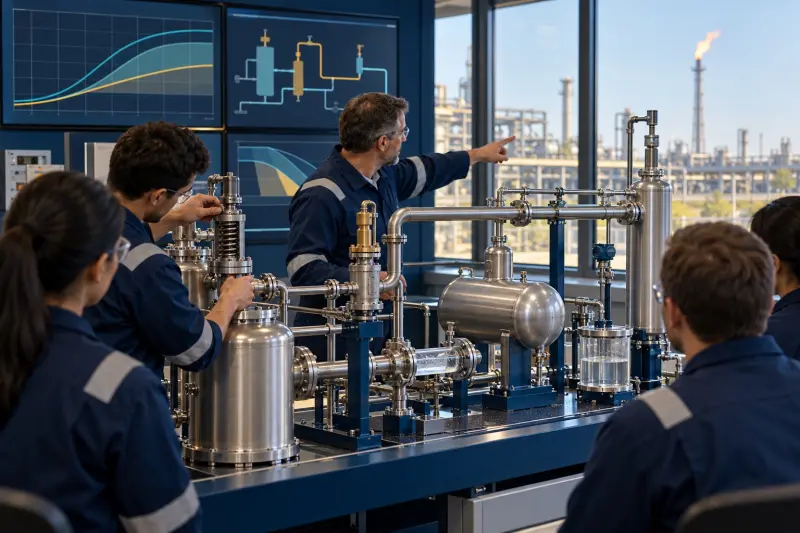
Controlled Bolting Hydraulic Torque Training Course

At a glance
- Duration
- 1 Week
- Format
- Classroom
- Cities
- Zanzibar, Paris, Lisbon, Toronto, Muscat, London and more
- Next session
- 15 – 19 November 2026, Zanzibar
- Average fee
- 7,500 €
Overview
Controlled Bolting with Hydraulic Torque and Tensioning Training Course is a one-week course for maintenance, shutdown, inspection, and supervision teams, who leave with a Controlled Bolting Job Pack. Participants connect bolted-joint behaviour with method selection, safe hydraulic-tool setup, pressure and load calculations, flange alignment, tightening sequences, inspection, and traceable records. Simulated practice develops disciplined execution without granting authorization for unsupervised site work. Agile Leaders Training Center presents controlled bolting with hydraulic torque and tensioning.
Who Should Attend
- Functions responsible for mechanical maintenance and pressure-boundary joint assembly
- Teams responsible for shutdown preparation, execution, and reinstatement
- Functions responsible for rotating-equipment flange integrity and leak prevention
- Teams responsible for bolting-tool selection, setup, calibration, and control
- Functions responsible for inspection, quality records, and work acceptance
- Supervisory teams responsible for safe controlled-bolting work
The course assumes participants already support industrial maintenance or bolted-joint work and leaves out equipment repair, live-plant authorization, independent competence certification, and unsupervised site qualification.
Departments and Industries
The course supports departments and industries that assemble, maintain, inspect, or supervise critical bolted joints.
- Mechanical maintenance and reliability departments
- Shutdown, turnaround, and project-execution teams
- Oil, gas, petrochemical, and process operations
- Power generation, utilities, and renewable-energy assets
- Marine, heavy engineering, and industrial construction
- Quality assurance, inspection, and technical-services functions
Learning Objectives
By the end of this course, participants will be able to:
- Analyze preload, relaxation, friction, and load-loss behaviour
- Compare hydraulic torque wrench operation with hydraulic bolt tensioning
- Apply equipment-selection, setup, reaction, and exclusion-zone checks
- Use pressure-to-load calculations and controlled tightening sequences
- Diagnose alignment, leakage, galling, and uneven-load indications
- Build inspection, calibration, traceability, and completion records
Course Agenda
Day 1: Bolted-Joint Foundations
- Bolted-Joint Load Path and Joint Diagram
- Preload, Clamp Load, Service Load, and Safety Margin Model
- Friction, Lubrication, Embedment, Relaxation, and Load-Loss Map
- Flange, Gasket, Fastener, Nut, and Washer Identification Checklist
- ASME PCC-1 Assembly-Practice Context and Job-Scope Boundary
Day 2: Method and Equipment Selection
- Torque-Control versus Direct-Tension Method Selection Matrix
- Hydraulic Torque Wrench, Cassette, Socket, Pump, and Hose Configuration
- Hydraulic Bolt Tensioner, Bridge, Puller, Nut Driver, and Pump Configuration
- Tool-Capacity, Access, Stroke, Bolt-Spacing, and Coverage Selection Sheet
- Calibration Certificate, Pressure Gauge, and Traceability Review
Day 3: Planning and Calculations
- Target Bolt Load, Bolt Stress, and Allowable-Limit Calculation Sheet
- Torque-to-Preload and Pressure-to-Torque Conversion Method
- Tensioner Area, Hydraulic Pressure, Load Transfer, and Loss Allowance Calculation
- Flange Alignment, Gasket Position, Gap, Parallelism, and Readiness Checklist
- Cross-Pattern, Multi-Pass, Circular-Pass, and Simultaneous-Tensioning Plan
Day 4: Safe Execution and Verification
- Stored-Energy, Pinch-Point, Hose, Reaction-Arm, and Exclusion-Zone Risk Check
- Hydraulic System Inspection, Connection, Bleeding, Pressurization, and Depressurization Sequence
- Bolt Numbering, Tool Position, Pass Control, and Completion Marking Method
- Residual Load, Breakout, Rotation, Gap, Leakage, and Visual Inspection Indicators
- Nonconformance, Troubleshooting, Escalation, and Controlled Bolting Job Documentation
Day 5: Simulated Practice and Capstone
- Exercise: Flange Readiness and Joint-Component Inspection
- Exercise: Hydraulic Torque Wrench Setup and Reaction-Point Verification
- Exercise: Hydraulic Bolt Tensioning Pressure and Coverage Plan
- Exercise: Multi-Pass Execution, Inspection, and Nonconformance Response
- Capstone Exercise: Controlled Bolting Job Pack
Practical Exercises
The course uses suggested activities with simulated tools, joint data, diagrams, and fictional maintenance scenarios.
- Suggested activity: compare torque and tensioning options with an access, capacity, risk, and accuracy decision matrix.
- Suggested activity: calculate target load, hydraulic pressure, pass values, and loss allowances from a controlled job sheet.
- Suggested activity: inspect a simulated flange arrangement and record alignment, gasket, fastener, lubrication, and readiness findings.
- Suggested activity: execute a tabletop bolting sequence and complete inspection, traceability, exception, and handover records.
FAQs
Who suits controlled bolting with hydraulic torque and tensioning training, and what does it assume?
It suits maintenance, shutdown, bolting, inspection, rotating-equipment, and supervisory personnel who already support industrial mechanical work. The training assumes basic familiarity with fasteners, flanges, workshop safety, and job procedures.
How does controlled bolting training differ from a basic torque-wrench course?
Controlled bolting training integrates joint behaviour, hydraulic torque, direct tensioning, calculations, sequencing, calibration, inspection, troubleshooting, and documented acceptance. A basic torque-wrench course usually concentrates on one tool and introductory tightening practice.
When should hydraulic bolt tensioning be selected instead of hydraulic torque?
Hydraulic bolt tensioning is considered when access, bolt spacing, protrusion, joint geometry, simultaneous loading, friction sensitivity, accuracy requirements, and available equipment favour direct axial loading. The approved job procedure remains decisive.
Why can hydraulic torque produce different bolt preload values?
Hydraulic torque can produce variable preload because friction at threads and bearing faces, lubrication condition, surface finish, tool accuracy, alignment, and joint relaxation affect how applied torque becomes bolt load.
What records support a controlled bolting job?
A controlled bolting job is supported by joint identification, component checks, target values, approved sequence, tool and calibration references, operator entries, pass completion, inspection results, deviations, escalation decisions, and handover acceptance.
Conclusion
Participants take a Controlled Bolting Job Pack back to work. It combines a method-selection matrix, readiness checklist, calculation sheet, tightening plan, safety controls, inspection record, nonconformance log, and handover form. The pack strengthens repeatable preparation, execution, verification, and traceability while keeping authorization and site-specific procedure decisions with the responsible organization.
credits: 5 credit per day
Course Mode: full-time
Provider: Agile Leaders Training Center
-
Events for this Course
-
Zanzibar 15 – 19 November 2026
-
Paris 16 – 20 November 2026
-
Lisbon 23 – 27 November 2026
-
Toronto 29 November – 3 December 2026
-
Muscat 20 – 24 December 2026
-
London 21 – 25 December 2026
-
Vienna 28 December 2026 – 1 January 2027
-
San Diego 4 – 8 January 2027
-
Porto 11 – 15 January 2027
-
Tokyo 18 – 22 January 2027
-
Nice 18 – 22 January 2027
-
Madrid 25 – 29 January 2027
-
Seoul 1 – 5 February 2027
-
Dubai 8 – 12 February 2027
-
Berlin 8 – 12 February 2027
-
Kuala Lumpur 15 – 19 February 2027
-
Baku 15 – 19 February 2027
-
Tbilisi 22 – 26 February 2027
-
Munich 1 – 5 March 2027
-
Abu Dhabi 8 – 12 March 2027
-
Jakarta 22 – 26 March 2027
-
New York 29 March – 2 April 2027
-
Johannesburg 4 – 8 April 2027
-
Istanbul 19 – 23 April 2027
-
Sharm El-Sheikh 26 – 30 April 2027
-
Geneva 2 – 6 May 2027
-
Prague 10 – 14 May 2027
-
Amman 16 – 20 May 2027
-
Chicago 23 – 27 May 2027
-
Addis Ababa 31 May – 4 June 2027
-
Tashkent 20 – 24 June 2027
-
Singapore 28 June – 2 July 2027
-
Phuket 4 – 8 July 2027
-
London 12 – 16 July 2027
-
Montreux 12 – 16 July 2027
-
Athens 19 – 23 July 2027
-
Bangkok 25 – 29 July 2027
-
Marbella 1 – 5 August 2027
-
Barcelona 2 – 6 August 2027
-
Bali 8 – 12 August 2027
-
Dubai 9 – 13 August 2027
-
Zoom 16 – 20 August 2027
-
Abu Dhabi 16 – 20 August 2027
-
Langkawi 22 – 26 August 2027
-
Casablanca 23 – 27 August 2027
-
Milan 30 August – 3 September 2027
-
Accra 5 – 9 September 2027
-
Amsterdam 6 – 10 September 2027
-
Nairobi 12 – 16 September 2027
-
Cairo 13 – 17 September 2027
-
Manama 19 – 23 September 2027
-
Lagos 26 – 30 September 2027
-
Rome 27 September – 1 October 2027
-
Trabzon 3 – 7 October 2027
-
Kuwait 10 – 14 October 2027
-
Doha 24 – 28 October 2027
-
Frankfurt 1 – 5 November 2027
-
Cape town 7 – 11 November 2027
| Image | Location | Dates | Duration | Mode | Price | Actions |
|---|---|---|---|---|---|---|

|
Jakarta |
Week 12, 2027 22 – 26 March 2027 |
1 Week | Onsite | €8,000 | |

|
New York |
Week 13, 2027 29 March – 2 April 2027 |
1 Week | Onsite | €16,000 | |

|
Johannesburg |
Week 13, 2027 4 – 8 April 2027 |
1 Week | Onsite | €6,000 | |

|
Istanbul |
Week 16, 2027 19 – 23 April 2027 |
1 Week | Onsite | €6,000 | |

|
Sharm El-Sheikh |
Week 17, 2027 26 – 30 April 2027 |
1 Week | Onsite | €5,200 | |

|
Geneva |
Week 17, 2027 2 – 6 May 2027 |
1 Week | Onsite | €8,000 | |

|
Prague |
Week 19, 2027 10 – 14 May 2027 |
1 Week | Onsite | €7,500 | |

|
Amman |
Week 19, 2027 16 – 20 May 2027 |
1 Week | Onsite | €6,000 | |

|
Chicago |
Week 20, 2027 23 – 27 May 2027 |
1 Week | Onsite | €16,000 | |

|
Addis Ababa |
Week 22, 2027 31 May – 4 June 2027 |
1 Week | Onsite | €6,000 | |

|
Tashkent |
Week 24, 2027 20 – 24 June 2027 |
1 Week | Onsite | €8,000 | |

|
Singapore |
Week 26, 2027 28 June – 2 July 2027 |
1 Week | Onsite | €6,500 | |

|
Phuket |
Week 26, 2027 4 – 8 July 2027 |
1 Week | Onsite | €8,000 | |

|
London |
Week 28, 2027 12 – 16 July 2027 |
1 Week | Onsite | €6,500 | |

|
Montreux |
Week 28, 2027 12 – 16 July 2027 |
1 Week | Onsite | €8,000 | |

|
Athens |
Week 29, 2027 19 – 23 July 2027 |
1 Week | Onsite | €7,500 | |

|
Bangkok |
Week 29, 2027 25 – 29 July 2027 |
1 Week | Onsite | €8,000 | |

|
Marbella |
Week 30, 2027 1 – 5 August 2027 |
1 Week | Onsite | €6,500 | |

|
Barcelona |
Week 31, 2027 2 – 6 August 2027 |
1 Week | Onsite | €6,500 | |

|
Bali |
Week 31, 2027 8 – 12 August 2027 |
1 Week | Onsite | €6,500 |
Frequently asked questions
What does this course cover?
OverviewControlled Bolting with Hydraulic Torque and Tensioning Training Course is a one-week course for maintenance, shutdown, inspection, and supervision teams, who leave with a Controlled Bolting Job Pack. Participants connect bolted-joint behaviour with method selection, safe hydraulic-tool setup, pressure and load calculations, flange alignment, tigh…
Are training dates available?
Yes. Available dates and destinations are listed in the course dates section on this page.
How can I register?
Choose an available date on this page and complete the registration form, or send a programme enquiry.
Can I download the course brochure?
Yes. Use the brochure download link provided on this page.
This course by city
- Maintenance Training and Engineering Training Courses in Abu Dhabi
- Maintenance Training and Engineering Training Courses in Accra
- Maintenance Training and Engineering Training Courses in Addis Ababa
- Maintenance Training and Engineering Training Courses in Amman
- Maintenance Training and Engineering Training Courses in Amsterdam
- Maintenance Training and Engineering Training Courses in Athens
- Maintenance Training and Engineering Training Courses in Baku
- Maintenance Training and Engineering Training Courses in Bali
- Maintenance Training and Engineering Training Courses in Bangkok
- Maintenance Training and Engineering Training Courses in Barcelona
- Maintenance Training and Engineering Training Courses in Berlin
- Maintenance Training and Engineering Training Courses in Cairo
- Maintenance Training and Engineering Training Courses in Cape town
- Maintenance Training and Engineering Training Courses in Casablanca
- Maintenance Training and Engineering Training Courses in Chicago
- Maintenance Training and Engineering Training Courses in Doha
- Maintenance Training and Engineering Training Courses in Dubai
- Maintenance Training and Engineering Training Courses in Frankfurt
- Maintenance Training and Engineering Training Courses in Geneva
- Maintenance Training and Engineering Training Courses in Istanbul
- Maintenance Training and Engineering Training Courses in Jakarta
- Maintenance Training and Engineering Training Courses in Johannesburg
- Maintenance Training and Engineering Training Courses in Kuala Lumpur
- Maintenance Training and Engineering Training Courses in Kuwait
- Maintenance Training and Engineering Training Courses in Lagos
- Maintenance Training and Engineering Training Courses in Langkawi
- Maintenance Training and Engineering Training Courses in Lisbon
- Maintenance Training and Engineering Training Courses in London
- Maintenance Training and Engineering Training Courses in Madrid
- Maintenance Training and Engineering Training Courses in Manama
- Maintenance Training and Engineering Training Courses in Marbella
- Maintenance Training and Engineering Training Courses in Milan
- Maintenance Training and Engineering Training Courses in Montreux
- Maintenance Training and Engineering Training Courses in Munich
- Maintenance Training and Engineering Training Courses in Muscat
- Maintenance Training and Engineering Training Courses in Nairobi
- Maintenance Training and Engineering Training Courses in New York
- Maintenance Training and Engineering Training Courses in Nice
- Maintenance Training and Engineering Training Courses in Paris
- Maintenance Training and Engineering Training Courses in Phuket
- Maintenance Training and Engineering Training Courses in Porto
- Maintenance Training and Engineering Training Courses in Prague
- Maintenance Training and Engineering Training Courses in Rome
- Maintenance Training and Engineering Training Courses in San Diego
- Maintenance Training and Engineering Training Courses in Seoul
- Maintenance Training and Engineering Training Courses in Sharm El-Sheikh
- Maintenance Training and Engineering Training Courses in Singapore
- Maintenance Training and Engineering Training Courses in Tashkent
- Maintenance Training and Engineering Training Courses in Tbilisi
- Maintenance Training and Engineering Training Courses in Tokyo
- Maintenance Training and Engineering Training Courses in Toronto
- Maintenance Training and Engineering Training Courses in Trabzon
- Maintenance Training and Engineering Training Courses in Vienna
- Maintenance Training and Engineering Training Courses in Zanzibar
- Maintenance Training and Engineering Training Courses in Zoom