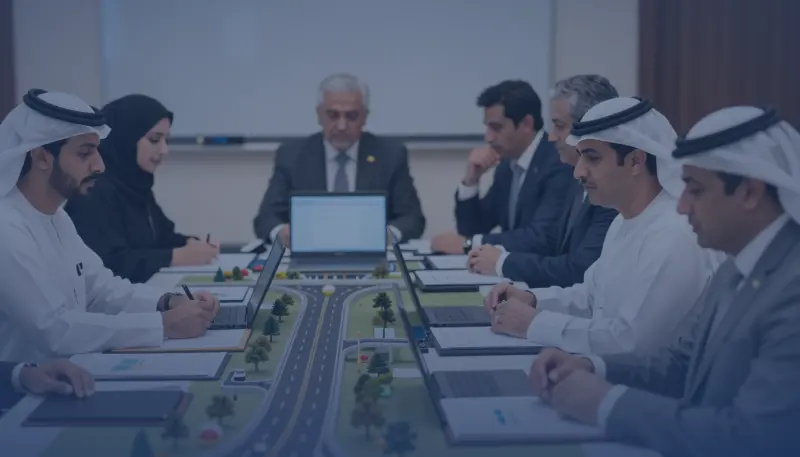
CP3P Certification and PPP Development Course

At a glance
- Duration
- 1 Week
- Format
- Classroom
- Cities
- Montreux, London, Nice, Abu Dhabi, Bali, Kuwait and more
- Next session
- 26 – 30 October 2026, Montreux
- Average fee
- 5,650 €
Course Overview
The CP3P Preparation Training Course is an advanced certification program tailored for professionals involved in developing, structuring, and appraising public-private partnership (PPP) projects. This course aligns with the APMG CP3P Certification framework and focuses on deepening the participant's understanding of project frameworks, screening and prioritization, value-for-money analysis, and structuring tender documentation and contracts. Emphasis is placed on practical tools for PPP risk allocation, procurement strategies, and developing a pipeline of viable projects. Designed for those preparing for the PPP Preparation Exam Training, this Certified PPP Professional Preparation course integrates real-world case studies, group work, and interactive workshops. Whether you're seeking a PPP lifecycle training for project managers or looking for a PPP development and structuring certification, this program is your path to becoming an APMG-certified PPP professional.
Target Audience
- Infrastructure Project Managers
- Government PPP Unit Officials
- Financial Analysts in Infrastructure & Public Services
- Procurement and Contracting Officers
- Legal Advisors and Consultants in PPP
- Development Bank and MDB Representatives
Targeted Organizational Departments
- PPP Units or Directorates
- Legal and Contract Management
- Infrastructure Development and Planning
- Public Procurement and Tendering Teams
- Economic and Financial Affairs Departments
- Risk and Compliance Offices
Targeted Industries
- Transportation (roads, rail, airports)
- Energy and Utilities (power, water, waste)
- Urban Development & Smart Cities
- Health and Education Infrastructure
- Telecommunications
- Ports and Logistics
Course Offerings
By the end of this CP3P Preparation Training Course, participants will be able to:
- Analyze and build a PPP legal and regulatory framework
- Conduct project screening and prioritize based on socio-economic value
- Apply cost-benefit and value-for-money analysis tools effectively
- Identify and manage PPP project risks throughout the lifecycle
- Develop and evaluate procurement options for PPPs
- Design tender documents and draft PPP contracts aligned with best practices
- Prepare for and successfully pass the APMG CP3P Certification exam
Training Methodology
The training is highly interactive and practice-oriented. Participants will engage in expert-led sessions, group discussions, and real-world case studies to apply knowledge directly to infrastructure development scenarios. This course includes simulated PPP screening, procurement exercises, and contract structuring labs. Emphasis is placed on peer-to-peer learning and feedback, supported by visual presentations and summary checklists. Each module reinforces preparation for the PPP Preparation Exam Training and integrates insights from APMG certified PPP professional study guides. Participants will also access online self-assessments and tools to aid exam readiness.
Course Toolbox
- Case study briefs (transport, energy, health)
- PPP Screening and Appraisal Templates
- Risk Allocation Matrices
- Value-for-Money Analysis Worksheets
- Sample Tender Structures and Contract Clauses
- Exam practice questions (aligned with APMG standards)
Course Agenda
Day 1: Foundations of PPP Frameworks & Institutions
- Topic 1: Legal and Regulatory Frameworks for PPP
- Topic 2: Institutional Responsibilities and PPP Governance
- Topic 3: Elements of a Strong Enabling Environment
- Topic 4: Roles of Public and Private Sector Stakeholders
- Topic 5: Policy Challenges and PPP Reform Models
- Topic 6: Capacity Development for PPP Units
- Reflection & Review: Global Best Practices in Establishing PPP Frameworks
Day 2: Identifying & Screening PPP Projects
- Topic 1: Defining Public Needs and Project Entry Points
- Topic 2: Strategic Planning and Project Prioritization
- Topic 3: Technical Feasibility and Project Scope Definition
- Topic 4: Affordability, Demand Forecasting, and Market Soundness
- Topic 5: Screening for PPP Suitability and Public Interest
- Topic 6: Environmental and Social Considerations in Screening
- Reflection & Review: Screening Exercises and Diagnostic Tools
Day 3: Appraising PPP Projects for Bankability
- Topic 1: Economic Appraisal and Cost-Benefit Analysis
- Topic 2: Fiscal Impact and Government Support Assessment
- Topic 3: Risk Identification, Allocation, and Mitigation
- Topic 4: Value for Money Analysis Approaches
- Topic 5: Developing the PPP Business Case
- Topic 6: Stakeholder Engagement in Appraisal Stage
- Reflection & Review: Value for Money Simulations and Appraisal Labs
Day 4: Structuring Procurement for PPPs
- Topic 1: Designing the Procurement Strategy for PPP
- Topic 2: Stages of Competitive Tendering and Negotiation Models
- Topic 3: Prequalification and Request for Proposals (RFPs)
- Topic 4: Bid Evaluation Criteria and Decision Transparency
- Topic 5: Managing Unsolicited Proposals and Innovations
- Topic 6: Ensuring Integrity and Fairness in PPP Procurement
- Reflection & Review: Procurement Strategy and RFQ/RFP Exercises
Day 5: Drafting PPP Contracts and Readiness for Award
- Topic 1: Structure of a Typical PPP Contract
- Topic 2: Key Clauses: Payment Mechanisms, Performance Standards
- Topic 3: Renegotiation, Dispute Resolution, and Termination Terms
- Topic 4: Final Risk Allocation and Legal Review
- Topic 5: Achieving Financial Close and Transaction Readiness
- Topic 6: CP3P Preparation Exam Review and Strategy
- Reflection & Review: Full Mock Exam, Key Takeaways, and Q&A
FAQ
What specific qualifications or prerequisites are needed for participants before enrolling in the course?
Participants are expected to have a basic understanding of PPP concepts, ideally having completed the CP3P Foundation level or equivalent practical experience in infrastructure projects.
How long is each day's session, and is there a total number of hours required for the entire course?
Each day's session is generally structured to last around 4-5 hours, with breaks and interactive activities included. The total course duration spans one week, approximately 20-25 hours of instruction.
What distinguishes economic feasibility analysis from value-for-money analysis in PPP projects?
Economic feasibility assesses the overall benefit to society using tools like cost-benefit analysis, while value-for-money compares PPP against traditional procurement to determine which offers better efficiency and cost-effectiveness over the project lifecycle.
How This Course is Different from Other CP3P Preparation Courses
This CP3P Preparation Training Course stands out by blending structured exam-focused instruction with practical insights drawn directly from real-life infrastructure projects and international PPP programs. Unlike generic PPP courses, it delves deep into PPP risk allocation and procurement training, and equips participants with tools such as value-for-money analysis worksheets, risk matrices, and contract structuring templates. Each module is aligned with APMG’s certification blueprint, and the course integrates extensive exam readiness components. Participants gain not only the knowledge required to pass the exam but also the competencies to lead PPP development and structuring initiatives in their sectors. Whether taken as a standalone course or a bridge from CP3P Foundation, this is the best PPP course for infrastructure professionals looking to advance their careers with certified PPP professional preparation.
credits: 5 credit per day
Course Mode: full-time
Provider: Agile Leaders Training Center
-
Events for this Course
-
Montreux 26 – 30 October 2026
-
London 2 – 6 November 2026
-
Nice 2 – 6 November 2026
-
Abu Dhabi 9 – 13 November 2026
-
Bali 15 – 19 November 2026
-
Kuwait 22 – 26 November 2026
-
Trabzon 22 – 26 November 2026
-
Zanzibar 29 November – 3 December 2026
-
Vienna 7 – 11 December 2026
-
Chicago 13 – 17 December 2026
-
Dubai 21 – 25 December 2026
-
Amman 27 – 31 December 2026
-
Lisbon 28 December 2026 – 1 January 2027
-
Doha 3 – 7 January 2027
-
Amman 3 – 7 January 2027
-
Cairo 4 – 8 January 2027
-
Barcelona 11 – 15 January 2027
-
London 18 – 22 January 2027
-
Amsterdam 18 – 22 January 2027
-
Milan 1 – 5 February 2027
-
Manama 7 – 11 February 2027
-
Dubai 8 – 12 February 2027
-
Tbilisi 15 – 19 February 2027
-
Berlin 22 – 26 February 2027
-
Rome 1 – 5 March 2027
-
Muscat 7 – 11 March 2027
-
Vienna 8 – 12 March 2027
-
Phuket 14 – 18 March 2027
-
Istanbul 22 – 26 March 2027
-
Lagos 28 March – 1 April 2027
-
Madrid 29 March – 2 April 2027
-
Cape town 4 – 8 April 2027
-
Casablanca 5 – 9 April 2027
-
Amsterdam 12 – 16 April 2027
-
Athens 12 – 16 April 2027
-
London 19 – 23 April 2027
-
Johannesburg 25 – 29 April 2027
-
Abu Dhabi 26 – 30 April 2027
-
Dubai 3 – 7 May 2027
-
Tokyo 3 – 7 May 2027
-
Zoom 9 – 13 May 2027
-
Cairo 10 – 14 May 2027
-
Milan 10 – 14 May 2027
-
Barcelona 17 – 21 May 2027
-
Dubai 23 – 27 May 2027
-
Kuala Lumpur 24 – 28 May 2027
-
Madrid 24 – 28 May 2027
-
Sharm El-Sheikh 31 May – 4 June 2027
-
Baku 31 May – 4 June 2027
-
Istanbul 7 – 11 June 2027
-
Manama 13 – 17 June 2027
-
Paris 14 – 18 June 2027
-
Amman 20 – 24 June 2027
-
Langkawi 27 June – 1 July 2027
-
Tashkent 27 June – 1 July 2027
-
London 5 – 9 July 2027
-
Accra 11 – 15 July 2027
-
Abu Dhabi 12 – 16 July 2027
-
Jakarta 19 – 23 July 2027
-
Bangkok 25 – 29 July 2027
-
Frankfurt 26 – 30 July 2027
-
Seoul 2 – 6 August 2027
-
Amsterdam 9 – 13 August 2027
-
Athens 9 – 13 August 2027
-
San Diego 9 – 13 August 2027
-
Kuala Lumpur 16 – 20 August 2027
-
Paris 16 – 20 August 2027
-
Geneva 22 – 26 August 2027
-
Nairobi 22 – 26 August 2027
-
Zoom 30 August – 3 September 2027
-
Abu Dhabi 6 – 10 September 2027
-
Singapore 6 – 10 September 2027
-
Dubai 13 – 17 September 2027
-
New York 20 – 24 September 2027
-
Amman 26 – 30 September 2027
-
Marbella 26 – 30 September 2027
-
Toronto 3 – 7 October 2027
-
Prague 11 – 15 October 2027
-
Rome 18 – 22 October 2027
-
Munich 18 – 22 October 2027
-
Porto 25 – 29 October 2027
| Image | Location | Dates | Duration | Mode | Price | Actions |
|---|---|---|---|---|---|---|

|
Zoom |
Week 18, 2027 9 – 13 May 2027 |
1 Week | Online | €1,500 | |

|
Cairo |
Week 19, 2027 10 – 14 May 2027 |
1 Week | Onsite | €4,100 | |

|
Milan |
Week 19, 2027 10 – 14 May 2027 |
1 Week | Onsite | €5,700 | |

|
Barcelona |
Week 20, 2027 17 – 21 May 2027 |
1 Week | Onsite | €5,700 | |

|
Dubai |
Week 20, 2027 23 – 27 May 2027 |
1 Week | Onsite | €4,500 | |

|
Kuala Lumpur |
Week 21, 2027 24 – 28 May 2027 |
1 Week | Onsite | €5,200 | |

|
Madrid |
Week 21, 2027 24 – 28 May 2027 |
1 Week | Onsite | €5,700 | |

|
Sharm El-Sheikh |
Week 22, 2027 31 May – 4 June 2027 |
1 Week | Onsite | €4,100 | |

|
Baku |
Week 22, 2027 31 May – 4 June 2027 |
1 Week | Onsite | €5,000 | |

|
Istanbul |
Week 23, 2027 7 – 11 June 2027 |
1 Week | Onsite | €4,500 | |

|
Manama |
Week 23, 2027 13 – 17 June 2027 |
1 Week | Onsite | €4,700 | |

|
Paris |
Week 24, 2027 14 – 18 June 2027 |
1 Week | Onsite | €5,700 | |

|
Amman |
Week 24, 2027 20 – 24 June 2027 |
1 Week | Onsite | €4,100 | |

|
Langkawi |
Week 25, 2027 27 June – 1 July 2027 |
1 Week | Onsite | €6,000 | |

|
Tashkent |
Week 25, 2027 27 June – 1 July 2027 |
1 Week | Onsite | €4,500 | |

|
London |
Week 27, 2027 5 – 9 July 2027 |
1 Week | Onsite | €5,700 | |

|
Accra |
Week 27, 2027 11 – 15 July 2027 |
1 Week | Onsite | €4,100 | |

|
Abu Dhabi |
Week 28, 2027 12 – 16 July 2027 |
1 Week | Onsite | €4,700 | |

|
Jakarta |
Week 29, 2027 19 – 23 July 2027 |
1 Week | Onsite | €5,700 | |

|
Bangkok |
Week 29, 2027 25 – 29 July 2027 |
1 Week | Onsite | €6,000 |
Frequently asked questions
Are training dates available?
Yes. Available dates and destinations are listed in the course dates section on this page.
How can I register?
Choose an available date on this page and complete the registration form, or send a programme enquiry.
Can I download the course brochure?
Yes. Use the brochure download link provided on this page.
This course by city
- Legal Training, Procurement and Contracting Courses in Abu Dhabi
- Legal Training, Procurement and Contracting Courses in Accra
- Legal Training, Procurement and Contracting Courses in Amman
- Legal Training, Procurement and Contracting Courses in Amsterdam
- Legal Training, Procurement and Contracting Courses in Athens
- Legal Training, Procurement and Contracting Courses in Baku
- Legal Training, Procurement and Contracting Courses in Bali
- Legal Training, Procurement and Contracting Courses in Bangkok
- Legal Training, Procurement and Contracting Courses in Barcelona
- Legal Training, Procurement and Contracting Courses in Berlin
- Legal Training, Procurement and Contracting Courses in Cairo
- Legal Training, Procurement and Contracting Courses in Cape town
- Legal Training, Procurement and Contracting Courses in Casablanca
- Legal Training, Procurement and Contracting Courses in Chicago
- Legal Training, Procurement and Contracting Courses in Doha
- Legal Training, Procurement and Contracting Courses in Dubai
- Legal Training, Procurement and Contracting Courses in Frankfurt
- Legal Training, Procurement and Contracting Courses in Geneva
- Legal Training, Procurement and Contracting Courses in Istanbul
- Legal Training, Procurement and Contracting Courses in Jakarta
- Legal Training, Procurement and Contracting Courses in Johannesburg
- Legal Training, Procurement and Contracting Courses in Kuala Lumpur
- Legal Training, Procurement and Contracting Courses in Kuwait
- Legal Training, Procurement and Contracting Courses in Lagos
- Legal Training, Procurement and Contracting Courses in Langkawi
- Legal Training, Procurement and Contracting Courses in Lisbon
- Legal Training, Procurement and Contracting Courses in London
- Legal Training, Procurement and Contracting Courses in Madrid
- Legal Training, Procurement and Contracting Courses in Manama
- Legal Training, Procurement and Contracting Courses in Marbella
- Legal Training, Procurement and Contracting Courses in Milan
- Legal Training, Procurement and Contracting Courses in Montreux
- Legal Training, Procurement and Contracting Courses in Munich
- Legal Training, Procurement and Contracting Courses in Muscat
- Legal Training, Procurement and Contracting Courses in Nairobi
- Legal Training, Procurement and Contracting Courses in New York
- Legal Training, Procurement and Contracting Courses in Nice
- Legal Training, Procurement and Contracting Courses in Paris
- Legal Training, Procurement and Contracting Courses in Phuket
- Legal Training, Procurement and Contracting Courses in Porto
- Legal Training, Procurement and Contracting Courses in Prague
- Legal Training, Procurement and Contracting Courses in Rome
- Legal Training, Procurement and Contracting Courses in San Diego
- Legal Training, Procurement and Contracting Courses in Seoul
- Legal Training, Procurement and Contracting Courses in Sharm El-Sheikh
- Legal Training, Procurement and Contracting Courses in Singapore
- Legal Training, Procurement and Contracting Courses in Tashkent
- Legal Training, Procurement and Contracting Courses in Tbilisi
- Legal Training, Procurement and Contracting Courses in Tokyo
- Legal Training, Procurement and Contracting Courses in Toronto
- Legal Training, Procurement and Contracting Courses in Trabzon
- Legal Training, Procurement and Contracting Courses in Vienna
- Legal Training, Procurement and Contracting Courses in Zanzibar
- Legal Training, Procurement and Contracting Courses in Zoom