Downstream Bioprocess Development Training Course

At a glance
- Duration
- 1 Week
- Format
- Classroom
- Cities
- London, New York, Munich, Prague, Tbilisi, Porto and more
- Next session
- 9 – 13 November 2026, London
- Average fee
- 7,500 €
Overview
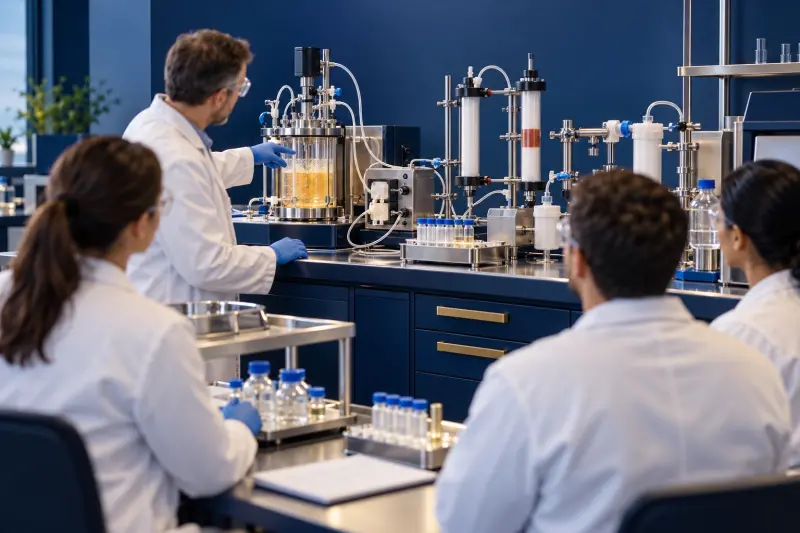
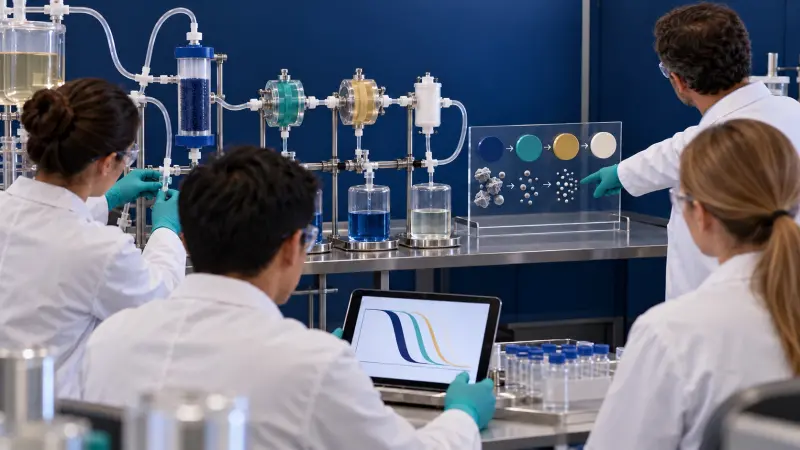
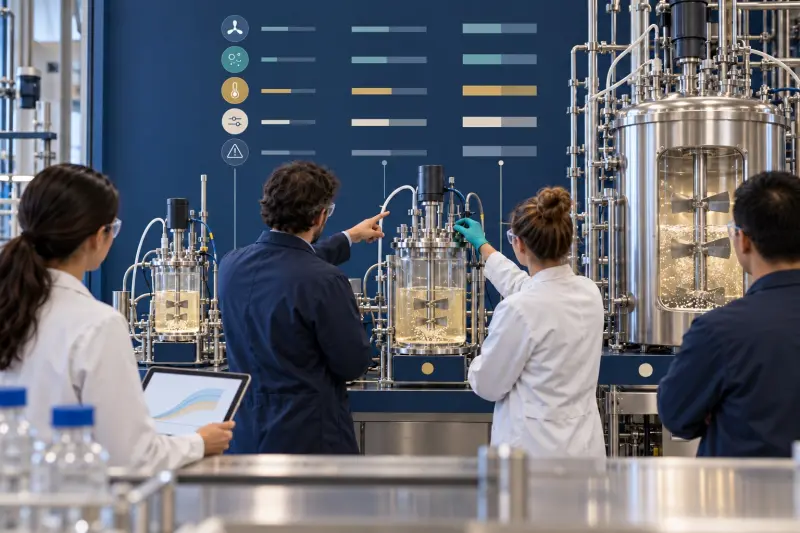
Early Downstream Bioprocess Development Training Course is a one-week intermediate course for downstream-development, purification, bioprocess, analytical, quality, and manufacturing-interface functions who leave with a Downstream Process Development Evidence Pack. Participants translate product and impurity attributes into a separation sequence, screen clarification, chromatography, membrane, and viral-clearance options, define scale-down studies, assess integration with upstream material, and prepare optimization and scale-up decisions. The course emphasizes evidence-led process selection rather than general biotechnology vocabulary. Agile Leaders Training Center presents early downstream bioprocess development.
Who Should Attend
- Downstream-development functions responsible for purification routes and experimental plans
- Bioprocess-engineering functions responsible for unit-operation integration and scale translation
- Purification functions responsible for chromatography, filtration, recovery, and yield
- Analytical-development functions responsible for product, impurity, and process evidence
- Quality-development functions responsible for traceability, risk, and control rationale
- Manufacturing-interface functions responsible for technology transfer and scale-up readiness
The course assumes participants already work with biologic materials, laboratory studies, or bioprocess data, and it leaves out introductory molecular biology, routine production operation, equipment certification, and product-specific validation protocols.
Departments and Industries
The course supports departments and industries that develop, transfer, or assure biologics purification processes.
- Biopharmaceutical, vaccine, recombinant-protein, and biosimilar development
- Process development, purification science, and bioprocess engineering
- Analytical development, formulation interfaces, and quality development
- Clinical and commercial manufacturing technology transfer
- Contract development and manufacturing organizations
- Life-science research, engineering services, and applied training laboratories
Learning Objectives
By the end of this course, participants will be able to:
- Analyze product, impurity, and feedstream separation needs
- Build an early downstream process-development strategy
- Compare clarification, chromatography, and membrane options
- Apply scale-down, screening, and optimization study designs
- Evaluate viral-clearance, cleaning, and testing interfaces
- Prioritize integration, scale-up, and transfer-readiness actions
Course Agenda
Day 1: Define the Separation Challenge
- Target Product and Critical Impurity Profile
- Upstream Feedstream Variability and Handover Register
- Recovery, Purity, Yield, Throughput, and Quality Objectives
- Downstream Unit-Operation Sequence and Decision Map
- Development Risk, Assumption, and Evidence Register
Day 2: Develop Harvest and Capture
- Cell Removal, Centrifugation, and Depth-Filtration Screen
- Flocculation, Precipitation, and Crystallization Decision Factors
- Primary Recovery Mass-Balance and Yield Calculation
- Capture Chromatography Mode and Resin-Screening Plan
- Feed Conditioning, Fouling, Capacity, and Cycle Assessment
Day 3: Build Purification and Viral Control
- Ion-Exchange, Affinity, Hydrophobic, and Mixed-Mode Comparison
- Polishing Step Selectivity and Impurity-Clearance Matrix
- Ultrafiltration, Diafiltration, and Membrane-Selection Study
- Viral Inactivation and Viral-Filtration Interface Map
- Intermediate Hold, Pooling, Stability, and Compatibility Screen
Day 4: Optimize and Prepare Scale-Up
- Scale-Down Model Purpose and Representativeness Criteria
- Factor Screening, Experimental Range, and Response Matrix
- Process Parameter, Performance, and Quality Relationship
- Cleaning, Reuse, Testing, and Lifecycle Considerations
- Scale-Up Basis, Equipment Fit, and Manufacturability Review
Day 5: Integrate the Development Package
- Suggested Exercise: Define the Separation Strategy
- Suggested Exercise: Compare Capture and Polishing Options
- Suggested Exercise: Review Membrane and Viral-Control Interfaces
- Suggested Exercise: Build a Scale-Down and Optimization Plan
- Capstone Exercise: Complete the Downstream Process Development Evidence Pack
Practical Exercises
The course uses suggested activities to turn product, impurity, unit-operation, and scale evidence into a coherent development route.
- Suggested activity: convert a feedstream description and quality target into a separation objective and unit-operation sequence.
- Suggested activity: compare clarification, capture, polishing, membrane, and viral-control options against yield, purity, capacity, and risk.
- Suggested activity: define scale-down acceptance criteria, experimental factors, responses, ranges, and evidence gaps.
- Suggested activity: assemble process rationale, mass balance, study results, risks, controls, scale-up basis, and transfer actions.
FAQs
Who suits early downstream bioprocess development training, and what does it assume?
Early downstream bioprocess development training suits downstream scientists, purification specialists, bioprocess engineers, analytical and quality developers, and manufacturing-interface teams. It assumes familiarity with biologic materials, laboratory studies, or bioprocess data.
How does downstream process development differ from routine downstream manufacturing?
Process development selects and characterizes a purification route through experiments, models, and evidence. Routine manufacturing executes a defined process within approved instructions, controls, equipment, and operating ranges.
How are chromatography modes selected for a biologic?
Selection considers product and impurity properties, binding mechanism, selectivity, capacity, recovery, buffer conditions, fouling, cleaning, cycle time, scalability, and how capture and polishing steps work together.
Why are scale-down models used in downstream development?
Scale-down models reproduce the important behavior of a larger operation with less material and time. They support screening, optimization, characterization, troubleshooting, and risk assessment when their representativeness is defined and verified.
What belongs in a downstream process development evidence pack?
The pack contains product and impurity profiles, feedstream assumptions, separation rationale, unit-operation screens, mass balances, experimental plans and results, viral and cleaning interfaces, risks, scale-up basis, gaps, and transfer actions.
Conclusion
Participants take back a Downstream Process Development Evidence Pack containing the separation basis, feedstream profile, recovery sequence, screening studies, chromatography and membrane choices, viral-control interfaces, scale-down models, optimization evidence, scale-up rationale, risks, and transfer actions. The pack connects laboratory decisions to a traceable purification strategy. It supports clearer development reviews and more disciplined preparation for manufacturing.
credits: 5 credit per day
Course Mode: full-time
Provider: Agile Leaders Training Center
-
Events for this Course
-
London 9 – 13 November 2026
-
New York 9 – 13 November 2026
-
Munich 16 – 20 November 2026
-
Prague 23 – 27 November 2026
-
Tbilisi 30 November – 4 December 2026
-
Porto 30 November – 4 December 2026
-
Paris 7 – 11 December 2026
-
Accra 20 – 24 December 2026
-
Zanzibar 20 – 24 December 2026
-
Sharm El-Sheikh 28 December 2026 – 1 January 2027
-
Bali 3 – 7 January 2027
-
Kuala Lumpur 4 – 8 January 2027
-
Nairobi 10 – 14 January 2027
-
Toronto 24 – 28 January 2027
-
Bangkok 31 January – 4 February 2027
-
Addis Ababa 1 – 5 February 2027
-
Tashkent 14 – 18 February 2027
-
Zoom 15 – 19 February 2027
-
London 22 – 26 February 2027
-
Seoul 22 – 26 February 2027
-
Abu Dhabi 1 – 5 March 2027
-
Baku 8 – 12 March 2027
-
Doha 14 – 18 March 2027
-
Frankfurt 15 – 19 March 2027
-
Kuwait 21 – 25 March 2027
-
Dubai 22 – 26 March 2027
-
Cairo 5 – 9 April 2027
-
Berlin 19 – 23 April 2027
-
Langkawi 25 – 29 April 2027
-
Phuket 2 – 6 May 2027
-
Amsterdam 10 – 14 May 2027
-
Johannesburg 16 – 20 May 2027
-
Jakarta 31 May – 4 June 2027
-
Milan 7 – 11 June 2027
-
Abu Dhabi 7 – 11 June 2027
-
Chicago 13 – 17 June 2027
-
Dubai 14 – 18 June 2027
-
Amman 27 June – 1 July 2027
-
Trabzon 27 June – 1 July 2027
-
Vienna 5 – 9 July 2027
-
Madrid 12 – 16 July 2027
-
Nice 12 – 16 July 2027
-
San Diego 19 – 23 July 2027
-
Geneva 25 – 29 July 2027
-
Tokyo 2 – 6 August 2027
-
Montreux 2 – 6 August 2027
-
Muscat 8 – 12 August 2027
-
Manama 15 – 19 August 2027
-
Singapore 23 – 27 August 2027
-
Lagos 5 – 9 September 2027
-
Lisbon 13 – 17 September 2027
-
Marbella 19 – 23 September 2027
-
Rome 20 – 24 September 2027
-
Athens 27 September – 1 October 2027
-
Casablanca 4 – 8 October 2027
-
Barcelona 11 – 15 October 2027
-
Cape town 17 – 21 October 2027
-
Istanbul 25 – 29 October 2027
| Image | Location | Dates | Duration | Mode | Price | Actions |
|---|---|---|---|---|---|---|

|
Madrid |
Week 28, 2027 12 – 16 July 2027 |
1 Week | Onsite | €6,500 | |

|
Nice |
Week 28, 2027 12 – 16 July 2027 |
1 Week | Onsite | €8,000 | |

|
San Diego |
Week 29, 2027 19 – 23 July 2027 |
1 Week | Onsite | €16,000 | |

|
Geneva |
Week 29, 2027 25 – 29 July 2027 |
1 Week | Onsite | €8,000 | |

|
Tokyo |
Week 31, 2027 2 – 6 August 2027 |
1 Week | Onsite | €12,000 | |

|
Montreux |
Week 31, 2027 2 – 6 August 2027 |
1 Week | Onsite | €8,000 | |

|
Muscat |
Week 31, 2027 8 – 12 August 2027 |
1 Week | Onsite | €6,500 | |

|
Manama |
Week 32, 2027 15 – 19 August 2027 |
1 Week | Onsite | €6,500 | |

|
Singapore |
Week 34, 2027 23 – 27 August 2027 |
1 Week | Onsite | €6,500 | |

|
Lagos |
Week 35, 2027 5 – 9 September 2027 |
1 Week | Onsite | €6,000 | |

|
Lisbon |
Week 37, 2027 13 – 17 September 2027 |
1 Week | Onsite | €6,500 | |

|
Marbella |
Week 37, 2027 19 – 23 September 2027 |
1 Week | Onsite | €6,500 | |

|
Rome |
Week 38, 2027 20 – 24 September 2027 |
1 Week | Onsite | €6,500 | |

|
Athens |
Week 39, 2027 27 September – 1 October 2027 |
1 Week | Onsite | €7,500 | |

|
Casablanca |
Week 40, 2027 4 – 8 October 2027 |
1 Week | Onsite | €6,000 | |

|
Barcelona |
Week 41, 2027 11 – 15 October 2027 |
1 Week | Onsite | €6,500 | |

|
Cape town |
Week 41, 2027 17 – 21 October 2027 |
1 Week | Onsite | €6,000 | |

|
Istanbul |
Week 43, 2027 25 – 29 October 2027 |
1 Week | Onsite | €6,000 |
Frequently asked questions
What does this course cover?
OverviewEarly Downstream Bioprocess Development Training Course is a one-week intermediate course for downstream-development, purification, bioprocess, analytical, quality, and manufacturing-interface functions who leave with a Downstream Process Development Evidence Pack. Participants translate product and impurity attributes into a separation sequence,…
Are training dates available?
Yes. Available dates and destinations are listed in the course dates section on this page.
How can I register?
Choose an available date on this page and complete the registration form, or send a programme enquiry.
Can I download the course brochure?
Yes. Use the brochure download link provided on this page.
This course by city
- Oil & Gas Training and Other Technical Courses in Abu Dhabi
- Oil & Gas Training and Other Technical Courses in Accra
- Oil & Gas Training and Other Technical Courses in Addis Ababa
- Oil & Gas Training and Other Technical Courses in Amman
- Oil & Gas Training and Other Technical Courses in Amsterdam
- Oil & Gas Training and Other Technical Courses in Athens
- Oil & Gas Training and Other Technical Courses in Baku
- Oil & Gas Training and Other Technical Courses in Bali
- Oil & Gas Training and Other Technical Courses in Bangkok
- Oil & Gas Training and Other Technical Courses in Barcelona
- Oil & Gas Training and Other Technical Courses in Berlin
- Oil & Gas Training and Other Technical Courses in Cairo
- Oil & Gas Training and Other Technical Courses in Cape town
- Oil & Gas Training and Other Technical Courses in Casablanca
- Oil & Gas Training and Other Technical Courses in Chicago
- Oil & Gas Training and Other Technical Courses in Doha
- Oil & Gas Training and Other Technical Courses in Dubai
- Oil & Gas Training and Other Technical Courses in Frankfurt
- Oil & Gas Training and Other Technical Courses in Geneva
- Oil & Gas Training and Other Technical Courses in Istanbul
- Oil & Gas Training and Other Technical Courses in Jakarta
- Oil & Gas Training and Other Technical Courses in Johannesburg
- Oil & Gas Training and Other Technical Courses in Kuala Lumpur
- Oil & Gas Training and Other Technical Courses in Kuwait
- Oil & Gas Training and Other Technical Courses in Lagos
- Oil & Gas Training and Other Technical Courses in Langkawi
- Oil & Gas Training and Other Technical Courses in Lisbon
- Oil & Gas Training and Other Technical Courses in London
- Oil & Gas Training and Other Technical Courses in Madrid
- Oil & Gas Training and Other Technical Courses in Manama
- Oil & Gas Training and Other Technical Courses in Marbella
- Oil & Gas Training and Other Technical Courses in Milan
- Oil & Gas Training and Other Technical Courses in Montreux
- Oil & Gas Training and Other Technical Courses in Munich
- Oil & Gas Training and Other Technical Courses in Muscat
- Oil & Gas Training and Other Technical Courses in Nairobi
- Oil & Gas Training and Other Technical Courses in New York
- Oil & Gas Training and Other Technical Courses in Nice
- Oil & Gas Training and Other Technical Courses in Paris
- Oil & Gas Training and Other Technical Courses in Phuket
- Oil & Gas Training and Other Technical Courses in Porto
- Oil & Gas Training and Other Technical Courses in Prague
- Oil & Gas Training and Other Technical Courses in Rome
- Oil & Gas Training and Other Technical Courses in San Diego
- Oil & Gas Training and Other Technical Courses in Seoul
- Oil & Gas Training and Other Technical Courses in Sharm El-Sheikh
- Oil & Gas Training and Other Technical Courses in Singapore
- Oil & Gas Training and Other Technical Courses in Tashkent
- Oil & Gas Training and Other Technical Courses in Tbilisi
- Oil & Gas Training and Other Technical Courses in Tokyo
- Oil & Gas Training and Other Technical Courses in Toronto
- Oil & Gas Training and Other Technical Courses in Trabzon
- Oil & Gas Training and Other Technical Courses in Vienna
- Oil & Gas Training and Other Technical Courses in Zanzibar
- Oil & Gas Training and Other Technical Courses in Zoom