Heavy Lifting and Project Cargo Transport Course

At a glance
- Duration
- 1 Week
- Format
- Classroom
- Cities
- Paris, Lisbon, Doha, Cairo, Johannesburg, Dubai and more
- Next session
- 9 – 13 November 2026, Paris
- Average fee
- 7,500 €
Overview
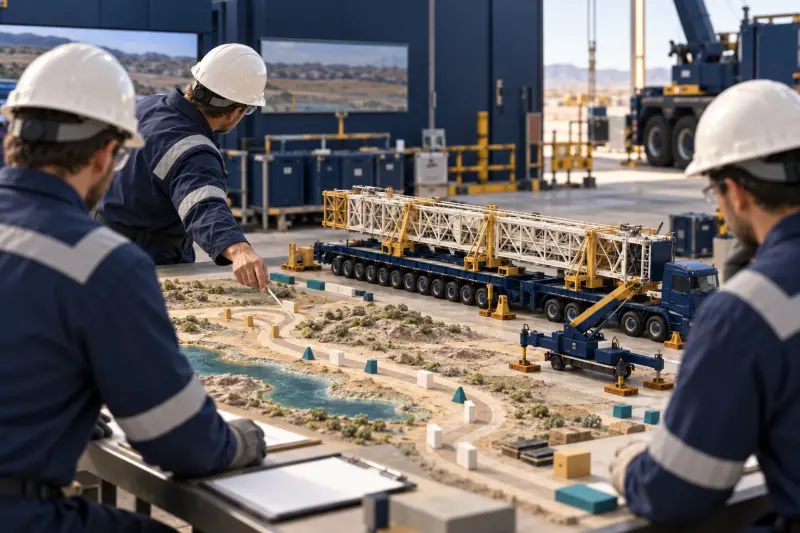
Advanced Heavy Lifting and Project Cargo Transport Training Course is a one-week advanced course for lift and transport engineers, supervisors, rigging planners, project teams, marine operations, HSE personnel, and assurance reviewers who leave with a Heavy Lift and Transport Execution Plan. Participants integrate engineered heavy lifting, critical lift planning, SPMT transport, project cargo route surveys, and marine load-out controls. The course converts load data and site constraints into verifiable execution decisions. Agile Leaders Training Center presents heavy-lift and project-cargo engineering practice.
Who Should Attend
- Engineering functions responsible for crane selection, lift calculations, and rigging design
- Transport functions responsible for SPMT configuration, route surveys, and exceptional loads
- Marine operations responsible for load-out, barge interfaces, sea fastening, and weather criteria
- Construction teams responsible for site readiness and execution coordination
- HSE and assurance functions responsible for controls, verification, and authorization
The course assumes participants interpret load drawings, crane charts, rigging data, transport layouts, and method statements, and it leaves out basic rigging, routine material handling, general safety induction, and generic project management.
Departments and Industries
The course supports departments and industries that engineer and execute heavy lifts and exceptional-load movements.
- Oil, gas, petrochemical, and process-plant construction
- Offshore wind, marine construction, and port operations
- Power generation, transmission, and industrial installation
- Heavy-haul, modular transport, and project logistics
- EPC, lifting services, technical assurance, and marine warranty support
Learning Objectives
By the end of this course, participants will be able to:
- Analyze load, center-of-gravity, stability, and interface data
- Evaluate crane, rigging, ground-support, and tandem-lift arrangements
- Build SPMT configurations and heavy-haul route plans
- Apply load-out, barge, sea-fastening, and weather controls
- Prioritize communications, contingencies, rescue, and stop-work criteria
- Build an auditable lift and transport execution plan
Course Agenda
Day 1: Establish the Engineering Basis
- Load Definition, Center-of-Gravity, and Stability Data Sheet
- Lift Classification and Criticality Screening Matrix
- ISO 12480-1 Safe-System-of-Work Requirements Map
- Onshore, Quayside, and Offshore Interface Register
- Heavy Lift and Transport Design-Basis Document
Day 2: Engineer Cranes and Rigging
- Crane Capacity Chart and Configuration Selection Method
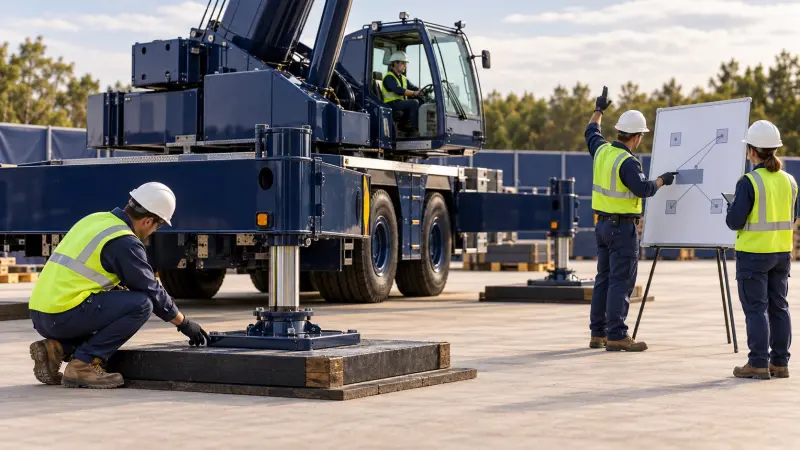
- Ground-Bearing Pressure and Crane-Mat Design Worksheet
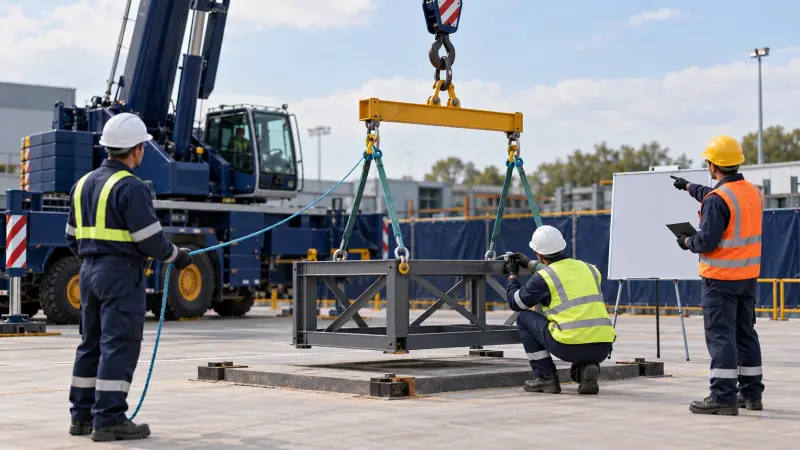
- Sling, Shackle, Spreader-Beam, and Lifting-Point Load Model
- Tandem-Lift Load-Share and Tail-Crane Control Plan
- Rigging Geometry, Tolerance, and Equipment Verification Checklist
Day 3: Plan Project Cargo Transport
- SPMT Axle-Line, Hydraulic-Group, and Stability Configuration Sheet
- Trailer and SPMT Load Distribution Calculation Method
- Heavy-Haul Route Survey and Clearance Register
- Bridge, Pavement, Gradient, Turning, and Obstruction Review
- Loading, Jacking, Support, and Controlled-Transfer Procedure
Day 4: Integrate Marine and Execution Controls
- DNV-ST-N001 Marine Operation Load-Case Review
- Load-Out, Load-In, Barge-Ballast, and Mooring Interface Plan
- Sea-Fastening, Voyage, and Structural-Restraint Verification Record
- Weather Window, Wind Limit, and Environmental Criteria Matrix
- Communication, Hold-Point, Contingency, and Rescue Control Sheet
Day 5: Practice Lift and Transport Execution
- Suggested Exercise: Select Crane, Rigging, and Ground Support
- Suggested Exercise: Configure SPMT and Validate the Route
- Suggested Exercise: Plan Tandem Lift and Load Transfer
- Suggested Exercise: Verify Marine, Weather, and Contingency Controls
- Capstone Exercise: Complete the Heavy Lift and Transport Execution Plan
Practical Exercises
The course uses suggested activities to turn load, equipment, route, and marine evidence into traceable execution controls.
- Suggested activity: calculate load paths and compare crane configurations, rigging geometry, ground support, and tandem-lift tolerances.
- Suggested activity: configure SPMT axle lines and evaluate route clearances, gradients, turns, pavement, bridges, and transfer supports.
- Suggested activity: connect load-out sequencing, ballast, mooring, sea fastening, weather limits, communications, and hold points.
- Suggested activity: document verification evidence, contingencies, rescue arrangements, approvals, and execution records.
FAQs
Who suits advanced heavy lifting and project cargo transport training, and what does it assume?
Advanced heavy lifting and project cargo transport training suits engineering, transport, rigging, marine, construction, HSE, and assurance functions. It assumes participants can interpret load drawings, equipment data, transport layouts, and method statements.
How does heavy lifting and project cargo transport differ from basic rigging training?
Heavy lifting and project cargo transport integrates engineered load paths, crane and transporter selection, ground and route capacity, marine interfaces, weather criteria, contingencies, and verification. Basic rigging training focuses on routine accessory selection, inspection, signaling, and handling practices.
What defines a critical lift plan?
A critical lift plan records the load, geometry, equipment configuration, capacity checks, ground support, rigging, interfaces, roles, communications, weather limits, hold points, contingencies, and verification evidence required for controlled execution.
How is SPMT transport stability checked?
SPMT transport stability is checked through center-of-gravity location, axle-line configuration, hydraulic grouping, load distribution, platform geometry, support polygon, route gradient, turning effects, ground capacity, equipment limits, and controlled operating criteria.
How are offshore heavy-lift weather limits managed?
Offshore heavy-lift weather limits are managed by defining forecast sources, wind and environmental criteria, operation duration, contingency time, decision points, monitoring responsibilities, stop criteria, and safe-state actions for each marine interface.
Conclusion
Participants take back a Heavy Lift and Transport Execution Plan linking load definition, cranes, rigging, ground support, transport, routes, marine interfaces, weather, and contingencies. It changes separate calculations and method statements into one traceable execution path. The plan supports technical review, site readiness, authorization, toolbox communication, controlled performance, and closeout evidence.
credits: 5 credit per day
Course Mode: full-time
Provider: Agile Leaders Training Center
-
Events for this Course
-
Paris 9 – 13 November 2026
-
Lisbon 9 – 13 November 2026
-
Doha 22 – 26 November 2026
-
Cairo 30 November – 4 December 2026
-
Johannesburg 20 – 24 December 2026
-
Dubai 21 – 25 December 2026
-
Manama 27 – 31 December 2026
-
Kuwait 27 – 31 December 2026
-
Vienna 11 – 15 January 2027
-
Addis Ababa 18 – 22 January 2027
-
Bangkok 7 – 11 February 2027
-
Jakarta 22 – 26 February 2027
-
Singapore 22 – 26 February 2027
-
Barcelona 1 – 5 March 2027
-
Accra 7 – 11 March 2027
-
Abu Dhabi 8 – 12 March 2027
-
Tokyo 15 – 19 March 2027
-
Marbella 21 – 25 March 2027
-
Milan 22 – 26 March 2027
-
Geneva 28 March – 1 April 2027
-
Casablanca 5 – 9 April 2027
-
Dubai 12 – 16 April 2027
-
Baku 26 – 30 April 2027
-
Berlin 26 – 30 April 2027
-
Munich 3 – 7 May 2027
-
Amman 9 – 13 May 2027
-
New York 10 – 14 May 2027
-
Chicago 16 – 20 May 2027
-
Nairobi 23 – 27 May 2027
-
Montreux 24 – 28 May 2027
-
Sharm El-Sheikh 31 May – 4 June 2027
-
Muscat 6 – 10 June 2027
-
Kuala Lumpur 7 – 11 June 2027
-
Zanzibar 13 – 17 June 2027
-
Athens 14 – 18 June 2027
-
Tashkent 20 – 24 June 2027
-
Tbilisi 21 – 25 June 2027
-
Phuket 27 June – 1 July 2027
-
Bali 27 June – 1 July 2027
-
Langkawi 11 – 15 July 2027
-
Trabzon 18 – 22 July 2027
-
London 19 – 23 July 2027
-
Lagos 25 – 29 July 2027
-
Istanbul 26 – 30 July 2027
-
Frankfurt 2 – 6 August 2027
-
Nice 9 – 13 August 2027
-
Porto 16 – 20 August 2027
-
Cape town 22 – 26 August 2027
-
London 13 – 17 September 2027
-
San Diego 13 – 17 September 2027
-
Madrid 20 – 24 September 2027
-
Amsterdam 11 – 15 October 2027
-
Zoom 18 – 22 October 2027
-
Abu Dhabi 18 – 22 October 2027
-
Rome 25 – 29 October 2027
-
Toronto 31 October – 4 November 2027
-
Prague 8 – 12 November 2027
-
Seoul 8 – 12 November 2027
| Image | Location | Dates | Duration | Mode | Price | Actions |
|---|---|---|---|---|---|---|

|
Casablanca |
Week 14, 2027 5 – 9 April 2027 |
1 Week | Onsite | €6,000 | |

|
Dubai |
Week 15, 2027 12 – 16 April 2027 |
1 Week | Onsite | €6,500 | |

|
Baku |
Week 17, 2027 26 – 30 April 2027 |
1 Week | Onsite | €8,000 | |

|
Berlin |
Week 17, 2027 26 – 30 April 2027 |
1 Week | Onsite | €6,500 | |

|
Munich |
Week 18, 2027 3 – 7 May 2027 |
1 Week | Onsite | €6,500 | |

|
Amman |
Week 18, 2027 9 – 13 May 2027 |
1 Week | Onsite | €6,000 | |

|
New York |
Week 19, 2027 10 – 14 May 2027 |
1 Week | Onsite | €16,000 | |

|
Chicago |
Week 19, 2027 16 – 20 May 2027 |
1 Week | Onsite | €16,000 | |

|
Nairobi |
Week 20, 2027 23 – 27 May 2027 |
1 Week | Onsite | €6,000 | |

|
Montreux |
Week 21, 2027 24 – 28 May 2027 |
1 Week | Onsite | €8,000 | |

|
Sharm El-Sheikh |
Week 22, 2027 31 May – 4 June 2027 |
1 Week | Onsite | €5,200 | |

|
Muscat |
Week 22, 2027 6 – 10 June 2027 |
1 Week | Onsite | €6,500 | |

|
Kuala Lumpur |
Week 23, 2027 7 – 11 June 2027 |
1 Week | Onsite | €6,500 | |

|
Zanzibar |
Week 23, 2027 13 – 17 June 2027 |
1 Week | Onsite | €6,000 | |

|
Athens |
Week 24, 2027 14 – 18 June 2027 |
1 Week | Onsite | €7,500 | |

|
Tashkent |
Week 24, 2027 20 – 24 June 2027 |
1 Week | Onsite | €8,000 | |

|
Tbilisi |
Week 25, 2027 21 – 25 June 2027 |
1 Week | Onsite | €5,700 | |

|
Phuket |
Week 25, 2027 27 June – 1 July 2027 |
1 Week | Onsite | €8,000 | |

|
Bali |
Week 25, 2027 27 June – 1 July 2027 |
1 Week | Onsite | €6,500 | |

|
Langkawi |
Week 27, 2027 11 – 15 July 2027 |
1 Week | Onsite | €8,000 |
Frequently asked questions
What does this course cover?
OverviewAdvanced Heavy Lifting and Project Cargo Transport Training Course is a one-week advanced course for lift and transport engineers, supervisors, rigging planners, project teams, marine operations, HSE personnel, and assurance reviewers who leave with a Heavy Lift and Transport Execution Plan. Participants integrate engineered heavy lifting, critica…
Are training dates available?
Yes. Available dates and destinations are listed in the course dates section on this page.
How can I register?
Choose an available date on this page and complete the registration form, or send a programme enquiry.
Can I download the course brochure?
Yes. Use the brochure download link provided on this page.
This course by city
- Maintenance Training and Engineering Training Courses in Abu Dhabi
- Maintenance Training and Engineering Training Courses in Accra
- Maintenance Training and Engineering Training Courses in Addis Ababa
- Maintenance Training and Engineering Training Courses in Amman
- Maintenance Training and Engineering Training Courses in Amsterdam
- Maintenance Training and Engineering Training Courses in Athens
- Maintenance Training and Engineering Training Courses in Baku
- Maintenance Training and Engineering Training Courses in Bali
- Maintenance Training and Engineering Training Courses in Bangkok
- Maintenance Training and Engineering Training Courses in Barcelona
- Maintenance Training and Engineering Training Courses in Berlin
- Maintenance Training and Engineering Training Courses in Cairo
- Maintenance Training and Engineering Training Courses in Cape town
- Maintenance Training and Engineering Training Courses in Casablanca
- Maintenance Training and Engineering Training Courses in Chicago
- Maintenance Training and Engineering Training Courses in Doha
- Maintenance Training and Engineering Training Courses in Dubai
- Maintenance Training and Engineering Training Courses in Frankfurt
- Maintenance Training and Engineering Training Courses in Geneva
- Maintenance Training and Engineering Training Courses in Istanbul
- Maintenance Training and Engineering Training Courses in Jakarta
- Maintenance Training and Engineering Training Courses in Johannesburg
- Maintenance Training and Engineering Training Courses in Kuala Lumpur
- Maintenance Training and Engineering Training Courses in Kuwait
- Maintenance Training and Engineering Training Courses in Lagos
- Maintenance Training and Engineering Training Courses in Langkawi
- Maintenance Training and Engineering Training Courses in Lisbon
- Maintenance Training and Engineering Training Courses in London
- Maintenance Training and Engineering Training Courses in Madrid
- Maintenance Training and Engineering Training Courses in Manama
- Maintenance Training and Engineering Training Courses in Marbella
- Maintenance Training and Engineering Training Courses in Milan
- Maintenance Training and Engineering Training Courses in Montreux
- Maintenance Training and Engineering Training Courses in Munich
- Maintenance Training and Engineering Training Courses in Muscat
- Maintenance Training and Engineering Training Courses in Nairobi
- Maintenance Training and Engineering Training Courses in New York
- Maintenance Training and Engineering Training Courses in Nice
- Maintenance Training and Engineering Training Courses in Paris
- Maintenance Training and Engineering Training Courses in Phuket
- Maintenance Training and Engineering Training Courses in Porto
- Maintenance Training and Engineering Training Courses in Prague
- Maintenance Training and Engineering Training Courses in Rome
- Maintenance Training and Engineering Training Courses in San Diego
- Maintenance Training and Engineering Training Courses in Seoul
- Maintenance Training and Engineering Training Courses in Sharm El-Sheikh
- Maintenance Training and Engineering Training Courses in Singapore
- Maintenance Training and Engineering Training Courses in Tashkent
- Maintenance Training and Engineering Training Courses in Tbilisi
- Maintenance Training and Engineering Training Courses in Tokyo
- Maintenance Training and Engineering Training Courses in Toronto
- Maintenance Training and Engineering Training Courses in Trabzon
- Maintenance Training and Engineering Training Courses in Vienna
- Maintenance Training and Engineering Training Courses in Zanzibar
- Maintenance Training and Engineering Training Courses in Zoom