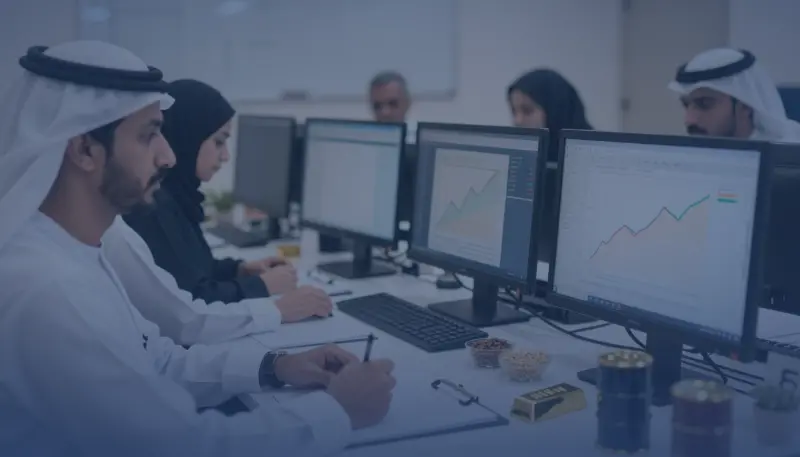
Natural Gas and LNG Markets Trading Course

At a glance
- Duration
- 1 Week
- Format
- Classroom
- Cities
- Baku, Abu Dhabi, Sharm El-Sheikh, Bangkok, Seoul, Geneva and more
- Next session
- 9 – 13 November 2026, Baku
- Average fee
- 7,500 €
Overview
Advanced Natural Gas and LNG Markets Trading Training Course is a one-week advanced course for traders, originators, portfolio, scheduling, commercial, and risk functions who leave with a Gas and LNG Trading Decision Book. Participants integrate natural gas and LNG trading, gas hub price formation, LNG cargo netback analysis, gas basis spread trading, and gas portfolio risk management. The course connects physical flows, contracts, storage, freight, derivatives, hedging, P&L, and controls across pipeline and cargo markets. Agile Leaders Training Center presents gas and LNG trading practice.
Who Should Attend
- Trading functions responsible for physical gas, LNG cargoes, futures, swaps, and options
- Origination and commercial functions responsible for supply, sales, term structures, and optionality
- Portfolio functions responsible for hub exposures, spreads, storage, freight, and optimization
- Scheduling functions responsible for nominations, balancing, pipeline flows, and cargo delivery
- Risk functions responsible for limits, mark-to-market, hedging, scenarios, and P&L review
- Market-analysis functions responsible for supply, demand, storage, weather, flows, and price signals
The course assumes participants already interpret commodity contracts, forward curves, position reports, and market data, and it leaves out introductory commodity terminology, crude-oil trading, plant operations, and specialist option-model development.
Departments and Industries
The course supports departments and industries that trade, schedule, hedge, or govern natural gas and LNG exposures.
- Gas production, processing, pipelines, storage, and distribution
- LNG liquefaction, shipping, regasification, and portfolio trading
- Utilities, power generation, and industrial energy procurement
- Commodity trading, origination, treasury, and market risk
- Shipping, freight, terminals, and cargo operations
- Commercial analytics, scheduling, settlements, and valuation control
Learning Objectives
By the end of this course, participants will be able to:
- Analyze gas and LNG supply, demand, flows, contracts, and price formation
- Build hub curves, basis maps, cargo netbacks, and spread views
- Apply futures, swaps, options, storage, and flexibility trading methods
- Evaluate nominations, balancing, freight, delivery, and portfolio constraints
- Use hedge ratios, limits, scenarios, mark-to-market, and P&L attribution
- Prioritize trade decisions through governance and evidence controls
Course Agenda
Day 1: Map Gas and LNG Markets
- Natural Gas Value Chain and Physical Flow Map
- Henry Hub, TTF, NBP, JKM, and Regional Benchmark Matrix
- Supply, Demand, Weather, Storage, and Infrastructure Driver Dashboard
- Spot, Term, Pipeline, and LNG Contract Structure Comparison
- Gas and LNG Trading Mandate and Governance Charter
Day 2: Price Hubs and Cargoes
- Forward Curve, Seasonality, and Tenor Alignment Method
- Hub, Location, Quality, and Transport Basis Map
- FOB, Destination Delivery, Freight, and Cargo Netback Model
- TTF-JKM, Henry Hub-LNG, and Basin Spread Decision Grid
- Market Data, Assumption, and Price Validation Checklist
Day 3: Trade Physical Flexibility
- Pipeline Nomination, Imbalance, and Constraint Decision Sheet
- Storage Injection, Withdrawal, Carry, and Optionality Model
- LNG Cargo Scheduling, Diversion, and Destination Decision Tree
- Volume, Delivery, Swing, and Contract Flexibility Register
- Physical Position, Exposure, and Portfolio Optimization Ledger
Day 4: Hedge and Govern Positions
- Gas Futures, Swaps, Options, and Hedge-Instrument Matrix
- Basis, Calendar, Location, and Cross-Market Spread Trade Sheet
- Hedge Ratio, Delta, and Residual Exposure Dashboard
- Mark-to-Market, P&L Attribution, and Settlement Reconciliation
- Risk Limit, Scenario, Stress, and Trade-Control Register
Day 5: Practice Gas and LNG Trading
- Suggested Exercise: Build Hub Curves and a Basis Market View
- Suggested Exercise: Compare Cargo Netbacks and Diversion Choices
- Suggested Exercise: Optimize Storage, Swing, and Physical Positions
- Suggested Exercise: Design a Hedge and Explain Trading P&L
- Capstone Exercise: Complete the Gas and LNG Trading Decision Book
Practical Exercises
The course uses suggested activities to convert market data, contracts, flows, and risk evidence into traceable trading and portfolio decisions.
- Suggested activity: map benchmark curves, seasonality, basis, infrastructure, storage, weather, and flow signals into a market view.
- Suggested activity: compare FOB and destination cargo netbacks after price, freight, delivery, and contractual adjustments.
- Suggested activity: optimize pipeline, storage, swing, cargo, and portfolio positions under operational constraints.
- Suggested activity: select hedge instruments and explain limits, scenarios, residual risk, mark-to-market, and P&L attribution.
FAQs
Who suits advanced natural gas and LNG markets trading training, and what does it assume?
Advanced natural gas and LNG markets trading training suits trading, origination, portfolio, scheduling, commercial, risk, and analytics functions. It assumes participants can interpret commodity contracts, forward curves, position reports, and market data.
How does natural gas and LNG trading differ from introductory commodity-markets training?
Natural gas and LNG trading integrates pipeline flows, storage, nominations, balancing, hub curves, basis, cargo netbacks, freight, term contracts, derivatives, portfolio optimization, hedging, and P&L. Introductory commodity training focuses on basic market and instrument concepts.
How are natural gas hub and LNG cargo prices connected?
Natural gas hub and LNG cargo prices are connected through contract indexation, liquefaction or regasification economics, freight, delivery terms, losses, timing, basis, and destination alternatives. Traders compare these components through forward curves, spreads, and netbacks.
How are storage and swing flexibility traded in gas markets?
Storage and swing flexibility are traded by comparing injection, withdrawal, carry, volume, timing, imbalance, and delivery choices against forward spreads, operational limits, contract rights, losses, and transaction costs.
How is natural gas and LNG trading risk controlled?
Natural gas and LNG trading risk is controlled through mandates, position and loss limits, approved instruments, independent prices, hedge ratios, basis analysis, scenarios, stress tests, mark-to-market, P&L attribution, settlements, exceptions, and escalation records.
Conclusion
Participants take back a Gas and LNG Trading Decision Book linking physical flows, contracts, hubs, cargo netbacks, flexibility, positions, hedges, and controls. It changes separate market views and exposure reports into one traceable decision path. The book supports trade selection, scheduling, portfolio optimization, risk review, P&L explanation, and governance.
credits: 5 credit per day
Course Mode: full-time
Provider: Agile Leaders Training Center
-
Events for this Course
-
Baku 9 – 13 November 2026
-
Abu Dhabi 9 – 13 November 2026
-
Sharm El-Sheikh 16 – 20 November 2026
-
Bangkok 22 – 26 November 2026
-
Seoul 23 – 27 November 2026
-
Geneva 29 November – 3 December 2026
-
Dubai 7 – 11 December 2026
-
Kuwait 13 – 17 December 2026
-
London 14 – 18 December 2026
-
Manama 20 – 24 December 2026
-
Frankfurt 28 December 2026 – 1 January 2027
-
Nairobi 3 – 7 January 2027
-
Cairo 11 – 15 January 2027
-
Athens 11 – 15 January 2027
-
Addis Ababa 18 – 22 January 2027
-
Muscat 14 – 18 February 2027
-
Dubai 15 – 19 February 2027
-
Chicago 21 – 25 February 2027
-
Jakarta 22 – 26 February 2027
-
Tashkent 28 February – 4 March 2027
-
Johannesburg 7 – 11 March 2027
-
San Diego 8 – 12 March 2027
-
Amman 14 – 18 March 2027
-
Toronto 4 – 8 April 2027
-
Milan 5 – 9 April 2027
-
Prague 12 – 16 April 2027
-
Bali 18 – 22 April 2027
-
Montreux 26 – 30 April 2027
-
Berlin 3 – 7 May 2027
-
Kuala Lumpur 10 – 14 May 2027
-
Nice 10 – 14 May 2027
-
Amsterdam 17 – 21 May 2027
-
Singapore 17 – 21 May 2027
-
Paris 24 – 28 May 2027
-
Accra 30 May – 3 June 2027
-
New York 31 May – 4 June 2027
-
Cape town 6 – 10 June 2027
-
London 14 – 18 June 2027
-
Porto 14 – 18 June 2027
-
Istanbul 21 – 25 June 2027
-
Zanzibar 4 – 8 July 2027
-
Tokyo 26 – 30 July 2027
-
Casablanca 9 – 13 August 2027
-
Trabzon 15 – 19 August 2027
-
Rome 16 – 20 August 2027
-
Langkawi 29 August – 2 September 2027
-
Lisbon 30 August – 3 September 2027
-
Barcelona 6 – 10 September 2027
-
Abu Dhabi 6 – 10 September 2027
-
Vienna 13 – 17 September 2027
-
Lagos 19 – 23 September 2027
-
Madrid 20 – 24 September 2027
-
Phuket 3 – 7 October 2027
-
Munich 4 – 8 October 2027
-
Zoom 18 – 22 October 2027
-
Tbilisi 25 – 29 October 2027
-
Doha 31 October – 4 November 2027
-
Marbella 31 October – 4 November 2027
| Image | Location | Dates | Duration | Mode | Price | Actions |
|---|---|---|---|---|---|---|

|
Baku |
Week 46, 2026 9 – 13 November 2026 |
1 Week | Onsite | €8,000 | |

|
Abu Dhabi |
Week 46, 2026 9 – 13 November 2026 |
1 Week | Onsite | €6,500 | |

|
Sharm El-Sheikh |
Week 47, 2026 16 – 20 November 2026 |
1 Week | Onsite | €5,200 | |

|
Bangkok |
Week 47, 2026 22 – 26 November 2026 |
1 Week | Onsite | €8,000 | |

|
Seoul |
Week 48, 2026 23 – 27 November 2026 |
1 Week | Onsite | €12,000 | |

|
Geneva |
Week 48, 2026 29 November – 3 December 2026 |
1 Week | Onsite | €8,000 | |

|
Dubai |
Week 50, 2026 7 – 11 December 2026 |
1 Week | Onsite | €6,500 | |

|
Kuwait |
Week 50, 2026 13 – 17 December 2026 |
1 Week | Onsite | €7,000 | |

|
London |
Week 51, 2026 14 – 18 December 2026 |
1 Week | Onsite | €6,500 | |

|
Manama |
Week 51, 2026 20 – 24 December 2026 |
1 Week | Onsite | €6,500 | |

|
Frankfurt |
Week 53, 2026 28 December 2026 – 1 January 2027 |
1 Week | Onsite | €6,500 | |

|
Nairobi |
Week 53, 2027 3 – 7 January 2027 |
1 Week | Onsite | €6,000 | |

|
Cairo |
Week 02, 2027 11 – 15 January 2027 |
1 Week | Onsite | €5,200 | |

|
Athens |
Week 02, 2027 11 – 15 January 2027 |
1 Week | Onsite | €7,500 | |

|
Addis Ababa |
Week 03, 2027 18 – 22 January 2027 |
1 Week | Onsite | €6,000 | |

|
Muscat |
Week 06, 2027 14 – 18 February 2027 |
1 Week | Onsite | €6,500 | |
|
|
Dubai |
Week 07, 2027 15 – 19 February 2027 |
1 Week | Onsite | €6,500 | |

|
Chicago |
Week 07, 2027 21 – 25 February 2027 |
1 Week | Onsite | €16,000 | |

|
Jakarta |
Week 08, 2027 22 – 26 February 2027 |
1 Week | Onsite | €8,000 | |

|
Tashkent |
Week 08, 2027 28 February – 4 March 2027 |
1 Week | Onsite | €8,000 |
Frequently asked questions
What does this course cover?
OverviewAdvanced Natural Gas and LNG Markets Trading Training Course is a one-week advanced course for traders, originators, portfolio, scheduling, commercial, and risk functions who leave with a Gas and LNG Trading Decision Book. Participants integrate natural gas and LNG trading, gas hub price formation, LNG cargo netback analysis, gas basis spread trad…
Are training dates available?
Yes. Available dates and destinations are listed in the course dates section on this page.
How can I register?
Choose an available date on this page and complete the registration form, or send a programme enquiry.
Can I download the course brochure?
Yes. Use the brochure download link provided on this page.
This course by city
- Oil & Gas Training and Other Technical Courses in Abu Dhabi
- Oil & Gas Training and Other Technical Courses in Accra
- Oil & Gas Training and Other Technical Courses in Addis Ababa
- Oil & Gas Training and Other Technical Courses in Amman
- Oil & Gas Training and Other Technical Courses in Amsterdam
- Oil & Gas Training and Other Technical Courses in Athens
- Oil & Gas Training and Other Technical Courses in Baku
- Oil & Gas Training and Other Technical Courses in Bali
- Oil & Gas Training and Other Technical Courses in Bangkok
- Oil & Gas Training and Other Technical Courses in Barcelona
- Oil & Gas Training and Other Technical Courses in Berlin
- Oil & Gas Training and Other Technical Courses in Cairo
- Oil & Gas Training and Other Technical Courses in Cape town
- Oil & Gas Training and Other Technical Courses in Casablanca
- Oil & Gas Training and Other Technical Courses in Chicago
- Oil & Gas Training and Other Technical Courses in Doha
- Oil & Gas Training and Other Technical Courses in Dubai
- Oil & Gas Training and Other Technical Courses in Frankfurt
- Oil & Gas Training and Other Technical Courses in Geneva
- Oil & Gas Training and Other Technical Courses in Istanbul
- Oil & Gas Training and Other Technical Courses in Jakarta
- Oil & Gas Training and Other Technical Courses in Johannesburg
- Oil & Gas Training and Other Technical Courses in Kuala Lumpur
- Oil & Gas Training and Other Technical Courses in Kuwait
- Oil & Gas Training and Other Technical Courses in Lagos
- Oil & Gas Training and Other Technical Courses in Langkawi
- Oil & Gas Training and Other Technical Courses in Lisbon
- Oil & Gas Training and Other Technical Courses in London
- Oil & Gas Training and Other Technical Courses in Madrid
- Oil & Gas Training and Other Technical Courses in Manama
- Oil & Gas Training and Other Technical Courses in Marbella
- Oil & Gas Training and Other Technical Courses in Milan
- Oil & Gas Training and Other Technical Courses in Montreux
- Oil & Gas Training and Other Technical Courses in Munich
- Oil & Gas Training and Other Technical Courses in Muscat
- Oil & Gas Training and Other Technical Courses in Nairobi
- Oil & Gas Training and Other Technical Courses in New York
- Oil & Gas Training and Other Technical Courses in Nice
- Oil & Gas Training and Other Technical Courses in Paris
- Oil & Gas Training and Other Technical Courses in Phuket
- Oil & Gas Training and Other Technical Courses in Porto
- Oil & Gas Training and Other Technical Courses in Prague
- Oil & Gas Training and Other Technical Courses in Rome
- Oil & Gas Training and Other Technical Courses in San Diego
- Oil & Gas Training and Other Technical Courses in Seoul
- Oil & Gas Training and Other Technical Courses in Sharm El-Sheikh
- Oil & Gas Training and Other Technical Courses in Singapore
- Oil & Gas Training and Other Technical Courses in Tashkent
- Oil & Gas Training and Other Technical Courses in Tbilisi
- Oil & Gas Training and Other Technical Courses in Tokyo
- Oil & Gas Training and Other Technical Courses in Toronto
- Oil & Gas Training and Other Technical Courses in Trabzon
- Oil & Gas Training and Other Technical Courses in Vienna
- Oil & Gas Training and Other Technical Courses in Zanzibar
- Oil & Gas Training and Other Technical Courses in Zoom