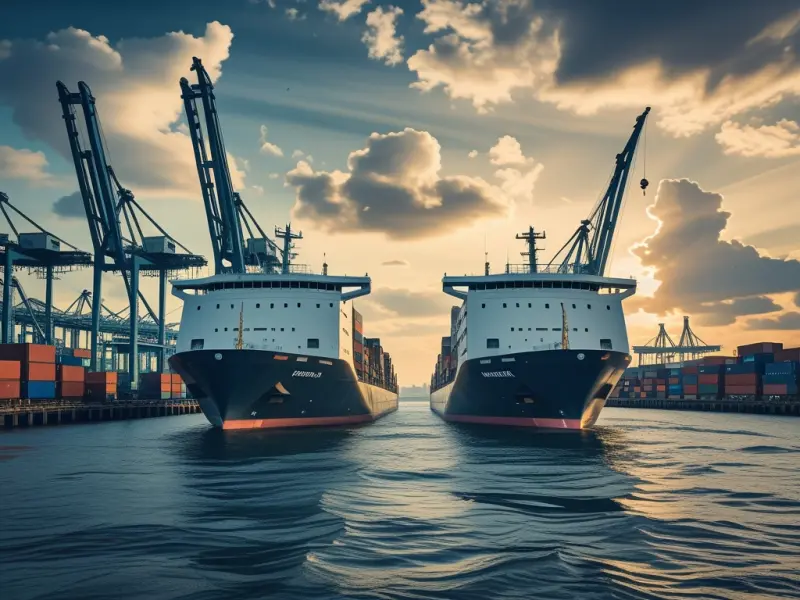
Port and Marine Terminal Management Training Course

At a glance
- Duration
- 1 Week
- Format
- Classroom
- Cities
- Athens, Seoul, Sharm El-Sheikh, Paris, Montreux, Marbella and more
- Next session
- 2 – 6 November 2026, Athens
- Average fee
- 7,500 €
Overview
Advanced Port and Marine Terminal Management Training Course is a one-week advanced course for port managers, marine-terminal leaders, harbour operations supervisors, HSE managers, logistics coordinators, and port-community professionals who leave with a Port and Marine Terminal Operating Model Portfolio. Participants integrate port governance, berth planning, vessel turnaround management, cargo operations, port safety management, port performance indicators, security coordination, and environmental performance. The course addresses multi-cargo port systems and remains distinct from specialist liquefied-gas ship/shore transfer training. Agile Leaders Training Center presents port management as coordinated control of infrastructure, operations, people, risk, and service outcomes.
Who Should Attend
- Port and terminal managers responsible for operating-model decisions
- Harbour masters, marine operations leaders, and berth planners
- Cargo, yard, gate, and logistics supervisors coordinating terminal flow
- HSE, security, environmental, and emergency-management professionals
- Port authority, concession, contractor, and service-provider representatives
The course assumes experience in port, terminal, logistics, maritime, or industrial operations. It excludes entry-level cargo handling, specialist gas-transfer control, navigation certification, and legal advice.
Departments and Industries
The course supports public and private organizations that plan, govern, operate, or serve ports and marine terminals.
- Port authorities, landlord ports, full-service ports, and terminal operators
- Container, dry-bulk, liquid-bulk, general-cargo, ferry, and cruise facilities
- Marine operations, cargo operations, logistics, engineering, and maintenance
- Health and safety, security, environment, quality, and emergency functions
- Shipping lines, agents, customs, contractors, and port-community partners
Learning Objectives
By the end of this course, participants will be able to:
- Map port governance, concession, regulatory, and stakeholder accountabilities
- Coordinate vessel arrival, berth allocation, marine services, and turnaround
- Control cargo flow across quay, yard, gate, storage, and hinterland interfaces
- Integrate safety, security, environment, contractor, and emergency controls
- Build balanced operational dashboards using port performance indicators
- Prioritize capacity, reliability, workforce, and service-improvement actions
Course Agenda
Day 1: Port Governance and Operating Models
- Port System, Terminal, and Port-Community Value Map
- Landlord, Tool, Service, and Mixed Operating-Model Comparison
- Authority, Concessionaire, Operator, and Contractor Accountability Matrix
- Regulatory, Commercial, Safety, Security, and Environmental Obligation Register
- Port Stakeholder Coordination Charter
Day 2: Vessel and Berth Operations
- Vessel Call and Pre-Arrival Information Workflow
- Berth Allocation and Marine-Service Planning Board
- Pilotage, Towage, Mooring, Access, and Weather-Control Interface
- Vessel Turnaround Delay and Constraint Analysis
- Berth Handover and Operating-Readiness Checklist
Day 3: Cargo and Terminal Flow
- Quay, Yard, Gate, Storage, and Hinterland Flow Map
- Multi-Cargo Handling and Segregation Control Matrix
- Equipment, Labour, Shift, and Contractor Coordination Plan
- Dwell Time, Queue, Bottleneck, and Capacity Analysis
- Cargo Integrity, Documentation, and Exception-Control Log
Day 4: Safety, Security, Environment, and Resilience
- ILO Port Safety and Health Control Framework
- ISPS Port-Facility Security Coordination Map
- Critical Task, Permit, Traffic, Lifting, and Contractor Control Review
- Emergency Command, Business Continuity, and Recovery Interface
- Environmental Aspect, Spill, Waste, Emission, and Nuisance Register
Day 5: Port Performance and Improvement Practice
- Exercise: Port Governance and Stakeholder Decision Map
- Exercise: Vessel Call and Berth-Conflict Resolution
- Exercise: Cargo-Flow Bottleneck and Capacity Review
- Exercise: Safety, Security, and Emergency Assurance Review
- Capstone Exercise: Port and Marine Terminal Operating Model Portfolio
Practical Exercises
The course uses suggested scenarios that connect management decisions with operational evidence.
- Suggested activity: compare operating models and allocate accountabilities for a mixed-use port.
- Suggested activity: resolve berth, equipment, labour, and cargo-flow conflicts during a congested period.
- Suggested activity: investigate vessel waiting time, berth occupancy, dwell time, and service reliability.
- Suggested activity: prioritize safety, security, environment, resilience, and productivity actions.
FAQs
What does advanced port and marine terminal management cover?
It covers governance, vessel and berth operations, cargo flow, workforce and contractors, safety, security, environment, emergency resilience, performance measurement, and coordinated improvement.
How is this course different from specialist liquefied-gas terminal training?
This course manages the broad multi-cargo port system and its operating model. Specialist liquefied-gas training concentrates on cargo-specific ship/shore transfer hazards, safeguards, and emergency systems.
Which port performance indicators are useful?
Useful indicators include vessel waiting and turnaround time, berth occupancy, cargo rate, lifts per ship-hour, dwell time, gate and yard flow, equipment availability, incidents, environmental measures, and service reliability.
How are safety and productivity balanced?
They are managed through defined operating limits, planned resources, reliable equipment, competent people, controlled interfaces, leading safety measures, and performance reviews that do not reward unsafe shortcuts.
Why is port-community coordination important?
Ports depend on authorities, operators, shipping lines, agents, customs, contractors, transport providers, workers, and communities. Shared information and clear decision rights reduce delay, conflict, and unmanaged risk.
Conclusion
The course integrates governance, vessel operations, cargo flow, port safety management, security, environment, resilience, and performance. Participants take back a Port and Marine Terminal Operating Model Portfolio containing maps, matrices, workflows, checklists, dashboards, and an improvement roadmap. The portfolio turns fragmented port activities into coordinated operating decisions with accountable owners and measurable outcomes.
credits: 5 credit per day
Course Mode: full-time
Provider: Agile Leaders Training Center
-
Events for this Course
-
Athens 2 – 6 November 2026
-
Seoul 2 – 6 November 2026
-
Sharm El-Sheikh 9 – 13 November 2026
-
Paris 16 – 20 November 2026
-
Montreux 23 – 27 November 2026
-
Marbella 29 November – 3 December 2026
-
London 30 November – 4 December 2026
-
Zanzibar 6 – 10 December 2026
-
New York 7 – 11 December 2026
-
Dubai 28 December 2026 – 1 January 2027
-
Porto 28 December 2026 – 1 January 2027
-
Baku 4 – 8 January 2027
-
Frankfurt 4 – 8 January 2027
-
Zoom 18 – 22 January 2027
-
Lagos 24 – 28 January 2027
-
Rome 25 – 29 January 2027
-
Milan 8 – 12 February 2027
-
Prague 22 – 26 February 2027
-
Manama 28 February – 4 March 2027
-
Bangkok 7 – 11 March 2027
-
Langkawi 14 – 18 March 2027
-
Kuala Lumpur 22 – 26 March 2027
-
Singapore 22 – 26 March 2027
-
Muscat 28 March – 1 April 2027
-
Nice 29 March – 2 April 2027
-
San Diego 5 – 9 April 2027
-
Istanbul 12 – 16 April 2027
-
Geneva 18 – 22 April 2027
-
Trabzon 25 – 29 April 2027
-
Jakarta 3 – 7 May 2027
-
Phuket 9 – 13 May 2027
-
Tbilisi 17 – 21 May 2027
-
Johannesburg 23 – 27 May 2027
-
Toronto 30 May – 3 June 2027
-
Casablanca 31 May – 4 June 2027
-
Cairo 7 – 11 June 2027
-
Lisbon 14 – 18 June 2027
-
Amman 20 – 24 June 2027
-
Chicago 27 June – 1 July 2027
-
Tokyo 5 – 9 July 2027
-
Vienna 12 – 16 July 2027
-
London 19 – 23 July 2027
-
Madrid 26 – 30 July 2027
-
Kuwait 1 – 5 August 2027
-
Abu Dhabi 2 – 6 August 2027
-
Accra 8 – 12 August 2027
-
Bali 22 – 26 August 2027
-
Barcelona 30 August – 3 September 2027
-
Tashkent 5 – 9 September 2027
-
Dubai 6 – 10 September 2027
-
Munich 20 – 24 September 2027
-
Doha 26 – 30 September 2027
-
Nairobi 3 – 7 October 2027
-
Abu Dhabi 4 – 8 October 2027
-
Cape town 17 – 21 October 2027
-
Berlin 25 – 29 October 2027
-
Amsterdam 1 – 5 November 2027
| Image | Location | Dates | Duration | Mode | Price | Actions |
|---|---|---|---|---|---|---|

|
Langkawi |
Week 10, 2027 14 – 18 March 2027 |
1 Week | Onsite | €8,000 | |

|
Kuala Lumpur |
Week 12, 2027 22 – 26 March 2027 |
1 Week | Onsite | €6,500 | |

|
Singapore |
Week 12, 2027 22 – 26 March 2027 |
1 Week | Onsite | €6,500 | |

|
Muscat |
Week 12, 2027 28 March – 1 April 2027 |
1 Week | Onsite | €6,500 | |

|
Nice |
Week 13, 2027 29 March – 2 April 2027 |
1 Week | Onsite | €8,000 | |

|
San Diego |
Week 14, 2027 5 – 9 April 2027 |
1 Week | Onsite | €16,000 | |

|
Istanbul |
Week 15, 2027 12 – 16 April 2027 |
1 Week | Onsite | €6,000 | |

|
Geneva |
Week 15, 2027 18 – 22 April 2027 |
1 Week | Onsite | €8,000 | |

|
Trabzon |
Week 16, 2027 25 – 29 April 2027 |
1 Week | Onsite | €8,000 | |

|
Jakarta |
Week 18, 2027 3 – 7 May 2027 |
1 Week | Onsite | €8,000 | |

|
Phuket |
Week 18, 2027 9 – 13 May 2027 |
1 Week | Onsite | €8,000 | |

|
Tbilisi |
Week 20, 2027 17 – 21 May 2027 |
1 Week | Onsite | €5,700 | |

|
Johannesburg |
Week 20, 2027 23 – 27 May 2027 |
1 Week | Onsite | €6,000 | |

|
Toronto |
Week 21, 2027 30 May – 3 June 2027 |
1 Week | Onsite | €16,000 | |

|
Casablanca |
Week 22, 2027 31 May – 4 June 2027 |
1 Week | Onsite | €6,000 | |

|
Cairo |
Week 23, 2027 7 – 11 June 2027 |
1 Week | Onsite | €5,200 | |

|
Lisbon |
Week 24, 2027 14 – 18 June 2027 |
1 Week | Onsite | €6,500 | |

|
Amman |
Week 24, 2027 20 – 24 June 2027 |
1 Week | Onsite | €6,000 | |

|
Chicago |
Week 25, 2027 27 June – 1 July 2027 |
1 Week | Onsite | €16,000 | |

|
Tokyo |
Week 27, 2027 5 – 9 July 2027 |
1 Week | Onsite | €12,000 |
Frequently asked questions
What does this course cover?
OverviewAdvanced Port and Marine Terminal Management Training Course is a one-week advanced course for port managers, marine-terminal leaders, harbour operations supervisors, HSE managers, logistics coordinators, and port-community professionals who leave with a Port and Marine Terminal Operating Model Portfolio. Participants integrate port governance, be…
Are training dates available?
Yes. Available dates and destinations are listed in the course dates section on this page.
How can I register?
Choose an available date on this page and complete the registration form, or send a programme enquiry.
Can I download the course brochure?
Yes. Use the brochure download link provided on this page.
This course by city
- Certified Courses By International Bodies in Abu Dhabi
- Certified Courses By International Bodies in Accra
- Certified Courses By International Bodies in Amman
- Certified Courses By International Bodies in Amsterdam
- Certified Courses By International Bodies in Athens
- Certified Courses By International Bodies in Baku
- Certified Courses By International Bodies in Bali
- Certified Courses By International Bodies in Bangkok
- Certified Courses By International Bodies in Barcelona
- Certified Courses By International Bodies in Berlin
- Certified Courses By International Bodies in Cairo
- Certified Courses By International Bodies in Cape town
- Certified Courses By International Bodies in Casablanca
- Certified Courses By International Bodies in Chicago
- Certified Courses By International Bodies in Doha
- Certified Courses By International Bodies in Dubai
- Certified Courses By International Bodies in Frankfurt
- Certified Courses By International Bodies in Geneva
- Certified Courses By International Bodies in Istanbul
- Certified Courses By International Bodies in Jakarta
- Certified Courses By International Bodies in Johannesburg
- Certified Courses By International Bodies in Kuala Lumpur
- Certified Courses By International Bodies in Kuwait
- Certified Courses By International Bodies in Lagos
- Certified Courses By International Bodies in Langkawi
- Certified Courses By International Bodies in Lisbon
- Certified Courses By International Bodies in London
- Certified Courses By International Bodies in Madrid
- Certified Courses By International Bodies in Manama
- Certified Courses By International Bodies in Marbella
- Certified Courses By International Bodies in Milan
- Certified Courses By International Bodies in Montreux
- Certified Courses By International Bodies in Munich
- Certified Courses By International Bodies in Muscat
- Certified Courses By International Bodies in Nairobi
- Certified Courses By International Bodies in New York
- Certified Courses By International Bodies in Nice
- Certified Courses By International Bodies in Paris
- Certified Courses By International Bodies in Phuket
- Certified Courses By International Bodies in Porto
- Certified Courses By International Bodies in Prague
- Certified Courses By International Bodies in Rome
- Certified Courses By International Bodies in San Diego
- Certified Courses By International Bodies in Seoul
- Certified Courses By International Bodies in Sharm El-Sheikh
- Certified Courses By International Bodies in Singapore
- Certified Courses By International Bodies in Tashkent
- Certified Courses By International Bodies in Tbilisi
- Certified Courses By International Bodies in Tokyo
- Certified Courses By International Bodies in Toronto
- Certified Courses By International Bodies in Trabzon
- Certified Courses By International Bodies in Vienna
- Certified Courses By International Bodies in Zanzibar
- Certified Courses By International Bodies in Zoom