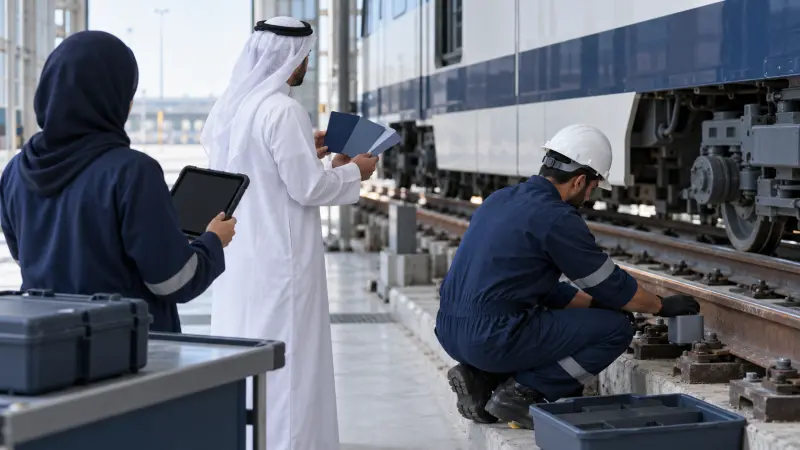
Rail Risk Engineering and Safety Assurance Course

At a glance
- Duration
- 1 Week
- Format
- Classroom
- Cities
- Bangkok, Marbella, Berlin, Phuket, London, Dubai and more
- Next session
- 8 – 12 November 2026, Bangkok
- Average fee
- 7,500 €
Overview
Rail Risk Engineering and Safety Assurance Training Course is a one-week professional course for rail engineers, systems assurance teams, safety specialists, asset managers, operators and project risk practitioners, who leave with a Rail Risk and Safety Assurance File. The course connects system boundaries, hazard analysis, interface risk, safety requirements, change assessment, acceptance evidence and operational monitoring. Agile Leaders Training Center presents rail risk engineering practice.
Who Should Attend
- Teams responsible for rail system safety and assurance
- Teams responsible for infrastructure and rolling-stock engineering
- Teams responsible for project and change risk assessment
- Teams responsible for operational safety and asset management
- Teams responsible for independent assessment and evidence review
The course assumes participants handle rail assets, projects, operations or safety evidence; it leaves out generic enterprise risk, accident investigation, predictive analytics and detailed electrical earthing design.
Departments and Industries
The course supports safety decisions across passenger rail, freight rail, metro systems, infrastructure delivery and asset maintenance.
- Rail systems engineering and integration teams
- Infrastructure and rolling-stock departments
- Safety, assurance and quality functions
- Operations and maintenance organizations
- Transport project delivery and commissioning teams
- Independent assessment and technical consulting practices
Learning Objectives
By the end of this course, participants will be able to:
- Analyze rail system boundaries and interfaces.
- Apply hazard identification and risk-analysis techniques.
- Evaluate risk-acceptance principles and controls.
- Build traceable safety requirements and evidence.
- Diagnose change and operational monitoring needs.
- Build a Rail Risk and Safety Assurance File.
Course Agenda
Day 1: Define the Rail System
- Rail Lifecycle and System Boundary Map
- Infrastructure, Rolling-Stock and Operations Interface Matrix
- Safety Stakeholder and Responsibility Map
- Operating Context and Assumption Register
- Risk Criteria and Decision-Gate Framework
Day 2: Analyze Rail Hazards
- Preliminary Hazard Analysis Method
- FMECA Failure and Criticality Worksheet
- Fault Tree Analysis Event Logic
- HAZOP Guideword Application for Rail Interfaces
- Hazard Register and Causal Evidence Record
Day 3: Evaluate and Control Risk
- Common Safety Method Risk Evaluation Process
- Code-of-Practice Acceptance Principle
- Reference-System Comparison Record
- Explicit Risk Estimation and Control Matrix
- Safety Requirement Allocation and Traceability Table
Day 4: Build Assurance Evidence
- Change Significance Assessment Checklist
- Safety Argument and Evidence Structure
- Verification, Validation and Independence Plan
- Interface Control and Change Decision Log
- Operational Monitoring and Residual Risk Register
Day 5: Practice Rail Risk Engineering
- Exercise: Define a Rail System and Its Interfaces
- Exercise: Build and Analyze a Hazard Register
- Exercise: Select a Risk-Acceptance Principle
- Exercise: Test Safety Requirement Traceability
- Capstone Exercise: Complete the Rail Risk and Safety Assurance File
Practical Exercises
The course uses suggested activities based on infrastructure, rolling-stock and operational-change cases.
- Suggested activity: map system boundaries, interfaces, actors and assumptions for a rail change.
- Suggested activity: compare hazard-analysis techniques and record credible causes and consequences.
- Suggested activity: connect controls, safety requirements and verification evidence to each hazard.
- Suggested activity: assemble risk acceptance, residual risk and monitoring decisions in one assurance file.
FAQs
Who suits rail risk engineering training, and what does it assume?
Rail risk engineering training suits engineering, assurance, safety, operations, maintenance and project teams. It assumes practical exposure to rail systems, assets, projects or safety evidence.
How does rail risk engineering differ from generic enterprise risk management?
Rail risk engineering focuses on technical hazards, system interfaces, safety requirements, verification evidence and lifecycle acceptance. Enterprise risk management covers wider strategic, financial and organizational uncertainty.
What belongs in a rail hazard register?
A rail hazard register records system context, hazard, causes, consequences, affected interfaces, controls, safety requirements, owners, evidence, status, residual risk and monitoring actions.
How are rail safety risks accepted?
Rail safety risks are accepted through defined criteria and evidence, using applicable codes of practice, comparison with similar reference systems or explicit risk estimation, with traceable controls and decisions.
Why is interface risk important in rail systems?
Interface risk is important because infrastructure, rolling stock, signaling, power, people and operating rules interact, so a change or assumption in one element can create hazards elsewhere.
Conclusion
Participants take back a Rail Risk and Safety Assurance File linking boundaries, hazards, controls, requirements, evidence and monitoring. The file makes safety decisions and responsibilities traceable. It supports coordinated assurance among engineering, projects, operations, maintenance, assessors and technical authorities.
credits: 5 credit per day
Course Mode: full-time
Provider: Agile Leaders Training Center
-
Events for this Course
-
Bangkok 8 – 12 November 2026
-
Marbella 15 – 19 November 2026
-
Berlin 23 – 27 November 2026
-
Phuket 29 November – 3 December 2026
-
London 30 November – 4 December 2026
-
Dubai 7 – 11 December 2026
-
Manama 13 – 17 December 2026
-
Amman 20 – 24 December 2026
-
Cairo 28 December 2026 – 1 January 2027
-
New York 28 December 2026 – 1 January 2027
-
Addis Ababa 4 – 8 January 2027
-
Lagos 10 – 14 January 2027
-
London 11 – 15 January 2027
-
Abu Dhabi 18 – 22 January 2027
-
Montreux 25 – 29 January 2027
-
San Diego 1 – 5 February 2027
-
Casablanca 1 – 5 March 2027
-
Jakarta 1 – 5 March 2027
-
Toronto 7 – 11 March 2027
-
Rome 8 – 12 March 2027
-
Istanbul 22 – 26 March 2027
-
Madrid 5 – 9 April 2027
-
Athens 5 – 9 April 2027
-
Bali 11 – 15 April 2027
-
Geneva 25 – 29 April 2027
-
Langkawi 2 – 6 May 2027
-
Paris 3 – 7 May 2027
-
Zanzibar 9 – 13 May 2027
-
Kuwait 16 – 20 May 2027
-
Sharm El-Sheikh 17 – 21 May 2027
-
Nairobi 23 – 27 May 2027
-
Tokyo 24 – 28 May 2027
-
Prague 31 May – 4 June 2027
-
Muscat 6 – 10 June 2027
-
Vienna 21 – 25 June 2027
-
Singapore 21 – 25 June 2027
-
Milan 28 June – 2 July 2027
-
Frankfurt 28 June – 2 July 2027
-
Kuala Lumpur 5 – 9 July 2027
-
Lisbon 5 – 9 July 2027
-
Abu Dhabi 12 – 16 July 2027
-
Trabzon 18 – 22 July 2027
-
Tbilisi 19 – 23 July 2027
-
Tashkent 25 – 29 July 2027
-
Barcelona 2 – 6 August 2027
-
Seoul 9 – 13 August 2027
-
Porto 16 – 20 August 2027
-
Amsterdam 23 – 27 August 2027
-
Doha 5 – 9 September 2027
-
Johannesburg 5 – 9 September 2027
-
Accra 12 – 16 September 2027
-
Dubai 13 – 17 September 2027
-
Chicago 19 – 23 September 2027
-
Munich 27 September – 1 October 2027
-
Nice 11 – 15 October 2027
-
Cape town 17 – 21 October 2027
-
Baku 1 – 5 November 2027
-
Zoom 8 – 12 November 2027
| Image | Location | Dates | Duration | Mode | Price | Actions |
|---|---|---|---|---|---|---|

|
Istanbul |
Week 12, 2027 22 – 26 March 2027 |
1 Week | Onsite | €6,000 | |

|
Madrid |
Week 14, 2027 5 – 9 April 2027 |
1 Week | Onsite | €6,500 | |

|
Athens |
Week 14, 2027 5 – 9 April 2027 |
1 Week | Onsite | €7,500 | |

|
Bali |
Week 14, 2027 11 – 15 April 2027 |
1 Week | Onsite | €6,500 | |

|
Geneva |
Week 16, 2027 25 – 29 April 2027 |
1 Week | Onsite | €8,000 | |

|
Langkawi |
Week 17, 2027 2 – 6 May 2027 |
1 Week | Onsite | €8,000 | |

|
Paris |
Week 18, 2027 3 – 7 May 2027 |
1 Week | Onsite | €6,500 | |

|
Zanzibar |
Week 18, 2027 9 – 13 May 2027 |
1 Week | Onsite | €6,000 | |

|
Kuwait |
Week 19, 2027 16 – 20 May 2027 |
1 Week | Onsite | €7,000 | |

|
Sharm El-Sheikh |
Week 20, 2027 17 – 21 May 2027 |
1 Week | Onsite | €5,200 | |

|
Nairobi |
Week 20, 2027 23 – 27 May 2027 |
1 Week | Onsite | €6,000 | |

|
Tokyo |
Week 21, 2027 24 – 28 May 2027 |
1 Week | Onsite | €12,000 | |

|
Prague |
Week 22, 2027 31 May – 4 June 2027 |
1 Week | Onsite | €7,500 | |

|
Muscat |
Week 22, 2027 6 – 10 June 2027 |
1 Week | Onsite | €6,500 | |

|
Vienna |
Week 25, 2027 21 – 25 June 2027 |
1 Week | Onsite | €7,500 | |

|
Singapore |
Week 25, 2027 21 – 25 June 2027 |
1 Week | Onsite | €6,500 | |

|
Milan |
Week 26, 2027 28 June – 2 July 2027 |
1 Week | Onsite | €7,000 | |

|
Frankfurt |
Week 26, 2027 28 June – 2 July 2027 |
1 Week | Onsite | €6,500 | |

|
Kuala Lumpur |
Week 27, 2027 5 – 9 July 2027 |
1 Week | Onsite | €6,500 | |

|
Lisbon |
Week 27, 2027 5 – 9 July 2027 |
1 Week | Onsite | €6,500 |
Frequently asked questions
What does this course cover?
OverviewRail Risk Engineering and Safety Assurance Training Course is a one-week professional course for rail engineers, systems assurance teams, safety specialists, asset managers, operators and project risk practitioners, who leave with a Rail Risk and Safety Assurance File. The course connects system boundaries, hazard analysis, interface risk, safety…
Are training dates available?
Yes. Available dates and destinations are listed in the course dates section on this page.
How can I register?
Choose an available date on this page and complete the registration form, or send a programme enquiry.
Can I download the course brochure?
Yes. Use the brochure download link provided on this page.
This course by city
- Maintenance Training and Engineering Training Courses in Abu Dhabi
- Maintenance Training and Engineering Training Courses in Accra
- Maintenance Training and Engineering Training Courses in Addis Ababa
- Maintenance Training and Engineering Training Courses in Amman
- Maintenance Training and Engineering Training Courses in Amsterdam
- Maintenance Training and Engineering Training Courses in Athens
- Maintenance Training and Engineering Training Courses in Baku
- Maintenance Training and Engineering Training Courses in Bali
- Maintenance Training and Engineering Training Courses in Bangkok
- Maintenance Training and Engineering Training Courses in Barcelona
- Maintenance Training and Engineering Training Courses in Berlin
- Maintenance Training and Engineering Training Courses in Cairo
- Maintenance Training and Engineering Training Courses in Cape town
- Maintenance Training and Engineering Training Courses in Casablanca
- Maintenance Training and Engineering Training Courses in Chicago
- Maintenance Training and Engineering Training Courses in Doha
- Maintenance Training and Engineering Training Courses in Dubai
- Maintenance Training and Engineering Training Courses in Frankfurt
- Maintenance Training and Engineering Training Courses in Geneva
- Maintenance Training and Engineering Training Courses in Istanbul
- Maintenance Training and Engineering Training Courses in Jakarta
- Maintenance Training and Engineering Training Courses in Johannesburg
- Maintenance Training and Engineering Training Courses in Kuala Lumpur
- Maintenance Training and Engineering Training Courses in Kuwait
- Maintenance Training and Engineering Training Courses in Lagos
- Maintenance Training and Engineering Training Courses in Langkawi
- Maintenance Training and Engineering Training Courses in Lisbon
- Maintenance Training and Engineering Training Courses in London
- Maintenance Training and Engineering Training Courses in Madrid
- Maintenance Training and Engineering Training Courses in Manama
- Maintenance Training and Engineering Training Courses in Marbella
- Maintenance Training and Engineering Training Courses in Milan
- Maintenance Training and Engineering Training Courses in Montreux
- Maintenance Training and Engineering Training Courses in Munich
- Maintenance Training and Engineering Training Courses in Muscat
- Maintenance Training and Engineering Training Courses in Nairobi
- Maintenance Training and Engineering Training Courses in New York
- Maintenance Training and Engineering Training Courses in Nice
- Maintenance Training and Engineering Training Courses in Paris
- Maintenance Training and Engineering Training Courses in Phuket
- Maintenance Training and Engineering Training Courses in Porto
- Maintenance Training and Engineering Training Courses in Prague
- Maintenance Training and Engineering Training Courses in Rome
- Maintenance Training and Engineering Training Courses in San Diego
- Maintenance Training and Engineering Training Courses in Seoul
- Maintenance Training and Engineering Training Courses in Sharm El-Sheikh
- Maintenance Training and Engineering Training Courses in Singapore
- Maintenance Training and Engineering Training Courses in Tashkent
- Maintenance Training and Engineering Training Courses in Tbilisi
- Maintenance Training and Engineering Training Courses in Tokyo
- Maintenance Training and Engineering Training Courses in Toronto
- Maintenance Training and Engineering Training Courses in Trabzon
- Maintenance Training and Engineering Training Courses in Vienna
- Maintenance Training and Engineering Training Courses in Zanzibar
- Maintenance Training and Engineering Training Courses in Zoom