How Does Agile Crisis Communication Work in Practice?
Agile crisis communication combines speed with disciplined verification. This guide explains the workplace skills, team roles and practical routines that make it effective.
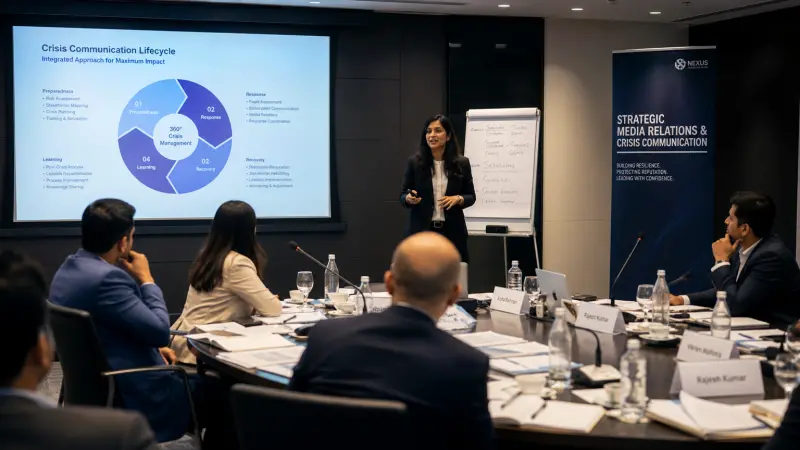
Organizations must navigate rapid news cycles, intense public scrutiny, and digital channels with structured communication processes. This programme covers strategic media relations and crisis communication essentials, connecting everyday press office management with high-pressure incident response. Participants learn to formulate targeted public relations plans, draft press releases and holding statements, brief spokespersons, and maintain transparent relations with journalists during operational disruptions. The curriculum links situation analysis, SMART communication objectives, message frameworks, and post-incident reputation recovery into an operational discipline. This course is delivered by Agile Leaders Training Center.
This programme serves external affairs and communications teams across sectors that operate under active media attention.
By the end of this course, participants will be able to:
Participants review practical frameworks and working templates throughout the sessions.
No formal academic qualifications are required. The programme is designed for professionals with responsibilities in public relations, corporate communications, media relations, public affairs, reputation management, or crisis response. Prior workplace exposure to communications or organizational affairs is beneficial.
Each day is structured for approximately 4 to 5 hours of instruction, including discussions and practical application exercises. The full one-week programme covers 20 to 25 instructional hours.
A general communication plan guides ongoing organizational goals through scheduled campaigns, messages, channels, and milestones. A crisis communication plan provides protocols for unexpected, high-risk situations, featuring activation thresholds, designated response teams, rapid approval procedures, holding statements, and coordinated media handling under time pressure.
Equipped with disciplined media engagement models and structured response workflows, communication professionals can navigate high-pressure press inquiries with confidence. By connecting rigorous PR planning with operational crisis readiness, organizations protect stakeholder confidence and sustain institutional credibility across dynamic media landscapes.
credits: 5 credit per day
Course Mode: full-time
Provider: Agile Leaders Training Center
Paris 19 – 23 October 2026
Prague 26 – 30 October 2026
New York 26 – 30 October 2026
London 2 – 6 November 2026
Amman 8 – 12 November 2026
Abu Dhabi 9 – 13 November 2026
Kuala Lumpur 16 – 20 November 2026
Manama 22 – 26 November 2026
Istanbul 30 November – 4 December 2026
Munich 30 November – 4 December 2026
Muscat 6 – 10 December 2026
Amsterdam 7 – 11 December 2026
Dubai 14 – 18 December 2026
Baku 21 – 25 December 2026
Tokyo 25 – 29 January 2027
Tbilisi 8 – 12 February 2027
Toronto 14 – 18 February 2027
Milan 15 – 19 February 2027
London 15 – 19 February 2027
Nairobi 21 – 25 February 2027
Vienna 1 – 5 March 2027
Montreux 1 – 5 March 2027
Barcelona 15 – 19 March 2027
Abu Dhabi 15 – 19 March 2027
Cape town 21 – 25 March 2027
Singapore 22 – 26 March 2027
Bali 28 March – 1 April 2027
Casablanca 29 March – 2 April 2027
Trabzon 4 – 8 April 2027
Dubai 5 – 9 April 2027
Madrid 12 – 16 April 2027
Phuket 18 – 22 April 2027
Paris 19 – 23 April 2027
Manama 25 – 29 April 2027
Bangkok 25 – 29 April 2027
Cairo 3 – 7 May 2027
Rome 10 – 14 May 2027
Frankfurt 10 – 14 May 2027
Marbella 16 – 20 May 2027
London 17 – 21 May 2027
Doha 23 – 27 May 2027
Dubai 31 May – 4 June 2027
Sharm El-Sheikh 7 – 11 June 2027
Chicago 13 – 17 June 2027
Kuala Lumpur 14 – 18 June 2027
Accra 20 – 24 June 2027
Abu Dhabi 21 – 25 June 2027
Vienna 28 June – 2 July 2027
Nice 28 June – 2 July 2027
Zanzibar 4 – 8 July 2027
Zoom 5 – 9 July 2027
Berlin 5 – 9 July 2027
Amsterdam 12 – 16 July 2027
Barcelona 19 – 23 July 2027
Jakarta 26 – 30 July 2027
Istanbul 2 – 6 August 2027
Cairo 9 – 13 August 2027
Milan 16 – 20 August 2027
Porto 16 – 20 August 2027
Geneva 22 – 26 August 2027
Langkawi 22 – 26 August 2027
Tashkent 22 – 26 August 2027
London 30 August – 3 September 2027
Rome 6 – 10 September 2027
San Diego 6 – 10 September 2027
Dubai 13 – 17 September 2027
Abu Dhabi 13 – 17 September 2027
Johannesburg 26 – 30 September 2027
Lisbon 27 September – 1 October 2027
Athens 4 – 8 October 2027
Amsterdam 11 – 15 October 2027
Madrid 18 – 22 October 2027
Seoul 18 – 22 October 2027
Kuwait 24 – 28 October 2027
| Image | Location | Dates | Duration | Mode | Price | Actions |
|---|---|---|---|---|---|---|

|
Paris |
Week 43, 2026 19 – 23 October 2026 |
1 Week | Onsite | €5,700 | |

|
Prague |
Week 44, 2026 26 – 30 October 2026 |
1 Week | Onsite | €6,000 | |

|
New York |
Week 44, 2026 26 – 30 October 2026 |
1 Week | Onsite | €12,000 | |

|
London |
Week 45, 2026 2 – 6 November 2026 |
1 Week | Onsite | €5,700 | |

|
Amman |
Week 45, 2026 8 – 12 November 2026 |
1 Week | Onsite | €4,100 | |
|
Abu Dhabi |
Week 46, 2026 9 – 13 November 2026 |
1 Week | Onsite | €4,700 | |

|
Kuala Lumpur |
Week 47, 2026 16 – 20 November 2026 |
1 Week | Onsite | €5,200 | |
|
Manama |
Week 47, 2026 22 – 26 November 2026 |
1 Week | Onsite | €4,700 | |

|
Istanbul |
Week 49, 2026 30 November – 4 December 2026 |
1 Week | Onsite | €4,500 | |

|
Munich |
Week 49, 2026 30 November – 4 December 2026 |
1 Week | Onsite | €5,700 | |

|
Muscat |
Week 49, 2026 6 – 10 December 2026 |
1 Week | Onsite | €5,700 | |

|
Amsterdam |
Week 50, 2026 7 – 11 December 2026 |
1 Week | Onsite | €5,700 | |

|
Dubai |
Week 51, 2026 14 – 18 December 2026 |
1 Week | Onsite | €4,500 | |

|
Baku |
Week 52, 2026 21 – 25 December 2026 |
1 Week | Onsite | €5,000 | |

|
Tokyo |
Week 04, 2027 25 – 29 January 2027 |
1 Week | Onsite | €10,000 | |
|
Tbilisi |
Week 06, 2027 8 – 12 February 2027 |
1 Week | Onsite | €5,000 | |

|
Toronto |
Week 06, 2027 14 – 18 February 2027 |
1 Week | Onsite | €12,000 | |

|
Milan |
Week 07, 2027 15 – 19 February 2027 |
1 Week | Onsite | €5,700 | |
|
|
London |
Week 07, 2027 15 – 19 February 2027 |
1 Week | Onsite | €5,700 | |

|
Nairobi |
Week 07, 2027 21 – 25 February 2027 |
1 Week | Onsite | €4,500 |
OverviewOrganizations must navigate rapid news cycles, intense public scrutiny, and digital channels with structured communication processes. This programme covers strategic media relations and crisis communication essentials, connecting everyday press office management with high-pressure incident response. Participants learn to formulate targeted public…
Yes. Available dates and destinations are listed in the course dates section on this page.
Choose an available date on this page and complete the registration form, or send a programme enquiry.
Yes. Use the brochure download link provided on this page.
Agile crisis communication combines speed with disciplined verification. This guide explains the workplace skills, team roles and practical routines that make it effective.