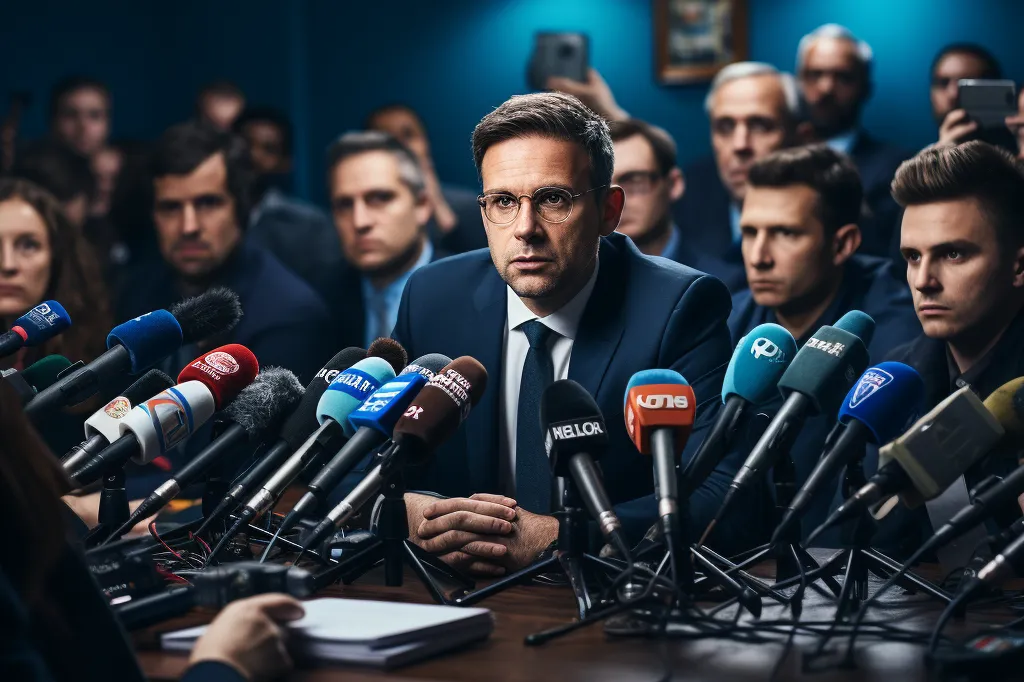
Strategic Media Relations and Crisis Communication Essentials
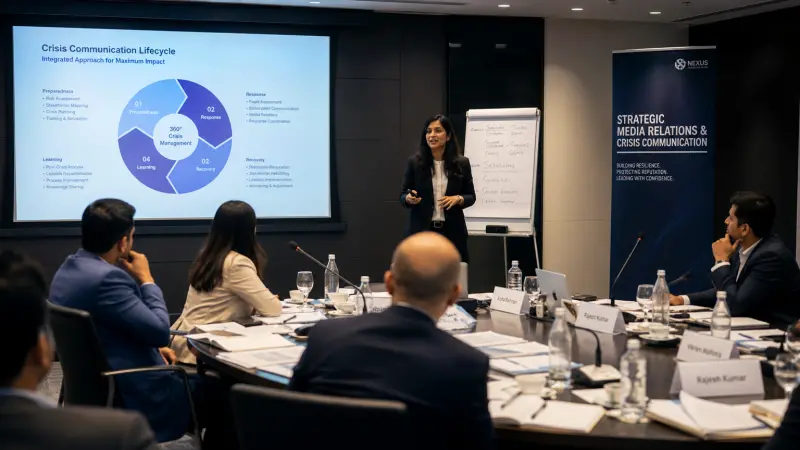
Course Details
-
# 103600636_82359
-
18 – 22 October 2027 22.Oct.2027
-
Madrid
-
5700 €
Overview
Organizations must navigate rapid news cycles, intense public scrutiny, and digital channels with structured communication processes. This programme covers strategic media relations and crisis communication essentials, connecting everyday press office management with high-pressure incident response. Participants learn to formulate targeted public relations plans, draft press releases and holding statements, brief spokespersons, and maintain transparent relations with journalists during operational disruptions. The curriculum links situation analysis, SMART communication objectives, message frameworks, and post-incident reputation recovery into an operational discipline. This course is delivered by Agile Leaders Training Center.
Who Should Attend
- Public relations managers and communication officers managing institutional media engagement.
- Corporate communications specialists coordinating external statements and press materials.
- Media relations managers and press officers responsible for newsroom inquiries and editorial pitches.
- Crisis communication and reputation management professionals safeguarding brand standing.
- Corporate affairs leads and public information officers coordinating public announcements.
Departments and Industries
This programme serves external affairs and communications teams across sectors that operate under active media attention.
- Corporate Communications and Public Relations Units in Banking and Financial Services
- External Affairs and Media Relations Offices in Energy and Utilities
- Public Information and Community Relations Teams in Healthcare and Pharmaceuticals
- Communications and Public Affairs Divisions in Aviation, Transport, and Logistics
- Media Relations and Stakeholder Engagement Teams in Higher Education and Nonprofits
Learning Objectives
By the end of this course, participants will be able to:
- Construct an operational media relations operating model for proactive pitches and reactive inquiries.
- Formulate public relations strategies using situation analysis and SMART communication objectives.
- Draft key messages, media briefing notes, and rapid holding statements.
- Prepare organizational spokespersons for broadcast, print, and digital interviews.
- Deploy crisis communication plans to manage the initial 24 to 48 hours of an operational incident.
- Measure media coverage, sentiment indicators, and message penetration across diverse channels.
Course Agenda
Day 1: Strategic Media Relations and the Modern Media Environment
- The strategic role of media relations within corporate communications
- Understanding journalists, editorial workflows, news cycles, and reporting deadlines
- Mapping traditional newsrooms, digital portals, and specialist industry outlets
- Identifying news angles, media opportunities, and institutional reputation risks
- Developing professional relationships with journalists and editors
- Designing a proactive and reactive media relations operating model
Day 2: PR Planning and Strategic Communication Design
- Conducting organizational situation analysis and communication audits
- Mapping stakeholders, priority audiences, and key industry influencers
- Setting measurable SMART communication and reputation objectives
- Crafting core institutional narratives and audience-aligned key messages
- Selecting distribution channels, implementation timelines, and tactical workflows
- Integrating press office activities with digital channels and stakeholder engagement
Day 3: Media Content, Interviews, and Spokesperson Performance
- Drafting media releases, pitch letters, factual backgrounders, and statements
- Translating complex technical data into concise media messages
- Briefing subject-matter experts and organizational spokespersons
- Managing formats for television, radio, print, and remote online interviews
- Addressing hostile, speculative, and repetitive media questions
- Structuring press conferences, announcement briefings, and media roundtables
Day 4: Crisis Communication Planning and Media Response
- Categorizing operational crises, trigger points, and reputation exposure
- Establishing crisis communication team structures and sign-off protocols
- Developing crisis scenario playbooks, FAQs, and holding statements
- Coordinating media engagement across the critical first 24 to 48 hours
- Handling misinformation, online speculation, and unverified reports
- Aligning operational management, legal counsel, and public statements
Day 5: Reputation Recovery, Campaign Integration, and Communication Evaluation
- Managing sustained media attention throughout incident resolution
- Communicating corrective measures and organizational accountability
- Executing post-crisis reputation recovery initiatives to rebuild institutional trust
- Evaluating message penetration, media sentiment, and coverage volume
- Assembling an integrated media relations and crisis response playbook
- Reviewing post-incident communication performance and refining protocols
Course Toolbox
Participants review practical frameworks and working templates throughout the sessions.
- Media mapping register and journalist relationship tracker
- Strategic communication planning template with SMART objective matrices
- Interview briefing pack and spokesperson preparation checklist
- Incident notification workflow and crisis communication planning template
- Approved holding statements and crisis FAQ response formats
- Post-crisis communication audit scorecard and media monitoring grid
FAQs
What specific qualifications or prerequisites are needed for participants before enrolling in the course?
No formal academic qualifications are required. The programme is designed for professionals with responsibilities in public relations, corporate communications, media relations, public affairs, reputation management, or crisis response. Prior workplace exposure to communications or organizational affairs is beneficial.
How long is each day's session, and is there a total number of hours required for the entire course?
Each day is structured for approximately 4 to 5 hours of instruction, including discussions and practical application exercises. The full one-week programme covers 20 to 25 instructional hours.
What is the difference between a crisis communication plan and a general communication plan?
A general communication plan guides ongoing organizational goals through scheduled campaigns, messages, channels, and milestones. A crisis communication plan provides protocols for unexpected, high-risk situations, featuring activation thresholds, designated response teams, rapid approval procedures, holding statements, and coordinated media handling under time pressure.
Conclusion
Equipped with disciplined media engagement models and structured response workflows, communication professionals can navigate high-pressure press inquiries with confidence. By connecting rigorous PR planning with operational crisis readiness, organizations protect stakeholder confidence and sustain institutional credibility across dynamic media landscapes.
Marketing, Customer Relations, and Sales Courses
Strategic Media Relations and Crisis Communication Course (103600636_82359)
Course Details
# 103600636_82359
18 – 22 October 2027
Madrid
Fees : 5700 €