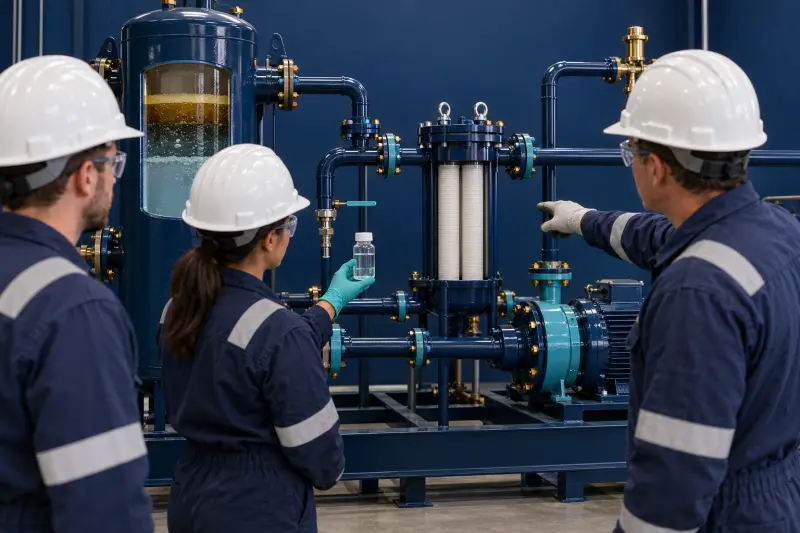
Surface Well Test Design and Execution Training Course

At a glance
- Duration
- 1 Week
- Format
- Classroom
- Cities
- Abu Dhabi, Langkawi, London, Vienna, Accra, Amman and more
- Next session
- 9 – 13 November 2026, Abu Dhabi
- Average fee
- 7,500 €
Overview
Surface Well Test Design and Execution Training Course is a one-week intermediate course for well test, production, reservoir, offshore operations, field operations, and technical supervision functions who leave with a Surface Well Test Design and Execution Pack. Participants connect test objectives and business decisions to surface well testing equipment, process safety barriers, execution sequences, real-time data acquisition, and data quality controls. The course addresses production and injection well test campaigns in land, offshore, and deepwater settings. Agile Leaders Training Center presents surface well test design and execution.
Who Should Attend
- Well test functions responsible for job design, equipment interfaces, execution control, and post-job evidence
- Production engineering functions responsible for well performance, test objectives, and operating decisions
- Field operations functions responsible for rig-up, commissioning, monitoring, sampling, and safe shutdown
- Reservoir engineering functions responsible for specifying data needs and reviewing acquired evidence
- Offshore operations functions responsible for space, utilities, marine interfaces, and deepwater constraints
- Technical supervision functions responsible for assurance, team alignment, readiness, and performance review
The course assumes participants already use oilfield operating procedures, well data, equipment diagrams, or test reports at work, and it leaves out advanced pressure-transient interpretation, reservoir model matching, and vendor-specific equipment maintenance.
Departments and Industries
The course supports departments and industries that design, execute, assure, or use evidence from surface production and injection testing.
- Oil and gas exploration, appraisal, development, and production
- Well testing, production technology, and reservoir engineering
- Offshore platforms, drillships, floating production facilities, and land operations
- Oilfield services, equipment rental, and field data acquisition
- Underground gas storage and carbon-storage injection operations
- Technical assurance, process safety, and asset operations
Learning Objectives
By the end of this course, participants will be able to:
- Build objective-led surface well test design bases
- Evaluate equipment, layout, utility, and operating envelopes
- Apply process safety barriers and readiness controls
- Use real-time data acquisition and quality checks
- Diagnose execution deviations and contingency triggers
- Prioritize verified handover evidence and first-line inferences
Course Agenda
Day 1: Define the Test Basis
- Business Decision and Well Test Objective Map
- Production and Injection Test Type Selection Matrix
- Expected Rate, Pressure, Temperature, and Fluid Basis Sheet
- Test Period, Stabilization, Sampling, and Shutdown Sequence
- Surface Well Test Design Basis Register
Day 2: Configure the Surface Package
- Flowhead, Surface Safety Valve, and Emergency Shutdown Architecture
- Choke Manifold and Sand Management Configuration Method
- Test Separator, Metering, Sampling, and Tank Interface Diagram
- Effluent Handling, Flare, Burner, and Disposal Decision Matrix
- Equipment Rating, Layout, Utilities, and Line-Sizing Review
Day 3: Assure Safety and Readiness
- API RP 54 Pressure and Function Test Readiness Checklist
- API RP 14C Surface Safety Analysis Table Interface
- Process Hazard, Isolation, Relief, and Emergency Response Review
- Rig-Up Inspection, Leak Test, Commissioning, and Handover Gate
- Team Responsibility, Communication, and Stop-Work Matrix
Day 4: Control Execution and Data Quality
- Real-Time Pressure, Temperature, Rate, and Level Monitoring Board
- Instrument Range, Calibration, Redundancy, and Time-Synchronization Check
- Deepwater Space, Motion, Logistics, and Remote-Operation Constraint Register
- Data Verification, Validation, Gap, and Anomaly Log
- Execution Deviation, Contingency Trigger, and Decision Protocol
Day 5: Practice Test Delivery
- Suggested Exercise: Convert Business Questions into Test Objectives
- Suggested Exercise: Configure Equipment and Surface Flow Paths
- Suggested Exercise: Challenge Safety Barriers and Readiness Evidence
- Suggested Exercise: Diagnose Data Quality and Execution Deviations
- Capstone Exercise: Complete the Surface Well Test Design and Execution Pack
Practical Exercises
The course uses suggested activities to integrate planning, equipment, safeguards, execution, measurement, and handover evidence.
- Suggested activity: convert reservoir and production questions into measurable objectives, acceptance criteria, and a controlled operating sequence.
- Suggested activity: build a surface package diagram linking flowhead, choke, separator, metering, sampling, tanks, effluent handling, and emergency shutdown.
- Suggested activity: review pressure tests, function tests, barriers, roles, contingencies, and readiness evidence before introducing well fluids.
- Suggested activity: reconcile real-time measurements, flag gaps and anomalies, record decisions, and prepare a verified post-job handover.
FAQs
Who suits surface well test design and execution training, and what does it assume?
Surface well test design and execution training suits well test, production, reservoir, field, offshore, assurance, and supervision functions. It assumes practical exposure to oilfield procedures, well data, equipment diagrams, operating interfaces, or test reports.
How does surface well test execution differ from advanced well test interpretation?
Surface well test execution controls objectives, equipment, safeguards, measurement, operating sequences, contingencies, and field evidence. Advanced interpretation uses conditioned pressure and rate histories to diagnose flow regimes, estimate reservoir parameters, and compare transient models.
What equipment forms a surface well testing package?
A surface well testing package commonly links a flowhead, safety valve, choke manifold, sand control, test separator, metering, sampling, tanks, pumps, effluent handling, flare or burner, instrumentation, data acquisition, and emergency shutdown interfaces selected for expected conditions.
How is surface well test data quality controlled during execution?
Surface well test data quality is controlled through suitable instrument ranges, calibration, redundant measurements, synchronized time records, stable operating periods, verified samples, anomaly logs, reconciliation checks, and traceable decisions when conditions depart from the design basis.
What changes for deepwater surface well test execution?
Deepwater surface well test execution adds space, motion, marine, logistics, remote-control, high-pressure, effluent-handling, emergency-response, and personnel-exposure constraints. These conditions require explicit interface ownership, readiness gates, contingency triggers, and reliable real-time monitoring.
Conclusion
Participants take back a Surface Well Test Design and Execution Pack containing objectives, design basis, equipment configuration, safeguards, measurement controls, sequence, contingencies, and handover evidence. The pack changes disconnected field documents into one traceable test-delivery path. It supports safer readiness decisions, more reliable measurements, and clearer technical review without replacing advanced transient interpretation.
credits: 5 credit per day
Course Mode: full-time
Provider: Agile Leaders Training Center
-
Events for this Course
-
Abu Dhabi 9 – 13 November 2026
-
Langkawi 15 – 19 November 2026
-
London 23 – 27 November 2026
-
Vienna 23 – 27 November 2026
-
Accra 29 November – 3 December 2026
-
Amman 6 – 10 December 2026
-
Barcelona 14 – 18 December 2026
-
Trabzon 20 – 24 December 2026
-
San Diego 28 December 2026 – 1 January 2027
-
Manama 3 – 7 January 2027
-
London 4 – 8 January 2027
-
Phuket 10 – 14 January 2027
-
Zanzibar 17 – 21 January 2027
-
Frankfurt 25 – 29 January 2027
-
Chicago 31 January – 4 February 2027
-
Kuala Lumpur 1 – 5 February 2027
-
Marbella 7 – 11 February 2027
-
Athens 22 – 26 February 2027
-
Nice 1 – 5 March 2027
-
Milan 8 – 12 March 2027
-
New York 15 – 19 March 2027
-
Montreux 22 – 26 March 2027
-
Paris 29 March – 2 April 2027
-
Rome 5 – 9 April 2027
-
Porto 12 – 16 April 2027
-
Tashkent 18 – 22 April 2027
-
Prague 26 – 30 April 2027
-
Tbilisi 10 – 14 May 2027
-
Johannesburg 16 – 20 May 2027
-
Bali 23 – 27 May 2027
-
Nairobi 30 May – 3 June 2027
-
Jakarta 7 – 11 June 2027
-
Berlin 14 – 18 June 2027
-
Zoom 21 – 25 June 2027
-
Lisbon 28 June – 2 July 2027
-
Abu Dhabi 5 – 9 July 2027
-
Doha 11 – 15 July 2027
-
Dubai 12 – 16 July 2027
-
Geneva 18 – 22 July 2027
-
Baku 26 – 30 July 2027
-
Casablanca 2 – 6 August 2027
-
Munich 2 – 6 August 2027
-
Seoul 9 – 13 August 2027
-
Toronto 15 – 19 August 2027
-
Istanbul 16 – 20 August 2027
-
Cairo 23 – 27 August 2027
-
Madrid 23 – 27 August 2027
-
Amsterdam 30 August – 3 September 2027
-
Singapore 6 – 10 September 2027
-
Bangkok 12 – 16 September 2027
-
Lagos 19 – 23 September 2027
-
Kuwait 26 – 30 September 2027
-
Sharm El-Sheikh 27 September – 1 October 2027
-
Muscat 10 – 14 October 2027
-
Dubai 11 – 15 October 2027
-
Tokyo 18 – 22 October 2027
-
Addis Ababa 25 – 29 October 2027
-
Cape town 7 – 11 November 2027
| Image | Location | Dates | Duration | Mode | Price | Actions |
|---|---|---|---|---|---|---|

|
Casablanca |
Week 31, 2027 2 – 6 August 2027 |
1 Week | Onsite | €6,000 | |

|
Munich |
Week 31, 2027 2 – 6 August 2027 |
1 Week | Onsite | €6,500 | |

|
Seoul |
Week 32, 2027 9 – 13 August 2027 |
1 Week | Onsite | €12,000 | |

|
Toronto |
Week 32, 2027 15 – 19 August 2027 |
1 Week | Onsite | €16,000 | |

|
Istanbul |
Week 33, 2027 16 – 20 August 2027 |
1 Week | Onsite | €6,000 | |

|
Cairo |
Week 34, 2027 23 – 27 August 2027 |
1 Week | Onsite | €5,200 | |

|
Madrid |
Week 34, 2027 23 – 27 August 2027 |
1 Week | Onsite | €6,500 | |

|
Amsterdam |
Week 35, 2027 30 August – 3 September 2027 |
1 Week | Onsite | €6,500 | |

|
Singapore |
Week 36, 2027 6 – 10 September 2027 |
1 Week | Onsite | €6,500 | |

|
Bangkok |
Week 36, 2027 12 – 16 September 2027 |
1 Week | Onsite | €8,000 | |

|
Lagos |
Week 37, 2027 19 – 23 September 2027 |
1 Week | Onsite | €6,000 | |

|
Kuwait |
Week 38, 2027 26 – 30 September 2027 |
1 Week | Onsite | €7,000 | |

|
Sharm El-Sheikh |
Week 39, 2027 27 September – 1 October 2027 |
1 Week | Onsite | €5,200 | |

|
Muscat |
Week 40, 2027 10 – 14 October 2027 |
1 Week | Onsite | €6,500 | |

|
Dubai |
Week 41, 2027 11 – 15 October 2027 |
1 Week | Onsite | €6,500 | |

|
Tokyo |
Week 42, 2027 18 – 22 October 2027 |
1 Week | Onsite | €12,000 | |

|
Addis Ababa |
Week 43, 2027 25 – 29 October 2027 |
1 Week | Onsite | €6,000 | |

|
Cape town |
Week 44, 2027 7 – 11 November 2027 |
1 Week | Onsite | €6,000 |
Frequently asked questions
What does this course cover?
OverviewSurface Well Test Design and Execution Training Course is a one-week intermediate course for well test, production, reservoir, offshore operations, field operations, and technical supervision functions who leave with a Surface Well Test Design and Execution Pack. Participants connect test objectives and business decisions to surface well testing e…
Are training dates available?
Yes. Available dates and destinations are listed in the course dates section on this page.
How can I register?
Choose an available date on this page and complete the registration form, or send a programme enquiry.
Can I download the course brochure?
Yes. Use the brochure download link provided on this page.
This course by city
- Oil & Gas Training and Other Technical Courses in Abu Dhabi
- Oil & Gas Training and Other Technical Courses in Accra
- Oil & Gas Training and Other Technical Courses in Addis Ababa
- Oil & Gas Training and Other Technical Courses in Amman
- Oil & Gas Training and Other Technical Courses in Amsterdam
- Oil & Gas Training and Other Technical Courses in Athens
- Oil & Gas Training and Other Technical Courses in Baku
- Oil & Gas Training and Other Technical Courses in Bali
- Oil & Gas Training and Other Technical Courses in Bangkok
- Oil & Gas Training and Other Technical Courses in Barcelona
- Oil & Gas Training and Other Technical Courses in Berlin
- Oil & Gas Training and Other Technical Courses in Cairo
- Oil & Gas Training and Other Technical Courses in Cape town
- Oil & Gas Training and Other Technical Courses in Casablanca
- Oil & Gas Training and Other Technical Courses in Chicago
- Oil & Gas Training and Other Technical Courses in Doha
- Oil & Gas Training and Other Technical Courses in Dubai
- Oil & Gas Training and Other Technical Courses in Frankfurt
- Oil & Gas Training and Other Technical Courses in Geneva
- Oil & Gas Training and Other Technical Courses in Istanbul
- Oil & Gas Training and Other Technical Courses in Jakarta
- Oil & Gas Training and Other Technical Courses in Johannesburg
- Oil & Gas Training and Other Technical Courses in Kuala Lumpur
- Oil & Gas Training and Other Technical Courses in Kuwait
- Oil & Gas Training and Other Technical Courses in Lagos
- Oil & Gas Training and Other Technical Courses in Langkawi
- Oil & Gas Training and Other Technical Courses in Lisbon
- Oil & Gas Training and Other Technical Courses in London
- Oil & Gas Training and Other Technical Courses in Madrid
- Oil & Gas Training and Other Technical Courses in Manama
- Oil & Gas Training and Other Technical Courses in Marbella
- Oil & Gas Training and Other Technical Courses in Milan
- Oil & Gas Training and Other Technical Courses in Montreux
- Oil & Gas Training and Other Technical Courses in Munich
- Oil & Gas Training and Other Technical Courses in Muscat
- Oil & Gas Training and Other Technical Courses in Nairobi
- Oil & Gas Training and Other Technical Courses in New York
- Oil & Gas Training and Other Technical Courses in Nice
- Oil & Gas Training and Other Technical Courses in Paris
- Oil & Gas Training and Other Technical Courses in Phuket
- Oil & Gas Training and Other Technical Courses in Porto
- Oil & Gas Training and Other Technical Courses in Prague
- Oil & Gas Training and Other Technical Courses in Rome
- Oil & Gas Training and Other Technical Courses in San Diego
- Oil & Gas Training and Other Technical Courses in Seoul
- Oil & Gas Training and Other Technical Courses in Sharm El-Sheikh
- Oil & Gas Training and Other Technical Courses in Singapore
- Oil & Gas Training and Other Technical Courses in Tashkent
- Oil & Gas Training and Other Technical Courses in Tbilisi
- Oil & Gas Training and Other Technical Courses in Tokyo
- Oil & Gas Training and Other Technical Courses in Toronto
- Oil & Gas Training and Other Technical Courses in Trabzon
- Oil & Gas Training and Other Technical Courses in Vienna
- Oil & Gas Training and Other Technical Courses in Zanzibar
- Oil & Gas Training and Other Technical Courses in Zoom