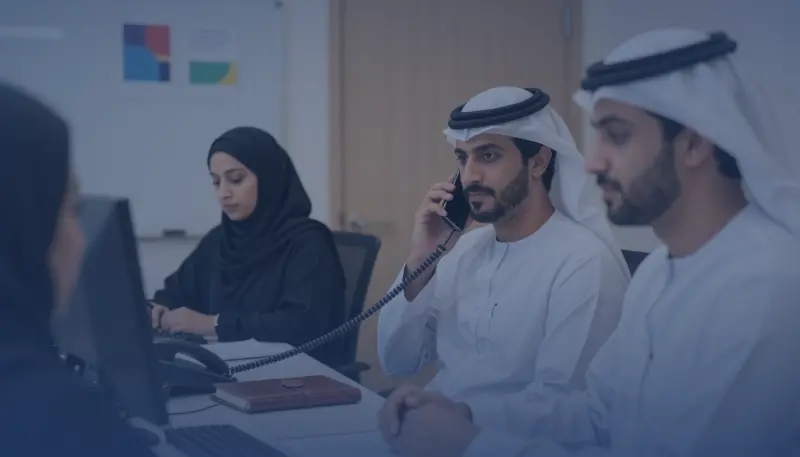
Telephone Etiquette and Call Handling Course
This 1-week course has 76 dates from November 2026 to November 2027 in 54 cities and live online. The next date runs 23 – 27 November 2026 in Accra. Fees per participant run from €4,100 (Casablanca) to €14,000 (San Diego) in a classroom, and from €1,500 live online.
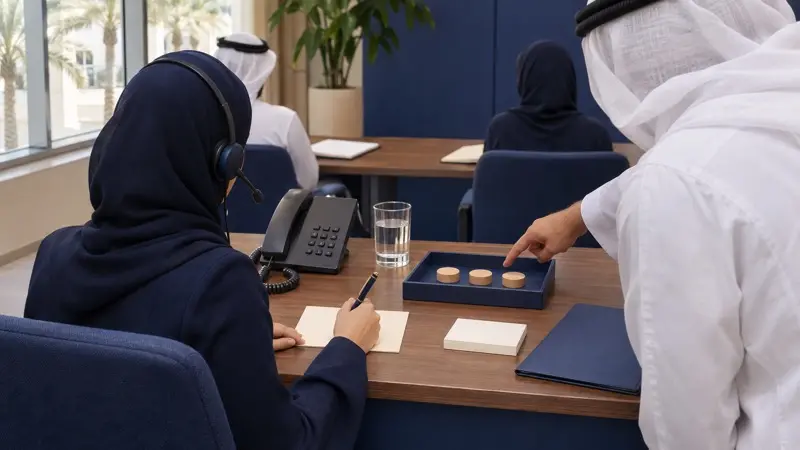
- Duration
- 1 Week5 days
- Scheduled dates
- 76
- Classroom cities
- 54Accra, Porto, Dubai, Paris and more
- Format
- Classroom and live online
- Fee per participant
- €1,500–€14,000Average €5,750
What does this course cover?
Overview
Professional Telephone Etiquette and Call Handling Training Course is a one-week professional course for staff who manage business calls and leave with a Telephone Call Handling Playbook. Participants develop professional telephone etiquette, vocal clarity, structured call openings and closings, active listening, needs discovery, call control, accurate message taking, and difficult-call de-escalation. The course solves inconsistent caller experiences through repeatable scripts, controls, and simulations. Agile Leaders Training Center develops practical telephone call handling.
Who Should Attend
- Teams responsible for answering, routing, and closing inbound business calls
- Teams responsible for making outbound service and follow-up calls
- Teams responsible for clarifying caller needs and recording accurate messages
- Teams responsible for resolving complaints and escalating difficult calls
- Teams responsible for monitoring and coaching telephone service quality
The course assumes participants already handle workplace calls and leaves out physical visitor management, contact-center workforce planning, and broad customer-service strategy.
Departments and Industries
The course supports departments and industries that depend on consistent telephone communication.
- Reception, switchboard, administration, and customer service
- Contact centers, help desks, and sales support
- Healthcare, education, and professional services
- Hospitality, transportation, and utility services
- Retail, logistics, and financial services
Learning Objectives
By the end of this course, participants will be able to:
- Apply telephone etiquette to openings, holds, transfers, and closings
- Use vocal pace, tone, and language for clear calls
- Analyze caller needs through listening and focused questions
- Build accurate call notes and message records
- Diagnose difficult calls and select de-escalation routes
- Evaluate call quality and prepare focused coaching feedback
Course Agenda
Day 1: Professional Telephone Standards
- Telephone Service Standard Canvas
- Call Preparation and Workspace Checklist
- Professional Opening and Identification Script
- Voice Pace, Tone, and Volume Control Grid
- Positive Language Replacement Bank
Day 2: Listening and Needs Discovery
- Active Listening Signal Checklist
- Open and Closed Question Funnel
- Caller Need Clarification Ladder
- Paraphrase and Confirmation Loop
- Call Purpose and Outcome Map
Day 3: Call Control and Message Accuracy
- Hold Permission and Return Protocol
- Warm Transfer and Handoff Sequence
- Accurate Telephone Message Template
- Call Time and Conversation Control Method
- Action Summary and Closing Checklist
Day 4: Difficult Calls and Quality Control
- Caller Emotion Recognition Guide
- De-Escalation Language Pathway
- Complaint Ownership and Escalation Matrix
- Privacy and Information Boundary Checklist
- Call Quality Observation Scorecard
Day 5: Telephone Call Handling Practice
- Exercise: Opening and Needs Discovery Simulation
- Exercise: Hold, Transfer, and Message Accuracy Drill
- Exercise: Difficult Caller De-Escalation Scenario
- Exercise: Call Quality Review and Coaching Practice
- Capstone: Telephone Call Handling Playbook
Practical Exercises
The course uses suggested activities drawn from healthcare, professional services, hospitality, and logistics.
- Suggested activity: answer a service call, clarify its purpose, and confirm the required outcome.
- Suggested activity: place a caller on hold, complete a warm transfer, and record a message without losing key details.
- Suggested activity: de-escalate an upset caller while maintaining privacy and role boundaries.
- Suggested activity: score a recorded simulation and deliver focused coaching feedback.
FAQs
Who suits professional telephone etiquette and call handling training, and what does it assume?
Staff who answer or make business calls suit the training; it assumes routine workplace telephone experience and does not require contact-center management responsibility.
How does telephone etiquette and call handling differ from general customer-service training?
Telephone etiquette and call handling concentrates on voice-only interactions, structured call stages, holds, transfers, messages, call control, and quality review; general customer-service training covers broader channels and service principles.
What makes a professional telephone opening effective?
An effective telephone opening identifies the organization or function, introduces the agent when appropriate, uses a clear greeting, invites the caller's purpose, and establishes a calm pace.
How should staff handle a difficult business call?
Staff should listen without interruption, name the issue, confirm facts, use neutral language, offer authorized options, summarize action, and escalate when the request exceeds their authority or presents a safety concern.
Conclusion
Participants take back a Telephone Call Handling Playbook containing scripts, questioning tools, message controls, transfer protocols, de-escalation routes, and a quality scorecard. It changes telephone service from individual habit into a repeatable operating practice. The playbook supports consistent calls, accurate handoffs, and focused coaching across customer-facing teams.
credits: 5 credit per day
Course Mode: full-time
Provider: Agile Leaders Training Center
-
Events for this Course
-
Accra 23 – 27 November 2026
-
Porto 30 November – 4 December 2026
-
Dubai 7 – 11 December 2026
-
Paris 7 – 11 December 2026
-
Phuket 13 – 17 December 2026
-
Casablanca 21 – 25 December 2026
-
Vienna 21 – 25 December 2026
-
Istanbul 28 December 2026 – 1 January 2027
-
Abu Dhabi 28 December 2026 – 1 January 2027
-
Paris 4 – 8 January 2027
-
Madrid 4 – 8 January 2027
-
Rome 11 – 15 January 2027
-
Trabzon 17 – 21 January 2027
-
Istanbul 18 – 22 January 2027
-
Manama 24 – 28 January 2027
-
London 25 – 29 January 2027
-
Chicago 31 January – 4 February 2027
-
Lagos 31 January – 4 February 2027
-
Amsterdam 8 – 12 February 2027
-
Kuala Lumpur 15 – 19 February 2027
-
Prague 15 – 19 February 2027
-
Kuwait 21 – 25 February 2027
-
Cairo 22 – 26 February 2027
-
Zoom 1 – 5 March 2027
-
Cape town 7 – 11 March 2027
-
Jakarta 15 – 19 March 2027
-
Vienna 22 – 26 March 2027
-
London 29 March – 2 April 2027
-
Tokyo 29 March – 2 April 2027
-
Amsterdam 5 – 9 April 2027
-
Milan 12 – 16 April 2027
-
Dubai 19 – 23 April 2027
-
Athens 19 – 23 April 2027
-
New York 26 – 30 April 2027
-
Addis Ababa 26 – 30 April 2027
-
Barcelona 3 – 7 May 2027
-
Toronto 9 – 13 May 2027
-
Seoul 10 – 14 May 2027
-
Abu Dhabi 17 – 21 May 2027
-
Berlin 17 – 21 May 2027
-
Marbella 23 – 27 May 2027
-
Bangkok 30 May – 3 June 2027
-
Manama 6 – 10 June 2027
-
Dubai 14 – 18 June 2027
-
Munich 14 – 18 June 2027
-
Frankfurt 14 – 18 June 2027
-
Amsterdam 21 – 25 June 2027
-
Langkawi 27 June – 1 July 2027
-
London 28 June – 2 July 2027
-
Baku 5 – 9 July 2027
-
Tashkent 11 – 15 July 2027
-
Bali 18 – 22 July 2027
-
San Diego 26 – 30 July 2027
-
Doha 1 – 5 August 2027
-
Montreux 9 – 13 August 2027
-
Nice 16 – 20 August 2027
-
London 23 – 27 August 2027
-
Abu Dhabi 23 – 27 August 2027
-
Muscat 29 August – 2 September 2027
-
Amman 5 – 9 September 2027
-
Nairobi 12 – 16 September 2027
-
Johannesburg 19 – 23 September 2027
-
Cairo 27 September – 1 October 2027
-
Tbilisi 27 September – 1 October 2027
-
Barcelona 4 – 8 October 2027
-
Dubai 11 – 15 October 2027
-
Rome 11 – 15 October 2027
-
Sharm El-Sheikh 18 – 22 October 2027
-
Abu Dhabi 18 – 22 October 2027
-
Lisbon 18 – 22 October 2027
-
Zanzibar 24 – 28 October 2027
-
Kuala Lumpur 1 – 5 November 2027
-
Singapore 1 – 5 November 2027
-
Milan 8 – 12 November 2027
-
Geneva 14 – 18 November 2027
-
Madrid 22 – 26 November 2027
When and where does this course run?
| Image | Location | Dates | Duration | Mode | Price | Actions |
|---|---|---|---|---|---|---|

|
Accra |
Week 48, 2026 23 – 27 November 2026 |
1 Week | Onsite | €4,850 | |

|
Porto |
Week 49, 2026 30 November – 4 December 2026 |
1 Week | Onsite | €5,700 | |

|
Dubai |
Week 50, 2026 7 – 11 December 2026 |
1 Week | Onsite | €4,500 | |

|
Paris |
Week 50, 2026 7 – 11 December 2026 |
1 Week | Onsite | €5,700 | |

|
Phuket |
Week 50, 2026 13 – 17 December 2026 |
1 Week | Onsite | €6,000 | |

|
Casablanca |
Week 52, 2026 21 – 25 December 2026 |
1 Week | Onsite | €4,100 | |

|
Vienna |
Week 52, 2026 21 – 25 December 2026 |
1 Week | Onsite | €5,700 | |

|
Istanbul |
Week 53, 2026 28 December 2026 – 1 January 2027 |
1 Week | Onsite | €4,500 | |

|
Abu Dhabi |
Week 53, 2026 28 December 2026 – 1 January 2027 |
1 Week | Onsite | €4,700 | |
|
|
Paris |
Week 01, 2027 4 – 8 January 2027 |
1 Week | Onsite | €5,700 | |

|
Madrid |
Week 01, 2027 4 – 8 January 2027 |
1 Week | Onsite | €5,700 | |

|
Rome |
Week 02, 2027 11 – 15 January 2027 |
1 Week | Onsite | €5,700 | |

|
Trabzon |
Week 02, 2027 17 – 21 January 2027 |
1 Week | Onsite | €6,800 | |
|
|
Istanbul |
Week 03, 2027 18 – 22 January 2027 |
1 Week | Onsite | €4,500 | |

|
Manama |
Week 03, 2027 24 – 28 January 2027 |
1 Week | Onsite | €4,700 | |

|
London |
Week 04, 2027 25 – 29 January 2027 |
1 Week | Onsite | €5,700 | |

|
Chicago |
Week 04, 2027 31 January – 4 February 2027 |
1 Week | Onsite | €12,000 | |

|
Lagos |
Week 04, 2027 31 January – 4 February 2027 |
1 Week | Onsite | €4,100 | |

|
Amsterdam |
Week 06, 2027 8 – 12 February 2027 |
1 Week | Onsite | €5,700 | |

|
Kuala Lumpur |
Week 07, 2027 15 – 19 February 2027 |
1 Week | Onsite | €5,200 |
Frequently asked questions
When does this course next run?
The next date runs 23 – 27 November 2026 in Accra. It is one of 76 dates scheduled up to November 2027.
Where is this course held?
In a classroom in 54 cities: Accra, Porto, Dubai, Paris, Phuket, Casablanca, Vienna, Istanbul, and more. It is also scheduled as live online sessions.
Can I attend this course online?
Yes. One date is scheduled as a live online session: 1 – 5 March 2027, from €1,500 per participant.
How long is the course?
1 Week. Each date shows its start and end dates.
How much does the course cost?
Fees per participant run from €4,100 (Casablanca) to €14,000 (San Diego) in a classroom, and from €1,500 live online. Each date shows its own fee.
What does this course cover?
OverviewProfessional Telephone Etiquette and Call Handling Training Course is a one-week professional course for staff who manage business calls and leave with a Telephone Call Handling Playbook. Participants develop professional telephone etiquette, vocal clarity, structured call openings and closings, active listening, needs discovery, call control, acc…
Are training dates available?
Yes. Available dates and destinations are listed in the course dates section on this page.
How can I register?
Choose an available date on this page and complete the registration form, or send a programme enquiry.
Can I download the course brochure?
Yes. Use the brochure download link provided on this page.
Can this course be run for our team?
Yes. Tell us the number of participants and your preferred dates and city through our training request form.
This course by city
- Marketing, Customer Relations, and Sales Courses in Abu Dhabi
- Marketing, Customer Relations, and Sales Courses in Accra
- Marketing, Customer Relations, and Sales Courses in Addis Ababa
- Marketing, Customer Relations, and Sales Courses in Amman
- Marketing, Customer Relations, and Sales Courses in Amsterdam
- Marketing, Customer Relations, and Sales Courses in Athens
- Marketing, Customer Relations, and Sales Courses in Baku
- Marketing, Customer Relations, and Sales Courses in Bali
- Marketing, Customer Relations, and Sales Courses in Bangkok
- Marketing, Customer Relations, and Sales Courses in Barcelona
- Marketing, Customer Relations, and Sales Courses in Berlin
- Marketing, Customer Relations, and Sales Courses in Cairo
- Marketing, Customer Relations, and Sales Courses in Cape town
- Marketing, Customer Relations, and Sales Courses in Casablanca
- Marketing, Customer Relations, and Sales Courses in Chicago
- Marketing, Customer Relations, and Sales Courses in Doha
- Marketing, Customer Relations, and Sales Courses in Dubai
- Marketing, Customer Relations, and Sales Courses in Frankfurt
- Marketing, Customer Relations, and Sales Courses in Geneva
- Marketing, Customer Relations, and Sales Courses in Istanbul
- Marketing, Customer Relations, and Sales Courses in Jakarta
- Marketing, Customer Relations, and Sales Courses in Johannesburg
- Marketing, Customer Relations, and Sales Courses in Kuala Lumpur
- Marketing, Customer Relations, and Sales Courses in Kuwait
- Marketing, Customer Relations, and Sales Courses in Lagos
- Marketing, Customer Relations, and Sales Courses in Langkawi
- Marketing, Customer Relations, and Sales Courses in Lisbon
- Marketing, Customer Relations, and Sales Courses in London
- Marketing, Customer Relations, and Sales Courses in Madrid
- Marketing, Customer Relations, and Sales Courses in Manama
- Marketing, Customer Relations, and Sales Courses in Marbella
- Marketing, Customer Relations, and Sales Courses in Milan
- Marketing, Customer Relations, and Sales Courses in Montreux
- Marketing, Customer Relations, and Sales Courses in Munich
- Marketing, Customer Relations, and Sales Courses in Muscat
- Marketing, Customer Relations, and Sales Courses in Nairobi
- Marketing, Customer Relations, and Sales Courses in New York
- Marketing, Customer Relations, and Sales Courses in Nice
- Marketing, Customer Relations, and Sales Courses in Paris
- Marketing, Customer Relations, and Sales Courses in Phuket
- Marketing, Customer Relations, and Sales Courses in Porto
- Marketing, Customer Relations, and Sales Courses in Prague
- Marketing, Customer Relations, and Sales Courses in Rome
- Marketing, Customer Relations, and Sales Courses in San Diego
- Marketing, Customer Relations, and Sales Courses in Seoul
- Marketing, Customer Relations, and Sales Courses in Sharm El-Sheikh
- Marketing, Customer Relations, and Sales Courses in Singapore
- Marketing, Customer Relations, and Sales Courses in Tashkent
- Marketing, Customer Relations, and Sales Courses in Tbilisi
- Marketing, Customer Relations, and Sales Courses in Tokyo
- Marketing, Customer Relations, and Sales Courses in Toronto
- Marketing, Customer Relations, and Sales Courses in Trabzon
- Marketing, Customer Relations, and Sales Courses in Vienna
- Marketing, Customer Relations, and Sales Courses in Zanzibar
- Marketing, Customer Relations, and Sales Courses in Zoom
More ways to train
- Every date of this courseAll cities and months, with fees
- Marketing, Customer Relations, and Sales CoursesEvery course in this subject
- Live online coursesTrain from wherever you are
- Training citiesCourses in each city
- All upcoming datesThe course calendar by month
- Training for your teamTell us the course, the number of participants and your dates
- Contact usAsk us about this course