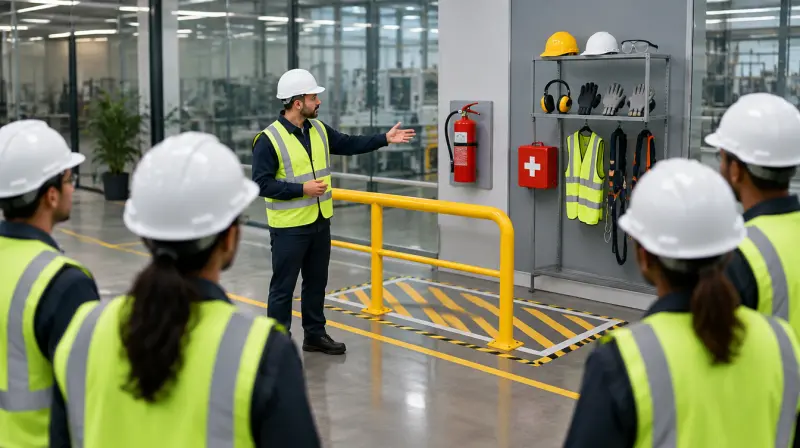
Workplace Health and Safety Foundations Training – 2 Weeks

Course Details
-
# 103600351_101084
-
27 September – 8 October 2027 08.Oct.2027
-
Munich
-
10000 €
Overview
Establishing dependable operating environments begins with frontline awareness, shared accountability, and consistent daily precautions. The Workplace Health and Safety Foundations Training Course provides non-specialist personnel, team leaders, and operational staff with a thorough two-week orientation to foundational occupational health and wellbeing. Participants master essential precautions, basic protective gear protocols, routine hazard checks, and immediate response measures. By examining daily operational settings across ten focused modules, learners build confidence in recognizing substandard conditions before injuries occur. This course is delivered by Agile Leaders Training Center.
Who Should Attend
- Newly appointed team leads and floor supervisors seeking operational grounding in workforce wellbeing.
- General staff and frontline personnel requiring structured orientation in daily risk evaluation.
- Administrative and facilities coordinators managing basic protective gear allocation and site notices.
- Departmental representatives appointed to joint employee safety committees.
- Operations support staff seeking a thorough foundational baseline before pursuing specialized certifications.
Targeted Departments and Industries
This entry-level programme supports non-specialist personnel across diverse commercial and manufacturing settings.
- Plant Operations and Warehouse Logistics
- Facilities Maintenance and Administrative Services
- Healthcare Support and Clinical Hospitality
- Retail Distribution and Light Assembly Lines
- Public Sector Services and Municipal Infrastructure
Learning Objectives
By the end of this course, participants will be able to:
- Apply foundational occupational health principles across routine shift workflows.
- Execute routine hazard checks using step-by-step observation checklists.
- Perform daily risk evaluation for typical department tasks and work areas.
- Select, inspect, and maintain basic protective gear according to task demands.
- Identify common ergonomic strains, chemical exposures, and mechanical entrapments.
- Implement emergency action plans and guide colleagues through safe building evacuations.
Course Agenda
Day 1: Foundations of Occupational Wellbeing and Site Precautions
- Core concepts of workplace wellbeing and individual employee responsibility
- Moral and financial reasons for maintaining clean, orderly work areas
- Common injury classifications: sprains, lacerations, burns, and falls
- Understanding basic safety terminology and cautionary signage
- Role of frontline workers in maintaining an alert operating culture
- Daily review and reflection on individual site habits
Day 2: Organizational Duties and Baseline Policies
- Employer obligations for providing safe equipment, tools, and environments
- Worker obligations regarding care, reporting, and proper rule following
- Navigating company policy handbooks and standard operating procedures
- The purpose of departmental safety committees and employee representation
- Communicating safety concerns openly without fear of reprisal
- Group review of sample workplace policy statements
Day 3: Routine Hazard Identification and Facility Housekeeping
- Differentiating between benign conditions and developing physical perils
- Housekeeping standards: preventing slips, trips, and corridor obstructions
- Walkway maintenance, floor condition inspections, and spillage responses
- Storage guidelines for inventory, pallets, and intermediate materials
- Conducting pre-shift walkthroughs and recording visible defects
- Checklist exercises for common workplace hazard recognition
Day 4: Everyday Risk Evaluation and Task Breakdown
- The five stages of conducting standard task assessments
- Rating likelihood and potential consequence for routine job steps
- Recognizing vulnerable persons, visitors, and temporary contractors
- Distinguishing acceptable conditions from unacceptable operational exposure
- Documenting observations using standardized department worksheets
- Practical exercise on daily risk evaluation for common warehouse tasks
Day 5: The Hierarchy of Safeguards
- Exploring the safeguard ladder from elimination to personal equipment
- Physical isolation: machine guards, interlocks, and safety rails
- Administrative measures: warning alarms, signage, and rotation schedules
- Understanding why physical modification outperforms behavioral controls
- Recognizing when existing machinery safeguards have been bypassed
- Interactive scenario on selecting appropriate physical barriers
Day 6: Personal Protective Gear Protocols
- Functions, capabilities, and strict limitations of personal equipment
- Eye, hearing, head, and foot protection standards for general environments
- Hand protection: glove selection based on mechanical or cut risks
- Proper fitting, daily pre-use checks, and defect identification
- Storage, sanitization, service life, and disposal criteria
- Practical demonstration of personal protective gear donning and inspection
Day 7: Ergonomics, Manual Handling, and Movement
- Musculoskeletal disorder causes and physical warning signs
- Safe lifting principles: base of support, spine alignment, and load centers
- Evaluating load dimensions, surface grip, and transit pathways
- Pushing and pulling mechanics versus manual lifting techniques
- Workstation arrangement, chair setup, and visual display comfort
- Guided practice in correct lifting and manual handling mechanics
Day 8: Chemical Awareness and Environmental Factors
- Common hazardous substances found in everyday commercial facilities
- Reading safety data sheets, hazard pictograms, and container labels
- Safe handling, transfer, and secondary container labeling protocols
- Ventilation basics, dust avoidance, and indoor air cleanliness
- Managing environmental factors: lighting, temperature, and industrial noise
- Practical session interpreting chemical warning pictograms
Day 9: Emergency Action Plans and First Response
- Typical emergency triggers: facility fires, severe weather, and utility failures
- Alarm recognition, primary exit pathways, and assembly procedures
- Roles of floor wardens, exit monitors, and trained first aiders
- Basic firefighting awareness and extinguisher operating rules
- Reporting injuries and preserving incident scenes for investigation
- Tabletop walkthrough of building emergency action plans
Day 10: Incident Reporting and Action Planning
- Near-miss definitions and why reporting minor occurrences prevents harm
- Completing simple incident report forms accurately and promptly
- Participating constructively in departmental review meetings
- Formulating a personal workplace wellbeing commitment roadmap
- Program consolidation and open-floor questions on foundation topics
- Presentation of individual task improvement action plans
Practical Exercises
Participants complete applied activities to build practical capability in daily workplace safety routines.
- Conduct a simulated routine hazard check on an operational workspace photo set.
- Fill out a standard job safety worksheet covering a repetitive lifting task.
- Perform pre-use inspection and fitting drills using diverse protective equipment items.
- Draft a clear near-miss report detailing a simulated corridor obstruction scenario.
FAQs
Are there any prerequisites required before joining this course?
No prior technical background or safety qualifications are required. The course is structured specifically for general staff, team leads, and entry-level coordinators seeking a grounded, accessible overview.
How does this 2-week foundation course differ from short 1-week programmes?
Unlike accelerated 1-week auditor or exam preparation courses, this 2-week foundation offering allows general staff ample time to practice hands-on routines, understand basic protective gear protocols, and master daily task assessments step by step.
Does this programme focus on heavy industrial or specialized engineering risks?
No, the curriculum focuses on widespread occupational wellbeing principles, everyday workplace hazards, ergonomics, basic chemical labeling, and routine emergency response applicable to common operational and administrative environments.
Conclusion
By completing this two-week foundational programme, participants gain the practical knowledge required to keep themselves and their colleagues safe during daily work. Equipped with essential tools for hazard checks, personal gear selection, and near-miss reporting, learners become active contributors to an alert, compliant, and supportive workplace culture.
Occupational Health, Safety and Security Training Courses
Workplace Health and Safety Foundations Training Course (103600351_101084)
Course Details
# 103600351_101084
27 September – 8 October 2027
Munich
Fees : 10000 €
Workplace Health and Safety Foundations Training – 2 Weeks runs in Munich over 12 days, with 1 upcoming date in Munich. The course fee is 10,000 €.
All dates in Munich
| Dates | Price | Actions |
|---|---|---|
| 27 September – 8 October 2027 | 10,000 € | Register |
Training in Munich
Experience our top-notch training courses in Munich. Join one of our training courses in Austria Today!
All courses in MunichThis course in other cities
- Abu Dhabi
- Accra
- Amman
- Amsterdam
- Athens
- Baku
- Bali
- Bangkok
- Barcelona
- Berlin
- Cairo
- Cape town
- Casablanca
- Chicago
- Doha
- Dubai
- Frankfurt
- Geneva
- Istanbul
- Jakarta
- Johannesburg
- Kuala Lumpur
- Kuwait
- Langkawi
- Lisbon
- London
- Madrid
- Manama
- Marbella
- Milan
- Montreux
- Muscat
- Nairobi
- New York
- Nice
- Paris
- Phuket
- Porto
- Prague
- Rome
- San Diego
- Seoul
- Sharm El-Sheikh
- Singapore
- Tashkent
- Tbilisi
- Tokyo
- Toronto
- Trabzon
- Vienna
- Zanzibar
- Zoom