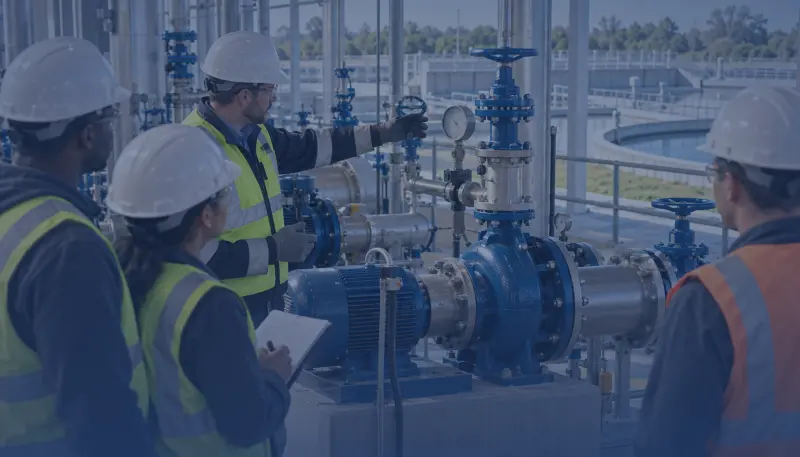
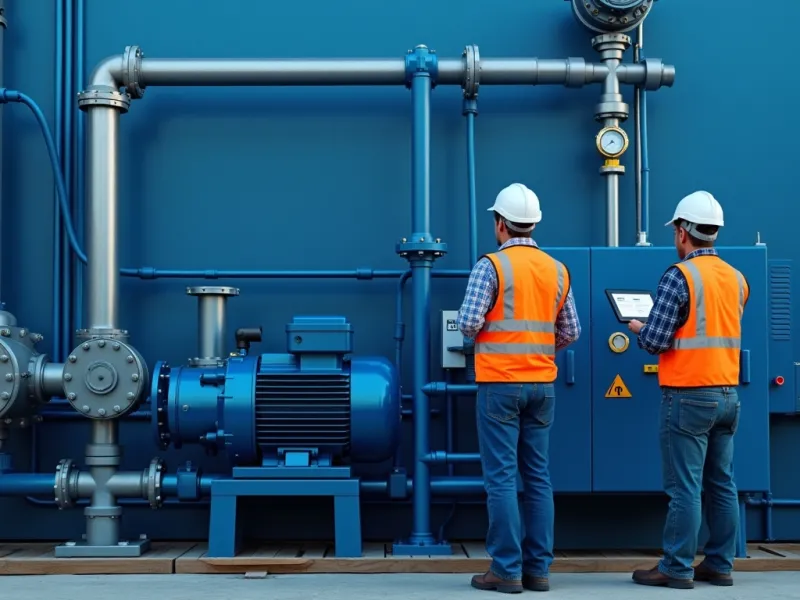
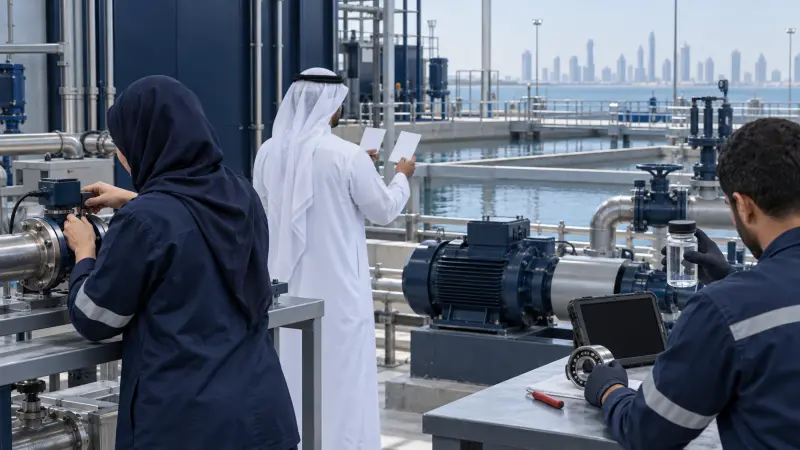
From Water Quality Testing to RO Operations and Pump Troubleshooting

Course Details
-
# 103600424_102898
-
20 – 24 December 2026 24.Dec.2026
-
Toronto
-
12000 €
Overview
Municipal and industrial drinking water facilities face rigorous regulatory benchmarks, operational disruptions, and shifting feed water chemistry. Moving from water quality testing to RO operations and pump troubleshooting requires technical discipline across laboratory testing, chemical clarification, mechanical pumping, and membrane separation. This training programme equips technical personnel with practical methods to evaluate physical, chemical, and microbiological contaminants, manage clarification and filtration stages, configure pumping hydraulics, and maintain reverse osmosis membranes. Participants acquire systematic diagnostic routines, maintenance checklists, and operational methodologies to maintain water purity and mechanical reliability across distributed utility networks. This course is delivered by Agile Leaders Training Center.
Who Should Attend
- Water treatment plant operators seeking advanced skills in membrane separation and clarifying chemistry.
- Pumping station engineers and technicians responsible for hydraulic performance, mechanical alignment, and cavitation control.
- Water quality analysts and laboratory personnel conducting physical, chemical, and microbiological sampling.
- Environmental and utility engineers overseeing municipal potable water treatment and distribution networks.
- Facility maintenance supervisors handling high-pressure pump servicing and reverse osmosis cleaning regimes.
Departments and Industries
This course serves operations, engineering, and quality specialists across municipal supply authorities and industrial process facilities.
- Municipal Drinking Water Authorities and Distribution Utilities
- Industrial Water Treatment Divisions in Power Generation and Refining
- Utility Management Units in Food, Beverage, and Pharmaceutical Manufacturing
- Operations and Maintenance Departments in Desalination Facilities
- Water Quality and Environmental Monitoring Laboratories
Learning Objectives
By the end of this course, participants will be able to:
- Conduct precise water quality testing for physical, chemical, and microbiological parameters against international drinking water standards.
- Control potable water treatment stages including coagulation, flocculation, media filtration, and chemical disinfection.
- Apply principles of pumping station design and operation to optimize flow rates, system head, and energy consumption.
- Execute structured pump troubleshooting routines to identify cavitation, seal degradation, and mechanical vibration.
- Manage reverse osmosis systems through disciplined pretreatment, flux monitoring, and chemical cleaning protocols.
- Formulate integrated emergency response plans for equipment failures, membrane fouling, and raw water contamination.
Course Agenda
Day 1: Fundamentals of Water Quality and Testing
- Drinking water regulatory frameworks and standard quality indices
- Measurement protocols for turbidity, pH, electrical conductivity, and total dissolved solids
- Laboratory methods for biological oxygen demand and chemical oxygen demand
- Microbiological testing protocols for coliforms, Escherichia coli, and waterborne pathogens
- Field sampling preservation techniques and rapid test kit calibration
- Diagnostic review of raw water contamination scenarios and laboratory reporting
Day 2: Potable Water Treatment Plant Processes
- Intake screening, aeration mechanisms, and raw water balancing
- Chemical coagulation and flocculation chemistry using alum and ferric salts
- Clarification mechanics, settling velocity, and sludge withdrawal routines
- Granular media filtration, differential pressure tracking, and backwash sequencing
- Disinfection chemistry using chlorination, ultraviolet irradiation, and ozone dosing
- Treated water storage reservoir management and residual disinfectant control
Day 3: Pumping Stations: Design, Operation and Troubleshooting
- Hydraulic principles of pumping station design and operation
- Centrifugal pump selection, performance curves, and net positive suction head requirements
- Flow regulation, control valves, and variable frequency drive integration
- Root cause diagnosis of mechanical seal leaks, bearing overheating, and cavitation
- Alignment verification, vibration monitoring, and preventative maintenance logs
- Energy optimization and pump staging strategies for fluctuating network demand
Day 4: Reverse Osmosis Systems: Operation and Maintenance
- Principles of membrane filtration and reverse osmosis separation chemistry
- Pretreatment requirements including cartridge filtration, antiscalant dosing, and dechlorination
- Membrane elements, pressure vessel configurations, and recovery rate calculations
- Operational tracking of normalized permeate flow, salt rejection, and differential pressure
- Membrane fouling mechanisms involving biological growth, colloidal silt, and mineral scale
- Clean-in-place procedures, chemical wash selection, and post-treatment remineralization
Day 5: Integrated Diagnostics, Safety and Advanced Controls
- Operational integration between conventional treatment trains and reverse osmosis units
- Diagnostic workflows for combined mechanical, hydraulic, and chemical process upsets
- Safety protocols for hazardous chemical handling, chlorine storage, and high-pressure piping
- Emergency response drills for sudden feed water spikes and power outages
- Instrumentation calibration, online water quality analyzers, and supervisory telemetry
- Final group presentation on plant operational optimization and troubleshooting plans
Practical Exercises
Participants engage in structured case exercises and practical calculations to resolve plant operational challenges.
- Suggested activity: Calculate coagulant dosing curves based on raw water turbidity and jar test data.
- Suggested activity: Analyze pump performance curves to calculate required head and prevent cavitation conditions.
- Suggested activity: Interpret RO operating logs to identify membrane scaling and calculate cleaning frequency.
- Suggested activity: Develop an emergency isolation and remedial action plan for an unchlorinated distribution event.
FAQs
What specific qualifications or prerequisites are needed for participants before enrolling in the course?
This course is suitable for engineers, operators, and technicians with basic knowledge of water systems. Prior experience in mechanical, civil, or environmental engineering is helpful but not mandatory.
How long is each day's session, and is there a total number of hours required for the entire course?
Each day's session is structured to last 4 to 5 hours, with breaks and interactive activities. The total duration is one week, approximately 20 to 25 hours of instruction.
How does troubleshooting differ between pumps and RO systems?
Pumps typically fail due to hydraulic, mechanical, or electrical issues, while RO troubleshooting focuses on water chemistry (scaling, fouling, chlorine damage) and membrane integrity. Both require systematic testing and preventive maintenance strategies.
Conclusion
Operating modern water facilities requires technical proficiency that bridges analytical chemistry, mechanical equipment reliability, and membrane technologies. By mastering these interconnected disciplines, technical personnel safeguard public health, extend asset lifecycles, and maintain compliant, cost-effective potable water supply infrastructure.
Environment & Sustainability Training Courses
Potable Water Treatment & Pumping Systems Course (103600424_102898)
Course Details
# 103600424_102898
20 – 24 December 2026
Toronto
Fees : 12000 €
From Water Quality Testing to RO Operations and Pump Troubleshooting runs in Toronto over 5 days, with 1 upcoming date in Toronto. The course fee is 12,000 €.
All dates in Toronto
| Dates | Price | Actions |
|---|---|---|
| 20 – 24 December 2026 | 12,000 € | Register |
Training in Toronto
Professional training courses in Toronto designed to enhance leadership, technical, and business skills!
All courses in TorontoThis course in other cities
- Abu Dhabi
- Accra
- Amman
- Amsterdam
- Athens
- Baku
- Bali
- Bangkok
- Barcelona
- Berlin
- Cairo
- Cape town
- Casablanca
- Chicago
- Doha
- Dubai
- Frankfurt
- Geneva
- Istanbul
- Jakarta
- Johannesburg
- Kuala Lumpur
- Kuwait
- Langkawi
- Lisbon
- London
- Madrid
- Manama
- Marbella
- Milan
- Montreux
- Munich
- Muscat
- Nairobi
- New York
- Nice
- Paris
- Phuket
- Porto
- Prague
- Rome
- San Diego
- Seoul
- Sharm El-Sheikh
- Singapore
- Tashkent
- Tbilisi
- Tokyo
- Trabzon
- Vienna
- Zanzibar
- Zoom