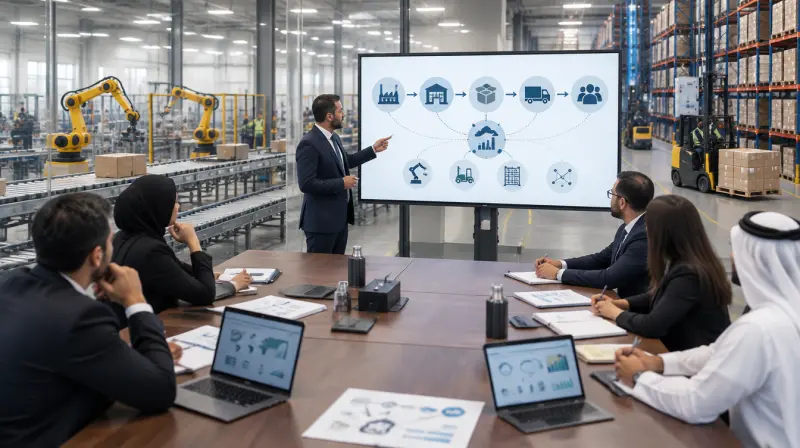
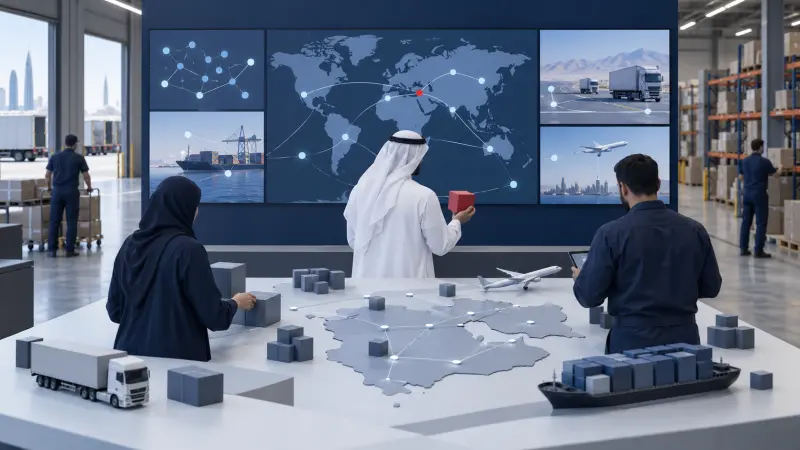
Supply Chain Engineering & Management Training Course

Course Details
-
# 103600544_105717
-
21 June – 2 July 2027 02.Jul.2027
-
Lisbon
-
10000 €
Overview
Modern distribution engineering demands rigorous mathematical optimization, telemetry integration, and automated tracking architectures. The Supply Chain Engineering & Management course equips technical specialists and industrial planners with analytical tools to calculate dynamic lot-sizing heuristics, configure radio-frequency identification topologies, and balance multi-echelon distribution pipelines. Participants evaluate stochastic lead-time variances, automated identification protocols, discrete-event simulation engines, and capable-to-promise logic to eliminate logistical friction across high-throughput distribution corridors. This course is delivered by Agile Leaders Training Center.
Who Should Attend
- Industrial engineers designing automated identification architectures and sensor-driven material handling workflows.
- Operations research specialists and quantitative analysts developing multi-echelon buffer stock heuristics.
- Logistics systems architects specifying radio-frequency identification tags, middleware, and telemetry layers.
- Distribution facility designers modeling dock-to-stock throughput, sorting capacities, and automated guided vehicles.
- Systems deployment planners configuring order allocation algorithms and real-time execution engines.
Departments and Industries
This technical curriculum supports engineering units and computational analytics groups across capital-intensive sectors.
- Automotive assembly plants and tier-one component fabrication hubs
- Semiconductor packaging facilities and electronic hardware foundries
- Biopharmaceutical manufacturing facilities and cold-chain distribution terminals
- Heavy machinery manufacturing plants and high-velocity spare parts centers
- Automated consumer package fulfillment hubs and robotic distribution hubs
Learning Objectives
By the end of this course, participants will be able to:
- Formulate quantitative heuristics for multi-echelon replenishment using deterministic and stochastic variables.
- Deploy radio-frequency identification frameworks, sensor arrays, and middleware across industrial transit routes.
- Execute discrete-event simulation runs to evaluate throughput constraints and fleet dispatching bottlenecks.
- Calibrate dynamic lot-sizing heuristics including Silver-Meal and Wagner-Whitin algorithms for fluctuating demand.
- Construct reverse logistics flow topologies to calculate component harvesting yields and remanufacturing throughput.
- Program Available-to-Promise and Capable-to-Promise rules within automated enterprise execution platforms.
- Quantify systemic fragility across distribution corridors using node criticality metrics and stochastic failure models.
- Synchronize multi-facility replenishment policies via multi-agent coordination frameworks and decentralized control logic.
Course Agenda
Day 1: Auto-ID Protocols and Sensor Telemetry Architecture
- Physics of passive and active radio-frequency identification in harsh industrial environments
- Antenna array placement, electromagnetic interference mitigation, and reader portal design
- Middleware integration specifications linking automated scanners with execution databases
- Sensor telemetry arrays: Continuous temperature logging, vibration monitoring, and GPS beacons
- Data throughput metrics, read-rate validation testing, and tag encoding standardisation
- Laboratory benchmark: Quantifying read accuracy thresholds under metal and liquid interference
Day 2: Quantitative Record Reconciliation and Auto-ID Data Pipelines
- Serialized material tracking frameworks across automated high-bay distribution hubs
- Algorithmic discrepancy reconciliation between physical sensor events and ledger databases
- Automated cycle counting workflows using automated aerial drones and optical scanners
- Loss mitigation formulas: Tracking misplaced assets through spatial probability filters
- Data ingestion architectures handling high-velocity serialized tag signals
- Technical workshop: Programming automated scan reconciliation scripts for real-time stock balances
Day 3: Digital Telemetry and Transit Event Management
- Architectures for mobile telematics pipelines and real-time transit telemetry
- Edge computing deployment on transport fleets for localized anomaly classification
- Integration gateways linking transport telemetry systems with enterprise schedule planners
- Simulation of transit asset utilization using discrete-event fleet tracking engines
- Cybersecurity parameters, packet encryption, and transmission protocols in mobile logistics fleets
- Technical workshop: Building automated exception trigger logic for multi-modal freight routes
Day 4: Network Topologies and Stochastic Demand Modeling
- Computational modeling of demand variance using power-law and Poisson distributions
- Multi-agent simulation protocols for assessing decentralized replenishment decisions
- Late-stage customization heuristics and modular postponement calculation techniques
- Facility location algorithms: P-median and capacitated facility location formulation
- Throughput capacity balancing between regional distribution hubs and cross-dock terminals
- Technical workshop: Solving capacitated distribution allocation models using linear programming tools
Day 5: Closed-Loop Topologies and Component Harvesting
- Mathematical modeling of reverse flow volumes, grading gates, and recovery streams
- Topological design of consolidation points, testing yards, and disassembly facilities
- Economic break-even algorithms for remanufacturing, recycling, and asset disposition
- Traceability mechanisms for tracking end-of-life component serialisation and residual value
- Circular material flow accounting models for industrial regulatory compliance
- Technical workshop: Designing an automated disassembly queue model with variable yield inputs
Day 6: Industrial Flow Synchronization and Throughput Balancing
- Mathematical balancing of fabrication cycle times and assembly takt times
- Calculating dynamic Kanban quantities and Constant Work-in-Process replenishment triggers
- Bottleneck identification methodologies using Theory of Constraints and throughput analysis
- Material flow synchronization across automated high-density storage and retrieval machinery
- Reducing transit buffers through point-of-use line feeding and kitting delivery logic
- Technical workshop: Simulating shop-floor replenishment schedules using pull-system algorithms
Day 7: Decentralized Replenishment and Lot-Sizing Heuristics
- Algorithmic comparison of dynamic lot-sizing heuristics: Wagner-Whitin versus Silver-Meal
- Part-period balancing formulation under non-stationary discrete demand profiles
- Safety stock pooling calculations: Centralized hub consolidation versus distributed depots
- Vendor-managed replenishment telemetry architectures and continuous replenishment parameters
- Multi-stop route dispatching optimization using vehicle routing heuristics
- Technical workshop: Formulating mathematical lot-sizing algorithms for erratic multi-period demand
Day 8: Disruption Simulation and Structural Fragility Analysis
- Taxonomy of logistical failure modes: Port closures, supplier insolvencies, and corridor blocks
- Quantifying network robustness using graph theory, node degree, and edge betweenness centrality
- Stochastic lead-time modelling using Monte Carlo simulations for component transit
- Dual-sourcing optimization: Balancing low-cost distant vendors with agile local suppliers
- Contingency rerouting algorithms under capacity-constrained alternate shipping channels
- Technical workshop: Stress-testing distribution topologies using discrete-event failure injectors
Day 9: Corridors Optimization and Quantitative Auditing
- Lead-time compression analytics across complex multi-modal international transit lanes
- Formulating multi-tier quantitative telemetry scorecards: Asset turns and cash cycle velocity
- Cross-dock throughput optimization using automated sortation scheduling formulas
- Empirical benchmarking metrics for automated storage density and handling unit costs
- Designing automated exception-reporting dashboards for engineering management teams
- Technical workshop: Constructing a variance diagnostic tool for cross-border freight transit runs
Day 10: Demand Allocation and Capable-to-Promise Execution
- Algorithmic logic of Available-to-Promise (ATP) and Capable-to-Promise (CTP) rules
- Real-time multi-echelon allocation engines under constrained manufacturing capacities
- Dynamic order promising protocols linking raw material schedules with dispatch queues
- Advanced replenishment scheduling using predictive statistical forecasting models
- Capstone synthesis: Engineering an integrated tracking and automated distribution framework
- Technical workshop: Simulating multi-tier order allocation under severe component shortages
Practical Exercises
Participants solve applied engineering problem sets using quantitative methods and data structures.
- Suggested activity: Formulate an optimal RFID reader placement scheme to maximize read rates along automated conveyor sorters.
- Suggested activity: Calculate multi-echelon safety stock quantities across regional depots using stochastic lead-time formulas.
- Suggested activity: Build a mathematical dynamic lot-sizing script comparing Silver-Meal and Wagner-Whitin methods.
- Suggested activity: Conduct a Monte Carlo disruption simulation to measure inventory depletion during prolonged port congestion.
FAQs
What computational background is expected for this course?
Participants should be comfortable with engineering mathematics, spreadsheet-based data analysis, and basic industrial distribution concepts. Optimization equations and simulation techniques are taught progressively from core principles.
How are sensor and RFID architectures demonstrated during the sessions?
The curriculum analyzes hardware specifications, antenna frequencies, middleware filtering algorithms, and data integration protocols through engineering schematics, technical data feeds, and deployment case exercises.
How does this engineering course differ from general logistics courses?
This program focuses on mathematical modeling, operations research, telematics pipelines, and hardware integration rather than commercial contracting or general purchasing administration.
Conclusion
Supply chain engineering provides the analytical foundations required to design resilient, data-driven distribution ecosystems. By mastering auto-ID protocols, dynamic heuristics, and throughput balancing, technical planners build high-performance material flows that withstand disruption, protect production continuity, and maximize asset utilization across complex multi-echelon networks.
Quality and Operations Management Training Courses
Supply Chain Engineering & Management Course (103600544_105717)
Course Details
# 103600544_105717
21 June – 2 July 2027
Lisbon
Fees : 10000 €
Supply Chain Engineering & Management Training Course runs in Lisbon over 12 days, with 1 upcoming date in Lisbon. The course fee is 10,000 €.
All dates in Lisbon
| Dates | Price | Actions |
|---|---|---|
| 21 June – 2 July 2027 | 10,000 € | Register |
Training in Lisbon
Professional training courses in Lisbon designed to develop leadership, technical, and business skills. Gain practical knowledge and advance your career in a dynamic European capital.
All courses in LisbonThis course in other cities
- Abu Dhabi
- Accra
- Amman
- Amsterdam
- Athens
- Baku
- Bali
- Bangkok
- Barcelona
- Berlin
- Cairo
- Cape town
- Casablanca
- Chicago
- Doha
- Dubai
- Frankfurt
- Geneva
- Istanbul
- Jakarta
- Johannesburg
- Kuala Lumpur
- Kuwait
- Lagos
- Langkawi
- London
- Madrid
- Manama
- Marbella
- Milan
- Montreux
- Munich
- Muscat
- Nairobi
- New York
- Nice
- Paris
- Phuket
- Porto
- Prague
- Rome
- San Diego
- Seoul
- Sharm El-Sheikh
- Singapore
- Tashkent
- Tbilisi
- Tokyo
- Toronto
- Trabzon
- Vienna
- Zanzibar
- Zoom