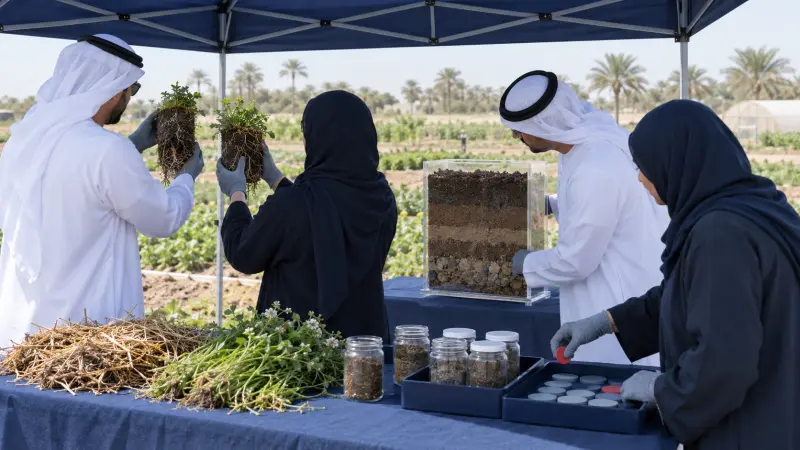
Organic Arable Farming Systems Management Training Course

Course Details
-
# 1375_201544
-
5 – 9 April 2027 09.Apr.2027
-
Amsterdam
-
5700 €
Overview
Organic Arable Farming Systems Management Training Course is a one-week advanced course for farm managers, agronomists, crop specialists, advisers, and sustainability teams who leave with an Organic Arable Farm Management Plan. Participants design organic crop rotation, soil fertility planning, nutrient cycling, seed and variety selection, weed and pest controls, crop health monitoring, field records, and yield-risk decisions. The course connects field evidence with seasonal management choices. Agile Leaders Training Center presents organic arable farming through field-scale planning and control.
Who Should Attend
- Teams responsible for field-crop production and seasonal farm plans
- Functions that advise on soil, crop, nutrient, and rotation decisions
- Farm-management teams that control operations, records, and resources
- Extension functions that support organic crop-system adoption
- Sustainability teams that evaluate soil health and production resilience
The course assumes participants already manage arable fields, crop advice, or farm records and leaves out livestock systems, protected cropping, food processing, and certification auditing.
Departments and Industries
The course serves departments and industries that plan, produce, advise on, or source organic arable crops.
- Arable farms, producer groups, and contract-farming operations
- Seed, grain, pulse, oilseed, and crop-input businesses
- Agricultural extension and rural development organizations
- Food sourcing, procurement, and supply-chain functions
- Soil, crop, sustainability, and farm-management departments
Learning Objectives
By the end of this course, participants will be able to:
- Analyze field constraints and organic arable production risks
- Build multi-field crop rotations and fertility strategies
- Evaluate seed, variety, cover-crop, and green-manure choices
- Apply organic weed, pest, and disease controls
- Use crop monitoring, field records, and yield scenarios
- Build an Organic Arable Farm Management Plan
Course Agenda
Day 1: Field Context and Organic Controls
- Organic Arable Farm Baseline Assessment
- Field Capability and Constraint Mapping Tool
- Organic Production Requirement Control Register
- Farm Conversion and Transition Risk Map
- Organic Arable Management Objective Matrix
Day 2: Rotation and Soil Fertility
- Multi-Field Organic Crop Rotation Planner
- Legume, Cover-Crop, and Green-Manure Selection Matrix
- Soil Organic Matter and Biological Activity Review
- Farm-Gate Nutrient Balance Worksheet
- Soil Fertility Amendment Decision Record
Day 3: Crop Establishment and Weed Control
- Organic Seed and Variety Selection Scorecard
- Seedbed, Sowing-Date, and Density Decision Tool
- Mechanical and Cultural Weed Control Calendar
- Stale Seedbed and Intercropping Options Matrix
- Crop Establishment Quality Inspection Sheet
Day 4: Crop Health, Records, and Yield Risk
- Integrated Pest and Disease Monitoring Protocol
- Preventive Crop Health Control Hierarchy
- Beneficial Organism and Habitat Action Map
- Organic Field Activity and Input Record
- Yield, Weather, and Market Risk Scenario Model
Day 5: Organic Arable Management Practice
- Exercise: Diagnose a Field and Rotation Constraint
- Exercise: Build a Rotation and Nutrient Strategy
- Exercise: Select Weed and Crop Health Controls
- Exercise: Review Field Records and Yield Risks
- Capstone Exercise: Organic Arable Farm Management Plan
Practical Exercises
The course uses cereal, pulse, and oilseed scenarios across different soils and production constraints.
- Suggested activity: map field capability, weed burden, nutrient status, and crop-history evidence before selecting a rotation.
- Suggested activity: balance legumes, cover crops, green manures, crop demand, and permitted fertility inputs in a nutrient strategy.
- Suggested activity: compare cultural, mechanical, biological, and monitoring controls for a crop-health scenario.
- Suggested activity: test yield and operational risks and assign records, owners, and review points.
FAQs
Who suits organic arable farming training, and what does it assume?
Organic arable farming training suits experienced farm managers, agronomists, crop advisers, extension personnel, and sustainability teams who already work with field crops or farm records.
How does organic arable farming differ from general organic agriculture training?
Organic arable farming concentrates on field-crop rotations, soil fertility, crop establishment, weed and pest controls, records, and yield risk rather than covering livestock, horticulture, processing, or broad organic principles.
How is an organic crop rotation designed?
An organic crop rotation is designed from field constraints, crop families, rooting patterns, nutrient demand, legumes, cover crops, weed and pest cycles, market needs, and operational capacity.
How is soil fertility managed in organic arable farming?
Soil fertility is managed through rotations, legumes, green manures, cover, organic matter, nutrient balances, soil evidence, timed amendments, and measures that reduce nutrient loss.
How are weeds and pests controlled in organic arable systems?
Weeds and pests are controlled through prevention, rotation, resistant varieties, cultivation, sowing decisions, hygiene, habitat support, monitoring, mechanical action, and permitted interventions selected from field evidence.
Conclusion
The course integrates field assessment, rotation, fertility, establishment, crop health, records, and risk decisions. Participants take back an Organic Arable Farm Management Plan defining field actions, control points, evidence, responsibilities, and review cycles. The plan helps farms coordinate seasonal choices and protect soil condition while managing production uncertainty.
Agribusiness & Food Security Training Courses
Organic Arable Farming Management Course (1375_201544)
Course Details
# 1375_201544
5 – 9 April 2027
Amsterdam
Fees : 5700 €