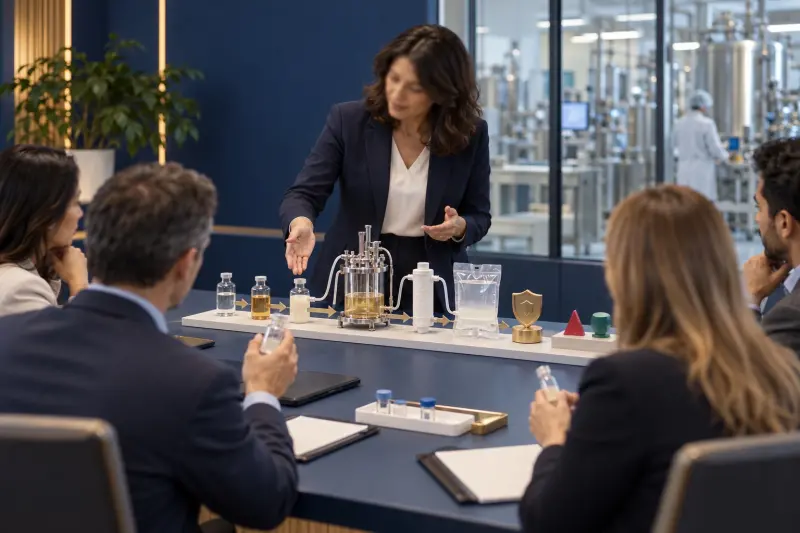
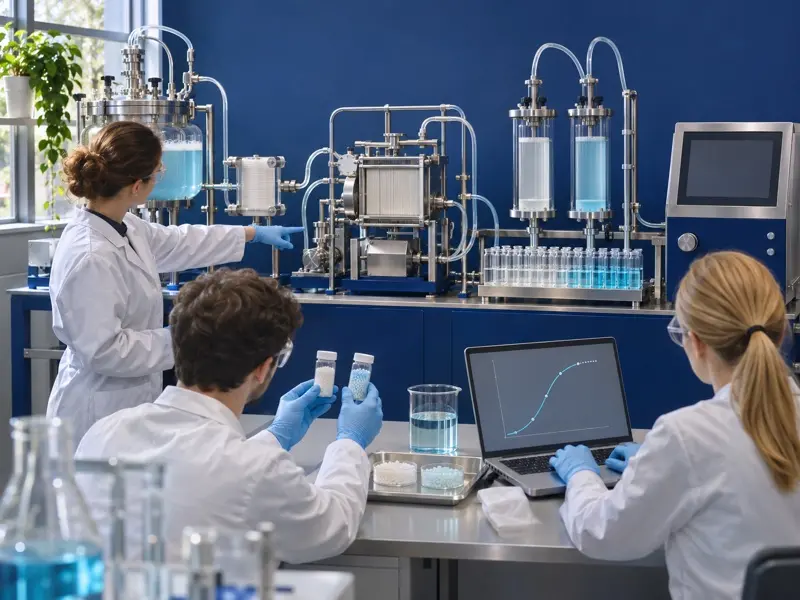
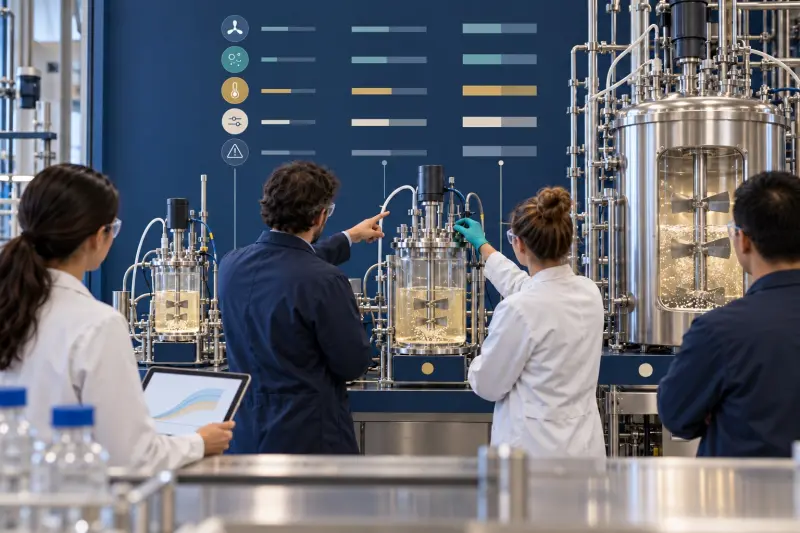
Biotechnology Fundamentals and Bioprocess Basics Training Course – Kuala Lumpur, 16–20 Aug 2027
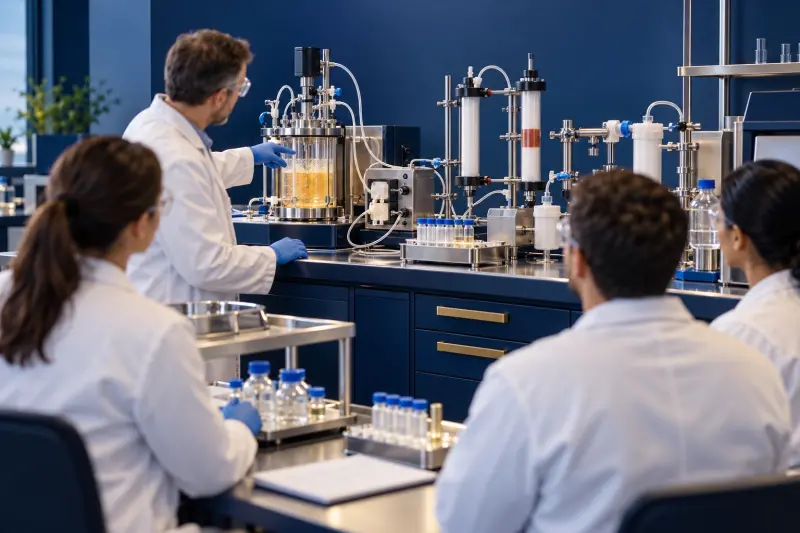
Course Details
-
# 1424_205093
-
16 – 20 August 2027 20.Aug.2027
-
Kuala Lumpur
-
6500 €
This session: 16–20 Aug 2027
This Biotechnology Fundamentals and Bioprocess Basics Training Course session in Kuala Lumpur runs from Monday 16 August to Friday 20 August 2027 (week 33, Q3 2027). It is the only date in Kuala Lumpur in 2027, at a fee of 6,500 €. Registration is open for this date. It is held in person.
- Dates
- Monday 16 Aug – Friday 20 Aug 2027
- Week
- 33 of 2027
- Duration
- 5 days
- Fee
- 6,500 €
- Status
- Open for registration
- Format
- In person
Overview
Biotechnology Fundamentals and Bioprocess Basics Training Course is a one-week foundation course for new biotechnology staff, laboratory support personnel, coordinators, managers, and life-science entrants who leave with a Biotechnology Process Map. Participants connect cell and molecular biology, recombinant DNA, expression systems, culture, fermentation, bioprocess stages, quality, biosafety, ethics, applications, and the product lifecycle. The course turns unfamiliar terminology into a structured view of biotechnology work. Agile Leaders Training Center presents biotechnology fundamentals through science-to-process connections.
Who Should Attend
- Laboratory support functions responsible for samples, records, materials, and routine workflows
- Manufacturing coordination functions responsible for production communication, schedules, and process handoffs
- Quality support functions responsible for documentation, controls, deviations, and traceability
- Technical administration functions responsible for coordinating scientific and operational activities
- Management functions responsible for decisions involving biotechnology teams or suppliers
- Career-entry functions preparing to work in life-science organizations
The course assumes participants can follow technical instructions at work and leaves out advanced experimental design, clinical practice, and product-specific regulatory submissions.
Departments and Industries
The course supports departments and industries that use biological science, controlled processes, and biotechnology products.
- Biotechnology, biopharmaceutical, vaccine, and diagnostics organizations
- Food, agricultural, environmental, and industrial biotechnology operations
- Research, development, laboratory, and analytical departments
- Manufacturing, process development, and technology-transfer functions
- Quality assurance, quality control, and documentation teams
- Technical procurement, project coordination, and operational management functions
Learning Objectives
By the end of this course, participants will be able to:
- Apply biotechnology vocabulary to workplace conversations
- Analyze DNA-to-protein and recombinant expression workflows
- Compare microbial and mammalian culture approaches
- Build an upstream-to-downstream bioprocess map
- Apply quality and biosafety controls to basic scenarios
- Evaluate biotechnology applications, ethics, and lifecycle choices
Course Agenda
Day 1: Biotechnology Foundations and Applications
- Biotechnology Domain and Application Map
- Cell Structure and Function Comparison Model
- DNA, RNA, and Protein Information Flow Diagram
- Genetic Variation and Trait Interpretation Method
- Biotechnology Product Lifecycle Map
Day 2: Recombinant DNA and Expression Systems
- Recombinant DNA Workflow Diagram
- Vector, Host, and Target Selection Matrix
- Gene Expression Control Model
- Transformation and Screening Decision Tree
- Expression Result Interpretation Checklist
Day 3: Culture, Fermentation, and Bioprocess Flow
- Microbial and Mammalian Culture Comparison Matrix
- Aseptic Practice and Contamination Control Checklist
- Fermentation Parameter Monitoring Chart
- Upstream Processing Sequence Map
- Downstream Recovery and Purification Flowchart
Day 4: Analysis, Quality, Safety, and Ethics
- Biological Sample Analytical Method Map
- Quality Attribute and Process Control Matrix
- Risk-Based Biosafety Assessment Method
- Biosecurity and Material Lifecycle Checklist
- Ethical Application Decision Framework
Day 5: Biotechnology Process Integration Practice
- Exercise: Interpret a DNA-to-Protein Workflow
- Exercise: Select a Host and Expression Route
- Exercise: Map Culture and Fermentation Controls
- Exercise: Assess Quality and Biosafety Risks
- Capstone Exercise: Biotechnology Process Map
Practical Exercises
The course uses suggested activities based on research, diagnostics, food biotechnology, and biologics production.
- Suggested activity: trace biological information from a DNA sequence concept to an expressed protein and identify key decisions.
- Suggested activity: compare microbial and mammalian hosts against product, process, time, and control needs.
- Suggested activity: arrange upstream, downstream, analytical, quality, and safety activities into a connected workflow.
- Suggested activity: build a Biotechnology Process Map with lifecycle stages, handoffs, risks, and ethical questions.
FAQs
Who suits a biotechnology fundamentals course, and what does it assume?
A biotechnology fundamentals course suits new staff, support personnel, coordinators, non-specialist managers, and career entrants who can follow technical instructions but do not require prior molecular biology expertise.
How does biotechnology fundamentals training differ from advanced bioprocess training?
Biotechnology fundamentals training builds shared scientific and process vocabulary, while advanced bioprocess training examines specialized design, optimization, scale-up, control, and troubleshooting in greater depth.
What is the relationship between recombinant DNA and biotechnology products?
Recombinant DNA methods assemble and introduce genetic instructions into a host so that cells can express a target molecule or characteristic used in research, production, diagnostics, or other applications.
How do upstream and downstream processing fit together?
Upstream processing prepares and grows the biological system, while downstream processing recovers, separates, purifies, and prepares the resulting material for its intended next stage.
Why are biosafety and ethics part of biotechnology basics?
Biosafety and ethics guide risk assessment, responsible handling, appropriate controls, transparent decisions, and consideration of consequences across laboratory, production, and application settings.
Conclusion
The course connects biotechnology science, expression systems, culture, bioprocessing, analysis, quality, safety, ethics, and applications. Participants take back a Biotechnology Process Map. The map improves workplace communication by showing lifecycle stages, process relationships, control points, handoffs, risks, and decisions in one structured artifact.
Oil & Gas Training and Other Technical Courses
Biotechnology Fundamentals and Bioprocess Course (1424_205093)
Course Details
# 1424_205093
16 – 20 August 2027
Kuala Lumpur
Fees : 6500 €
Biotechnology Fundamentals and Bioprocess Basics Training Course runs in Kuala Lumpur over 5 days, with 1 upcoming date in Kuala Lumpur. The course fee is 6,500 €.
All dates in Kuala Lumpur
| Dates | Price | Actions |
|---|---|---|
| 16 – 20 August 2027 This session | 6,500 € | Register |
Training in Kuala Lumpur
Experience our high-quality training courses in Kuala Lumpur, Malaysia's bustling capital Training courses in Malaysia.
All courses in Kuala LumpurThis course in other cities
- Abu Dhabi
- Accra
- Addis Ababa
- Amman
- Amsterdam
- Athens
- Baku
- Bali
- Bangkok
- Barcelona
- Berlin
- Cairo
- Cape town
- Casablanca
- Chicago
- Doha
- Dubai
- Frankfurt
- Geneva
- Istanbul
- Jakarta
- Johannesburg
- Kuwait
- Lagos
- Langkawi
- Lisbon
- London
- Madrid
- Manama
- Marbella
- Milan
- Montreux
- Munich
- Muscat
- Nairobi
- New York
- Nice
- Paris
- Phuket
- Porto
- Prague
- Rome
- San Diego
- Seoul
- Sharm El-Sheikh
- Singapore
- Tashkent
- Tbilisi
- Tokyo
- Toronto
- Trabzon
- Vienna
- Zanzibar
- Zoom