Restaurant Inventory and Food Cost Control Training Course

Course Details
-
# 1788_234337
-
27 September – 1 October 2027 01.Oct.2027
-
Zoom
-
1500 €
Overview
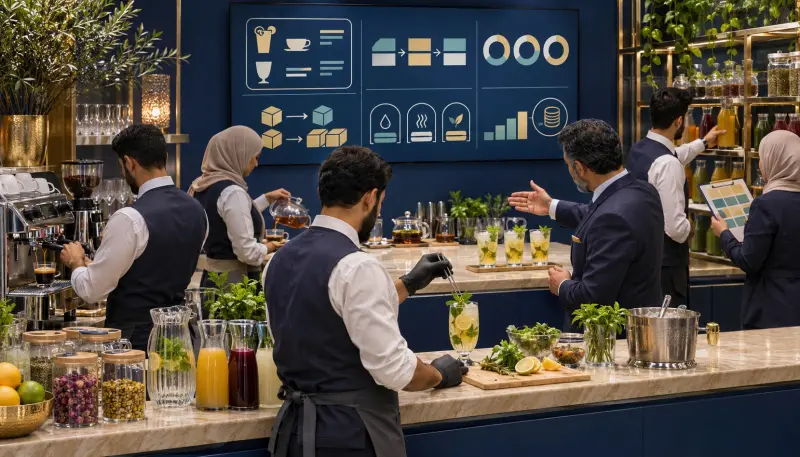
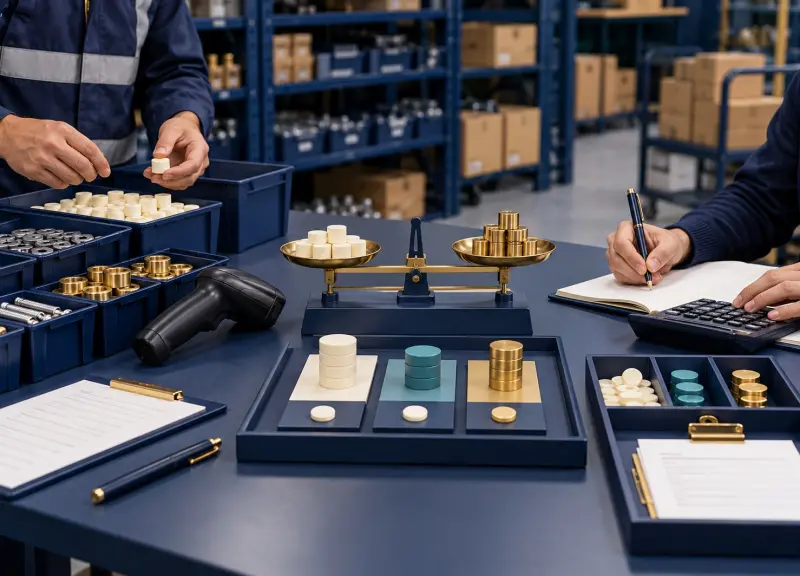
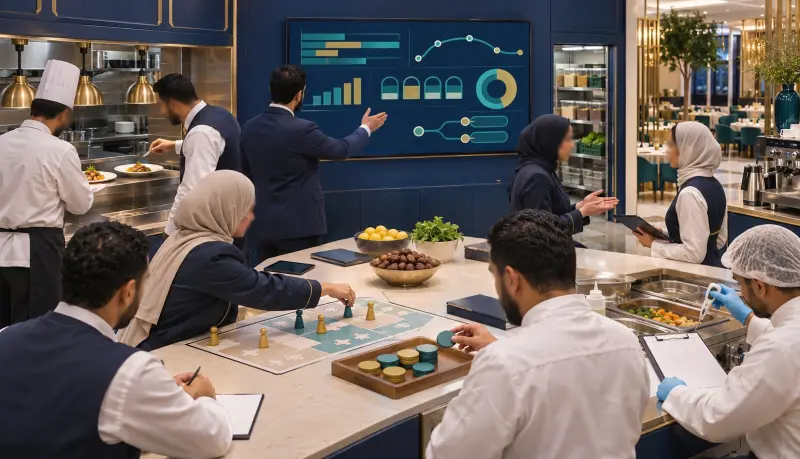
Restaurant Inventory and Food Cost Control Training Course is a one-week management course for restaurant, food and beverage, kitchen, purchasing, and cost-control teams who leave with a Restaurant Inventory and Cost Control Pack. The course connects restaurant inventory control, food cost control, recipe costing, stock count variance, restaurant waste tracking, purchasing, portions, yields, beverage control, and pricing interfaces. It addresses missing records and unexplained usage through linked operating evidence. Agile Leaders Training Center delivers this course on restaurant inventory and food cost control.
Who Should Attend
- Teams responsible for purchasing, supplier orders, receiving, invoice checks, and storage handoffs
- Functions responsible for recipes, portions, production yields, kitchen usage, and menu decisions
- Teams responsible for food and beverage inventory, stock counts, transfers, and adjustments
- Functions responsible for cost reporting, sales reconciliation, variance analysis, and management action
- Teams responsible for waste, spoilage, complimentary items, returns, and operational performance
The course assumes participants work with restaurant operations, stock, recipes, purchasing, sales, or cost reports and leaves out accounting-standard advice, food-safety certification, and software configuration.
Departments and Industries
The course supports restaurant inventory and cost decisions across food service, hospitality, retail dining, and institutional catering.
- Restaurant operations, kitchen production, food and beverage service, and outlet management
- Purchasing, receiving, stores, inventory control, and supplier coordination
- Finance, cost control, management accounting, revenue, and performance reporting
- Hotels, resorts, restaurants, cafés, catering, and contract food service
- Healthcare, education, leisure, workplace dining, and event operations
Learning Objectives
By the end of this course, participants will be able to:
- Build purchasing, receiving, storage, and issue controls.
- Apply recipe, portion, yield, and beverage costing methods.
- Analyze theoretical and actual food usage variances.
- Evaluate stock-count accuracy, waste, and adjustment evidence.
- Compare menu contribution, pricing, and cost actions.
- Build a Restaurant Inventory and Cost Control Pack.
Course Agenda
Day 1: Purchasing, Receiving, and Storage
- Purchase Specification and Approved-Supplier Control Sheet
- Par Level, Reorder Point, and Order Quantity Planner
- Purchase Order, Delivery Note, and Invoice Match Checklist
- Receiving Quantity, Quality, Price, and Temperature Record
- Storage Location, Labeling, Rotation, and Issue Control Map
Day 2: Recipes, Portions, and Yields
- Standard Recipe and Ingredient Costing Card
- Edible Yield Test and Purchase Quantity Worksheet
- Portion Standard, Serving Tool, and Plate Cost Guide
- Food and Beverage Unit Conversion Register
- Recipe Cost Change and Menu Price Interface Log
Day 3: Counts, Usage, and Variances
- Inventory Count Schedule and Responsibility Plan
- Blind Count, Recount, and Unit-of-Measure Checklist
- Opening Stock, Purchases, Transfers, and Closing Stock Reconciliation
- Theoretical and Actual Consumption Variance Sheet
- Food Cost, Beverage Cost, and Cost-of-Sales Dashboard
Day 4: Waste, Performance, and Action
- Waste, Spoilage, Overproduction, and Return Log
- Complimentary Item, Staff Meal, and Void Control Register
- Menu Contribution and Cost Movement Matrix
- High-Value Item, Usage Trend, and Exception Review
- Restaurant Inventory and Cost Action Tracker
Day 5: Restaurant Cost-Control Practice
- Exercise: Validate Purchasing, Receiving, and Storage Evidence
- Exercise: Cost Recipes, Portions, Yields, and Beverages
- Exercise: Reconcile Counts and Diagnose Usage Variances
- Exercise: Prioritize Waste, Pricing, and Performance Actions
- Capstone Exercise: Build the Restaurant Inventory and Cost Control Pack
Practical Exercises
The course uses suggested activities to connect restaurant stock movements, production records, sales, and management decisions.
- Suggested activity: match an ingredient order, delivery, invoice, storage entry, and kitchen issue for a restaurant outlet.
- Suggested activity: calculate edible yield, standard portion cost, recipe cost, and revised cost after a supplier-price change.
- Suggested activity: reconcile a stock count with purchases, transfers, sales-linked usage, waste, and approved adjustments.
- Suggested activity: turn food-cost and waste exceptions into owners, actions, evidence, and review dates.
FAQs
Who suits restaurant inventory and food cost control training, and what does it assume?
Restaurant inventory and food cost control training suits operations, kitchen, purchasing, stores, finance, and cost-control teams and assumes practical exposure to stock, recipes, orders, sales, or operating reports.
How does restaurant inventory and food cost control differ from general inventory training?
Restaurant inventory and food cost control links perishable stock, recipes, portions, yields, sales, waste, and beverage usage, while general inventory training focuses on broader replenishment, storage, accuracy, and service-level decisions.
How is actual food cost compared with theoretical food cost?
Actual food cost uses opening stock, purchases, transfers, and closing stock, while theoretical food cost applies standard recipe quantities and current ingredient costs to recorded sales. The variance directs investigation of portions, waste, counts, prices, and transactions.
Which records support restaurant stock-count variance analysis?
Restaurant stock-count variance analysis uses count sheets, unit conversions, receiving records, transfers, issues, recipe standards, sales, waste logs, returns, complimentary-item records, and approved adjustments.
Conclusion
Participants take back a Restaurant Inventory and Cost Control Pack. It connects purchasing, receiving, storage, recipes, portions, yields, counts, consumption, food and beverage cost, waste, menu decisions, and action tracking. The pack changes disconnected restaurant records into a controlled evidence flow with owners, checks, variances, and management actions.
Hospitality and Tourism Training Courses
Restaurant Inventory and Food Cost Control Course (1788_234337)
Course Details
# 1788_234337
27 September – 1 October 2027
Zoom
Fees : 1500 €
Restaurant Inventory and Food Cost Control Training Course runs in Zoom over 5 days, with 1 upcoming date in Zoom. The course fee is 1,500 €.
All dates in Zoom
| Dates | Price | Actions |
|---|---|---|
| 27 September – 1 October 2027 | 1,500 € | Register |
Training in Zoom
If you can't make it to one of our physical locations, we also offer a wide range of professional training courses on demand through online coaching meetings.
All courses in ZoomThis course in other cities
- Abu Dhabi
- Accra
- Addis Ababa
- Amman
- Amsterdam
- Athens
- Baku
- Bali
- Bangkok
- Barcelona
- Berlin
- Cairo
- Cape town
- Casablanca
- Chicago
- Doha
- Dubai
- Frankfurt
- Geneva
- Istanbul
- Jakarta
- Johannesburg
- Kuala Lumpur
- Kuwait
- Lagos
- Langkawi
- Lisbon
- London
- Madrid
- Manama
- Marbella
- Milan
- Montreux
- Munich
- Muscat
- Nairobi
- New York
- Nice
- Paris
- Phuket
- Porto
- Prague
- Rome
- San Diego
- Seoul
- Sharm El-Sheikh
- Singapore
- Tashkent
- Tbilisi
- Tokyo
- Toronto
- Trabzon
- Vienna
- Zanzibar