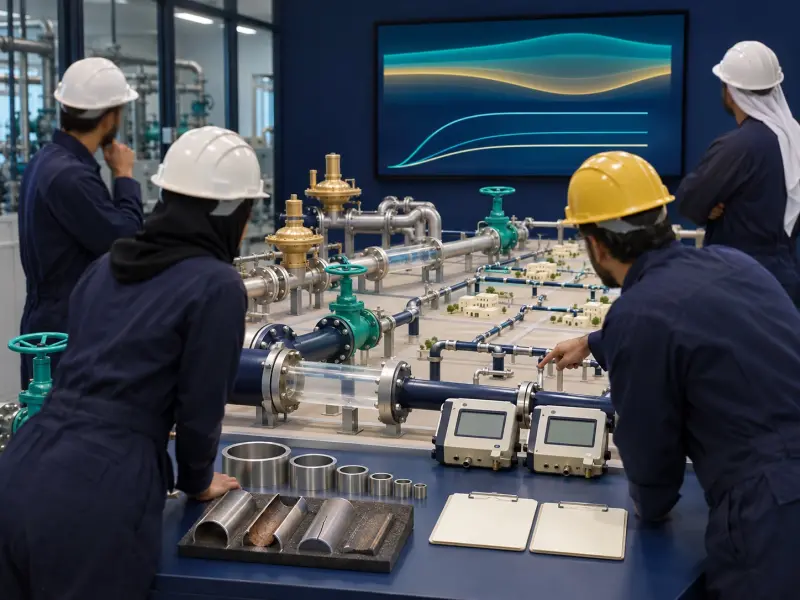
Advanced Well Casing Design Training Course

Course Details
-
# 1924_243035
-
6 – 10 December 2026 10.Dec.2026
-
Bali
-
6500 €
Overview
Advanced Well Casing Design Training Course is a one-week advanced course for drilling engineers, well engineers, casing specialists, completion engineers, integrity personnel, and technical reviewers who leave with a Well Casing Design Calculation File. Participants apply advanced well casing design, casing load analysis, burst and collapse design, tubular grade and weight selection, and well integrity casing design. The course connects well architecture, load envelopes, tubular properties, connections, cementing interfaces, and design assurance without teaching field inspection. Agile Leaders Training Center presents auditable casing design practice.
Who Should Attend
- Functions responsible for well architecture and casing program design
- Drilling and well teams responsible for load cases and tubular selection
- Completion functions responsible for operating envelopes and casing interfaces
- Well-integrity personnel responsible for barrier design and lifecycle loads
- Technical assurance teams responsible for design review and calculation traceability
The course assumes participants use well schematics, pressure data, and engineering calculations, and it leaves out introductory drilling, field inspection, thread gauging, running procedures, and manufacturer qualification.
Departments and Industries
The course supports departments and industries that design or assure casing systems for subsurface wells.
- Oil and gas drilling, completions, and well engineering
- Geothermal and carbon-storage well projects
- Well integrity, technical assurance, and operational risk
- Drilling contractors, tubular suppliers, and engineering services
- Exploration, appraisal, development, and intervention planning
Learning Objectives
By the end of this course, participants will be able to:
- Analyze well objectives and casing-setting-depth constraints
- Build installation, drilling, completion, and production load cases
- Apply burst, collapse, axial, and triaxial strength checks
- Evaluate grade, weight, wall, and connection alternatives
- Use wear, corrosion, temperature, and buckling allowances
- Build an auditable casing design and assurance file
Course Agenda
Day 1: Establish the Casing Design Basis
- Well Objective, Lifecycle, and Design-Basis Register
- Pore Pressure, Fracture Gradient, and Mud-Window Plot
- Casing Setting Depth and Kick-Tolerance Decision Method
- Conductor, Surface, Intermediate, Production, and Liner Architecture Map
- NORSOK D-010 Well-Barrier Interface Review
Day 2: Build Casing Load Cases
- Installation, Cementing, Drilling, Completion, and Production Load Matrix
- Internal and External Pressure Profile Construction Method
- Gas Kick, Evacuation, Leak, and Pressure-Test Scenario Sheet
- Axial Weight, Buoyancy, Bending, Drag, and Thermal Load Model
- Load Envelope, Design Factor, and Contingency Register
Day 3: Calculate Strength and Interaction
- API TR 5C3 and ISO/TR 10400 Performance Property Map
- Yield and Rupture Burst Resistance Calculation
- Yield, Plastic, Transition, and Elastic Collapse Check
- Tension, Compression, Biaxial, and Triaxial Interaction Assessment
- Pressure-Temperature and Combined-Load Design Envelope
Day 4: Select Tubulars and Assure Integrity
- API 5CT Grade, Weight, Wall, and Dimension Selection Matrix
- Connection Tension, Compression, Torque, and Sealability Review
- Buckling, Wear, Corrosion, Erosion, and Fatigue Allowance Sheet
- Cementing, Centralization, Zonal Isolation, and Annular Interface Checklist
- Design Verification, Sensitivity, and Technical Assurance Record
Day 5: Practice Advanced Casing Design
- Suggested Exercise: Select Casing Setting Depths and Architecture
- Suggested Exercise: Build Burst, Collapse, and Axial Load Profiles
- Suggested Exercise: Compare Tubular Grades, Weights, and Connections
- Suggested Exercise: Test Combined Loads and Integrity Allowances
- Capstone Exercise: Complete the Well Casing Design Calculation File
Practical Exercises
The course uses suggested activities to convert well inputs and tubular data into traceable design decisions.
- Suggested activity: place casing seats using pressure windows, hole constraints, kick tolerance, and well objectives.
- Suggested activity: construct installation and operating pressure profiles for burst and collapse scenarios.
- Suggested activity: compare pipe-body and connection capacity under axial, pressure, temperature, and bending loads.
- Suggested activity: document design factors, sensitivities, wear and corrosion allowances, and assurance actions.
FAQs
Who suits advanced well casing design training, and what does it assume?
Advanced well casing design training suits drilling, well, completion, integrity, tubular, and assurance personnel. It assumes participants can interpret well schematics, pressure data, and engineering calculations.
How does advanced well casing design differ from casing inspection training?
Advanced well casing design defines architecture, loads, strengths, tubulars, connections, and design factors before installation. Casing inspection training evaluates manufactured or installed tubular condition, damage, dimensions, threads, and acceptance evidence.
Which loads are considered in well casing design?
Well casing design considers internal and external pressure, axial weight, buoyancy, cementing, pressure tests, kicks, evacuation, completion and production conditions, thermal effects, bending, drag, buckling, wear, corrosion, and credible contingencies.
How are burst and collapse resistance checked?
Burst and collapse resistance are checked by matching scenario-specific pressure differentials and combined loads against applicable pipe-body and connection capacities with documented design factors, material data, temperature effects, wear, corrosion, and uncertainty allowances.
How are casing grades, weights, and connections selected?
Selection compares dimensional and material properties, load envelopes, service environment, sealability, installation loads, availability, compatibility, lifecycle integrity, and approved performance data for the selected pipe body and connection.
Conclusion
Participants take back a Well Casing Design Calculation File linking architecture, pressure windows, load cases, strength calculations, tubular selection, connections, integrity allowances, and assurance. It changes separate well inputs and pipe tables into a traceable design decision path. The file supports peer review, sensitivity testing, procurement specifications, barrier assurance, and lifecycle updates.
Oil & Gas Training and Other Technical Courses
Advanced Well Casing Design Training Course (1924_243035)
Course Details
# 1924_243035
6 – 10 December 2026
Bali
Fees : 6500 €
Advanced Well Casing Design Training Course runs in Bali over 5 days, with 1 upcoming date in Bali. The course fee is 6,500 €.
All dates in Bali
| Dates | Price | Actions |
|---|---|---|
| 6 – 10 December 2026 | 6,500 € | Register |
Training in Bali
Sunset view over rice terraces in Bali with palm trees and mountains in the background, showcasing natural island beauty.
All courses in BaliThis course in other cities
- Abu Dhabi
- Accra
- Addis Ababa
- Amman
- Amsterdam
- Athens
- Baku
- Bangkok
- Barcelona
- Berlin
- Cairo
- Cape town
- Casablanca
- Chicago
- Doha
- Dubai
- Frankfurt
- Geneva
- Istanbul
- Jakarta
- Johannesburg
- Kuala Lumpur
- Kuwait
- Lagos
- Langkawi
- Lisbon
- London
- Madrid
- Manama
- Marbella
- Milan
- Montreux
- Munich
- Muscat
- Nairobi
- New York
- Nice
- Paris
- Phuket
- Porto
- Prague
- Rome
- San Diego
- Seoul
- Sharm El-Sheikh
- Singapore
- Tashkent
- Tbilisi
- Tokyo
- Toronto
- Trabzon
- Vienna
- Zanzibar
- Zoom