Advanced Depth Conversion and Velocity Modelling Training Course

Course Details
-
# 1963_245331
-
25 – 29 April 2027 29.Apr.2027
-
Nairobi
-
6000 €
Overview
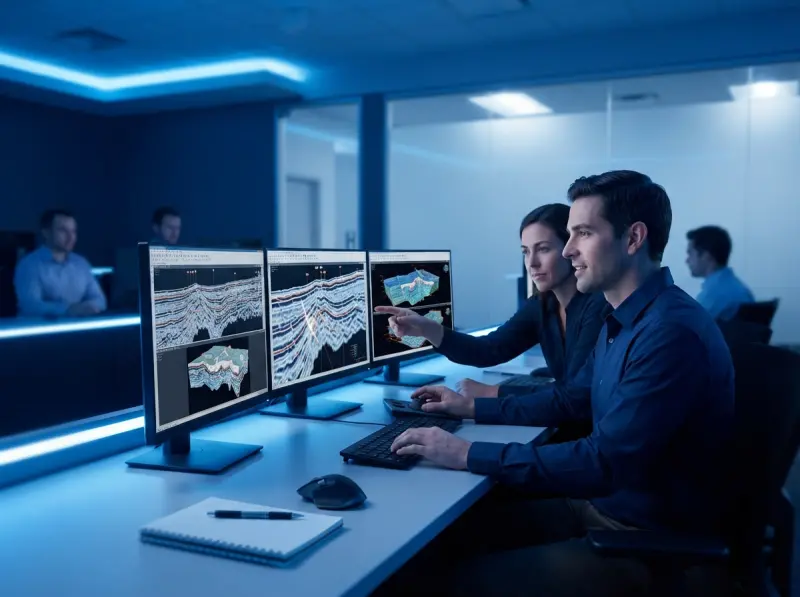
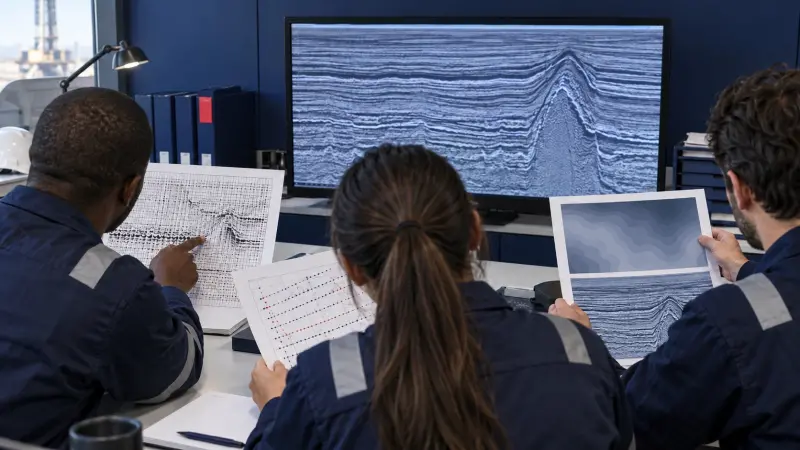
Advanced Depth Conversion and Velocity Modelling Training Course is a one-week advanced course for seismic interpreters, exploration geophysicists, depth-imaging reviewers, subsurface team leads, and geoscientists who must turn time-domain interpretations into defensible depth products. Participants connect velocity data qualification, well-to-seismic calibration, Dix interval velocity, layered velocity model building, gridded velocity model construction, anisotropic depth imaging review, time-to-depth conversion, structural depth uncertainty, and technical assurance. The course is software-neutral and converts evidence into a Velocity Model and Depth Conversion Assurance File. Agile Leaders Training Center presents advanced depth conversion and velocity modelling.
Who Should Attend
- Seismic interpretation functions responsible for horizons, faults, structural closures, and depth maps
- Exploration and development geophysicists responsible for velocity evidence and depth prognosis
- Depth-imaging reviewers responsible for tomography, migration gathers, and model-update acceptance
- Well-seismic integration functions responsible for checkshots, vertical seismic profiles, sonic logs, and synthetic ties
- Subsurface team leads responsible for structural uncertainty, assurance gates, and technical handover
- Geoscience quality functions responsible for traceability, residual analysis, and model governance
The course assumes working knowledge of seismic interpretation and basic travel-time concepts. It leaves out introductory seismic acquisition, detailed signal processing, vendor-specific button sequences, software programming, and full mathematical derivations of migration algorithms.
Departments and Industries
The course supports functions that use seismic travel time, well evidence, and velocity models to make depth-based subsurface decisions.
- Oil and gas exploration and appraisal
- Field development and well planning
- Seismic interpretation and depth imaging
- Subsurface assurance and technical governance
- Carbon storage site characterization
- Geothermal and regional geoscience studies
Learning Objectives
By the end of this course, participants will be able to:
- Distinguish stacking, RMS, average, interval, migration, and anisotropic velocities
- Qualify checkshot, vertical seismic profile, sonic-log, well-top, and processing velocity evidence
- Build layered and gridded velocity models with geological constraints
- Convert interpreted horizons and faults from time to depth with traceable assumptions
- Diagnose calibration residuals, misties, structural artifacts, and model limitations
- Test scenarios and communicate depth uncertainty for assurance decisions
Course Agenda
Day 1: Qualify Velocity Evidence
- Velocity Type, Domain, Datum, and Unit Classification Matrix
- Checkshot, Vertical Seismic Profile, and Sonic-Log Evidence Register
- Well-Tie, Polarity, Phase, and Horizon Correspondence Checklist
- RMS-to-Interval Velocity Conversion using Dix Relationships
- Velocity Data Provenance and Fitness-for-Purpose Scorecard
Day 2: Build Geological Velocity Models
- Layer Framework, Fault Boundary, and Formation Constraint Panel
- Constant, Gradient, Compaction, and Trend Function Comparison
- Layered Velocity Model Building and Well Calibration Workflow
- Gridded Velocity Model Construction and Spatial Interpolation Controls
- Velocity Outlier, Lateral Variation, and Scenario Register
Day 3: Review Depth Imaging Updates
- Time Migration versus Depth Migration Decision Matrix
- Kirchhoff, Reverse-Time Migration, and Imaging Assumption Map
- Tomographic Residual-Moveout Interpretation and Update Review
- Full-Waveform Inversion Interface and Low-Wavenumber Model Check
- VTI and TTI Anisotropy Parameter Evidence and Sensitivity Sheet
Day 4: Convert and Assure Structural Interpretation
- Vertical-Ray, Image-Ray, and Volume-Based Time-to-Depth Conversion
- Horizon, Fault, Point, and Grid Domain-Conversion Control Sheet
- Well-Top Residual Map and Calibration Closure Test
- Depth-Surface Structure, Thickness, and Closure Integrity Review
- Structural Depth Uncertainty Scenario and Envelope Map
Day 5: Defend the Depth Solution
- Suggested Exercise: Reconcile Velocity Sources and Select Model Inputs
- Suggested Exercise: Build Layered and Gridded Velocity Scenarios
- Suggested Exercise: Diagnose Residuals and Depth-Imaging Artifacts
- Suggested Exercise: Convert Horizons and Test Closure Sensitivity
- Capstone Exercise: Complete the Velocity Model and Depth Conversion Assurance File
Practical Exercises
The course uses suggested activities to connect interpreter decisions, velocity evidence, model behavior, and depth risk.
- Suggested activity: inventory velocity sources, reconcile domains and datums, and record evidence limitations.
- Suggested activity: calculate interval velocities, calibrate a layered model to wells, and inspect residual patterns.
- Suggested activity: compare velocity scenarios and diagnose their effects on faults, closures, thickness, and well prognosis.
- Suggested activity: assemble a review file with acceptance criteria, uncertainty envelopes, decision logs, and handover actions.
FAQs
Who suits advanced depth conversion and velocity modelling training?
Advanced depth conversion and velocity modelling training suits experienced seismic interpreters, exploration geophysicists, imaging reviewers, well-seismic integration specialists, and subsurface assurance leads. Participants should already understand seismic sections, horizons, faults, and basic travel-time concepts.
How does time-to-depth conversion differ from depth migration?
Time-to-depth conversion transforms interpreted time-domain objects through a velocity model. Depth migration repositions seismic energy during imaging with a depth-domain velocity model. Both depend on velocity quality, but they use different workflows and must be reviewed with different controls.
Which velocity data are used in a depth conversion model?
A depth conversion model can use checkshots, vertical seismic profiles, calibrated sonic logs, well tops, stacking or migration velocities, geological trends, and interpreted layer boundaries. Their value depends on domain, datum, sampling, uncertainty, and fitness for the intended conversion.
How is a velocity model calibrated and quality controlled?
Calibration compares predicted and observed travel times or depths at wells, maps residuals, investigates systematic and local misties, tests alternative functions and spatial trends, and confirms that structural results remain geologically plausible.
How is structural depth uncertainty communicated?
Structural depth uncertainty is communicated through traceable model scenarios, parameter sensitivities, well residuals, depth envelopes, closure and thickness changes, assumption registers, and clear conditions for accepting or revisiting the model.
Conclusion
Participants take back a Velocity Model and Depth Conversion Assurance File that links data provenance, velocity classification, well calibration, model construction, imaging review, converted structural products, residuals, uncertainty scenarios, and acceptance decisions. It supports clearer technical challenge, more defensible depth maps, and better communication between interpreters, imagers, geologists, and well planners.
Oil & Gas Training and Other Technical Courses
Depth Conversion and Velocity Modelling Course (1963_245331)
Course Details
# 1963_245331
25 – 29 April 2027
Nairobi
Fees : 6000 €
Advanced Depth Conversion and Velocity Modelling Training Course runs in Nairobi over 5 days, with 1 upcoming date in Nairobi. The course fee is 6,000 €.
All dates in Nairobi
| Dates | Price | Actions |
|---|---|---|
| 25 – 29 April 2027 | 6,000 € | Register |
Training in Nairobi
Experience our top-notch training course programs in the vibrant city of Nairobi, Kenya.
All courses in NairobiThis course in other cities
- Abu Dhabi
- Accra
- Addis Ababa
- Amman
- Amsterdam
- Athens
- Baku
- Bali
- Bangkok
- Barcelona
- Berlin
- Cairo
- Cape town
- Casablanca
- Chicago
- Doha
- Dubai
- Frankfurt
- Geneva
- Istanbul
- Jakarta
- Johannesburg
- Kuala Lumpur
- Kuwait
- Lagos
- Langkawi
- Lisbon
- London
- Madrid
- Manama
- Marbella
- Milan
- Montreux
- Munich
- Muscat
- New York
- Nice
- Paris
- Phuket
- Porto
- Prague
- Rome
- San Diego
- Seoul
- Sharm El-Sheikh
- Singapore
- Tashkent
- Tbilisi
- Tokyo
- Toronto
- Trabzon
- Vienna
- Zanzibar
- Zoom