Advanced Marine Oil and Gas Terminal Design Training Course

Course Details
-
# 1965_245426
-
22 – 26 March 2027 26.Mar.2027
-
Paris
-
6500 €
Overview
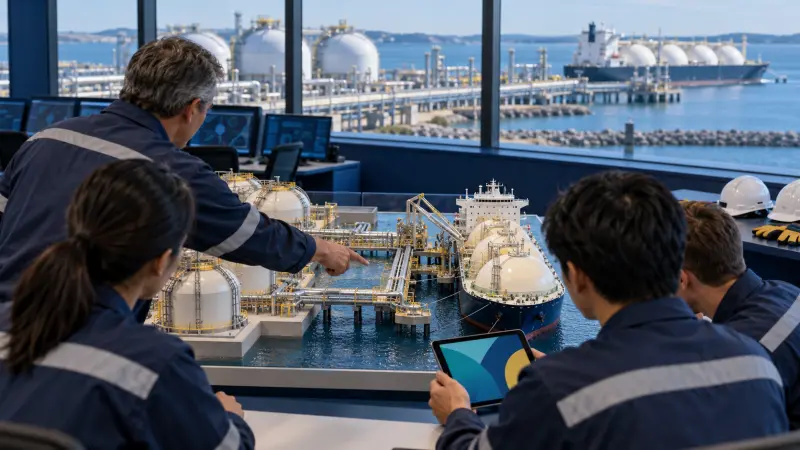
Advanced Marine Oil and Gas Terminal Design Training Course is a one-week advanced course for marine terminal, port, coastal, project, mooring, asset-integrity, operations, and technical-authority functions who leave with a Marine Terminal Design and Asset Assurance File. Participants connect metocean evidence, vessel envelopes, navigation, berth layout, berthing and mooring systems, cargo transfer, utilities, safety, operability, inspection, and life extension. The course integrates multidisciplinary decisions across the asset lifecycle. Agile Leaders Training Center presents marine terminal design and assurance.
Who Should Attend
- Marine and coastal engineering functions responsible for site conditions, navigation, dredging, structures, and shoreline interfaces
- Terminal project functions responsible for design basis, layout, stage gates, procurement, construction, and handover
- Mooring and naval functions responsible for vessel envelopes, berthing energy, fenders, lines, hooks, and dolphins
- Mechanical and process functions responsible for loading arms, hoses, pipelines, utilities, isolation, and drainage
- Operations and safety functions responsible for operability, ship-shore interfaces, hazardous areas, fire, spill, and emergency systems
- Asset-integrity functions responsible for inspection, degradation, structural monitoring, ageing, and life extension
The course assumes participants already work with marine infrastructure, port operations, or oil and gas facilities, and it leaves out basic naval architecture, detailed structural software operation, vessel navigation training, cargo custody-transfer accounting, and regulator-specific permitting.
Departments and Industries
The course supports departments and industries that design, operate, assure, or extend the life of marine transfer assets.
- Oil, gas, LNG, and petrochemical terminals
- Ports, harbours, and coastal infrastructure
- Offshore production and floating storage systems
- Engineering, procurement, construction, and commissioning
- Marine operations, shipping, and terminal assurance
- Asset integrity, inspection, maintenance, and emergency management
Learning Objectives
By the end of this course, participants will be able to:
- Build a metocean, vessel, navigation, and operability design basis
- Evaluate berth layout, berthing energy, fenders, dolphins, and access
- Analyze mooring arrangements against vessel and environmental cases
- Integrate loading, pipeline, utility, safety, and emergency systems
- Diagnose degradation, inspection evidence, and life-extension constraints
- Prioritize design reviews, assurance gates, and handover actions
Course Agenda
Day 1: Establish the Terminal Design Basis
- PIANC Marine Terminal Recommendation and Responsibility Map
- Bathymetry, Geotechnical, Wind, Wave, Current, Tide, and Seismic Register
- Vessel Design Envelope and Future Fleet Scenario Matrix
- Navigation Channel, Turning Basin, Under-Keel Clearance, and Tug Basis
- Availability, Downtime, Climate, and Operability Criteria Sheet
Day 2: Configure Berths and Marine Structures
- Jetty, Wharf, Island Berth, SPM, and Nearshore Layout Comparison
- Berthing Energy and Fender Selection Review
- Breasting Dolphin, Mooring Dolphin, Trestle, and Platform Arrangement
- Access, Escape, Security, Lighting, and Marine Service Corridor Plan
- Dredging, Scour, Sedimentation, Corrosion, and Structural Exposure Register
Day 3: Engineer Mooring and Vessel Interfaces
- OCIMF MEG4 Ship-Design Minimum Breaking Load and Line Basis
- Environmental Mooring Load Case and Line-Tension Review
- Quick-Release Hook, Capstan, Bollard, and Monitoring Arrangement
- SIGTTO LNG Jetty Site-Specific Risk and Compatibility Checklist
- Terminal Information, Vessel Compatibility, and Berth Acceptance File
Day 4: Integrate Cargo, Utility, and Safety Systems
- Marine Loading Arm, Hose, Manifold, Envelope, and Emergency Release Review
- Jetty Pipeline, Isolation, Drainage, Vapour Return, and Pigging Arrangement
- Hazardous Area, Ignition Control, Firewater, Foam, and Gas Detection Map
- Spill Containment, Runoff, Waste, and Environmental Protection Controls
- Power, Communication, Control, ESD, Access, and Maintainability Interface Matrix
Day 5: Assure Operability and Asset Life
- Suggested Exercise: Build a Marine Terminal Design Basis and Vessel Envelope
- Suggested Exercise: Review Berthing, Fender, and Mooring Cases
- Suggested Exercise: Challenge Cargo-Transfer and Emergency Interfaces
- Suggested Exercise: Prioritize Inspection, Repair, and Life-Extension Evidence
- Capstone Exercise: Complete the Marine Terminal Design and Asset Assurance File
Practical Exercises
The course uses suggested activities to connect environmental evidence, vessel behavior, infrastructure, cargo systems, operations, and lifecycle risk.
- Suggested activity: reconcile metocean data, vessel particulars, navigation limits, downtime criteria, and future operating scenarios.
- Suggested activity: compare berth layouts and test berthing, fender, mooring, access, and constructability assumptions.
- Suggested activity: review loading arms, pipelines, utilities, emergency shutdown, fire, spill, and escape interfaces as one system.
- Suggested activity: assemble an assurance file with design decisions, hold points, inspection evidence, degradation risks, and life-extension actions.
FAQs
Who suits advanced marine oil and gas terminal design training?
Advanced marine oil and gas terminal design training suits marine, port, coastal, civil, structural, mooring, mechanical, process, safety, operations, project, and asset-integrity functions with prior experience in marine infrastructure or oil and gas facilities.
What defines the vessel design envelope for a marine terminal?
The vessel design envelope defines the range of ships, dimensions, drafts, manifolds, freeboards, mooring arrangements, approach limits, tug needs, loading rates, and future scenarios that the terminal must accommodate safely and operably.
How are fenders and mooring systems selected?
Fenders are checked against berthing energy, reaction, hull pressure, geometry, and environmental conditions. Mooring systems are evaluated against vessel characteristics, line properties, hooks, dolphins, wind, waves, current, tide, passing vessels, operational limits, and line-tension balance.
How do PIANC, OCIMF, and SIGTTO guidance differ?
PIANC guidance addresses marine terminal infrastructure and assessment. OCIMF guidance supports mooring equipment and terminal interfaces. SIGTTO adds LNG and gas-terminal jetty considerations. Projects combine the relevant guidance with the site basis, governing requirements, and owner standards.
What evidence supports marine terminal life extension?
Life-extension decisions use design records, inspection history, structural condition, corrosion and scour data, metocean changes, load reassessment, equipment obsolescence, safety-critical performance, operability history, repair feasibility, and defined monitoring actions.
Conclusion
Participants take back a Marine Terminal Design and Asset Assurance File linking site data, vessel envelopes, navigation, berthing, fenders, mooring, structures, cargo transfer, utilities, safety, operability, inspection, degradation, and life-extension decisions. It supports clearer multidisciplinary challenge from concept through continued service.
Oil & Gas Training and Other Technical Courses
Marine Oil and Gas Terminal Design Course (1965_245426)
Course Details
# 1965_245426
22 – 26 March 2027
Paris
Fees : 6500 €
Advanced Marine Oil and Gas Terminal Design Training Course runs in Paris over 5 days, with 1 upcoming date in Paris. The course fee is 6,500 €.
All dates in Paris
| Dates | Price | Actions |
|---|---|---|
| 22 – 26 March 2027 | 6,500 € | Register |
Training in Paris
Join us in the romantic capital of France, Paris, and participate in our esteemed professional training courses in Paris France.
All courses in ParisThis course in other cities
- Abu Dhabi
- Accra
- Addis Ababa
- Amman
- Amsterdam
- Athens
- Baku
- Bali
- Bangkok
- Barcelona
- Berlin
- Cairo
- Cape town
- Casablanca
- Chicago
- Doha
- Dubai
- Frankfurt
- Geneva
- Istanbul
- Jakarta
- Johannesburg
- Kuala Lumpur
- Kuwait
- Lagos
- Langkawi
- Lisbon
- London
- Madrid
- Manama
- Marbella
- Milan
- Montreux
- Munich
- Muscat
- Nairobi
- New York
- Nice
- Phuket
- Porto
- Prague
- Rome
- San Diego
- Seoul
- Sharm El-Sheikh
- Singapore
- Tashkent
- Tbilisi
- Tokyo
- Toronto
- Trabzon
- Vienna
- Zanzibar
- Zoom