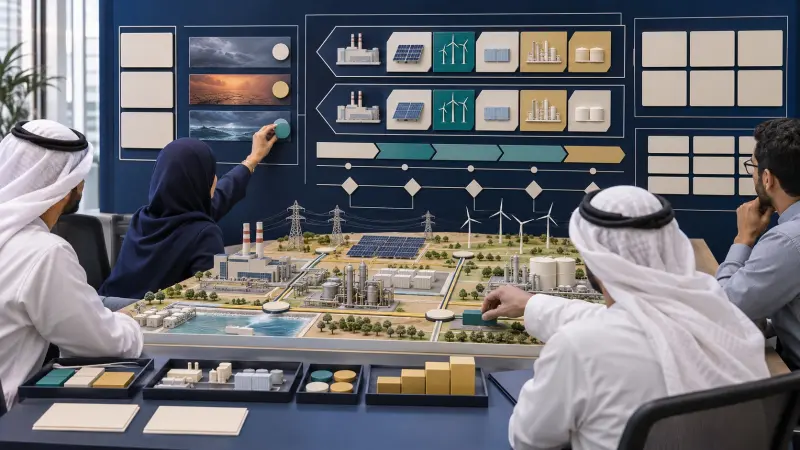
Gas Value Strategy, Low-Carbon Projects and GHG Accounting Training Course

Course Details
-
# 1996_247277
-
15 – 19 March 2027 19.Mar.2027
-
Seoul
-
12000 €
Overview
Gas Value Strategy, Low-Carbon Projects and GHG Accounting Training Course is a one-week advanced course for energy strategy, commercial, sustainability, finance, and asset-development functions that leave with an Integrated Gas Value and Decarbonization Decision Book. Participants connect gas monetization routes, low-carbon project screening, greenhouse gas accounting, carbon exposure, and investment choices through traceable evidence. The course uses gas value-chain mapping, project economics, GHG Protocol inventories, and abatement sequencing. Agile Leaders Training Center presents gas value strategy and GHG accounting.
Who Should Attend
- Strategy functions responsible for portfolio choices, capital priorities, and transition pathways
- Commercial functions responsible for gas markets, offtake structures, and monetization routes
- Business-development functions responsible for opportunity screening, partnerships, and investment cases
- Sustainability functions responsible for greenhouse gas inventories, carbon intensity, and disclosure evidence
- Finance and asset-development functions responsible for valuation, risk, and investment recommendations
The course assumes participants can interpret project assumptions, financial models, operating data, and emissions records, and it leaves out detailed process design, commodity trading execution, and assurance certification.
Departments and Industries
The course supports departments and industries that make linked gas, investment, and decarbonization decisions.
- Integrated energy companies and natural gas producers
- LNG, gas-processing, pipeline, and utility businesses
- Hydrogen, renewable-energy, and CCUS project developers
- Strategy, commercial, finance, sustainability, and capital-project departments
- Investment, advisory, infrastructure, and industrial manufacturing organizations
Learning Objectives
By the end of this course, participants will be able to:
- Analyze gas monetization routes and value-chain constraints
- Compare low-carbon project options using screening criteria
- Build Scope 1, Scope 2, and Scope 3 inventories
- Evaluate project economics under carbon-price scenarios
- Prioritize abatement options using cost and feasibility evidence
- Build an integrated investment and decarbonization roadmap
Course Agenda
Day 1: Frame Gas Value Opportunities
- Gas Resource-to-Market Value Chain Map
- Associated-Gas Capture and Flaring Baseline
- Pipeline, LNG, CNG, GTL, and Gas-to-Chemicals Route Screen
- Market, Infrastructure, Feedstock, and Offtake Constraint Register
- Gas Opportunity Boundary and Decision-Criteria Charter
Day 2: Test Monetization Economics
- Route-Level Cash-Flow and Net-Present-Value Model
- Price, Volume, CAPEX, OPEX, and Schedule Assumption Book
- Scenario and Sensitivity Tornado Analysis
- Commercial Structure and Risk-Allocation Matrix
- Gas Monetization Option Ranking Scorecard
Day 3: Screen Low-Carbon Projects
- Renewable Power Integration Opportunity Screen
- Low-Emissions Hydrogen Pathway Comparison
- CCUS Value-Chain and Business-Model Map
- Technology Readiness, Infrastructure, and Offtake Gate
- Low-Carbon Project Portfolio Prioritization Matrix
Day 4: Build GHG and Carbon Evidence
- GHG Protocol Organizational and Operational Boundary Map
- Scope 1, Scope 2, and Scope 3 Source Register
- Activity Data, Emission Factor, and Data-Quality Workbook
- Asset and Product Carbon-Intensity Baseline
- Internal Carbon Price and Marginal Abatement Cost Curve
Day 5: Practice Integrated Decisions
- Suggested Exercise: Challenge a Gas Route Ranking under Scenario Changes
- Suggested Exercise: Screen Hydrogen, Renewable, and CCUS Options
- Suggested Exercise: Reconcile a GHG Inventory and Carbon-Intensity Baseline
- Suggested Exercise: Sequence Abatement Actions against Investment Gates
- Capstone Exercise: Complete the Integrated Gas Value and Decarbonization Decision Book
Practical Exercises
The course uses suggested activities to connect commercial, project, and emissions evidence.
- Suggested activity: compare pipeline, LNG, CNG, and conversion routes against a common decision charter.
- Suggested activity: test project value under demand, cost, schedule, and carbon-price scenarios.
- Suggested activity: build a controlled Scope 1, Scope 2, and Scope 3 source-and-data register.
- Suggested activity: defend a portfolio roadmap using economics, carbon intensity, feasibility, and risk.
FAQs
Who suits gas value strategy and GHG accounting training, and what does it assume?
Gas value strategy and GHG accounting training suits strategy, commercial, sustainability, finance, and asset-development functions. It assumes participants can interpret project, operating, financial, and emissions data.
How does gas value strategy training differ from a gas trading course?
Gas value strategy training evaluates asset routes, project economics, carbon exposure, and investment sequencing. Gas trading training concentrates on market positions, contracts, price risk, and transaction execution.
What gas monetization routes can an investment screen compare?
A gas monetization screen can compare pipeline sales, LNG, CNG, power, GTL, gas-to-chemicals, NGL recovery, hydrogen, reinjection, and flare-gas recovery where technically and commercially relevant.
How does GHG accounting affect gas project economics?
GHG accounting establishes emissions boundaries, carbon intensity, and exposure to carbon-related costs or customer requirements. Those factors can change operating costs, financing assumptions, offtake value, and route rankings.
How are low-carbon projects prioritized in a gas portfolio?
Low-carbon projects are prioritized by testing strategic fit, technical readiness, infrastructure, offtake, emissions impact, project economics, policy exposure, delivery risk, and dependencies across the value chain.
Conclusion
Participants take back an Integrated Gas Value and Decarbonization Decision Book linking monetization routes, financial assumptions, low-carbon options, GHG evidence, carbon exposure, and abatement priorities. It changes separate commercial and sustainability studies into one traceable investment basis. Teams can update the book as markets, operating data, technology choices, and portfolio constraints change.
Oil & Gas Training and Other Technical Courses
Gas Value Strategy and GHG Accounting Training Course (1996_247277)
Course Details
# 1996_247277
15 – 19 March 2027
Seoul
Fees : 12000 €
Gas Value Strategy, Low-Carbon Projects and GHG Accounting Training Course runs in Seoul over 5 days, with 1 upcoming date in Seoul. The course fee is 12,000 €.
All dates in Seoul
| Dates | Price | Actions |
|---|---|---|
| 15 – 19 March 2027 | 12,000 € | Register |
Training in Seoul
Experience our top-notch training courses in Seoul in South Korea, Join one of our training courses in Seoul Today!
All courses in SeoulThis course in other cities
- Abu Dhabi
- Accra
- Addis Ababa
- Amman
- Amsterdam
- Athens
- Baku
- Bali
- Bangkok
- Barcelona
- Berlin
- Cairo
- Cape town
- Casablanca
- Chicago
- Doha
- Dubai
- Frankfurt
- Geneva
- Istanbul
- Jakarta
- Johannesburg
- Kuala Lumpur
- Kuwait
- Lagos
- Langkawi
- Lisbon
- London
- Madrid
- Manama
- Marbella
- Milan
- Montreux
- Munich
- Muscat
- Nairobi
- New York
- Nice
- Paris
- Phuket
- Porto
- Prague
- Rome
- San Diego
- Sharm El-Sheikh
- Singapore
- Tashkent
- Tbilisi
- Tokyo
- Toronto
- Trabzon
- Vienna
- Zanzibar
- Zoom