Refinery and Petrochemical Wastewater Treatment Training Course

Course Details
-
# 2049_250517
-
7 – 11 December 2026 11.Dec.2026
-
Porto
-
6500 €
Overview
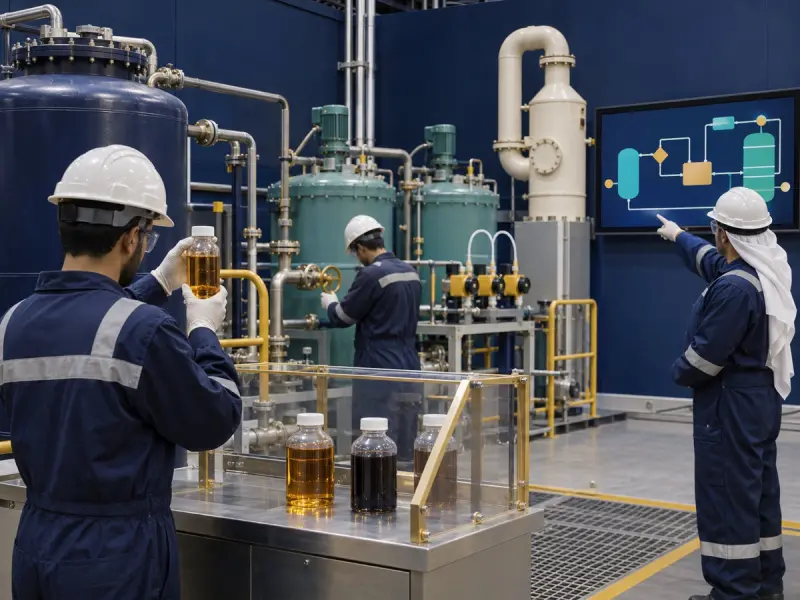
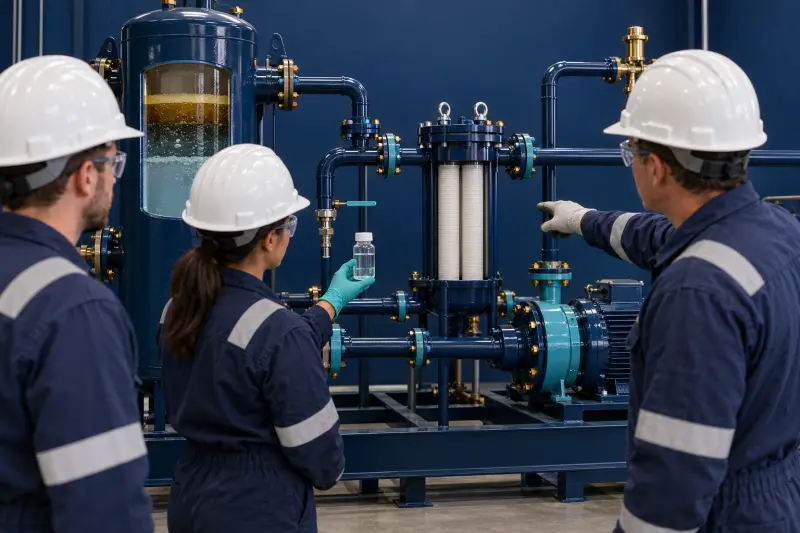
Refinery and Petrochemical Wastewater Treatment Training Course is a one-week intermediate course for wastewater, environmental, process, operations, laboratory, maintenance, and technical teams who leave with a Refinery Wastewater Treatment Control File. Participants connect source segregation, contaminant loads, oily-water separation, equalization, pretreatment, biological treatment, tertiary polishing, reuse, sludge, odor, monitoring, and troubleshooting. The course turns variable industrial effluent evidence into controlled treatment-train decisions. Agile Leaders Training Center presents refinery and petrochemical wastewater treatment.
Who Should Attend
- Functions responsible for refinery and petrochemical wastewater performance
- Teams responsible for environmental monitoring and discharge evidence
- Personnel responsible for process-unit wastewater interfaces and source control
- Groups responsible for treatment-plant operations and upset response
- Laboratory functions responsible for sampling and analytical trends
- Maintenance functions responsible for treatment equipment reliability
The course assumes participants work with industrial wastewater, process operations, laboratory results, or treatment equipment; it leaves out potable-water treatment, detailed civil design, and site-specific discharge authorization.
Departments and Industries
The course supports departments and industries that manage hydrocarbon-bearing and chemically variable wastewater.
- Petroleum refining and fuel production
- Petrochemical and polymer manufacturing
- Industrial wastewater and environmental services
- Process engineering and plant operations
- Laboratory, quality, and technical assurance
- Maintenance, reliability, and utilities functions
Learning Objectives
By the end of this course, participants will be able to:
- Analyze refinery and petrochemical wastewater sources and loads
- Build segregation, sampling, and equalization controls
- Apply oily-water separation and physicochemical pretreatment methods
- Evaluate biological treatment, polishing, and reuse options
- Diagnose shock loads, toxicity, odors, sludge, and equipment deviations
- Prioritize monitoring and corrective actions across the treatment train
Course Agenda
Day 1: Characterize Wastewater Sources
- Process Source-to-Wastewater Stream Map
- Oil, Solids, COD, Ammonia, Sulfide, and Phenol Load Profile
- Grab and Composite Sampling Plan
- Stormwater, Utility, Sour-Water, and Process-Drain Segregation Matrix
- Flow, Load, Variability, and Data-Quality Register
Day 2: Control Oily Water and Pretreatment
- API Separator and Coalescing Plate Performance Check
- Dissolved Air Flotation Dose and Recycle Control Sheet
- Emulsion Breaking and Oil-Recovery Decision Matrix
- Equalization Volume and Shock-Load Buffer Model
- Sour-Water and Spent-Caustic Interface Checklist
Day 3: Operate Biological Treatment
- Biodegradability and Toxicity Screening Profile
- Activated Sludge Food-to-Microorganism Control Map
- Aeration, Dissolved Oxygen, and Mixing Trend Sheet
- Nitrification, Nutrient, and Salinity Constraint Register
- Biomass Settling, Foaming, and Bulking Diagnostic Chart
Day 4: Polish, Reuse, and Verify Performance
- Clarification, Filtration, and Activated Carbon Option Screen
- Recalcitrant COD and Advanced Oxidation Decision Guide
- Water Reuse Quality and Treatment-Barrier Matrix
- Sludge Thickening, Dewatering, and Routing Plan
- Effluent Monitoring and Treatment KPI Dashboard
Day 5: Practice Treatment Decisions
- Suggested Exercise: Reconcile a Variable Influent Load
- Suggested Exercise: Diagnose an Oily-Water Separation Failure
- Suggested Exercise: Stabilize a Biological Treatment Upset
- Suggested Exercise: Select a Polishing and Reuse Route
- Capstone Exercise: Present a Refinery Wastewater Treatment Control File
Practical Exercises
The course uses suggested activities to turn refinery and petrochemical wastewater evidence into coordinated operating decisions.
- Suggested activity: map process, utility, stormwater, sour-water, and concentrated streams to segregation and treatment routes.
- Suggested activity: interpret oil, solids, COD, ammonia, sulfide, phenol, salinity, flow, and toxicity trends.
- Suggested activity: diagnose linked separator, flotation, equalization, biological, sludge, and odor deviations.
- Suggested activity: compare polishing and reuse options and record monitoring, reliability, and corrective actions.
FAQs
Who suits refinery and petrochemical wastewater treatment training, and what does it assume?
Wastewater, environmental, process, operations, laboratory, maintenance, and technical functions suit the training. It assumes participants already work with industrial effluent, plant data, or treatment equipment.
How does refinery wastewater treatment differ from general biological wastewater training?
Refinery wastewater treatment integrates oily water, sour-water and spent-caustic interfaces, shock loads, hydrocarbons, sulfides, ammonia, phenols, salinity, pretreatment, biological protection, and polishing.
Why is source segregation important in refinery wastewater treatment?
Source segregation keeps incompatible or concentrated streams from overwhelming shared treatment units and allows recovery, pretreatment, equalization, controlled routing, and more reliable monitoring.
How are oil and emulsions removed from petrochemical wastewater?
Free oil is separated through gravity and coalescence, while emulsified oil may require chemical conditioning and flotation before downstream treatment, subject to stream tests and operating evidence.
What evidence supports refinery wastewater troubleshooting?
Troubleshooting uses flow, contaminant loads, separator performance, chemical dose, recycle, oxygen, biomass, settling, toxicity, sludge, odor, maintenance, and effluent trends linked to recent process changes.
Conclusion
Participants take a Refinery Wastewater Treatment Control File back to their organization. It links source maps, load profiles, segregation controls, treatment settings, diagnostic evidence, reuse options, sludge routes, monitoring, and corrective actions. The file changes isolated operating records into a traceable basis for stabilizing treatment and coordinating process, environmental, laboratory, operations, and maintenance decisions.
Oil & Gas Training and Other Technical Courses
Refinery Petrochemical Wastewater Treatment Course (2049_250517)
Course Details
# 2049_250517
7 – 11 December 2026
Porto
Fees : 6500 €
Refinery and Petrochemical Wastewater Treatment Training Course runs in Porto over 5 days, with 1 upcoming date in Porto. The course fee is 6,500 €.
All dates in Porto
| Dates | Price | Actions |
|---|---|---|
| 7 – 11 December 2026 | 6,500 € | Register |
Training in Porto
Explore professional training courses in Porto, Portugal, designed to enhance practical skills, support career growth, and deliver expert-led learning in a vibrant business city.
All courses in PortoThis course in other cities
- Abu Dhabi
- Accra
- Addis Ababa
- Amman
- Amsterdam
- Athens
- Baku
- Bali
- Bangkok
- Barcelona
- Berlin
- Cairo
- Cape town
- Casablanca
- Chicago
- Doha
- Dubai
- Frankfurt
- Geneva
- Istanbul
- Jakarta
- Johannesburg
- Kuala Lumpur
- Kuwait
- Lagos
- Langkawi
- Lisbon
- London
- Madrid
- Manama
- Marbella
- Milan
- Montreux
- Munich
- Muscat
- Nairobi
- New York
- Nice
- Paris
- Phuket
- Prague
- Rome
- San Diego
- Seoul
- Sharm El-Sheikh
- Singapore
- Tashkent
- Tbilisi
- Tokyo
- Toronto
- Trabzon
- Vienna
- Zanzibar
- Zoom