Wellsite and Operations Geology Duties Training Course

Course Details
-
# 2081_252500
-
8 – 12 February 2027 12.Feb.2027
-
Amsterdam
-
6500 €
Overview
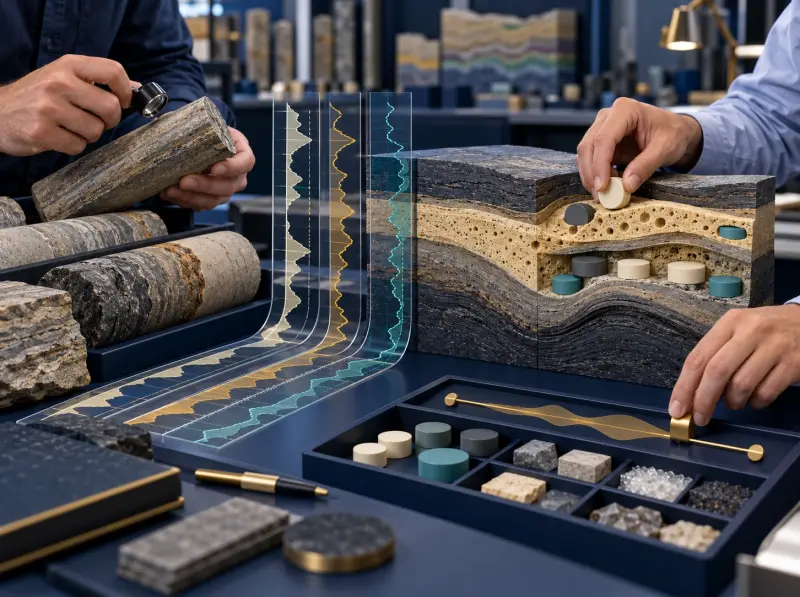
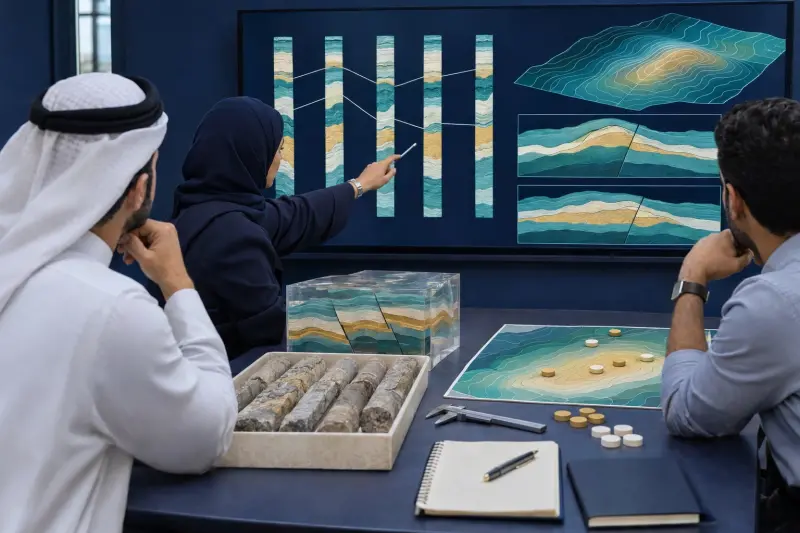
Wellsite and Operations Geology Duties Training Course is a one-week intermediate course for wellsite geologists, operations geologists, mud loggers, drilling engineers, and subsurface personnel who leave with a Wellsite Geological Operations Dossier. Participants apply a wellsite geology workflow to prepare prognosis inputs, monitor drilling evidence, control samples and data, communicate uncertainty, and support timely decisions without replacing specialist petrophysics or drilling engineering. Agile Leaders Training Center delivers this course in wellsite and operations geology duties.
Who Should Attend
- Personnel responsible for geological surveillance, formation recognition, and escalation at the rig
- Personnel responsible for operations-geology coordination, prognosis updates, and subsurface communication
- Personnel responsible for mud-log observations, gas trends, sample descriptions, and depth control
- Personnel responsible for drilling decisions that depend on geological indicators and data quality
- Early-career subsurface personnel supporting well planning, execution, and end-of-well records
The course assumes participants support drilling or subsurface work and leaves out specialist petrophysical interpretation, laboratory core analysis, and drilling-engineering design.
Departments and Industries
The course supports departments and industries that acquire, control, interpret, or act on geological evidence during well construction.
- Exploration, development geology, reservoir characterization, and subsurface assurance functions
- Drilling, well engineering, well delivery, and real-time operations centers
- Mud logging, surface logging, LWD, wireline, coring, and sample-management services
- Oil and gas operators, drilling contractors, and geoscience service companies
- Geothermal, carbon-storage, and deep subsurface investigation teams
Learning Objectives
By the end of this course, participants will be able to:
- Build a pre-spud geological readiness pack from prognosis and offset-well evidence.
- Analyze cuttings, cavings, mud-log data, gas shows, drilling breaks, and losses.
- Apply sample custody and geological data quality controls.
- Evaluate LWD and wireline acquisition quality, formation tops, and correlations.
- Diagnose pore-pressure, wellbore-stability, and geohazard indicators for escalation.
- Build daily and end-of-well geological reporting for operational handover.
Course Agenda
Day 1: Prepare the Geological Operations Basis
- Well Objectives, Geological Prognosis, and Uncertainty Register
- Offset-Well Evidence Review and Analogue Comparison Matrix
- Stratigraphic Marker, Formation-Top, and Correlation Framework
- Pre-Spud Geological Readiness Checklist and Responsibility Map
- Real-Time Communication, Decision Rights, and Escalation Protocol
Day 2: Control Samples and Surface Evidence
- Lag-Time Correction and Sample-Depth Control Method
- Cuttings Description, Lithology Coding, and Sample Log
- Cuttings-versus-Cavings Diagnostic Checklist
- Core and Sidewall-Core Coordination and Recovery Record
- Sample Custody, Packaging, Dispatch, and Archive Register
Day 3: Interpret Drilling and Mud-Log Indicators
- Rate-of-Penetration and Drilling-Break Trend Analysis
- Mud-Log Parameter and Total-Gas Baseline Chart
- Gas Component, Lag, Contamination, and Show Evaluation Matrix
- Losses, Gains, Torque, Drag, and Wellbore Response Correlation
- Pore-Pressure, Wellbore-Stability, and Geohazard Escalation Matrix
Day 4: Assure Downhole Data and Reports
- LWD and MWD Acquisition Quality-Control Checklist
- Wireline Run Readiness, Depth Match, and Data Acceptance Record
- Formation-Top Picking and Multi-Source Correlation Panel
- Daily Geological Report, Uncertainty Statement, and Decision Log
- End-of-Well Geological Report and Handover Dossier Structure
Day 5: Practice Geological Decision Support
- Suggested Exercise: Build a Pre-Spud Readiness Pack from Offset Evidence
- Suggested Exercise: Diagnose Cuttings, Cavings, Gas, and Drilling Indicators
- Suggested Exercise: Review LWD and Wireline Data Quality Exceptions
- Suggested Exercise: Issue a Geological Escalation and Daily Decision Note
- Capstone Exercise: Present a Wellsite Geological Operations Dossier
Practical Exercises
The course uses suggested activities based on changing formations, incomplete records, delayed surface evidence, acquisition exceptions, and time-sensitive decisions.
- Suggested activity: reconcile prognosis, offset wells, sample depths, mud-log traces, and formation markers in a geological correlation panel.
- Suggested activity: distinguish cuttings from instability-related cavings and record evidence, uncertainty, and required escalation.
- Suggested activity: inspect LWD and wireline depth, coverage, calibration, and acceptance exceptions in a geological data quality review.
- Suggested activity: produce a daily report and handover dossier linking observations, interpretations, decisions, owners, and unresolved risks.
FAQs
Who suits wellsite and operations geology duties training, and what does it assume?
Geologists, mud loggers, drilling personnel, and subsurface team members suit the training. It assumes familiarity with basic petroleum geology and drilling terminology but not specialist log interpretation.
How does wellsite geology training differ from specialist petrophysics training?
Wellsite geology training focuses on operational surveillance, samples, formation recognition, communication, and decision support; specialist petrophysics training develops deeper quantitative interpretation of wireline and LWD measurements.
How do wellsite geologists distinguish cuttings from cavings?
Wellsite geologists compare particle shape, freshness, lithology, abundance, lag-corrected depth, drilling conditions, and instability indicators, then record uncertainty when evidence is not conclusive.
How are gas shows used in operations geology?
Gas shows are interpreted against background gas, lag, drilling rate, mud system, contamination, lithology, and other hydrocarbon evidence before an operational conclusion or escalation is made.
What belongs in an end-of-well geological handover?
An end-of-well handover records formation tops, correlations, sample inventory, cores, shows, acquisition quality, unresolved discrepancies, geological events, decision history, data locations, and follow-up actions.
Conclusion
Participants take back a Wellsite Geological Operations Dossier. It combines the readiness pack, sample register, evidence logs, quality controls, escalation matrix, daily reporting, formation correlation, and end-of-well handover. The dossier makes geological observations, uncertainty, decisions, ownership, and remaining actions traceable across the drilling operation.
Oil & Gas Training and Other Technical Courses
Wellsite and Operations Geology Duties Course (2081_252500)
Course Details
# 2081_252500
8 – 12 February 2027
Amsterdam
Fees : 6500 €
Wellsite and Operations Geology Duties Training Course runs in Amsterdam over 5 days, with 1 upcoming date in Amsterdam. The course fee is 6,500 €.
All dates in Amsterdam
| Dates | Price | Actions |
|---|---|---|
| 8 – 12 February 2027 | 6,500 € | Register |
Training in Amsterdam
Experience our top-notch training courses in Amsterdam the vibrant capital of Netherlands, Join one of our training courses in Netherlands Today!
All courses in AmsterdamThis course in other cities
- Abu Dhabi
- Accra
- Addis Ababa
- Amman
- Athens
- Baku
- Bali
- Bangkok
- Barcelona
- Berlin
- Cairo
- Cape town
- Casablanca
- Chicago
- Doha
- Dubai
- Frankfurt
- Geneva
- Istanbul
- Jakarta
- Johannesburg
- Kuala Lumpur
- Kuwait
- Lagos
- Langkawi
- Lisbon
- London
- Madrid
- Manama
- Marbella
- Milan
- Montreux
- Munich
- Muscat
- Nairobi
- New York
- Nice
- Paris
- Phuket
- Porto
- Prague
- Rome
- San Diego
- Seoul
- Sharm El-Sheikh
- Singapore
- Tashkent
- Tbilisi
- Tokyo
- Toronto
- Trabzon
- Vienna
- Zanzibar
- Zoom