Advanced Marine Accident Investigation and Safety Analysis Training Course

Course Details
-
# 2159_258182
-
15 – 19 November 2026 19.Nov.2026
-
Lagos
-
4100 €
Overview
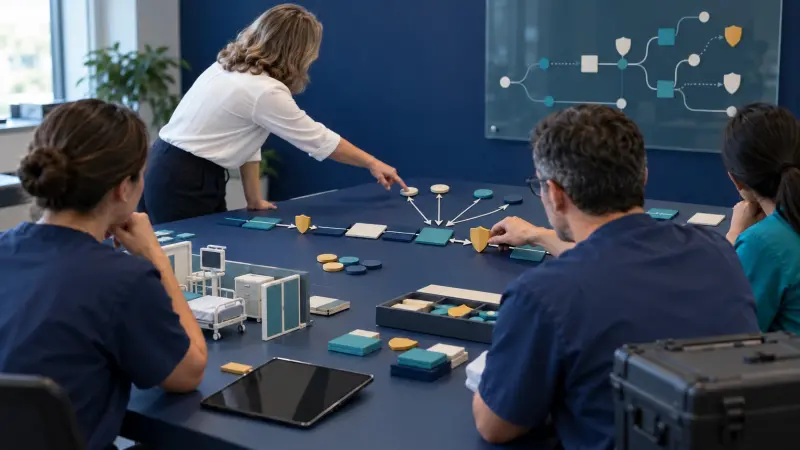
Advanced Marine Accident Investigation and Safety Analysis Training Course is a one-week advanced course for marine investigators, safety managers, ship operators, port personnel, surveyors, HSE leaders and legal support teams. Participants build a Marine Safety Investigation File connecting scope, evidence, interviews, recorded data, event reconstruction, human and organizational factors, causal analysis, recommendations and reporting. The course supports prevention learning and does not determine liability or replace authority procedures. Agile Leaders Training Center presents marine accident investigation practice.
Who Should Attend
- Marine accident investigators responsible for evidence and safety findings
- Ship operator and safety teams supporting casualty investigations
- Port and terminal personnel preserving occurrence records
- Surveyors and technical specialists contributing expert evidence
- HSE and legal-support teams coordinating investigation interfaces
The course assumes experience in maritime operations, safety or investigations; it leaves out criminal inquiry, legal opinions and authority-specific authorization.
Departments and Industries
The course supports safety investigation across maritime transport and other asset-intensive operations.
- Shipping companies and vessel management organizations
- Ports, terminals and marine service providers
- Offshore and energy marine operations
- Marine surveying and technical advisory services
- Safety, risk, insurance and investigation teams
Learning Objectives
By the end of this course, participants will be able to:
- Apply the IMO Casualty Investigation Code purpose and structure.
- Build an investigation scope and evidence plan.
- Use interviews, records and technical data to reconstruct events.
- Analyze mechanical, human and organizational causal factors.
- Evaluate findings and preventive safety recommendations.
- Build a marine safety investigation file and report.
Course Agenda
Day 1: Frame the Safety Investigation
- IMO Casualty Investigation Code Purpose and Boundary Map
- Casualty, Incident and Investigation Classification Matrix
- Investigation Mandate, Scope and Terms-of-Reference Template
- Independence, Coordination and Stakeholder Interface Plan
- Initial Notification and Investigation Readiness Checklist
Day 2: Secure and Collect Evidence
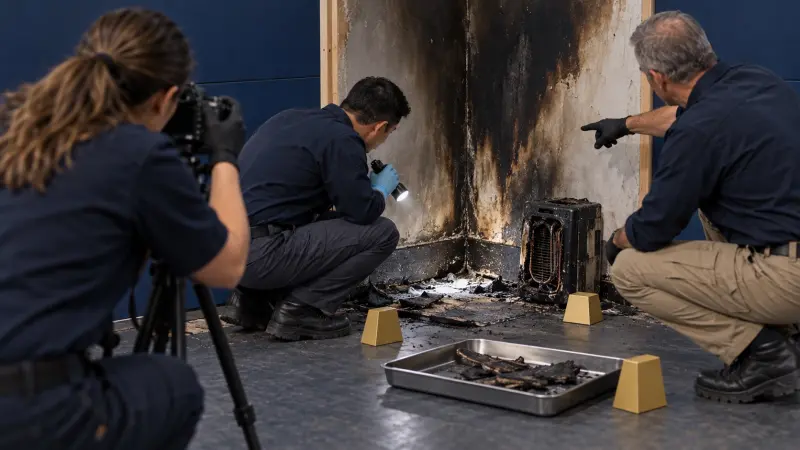
- Scene Safety and Evidence Preservation Plan
- Physical, Documentary and Digital Evidence Register
- Voyage Data, Logbook and Communication Record Matrix
- Photography, Diagram and Measurement Control Sheet
- Evidence Custody, Access and Change Log
Day 3: Interview and Reconstruct Events
- Witness Mapping and Interview Sequence Plan
- Non-Blaming Question and Account-Verification Method
- Timeline, Event and Condition Reconstruction Chart
- Navigation, Engineering and Operational Data Correlation
- Conflicting Evidence and Information-Gap Register
Day 4: Analyze Causes and Develop Recommendations
- Immediate, Contributing and Underlying Factor Analysis
- Mechanical, Human and Organizational Factor Matrix
- Barrier, Control and Safety-Management Review
- Finding, Conclusion and Evidence Traceability Table
- Safety Recommendation Feasibility and Prevention Test
Day 5: Practice Investigation Reporting
- Exercise: Define Scope and Build an Evidence Plan
- Exercise: Conduct and Evaluate a Witness Interview
- Exercise: Reconstruct an Event from Recorded Data
- Exercise: Test Causal Findings and Safety Recommendations
- Capstone Exercise: Complete the Marine Safety Investigation File and Report
Practical Exercises
The course uses suggested activities based on vessel, port and offshore occurrences.
- Suggested activity: triage a casualty notification and define the investigation boundary.
- Suggested activity: reconcile witness accounts with voyage and engineering records.
- Suggested activity: map human and organizational factors without assigning blame.
- Suggested activity: draft a supported finding and preventive safety recommendation.
FAQs
Who suits Marine Accident Investigation training, and what does it assume?
Marine Accident Investigation training suits investigators, safety teams, operators, port personnel, surveyors and technical advisers. It assumes maritime or investigation experience and develops advanced evidence, analysis and reporting controls.
How does Marine Accident Investigation training differ from general root-cause analysis?
Marine Accident Investigation training applies evidence, recorded voyage data, maritime operations, human factors and the IMO safety-investigation structure to casualties and incidents rather than using a sector-neutral incident method.
What is the purpose of a marine safety investigation?
The purpose is to prevent future marine casualties and incidents through evidence collection, causal-factor analysis and safety recommendations. A safety investigation is distinct from proceedings that allocate blame or liability.
How are human factors analyzed in a marine accident investigation?
Human factors are analyzed with task, workload, communication, competence, supervision, procedures, equipment and organizational context. The analysis asks why actions made sense in the circumstances and connects conclusions to evidence.
What belongs in a marine safety investigation report?
A report connects facts, vessel and people information, occurrence narrative, evidence analysis, mechanical, human and organizational causal factors, safety issues, conclusions and recommendations where appropriate.
Conclusion
Participants take back a Marine Safety Investigation File containing scope, evidence, interview, reconstruction, analysis and reporting tools. The file creates traceability from occurrence records to findings and recommendations. It also strengthens learning follow-up while preserving the boundary between safety investigation and liability processes.
Governance, Risk and Compliance Training Courses
Marine Accident Investigation Training Course (2159_258182)
Course Details
# 2159_258182
15 – 19 November 2026
Lagos
Fees : 4100 €
Advanced Marine Accident Investigation and Safety Analysis Training Course runs in Lagos over 5 days, with 1 upcoming date in Lagos. The course fee is 4,100 €.
All dates in Lagos
| Dates | Price | Actions |
|---|---|---|
| 15 – 19 November 2026 | 4,100 € | Register |
This course in other cities
- Abu Dhabi
- Accra
- Addis Ababa
- Amman
- Amsterdam
- Athens
- Baku
- Bali
- Bangkok
- Barcelona
- Berlin
- Cairo
- Cape town
- Casablanca
- Chicago
- Doha
- Dubai
- Frankfurt
- Geneva
- Istanbul
- Jakarta
- Johannesburg
- Kuala Lumpur
- Kuwait
- Langkawi
- Lisbon
- London
- Madrid
- Manama
- Marbella
- Milan
- Montreux
- Munich
- Muscat
- Nairobi
- New York
- Nice
- Paris
- Phuket
- Porto
- Prague
- Rome
- San Diego
- Seoul
- Sharm El-Sheikh
- Singapore
- Tashkent
- Tbilisi
- Tokyo
- Toronto
- Trabzon
- Vienna
- Zanzibar
- Zoom