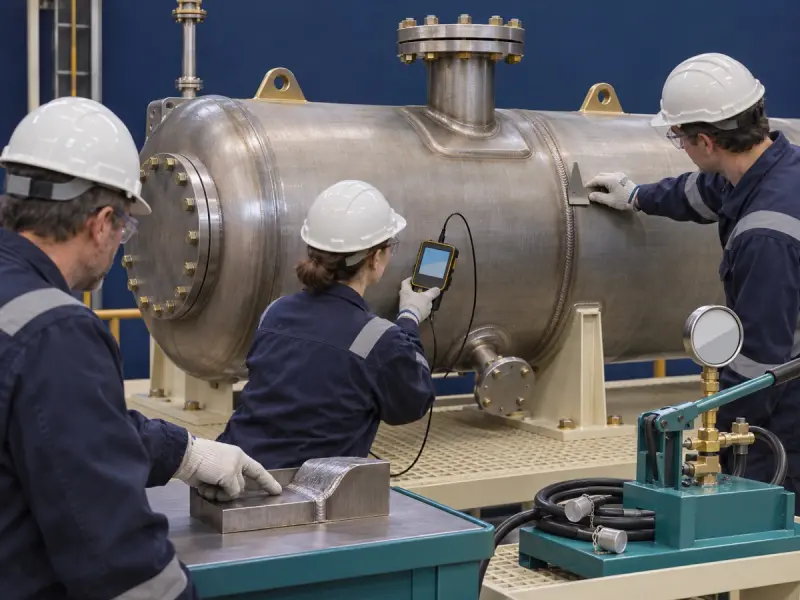
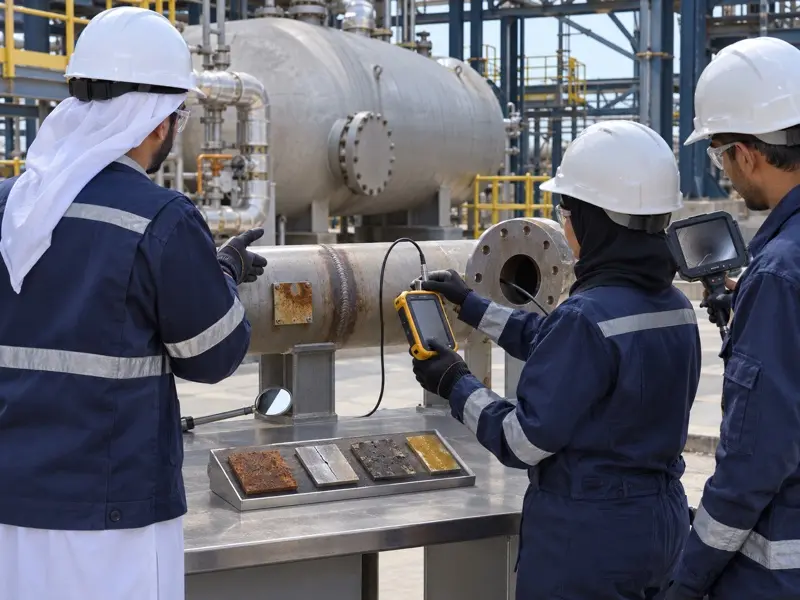
Pressure Vessel Integrity and Lifecycle Decisions Training Course

Course Details
-
# 2174_259115
-
1 – 5 August 2027 05.Aug.2027
-
Tashkent
-
8000 €
Overview
Pressure Vessel Integrity and Lifecycle Decisions Training Course is a one-week professional course for mechanical engineers, inspectors, maintenance and reliability teams, and plant technical authorities, who leave with a Pressure Vessel Integrity Decision File. The course connects design basis, construction records, degradation evidence, inspection planning, fitness-for-service screening, repair governance and continued-operation decisions. Agile Leaders Training Center presents pressure vessel integrity practice.
Who Should Attend
- Teams responsible for pressure equipment design basis and technical records
- Teams responsible for in-service inspection and condition assessment
- Teams responsible for fixed-equipment maintenance and reliability
- Teams responsible for repair, alteration and rerating decisions
- Teams responsible for plant mechanical integrity assurance
The course assumes participants handle pressure equipment records, inspections or maintenance decisions; it leaves out relief-valve test-bench operation, piping design, generic process safety and shutdown planning.
Departments and Industries
The course supports pressure equipment decisions across process plants, utilities, manufacturing and energy facilities.
- Mechanical engineering and fixed-equipment departments
- Inspection and nondestructive examination teams
- Maintenance and reliability organizations
- Technical authority and asset-integrity functions
- Petrochemical, refining and chemical operations
- Power, utilities and industrial manufacturing facilities
Learning Objectives
By the end of this course, participants will be able to:
- Analyze a pressure vessel design basis and load cases.
- Evaluate materials, fabrication and construction records.
- Diagnose credible damage mechanisms and inspection needs.
- Build an in-service inspection and monitoring plan.
- Compare continued-service, repair and alteration options.
- Build a Pressure Vessel Integrity Decision File.
Course Agenda
Day 1: Establish the Design Basis
- ASME BPVC Section VIII Design Basis Map
- Pressure, Temperature and Load-Case Register
- Shell, Head, Nozzle and Support Component Map
- Material Selection and Corrosion Allowance Record
- Design Documentation Traceability Checklist
Day 2: Review Construction Integrity
- Fabrication Route and Welding Record Review
- Heat Treatment and Material Traceability Matrix
- Nondestructive Examination Method Selection
- Pressure Testing and Acceptance Evidence Checklist
- Pressure-Relief Interface Verification Map
Day 3: Plan In-Service Inspection
- API 510 Inspection Planning Framework
- API RP 571 Damage Mechanism Review
- API RP 572 Vessel Inspection Practice Map
- Thickness Monitoring Location Selection Method
- Inspection Interval and Condition Monitoring Plan
Day 4: Make Lifecycle Decisions
- Inspection Finding Significance Matrix
- Remaining-Life and Corrosion-Rate Calculation Sheet
- API 579-1/ASME FFS-1 Screening Path
- Repair, Alteration and Rerating Option Record
- Continued-Operation Decision and Approval Log
Day 5: Practice Integrity Decisions
- Exercise: Reconstruct a Pressure Vessel Design Basis
- Exercise: Diagnose Damage Mechanisms from Evidence
- Exercise: Build an Inspection and Monitoring Plan
- Exercise: Evaluate Repair and Continued-Service Options
- Capstone Exercise: Complete the Pressure Vessel Integrity Decision File
Practical Exercises
The course uses suggested activities based on process, utility and manufacturing pressure equipment cases.
- Suggested activity: reconcile drawings, nameplate data, material records and operating conditions into a traceable design basis.
- Suggested activity: connect service conditions and observed indications to credible damage mechanisms and inspection methods.
- Suggested activity: calculate corrosion rate and remaining life, then screen the need for further assessment.
- Suggested activity: document inspection, repair and continued-operation decisions in one integrity file.
FAQs
Who suits pressure vessel integrity training, and what does it assume?
Pressure vessel integrity training suits engineering, inspection, maintenance, reliability and technical authority teams. It assumes practical exposure to pressure equipment records, inspections or maintenance decisions.
How does pressure vessel integrity training differ from relief-valve testing?
Pressure vessel integrity training addresses the vessel lifecycle, degradation, inspection, assessment and repair decisions. Relief-valve testing focuses on bench procedures, set pressure, leakage and valve performance.
What belongs in a pressure vessel design basis?
A pressure vessel design basis records service conditions, pressure and temperature limits, load cases, materials, corrosion allowance, component configuration, fabrication requirements, examination, testing and traceable approval evidence.
How are pressure vessel inspection priorities selected?
Pressure vessel inspection priorities follow credible damage mechanisms, consequence, operating history, previous findings, degradation rates, accessibility, data quality and the decisions that inspection results must support.
When does a pressure vessel need fitness-for-service assessment?
Fitness-for-service assessment becomes relevant when inspection identifies damage or flaws that cannot be resolved through routine acceptance checks and a structured evaluation is needed for continued operation, repair or replacement.
Conclusion
Participants take back a Pressure Vessel Integrity Decision File linking design evidence, construction records, degradation threats, inspection plans and assessment results. The file makes lifecycle decisions and responsibilities traceable. It supports consistent choices among engineering, inspection, maintenance, reliability and plant authority teams.
Maintenance Training and Engineering Training Courses
Pressure Vessel Integrity and Lifecycle Course (2174_259115)
Course Details
# 2174_259115
1 – 5 August 2027
Tashkent
Fees : 8000 €
Pressure Vessel Integrity and Lifecycle Decisions Training Course runs in Tashkent over 5 days, with 1 upcoming date in Tashkent. The course fee is 8,000 €.
All dates in Tashkent
| Dates | Price | Actions |
|---|---|---|
| 1 – 5 August 2027 | 8,000 € | Register |
Training in Tashkent
Experience our top-notch training courses and programs in Tashkent.
All courses in TashkentThis course in other cities
- Abu Dhabi
- Accra
- Addis Ababa
- Amman
- Amsterdam
- Athens
- Baku
- Bali
- Bangkok
- Barcelona
- Berlin
- Cairo
- Cape town
- Casablanca
- Chicago
- Doha
- Dubai
- Frankfurt
- Geneva
- Istanbul
- Jakarta
- Johannesburg
- Kuala Lumpur
- Kuwait
- Lagos
- Langkawi
- Lisbon
- London
- Madrid
- Manama
- Marbella
- Milan
- Montreux
- Munich
- Muscat
- Nairobi
- New York
- Nice
- Paris
- Phuket
- Porto
- Prague
- Rome
- San Diego
- Seoul
- Sharm El-Sheikh
- Singapore
- Tbilisi
- Tokyo
- Toronto
- Trabzon
- Vienna
- Zanzibar
- Zoom