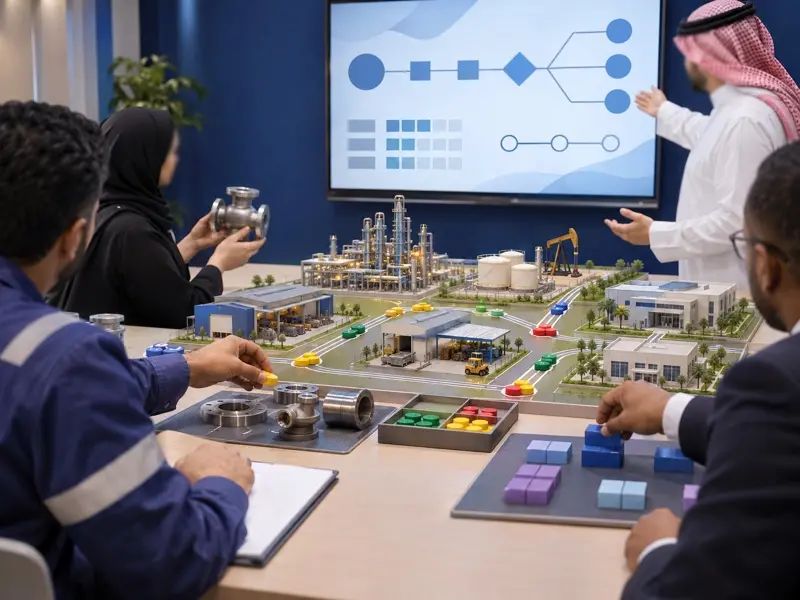
In-Country Value and Sustainable Growth Strategy Training Course

Course Details
-
# 2199_260893
-
21 – 25 December 2026 25.Dec.2026
-
Kuala Lumpur
-
5200 €
Overview
In-Country Value and Sustainable Growth Strategy Training Course is a one-week professional course for procurement, supply chain, sustainability, finance, strategy, and local content professionals, who leave with an In-Country Value and Sustainable Growth Action Pack. The course connects local-spend baselines, workforce value, supplier capability, environmental and social screening, investment choices, measurement, and governance. Agile Leaders Training Center develops in-country value and sustainable growth practice.
Who Should Attend
- Teams responsible for local content and localization strategy
- Functions responsible for procurement and supplier development
- People responsible for sustainability screening and supply-chain due diligence
- Teams responsible for workforce planning and capability investment
- Functions responsible for finance, strategy, performance, and governance
The course assumes participants can work with procurement, supplier, workforce, financial, or sustainability evidence; it leaves out jurisdiction-specific legal advice, tender administration, general ESG introductions, and macroeconomic policy design.
Departments and Industries
The course supports in-country value decisions across energy, infrastructure, manufacturing, transport, public services, and professional services.
- Procurement, sourcing, and supply-chain functions
- Sustainability, risk, and compliance functions
- Finance, investment, and strategy teams
- Workforce development and human resources functions
- Supplier development and industrial-growth organizations
Learning Objectives
By the end of this course, participants will be able to:
- Analyze local-spend, workforce, supplier, and capability baselines.
- Build an in-country value measurement framework.
- Apply environmental and social supplier due diligence.
- Prioritize supplier-development and workforce investments.
- Evaluate value scenarios, trade-offs, risks, and controls.
- Build a governed sustainable growth action plan.
Course Agenda
Day 1: Frame In-Country Value
- In-Country Value Objective and Boundary Map
- Local Content Definition and Classification Sheet
- Stakeholder and Decision-Owner Matrix
- Local-Spend and Workforce Baseline Template
- Value Leakage and Opportunity Diagnostic
Day 2: Map Suppliers and Capabilities
- Supply-and-Demand Gap Analysis Method
- Local Supplier Segmentation Matrix
- Capability and Accreditation Readiness Checklist
- Workforce Skills-Gap Assessment
- Supplier Development Pathway Map
Day 3: Apply ESG Due Diligence
- Environmental and Social Supplier-Risk Screen
- Supply-Chain Mapping and Risk-Prioritization Method
- Labor and Working-Condition Due-Diligence Checklist
- Supplier Performance Evidence Tracker
- Corrective Action and Escalation Register
Day 4: Measure and Govern Growth
- In-Country Value Metric Dictionary
- Local Value Calculation and Attribution Model
- Supplier Investment Appraisal Matrix
- Governance Roles and Decision-Rights Chart
- Performance Dashboard and Review Calendar
Day 5: Practice Sustainable Growth Decisions
- Exercise: Diagnose a Local Value Baseline
- Exercise: Prioritize Supplier and Workforce Gaps
- Exercise: Test ESG Screening and Corrective Controls
- Exercise: Compare Investment and Value Scenarios
- Capstone Exercise: Complete the In-Country Value and Sustainable Growth Action Pack
Practical Exercises
The course uses suggested activities based on energy, manufacturing, infrastructure, transport, and service supply chains.
- Suggested activity: define local-value boundaries and calculate a procurement and workforce baseline.
- Suggested activity: segment suppliers and prioritize capability, skills, and investment gaps.
- Suggested activity: map environmental and social risks and assign due-diligence controls.
- Suggested activity: combine metrics, governance, investments, and actions in a growth pack.
FAQs
Who suits in-country value and sustainable growth training?
In-country value training suits professionals who assess procurement, suppliers, workforce capability, sustainability, investment, or performance and who can work with operational or financial evidence.
How does in-country value strategy differ from a general procurement course?
In-country value strategy connects procurement with local spend, workforce capability, supplier development, sustainability due diligence, investment, and value measurement, while general procurement training focuses on sourcing and purchasing processes.
How is an in-country value baseline built?
An in-country value baseline defines boundaries, classifies eligible spend and workforce contributions, identifies evidence sources, assigns owners, and records assumptions for repeatable measurement.
How does ESG screening support sustainable local value?
ESG screening supports sustainable local value by identifying supplier environmental and social risks, prioritizing due diligence, assigning controls, and tracking corrective actions.
How should supplier-development investments be prioritized?
Supplier-development investments should be prioritized using capability gaps, demand potential, value contribution, environmental and social risk, feasibility, cost, ownership, and performance evidence.
Conclusion
Participants take back an In-Country Value and Sustainable Growth Action Pack connecting baselines, suppliers, workforce gaps, due diligence, metrics, investments, governance, and actions. It makes value assumptions, evidence, and decision ownership traceable. The pack supports procurement, sustainability, finance, workforce, strategy, and supplier-development decisions.
Environment & Sustainability Training Courses
In-Country Value and Sustainable Growth Course (2199_260893)
Course Details
# 2199_260893
21 – 25 December 2026
Kuala Lumpur
Fees : 5200 €