Total Organic Carbon (TOC) Analyzer Operation Training Course

Course Details
-
# 2215_262080
-
22 – 26 March 2027 26.Mar.2027
-
Montreux
-
7500 €
Overview
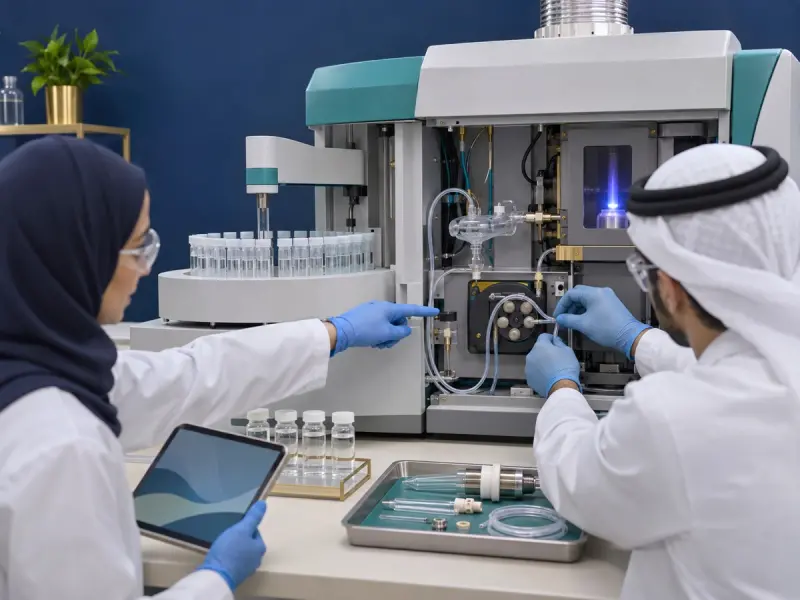
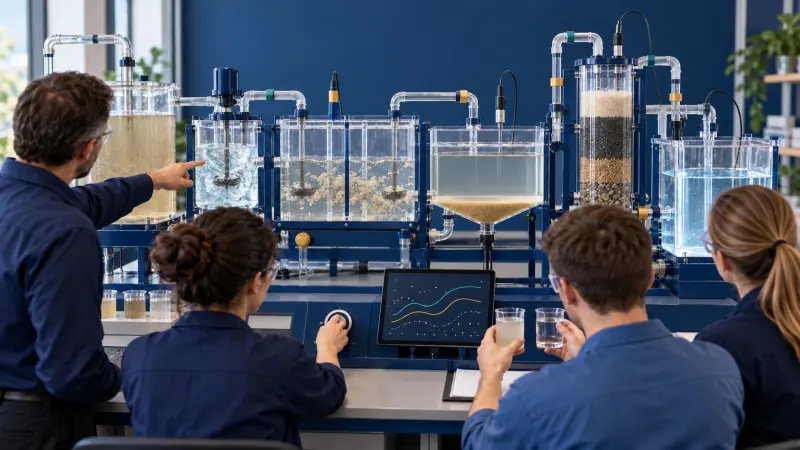
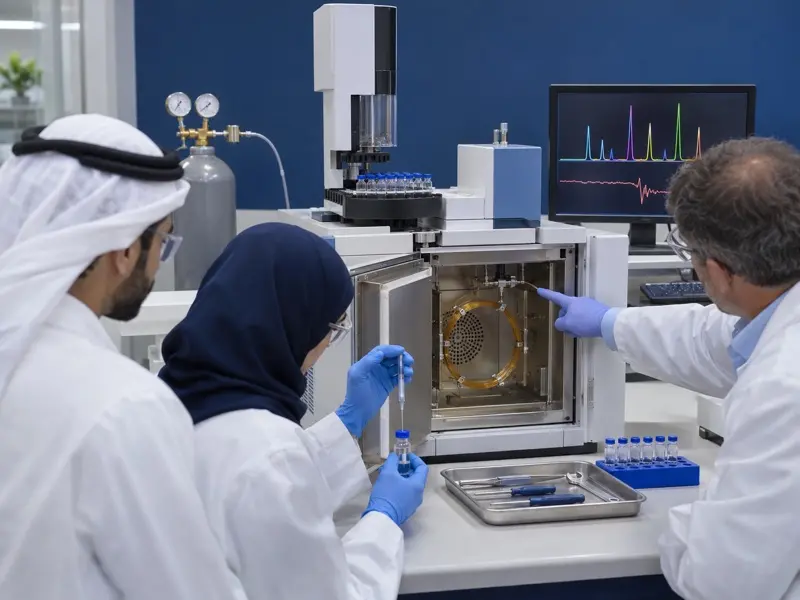
Total Organic Carbon (TOC) Analyzer Operation Training Course is a one-week intermediate course for laboratory analysts, environmental monitoring teams, water-quality functions, process chemists, and quality-control personnel, who leave with a TOC Analyzer Method Control Pack. The course connects TOC measurement principles, sample preparation, analyzer components, oxidation and detection routes, calibration, system suitability, interference control, data quality, method verification, troubleshooting, maintenance, and reporting. It turns instrument readings into controlled analytical results. Agile Leaders Training Center develops total organic carbon analyzer practice.
Who Should Attend
- Teams responsible for drinking-water, surface-water, groundwater, and wastewater analysis
- Functions responsible for environmental monitoring and laboratory data quality
- People responsible for process-water, cleaning, and product-quality measurements
- Teams responsible for analytical method setup, verification, and review
- Functions responsible for laboratory instruments, preventive maintenance, and troubleshooting
The course assumes participants can follow laboratory procedures and interpret calibration data; it leaves out introductory chemistry, manufacturer-specific repair certification, regulatory approval decisions, and unrelated chromatographic methods.
Departments and Industries
The course supports TOC measurement across water utilities, environmental laboratories, pharmaceuticals, food production, chemicals, energy, manufacturing, and research facilities.
- Water and wastewater quality laboratories
- Environmental monitoring and compliance-testing functions
- Pharmaceutical and life-science quality-control teams
- Food, beverage, and process-water laboratories
- Chemical, energy, and manufacturing operations
- Research, method-development, and instrument-support functions
Learning Objectives
By the end of this course, participants will be able to:
- Apply TOC measurement principles to different sample matrices.
- Use sample preparation and preservation controls.
- Build calibration and system-suitability sequences.
- Analyze blanks, recovery, precision, carryover, and interferences.
- Diagnose analyzer performance and maintenance needs.
- Evaluate method verification data and TOC reports.
Course Agenda
Day 1: Establish TOC Measurement Principles
- TC, TIC, TOC, DOC, and NPOC Relationship Map
- ISO 8245:1999 Water Matrix and Interference Review
- Combustion Catalytic Oxidation Process Diagram
- Wet Oxidation and NDIR Detection Flow Map
- TOC Method Selection and Range Matrix
Day 2: Control Samples and Instrument Setup
- Sample Collection and Preservation Checklist
- Filtration, Acidification, and Sparging Decision Tree
- Analyzer Fluidics, Reactor, Detector, and Gas Path Map
- Reagent, Carrier Gas, and Consumable Readiness Log
- Startup, Shutdown, and Sequence Setup Procedure
Day 3: Calibrate and Verify Performance
- Calibration Standard Preparation Worksheet
- Multi-Point Calibration Curve Acceptance Review
- Blank, Control Standard, and System-Suitability Sequence
- Recovery, Precision, Linearity, and Carryover Assessment
- Detection and Quantitation Capability Study
Day 4: Troubleshoot and Maintain the Analyzer
- Matrix Interference and Dilution Response Matrix
- Drift, Noise, Peak Shape, and Baseline Diagnostic Guide
- Leak, Flow, Oxidation, and Detector Fault Tree
- Preventive Maintenance and Consumable Schedule
- Result Review, Audit Trail, and Reporting Checklist
Day 5: Practice Controlled TOC Analysis
- Exercise: Select a TOC Route for Water Matrices
- Exercise: Build a Calibration and Suitability Sequence
- Exercise: Investigate Recovery and Carryover Failures
- Exercise: Diagnose an Analyzer Performance Trend
- Capstone Exercise: Complete the TOC Analyzer Method Control Pack
Practical Exercises
The course uses suggested activities based on drinking water, wastewater, process water, cleaning samples, and high-salt matrices.
- Suggested activity: classify carbon fractions and select preparation, oxidation, detection, and measurement routes.
- Suggested activity: prepare a calibration plan with blanks, standards, controls, acceptance criteria, and sequence order.
- Suggested activity: interpret recovery, precision, carryover, drift, noise, and interference evidence.
- Suggested activity: assemble verification, maintenance, troubleshooting, data-review, and reporting controls.
FAQs
Who suits TOC analyzer operation training and what does it assume?
TOC analyzer operation training suits laboratory, environmental, water-quality, process, instrument, and quality-control teams able to follow analytical procedures and interpret calibration information.
How does TOC analyzer operation differ from general water analysis training?
TOC analyzer operation focuses on carbon fractions, sample treatment, oxidation and detection, calibration, system suitability, interference control, instrument performance, method verification, and result reporting rather than a broad range of water-quality parameters.
What is the difference between TC, TIC, TOC, DOC, and NPOC?
TC represents total carbon, TIC represents inorganic carbon, TOC represents organic carbon, DOC is the organic carbon in a defined filtered fraction, and NPOC is the non-purgeable organic carbon remaining after acidification and sparging.
How is a TOC analyzer calibration checked?
A TOC analyzer calibration is checked through defined standards, curve review, blanks, control standards, system-suitability tests, recovery, precision, carryover, range suitability, and documented acceptance criteria.
What causes unreliable TOC analyzer results?
Unreliable TOC analyzer results can arise from sampling and preservation errors, contamination, unsuitable dilution, incomplete oxidation, inorganic-carbon removal problems, leaks, flow instability, detector drift, carryover, degraded reagents, or failed calibration controls.
Conclusion
Participants take back a TOC Analyzer Method Control Pack linking method selection, sample controls, instrument setup, calibration, suitability tests, verification, troubleshooting, maintenance, data review, and reporting. It changes routine analyzer use into a documented analytical-control process. The pack supports defensible results across water, environmental, process, and quality-control samples while making failure responses and evidence requirements visible.
Environment & Sustainability Training Courses
TOC Analyzer Operation and Measurement Course (2215_262080)
Course Details
# 2215_262080
22 – 26 March 2027
Montreux
Fees : 7500 €
Total Organic Carbon (TOC) Analyzer Operation Training Course runs in Montreux over 5 days, with 1 upcoming date in Montreux. The course fee is 7,500 €.
All dates in Montreux
| Dates | Price | Actions |
|---|---|---|
| 22 – 26 March 2027 | 7,500 € | Register |
Training in Montreux
Experience our top-notch training courses and programs in the vibrant city of Montreux.
All courses in MontreuxThis course in other cities
- Abu Dhabi
- Accra
- Addis Ababa
- Amman
- Amsterdam
- Athens
- Baku
- Bali
- Bangkok
- Barcelona
- Berlin
- Cairo
- Cape town
- Casablanca
- Chicago
- Doha
- Dubai
- Frankfurt
- Geneva
- Istanbul
- Jakarta
- Johannesburg
- Kuala Lumpur
- Kuwait
- Lagos
- Langkawi
- Lisbon
- London
- Madrid
- Manama
- Marbella
- Milan
- Munich
- Muscat
- Nairobi
- New York
- Nice
- Paris
- Phuket
- Porto
- Prague
- Rome
- San Diego
- Seoul
- Sharm El-Sheikh
- Singapore
- Tashkent
- Tbilisi
- Tokyo
- Toronto
- Trabzon
- Vienna
- Zanzibar
- Zoom