Technical Project Management Training Course: Tools, Methods & Execution

Course Details
-
# 103600369_76583
-
7 – 11 June 2027 11.Jun.2027
-
Abu Dhabi
-
4700 €
Overview
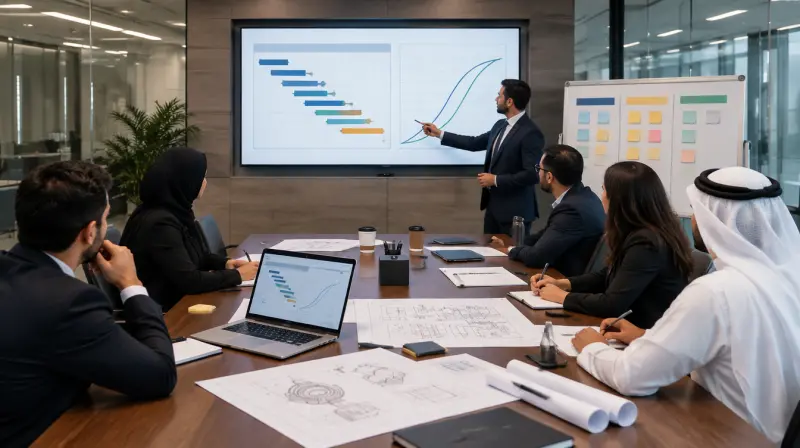
Engineering and software initiatives demand structured execution frameworks that balance technical complexity with rigorous schedule and cost controls. This Technical Project Management Training Course equips team leads and technical managers with practical capabilities across systems engineering alignment, critical path scheduling, and performance tracking. Participants explore predictive and adaptive planning models, configure baseline plans in tools like OpenProject and GanttProject, and apply earned value metrics to monitor delivery health. The curriculum emphasizes requirement traceability, engineering change control, and risk containment across technical interfaces. This course is delivered by Agile Leaders Training Center.
Who Should Attend
- Technical project managers transitioning from hands-on engineering or software roles into formal project leadership.
- Engineering managers responsible for multi-disciplinary product delivery, equipment validation, and resource scheduling.
- IT project leads supervising infrastructure deployments, systems integration, and software releases.
- Systems engineers seeking structured alignment between systems engineering practices and project controls.
- Software development team leads managing sprint commitments alongside broader milestone constraints.
Departments and Industries
This program supports professionals delivering technical deliverables across complex industrial and digital environments.
- Project Management Offices and Technical Program Management units in Aerospace and Defense
- Engineering and Research and Development departments in High-Tech Manufacturing
- Information Technology and Enterprise Software units in Telecommunications
- Capital Projects and Asset Engineering teams in Energy and Utilities
- Infrastructure and Systems Engineering divisions in Smart Mobility and Construction
Learning Objectives
By the end of this course, participants will be able to:
- Structure technical project lifecycles using appropriate predictive, adaptive, and hybrid models.
- Capture stakeholder requirements and translate technical specifications into a verified Work Breakdown Structure.
- Calculate critical paths, float, and resource allocations using open-source scheduling tools.
- Analyze project performance using Earned Value Management formulas for cost and schedule variance.
- Implement formal change control and configuration management to mitigate scope creep.
- Conduct technical risk evaluations and execute mitigation strategies for high-dependency projects.
- Coordinate verification, validation, and handover protocols for smooth project completion.
Course Agenda
Day 1: Foundations of Technical Project Management and Tool Setup
- Role boundaries between traditional project management and technical project management
- Alignment of systems engineering processes with project lifecycles
- Predictive versus adaptive planning models in technical work
- Core governance checkpoints and technical stakeholder identification
- Hands-on schedule initialization using OpenProject and GanttProject
- Establishing technical baselines and execution assumptions
Day 2: Requirements Analysis, Work Breakdown, and Estimation
- Technical scope elicitation and functional requirements definition
- Decomposing deliverables into a structured Work Breakdown Structure
- Network diagram construction and Critical Path Method calculations
- Parametric and three-point estimation techniques for technical tasks
- Feasibility evaluation and technical trade-off studies
- Risk identification protocols and technical risk registers
Day 3: Execution Control, Earned Value, and Quality Assurance
- Earned Value Management principles: PV, EV, AC, and performance indices
- Tracking project variance and forecasting estimate at completion
- Engineering change control and baseline revision governance
- Managing configuration baselines across hardware and software assets
- Quality control checkpoints and technical compliance monitoring
- Resolving technical bottlenecks and dependency conflicts
Day 4: Agile, Waterfall, and Hybrid Execution in Practice
- Agile project mechanics: backlog refinement, iterations, and velocity
- Waterfall controls for stage-gated technical deliverables
- Structuring hybrid workflows: agile design iterations with waterfall deployment
- Managing interface dependencies across interdisciplinary technical teams
- Scenario-based contingency planning and technical decision analysis
- Integration testing strategies and verification milestone tracking
Day 5: Validation, Optimization, and Project Handover
- System verification and validation protocols prior to deployment
- Applying design thinking principles to technical problem solving
- Value management and performance optimization across deliverables
- Structured project closeout, technical sign-off, and transition plans
- Documenting technical lessons learned and reusable project assets
- Tailoring project management methods for future technical initiatives
Practical Exercises
Participants apply core tools and methodologies through structured hands-on assignments.
- Formulate a complete Work Breakdown Structure and dictionary for an engineering module.
- Build a project network schedule and identify critical path tasks in GanttProject.
- Calculate EVM metrics from sample project status data and report forecast variances.
- Draft an engineering change request with cross-functional impact and cost assessments.
FAQs
What specific qualifications or prerequisites are needed before enrolling?
A background in engineering, information technology, or technical project operations is recommended. Familiarity with basic project scheduling or team coordination is helpful.
How long is each day session, and what is the overall instructional duration?
Each daily session spans approximately four to five instructional hours, including structured practical exercises and discussions, covering 25 to 30 hours over the one week.
What distinguishes a technical project manager from a traditional project manager?
Traditional project managers concentrate primarily on schedule, budget, and general resource tracking. Technical project managers combine these governance skills with architectural understanding, systems engineering methods, and hands-on scheduling tools.
Conclusion
Technical initiatives require rigorous planning and operational discipline to meet tight technical specifications, budgets, and schedules. This one-week course equips technical leaders with the methods, analytical tools, and execution strategies needed to guide engineering and technology projects from requirements definition to verified handover.
Agile PM and Project Management Training Courses
Technical Project Management Training Course (103600369_76583)
Course Details
# 103600369_76583
7 – 11 June 2027
Abu Dhabi
Fees : 4700 €