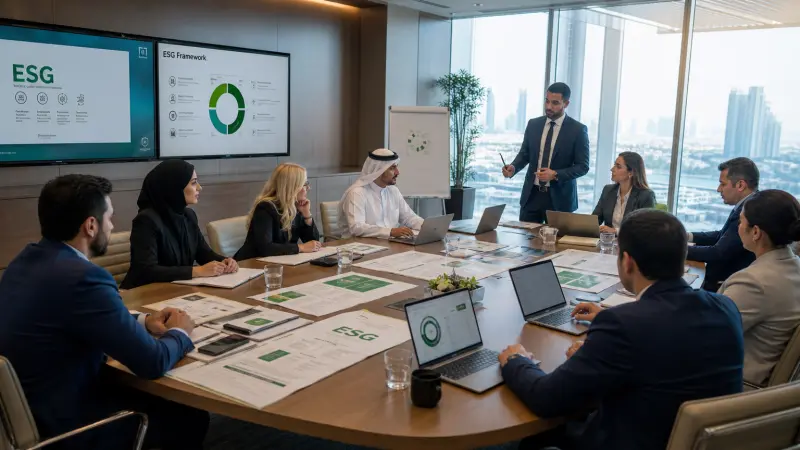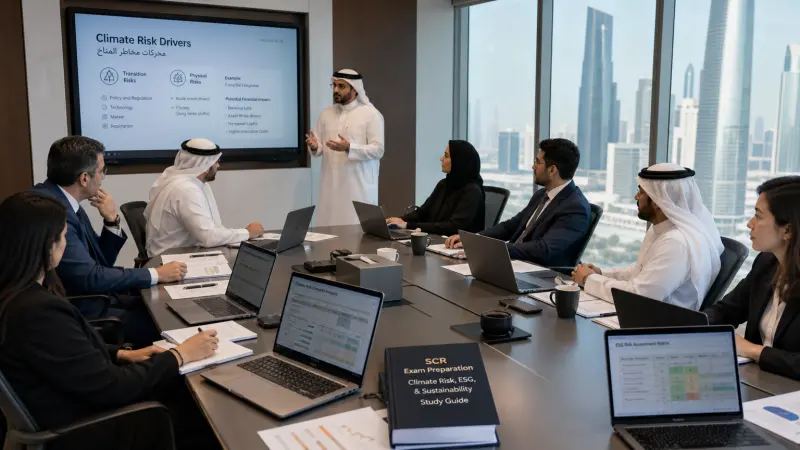
The verdict: sustainability becomes practical when it changes operating and investment decisions, not when it remains a separate reporting exercise.
Sustainability, risk, finance, operations, facilities, engineering and senior leadership teams benefit most when they share ownership.
Many organisations begin with a public ambition, a long list of initiatives or a reporting template. They then discover that data definitions differ, business units interpret priorities differently and no one owns the operational change. Activity continues, but managers cannot tell which actions control material impact.
The remedy is disciplined: identify the environmental and business issue, define a boundary and baseline, assign responsibility, select controls, monitor evidence and review decisions. Communication should follow the quality of the system, not run ahead of it.
What will you be able to do afterwards?
- Distinguish material environmental risks from popular but low-impact activity.
- Define boundaries, assumptions and evidence requirements for sustainability information.
- Assign accountable owners for environmental controls and improvement actions.
- Connect climate, water, energy, waste and operational resilience with business decisions.
- Separate physical climate risks from transition, regulatory and market risks.
- Challenge targets that have no credible baseline, delivery path or management owner.
- Build reporting routines that state gaps and limitations instead of hiding them.
- Turn specialist findings into decisions for investment, procurement, operations and governance.
Who is it for, and who is it not for?
This subject is useful for sustainability and ESG professionals, environmental managers, engineers, risk teams, finance staff, facilities leaders and executives who approve plans or disclosures. It also helps operational managers who are given environmental targets but need to understand what should change in daily work.
It is not only for report writers. A water-treatment operator controls process conditions, procurement influences supplier requirements, engineering shapes asset choices and finance tests investment assumptions. If these functions treat sustainability as somebody else's dashboard, targets will remain detached from execution.
It is not for organisations seeking polished claims without evidence. Training cannot create reliable data, governance or maintenance discipline on its own. Nor should every participant take the same route: a plant technician needs different depth from a climate-risk analyst or corporate reporting lead.
Why do ambitious targets fail in operations?
Imagine a company sets an environmental goal and asks each facility to contribute. One site measures purchased utilities, another uses estimates, and a third excludes outsourced operations. Managers receive a combined figure that looks precise but cannot be compared. Meanwhile, improvement actions are assigned to a committee rather than to asset and process owners.
The fix begins by defining the boundary, data source, calculation owner and review control. The team then identifies the operational levers behind the result. For water, this may involve quality testing, treatment stages, pumping, membrane performance and maintenance. For buildings, it may involve site planning, energy, water and indoor environmental quality. For corporate ESG, it may involve governance, stakeholder priorities and reporting expectations.
ESG Strategy and Sustainability Implementation Certification is relevant when professionals need to connect ESG principles, reporting expectations, stakeholder priorities, organisational frameworks and practical implementation. It suits people building a management approach rather than a collection of disconnected initiatives.
How does weak data become a management risk?
Weak data does more than damage a report. It can direct investment toward the wrong site, conceal deterioration or create confidence that a control is working when it is not. Common failures include unclear units, changing boundaries, manual transfers, estimates presented as measurements and missing review evidence.
Start with the decision the data must support. Define the owner, source, frequency, method and quality checks. Record assumptions and preserve a traceable path from source to reported result. Where information is incomplete, disclose the gap and create a plan to improve it. False precision is less useful than an honest range of confidence.
Operational evidence matters especially in essential systems. From Water Quality Testing to RO Operations and Pump Troubleshooting fits technical personnel who need practical methods for water-quality evaluation, treatment, pumping hydraulics, reverse-osmosis operation, maintenance and systematic fault diagnosis. It addresses the point where environmental performance and asset reliability meet.
Why must climate risk reach business decisions?
A climate-risk register can be technically sound yet operationally irrelevant. The failure occurs when risks are described broadly but not connected to assets, time horizons, suppliers, financing, controls or accountable decisions. A heat, flood or regulatory scenario should lead to a question about exposure, vulnerability and response.
Teams should distinguish physical hazards from transition risks, examine plausible scenarios and identify which assumptions would change a decision. They can then incorporate actions into enterprise risk, capital planning, procurement, continuity and governance. The goal is not to predict one future perfectly, but to understand where strategy is fragile.
SCR Certification Prep: Sustainability & Climate Risk is appropriate for professionals seeking structured knowledge of climate science, sustainability frameworks, regulatory obligations, physical and transition risk, scenario analysis, ESG reporting and green-finance connections.
How do teams avoid reporting without improvement?
Reporting should be the result of managed performance. For each material issue, identify the objective, control, owner, evidence and escalation route. Review exceptions with the managers who can allocate resources or change policy. Keep action registers connected to ordinary management forums rather than creating a sustainability process that competes with operations.
Do not reward volume of initiatives. A smaller set of well-owned controls is more credible than a large campaign list. When an action closes, verify the operating result. If performance does not change, revisit the causal assumption rather than simply marking the task complete.
Communication should explain what the organisation did, what the evidence shows and what remains uncertain. This builds decision quality and reduces pressure to defend claims that operational teams cannot support.
What should a manager do after training?
Select one material issue and map it end to end. Define the boundary, data source, operational cause, control owner, management decision and reporting statement. Bring the relevant functions together to challenge gaps. Then improve one control and verify that the evidence changed.
This assignment tests whether participants can move from terminology to management. It also reveals whether the organisation must fix ownership, systems or authority before setting further commitments.
Bottom line
Strong sustainability work connects material risk, operating control, reliable evidence and accountable decisions. Build that chain before expanding targets or communications. Check the course page for the full syllabus, upcoming dates and fees.
Frequently asked questions
Should a team start with reporting standards?
Start by understanding material issues and decisions, then map relevant reporting requirements. A template cannot replace operational ownership or evidence.
Who should own sustainability data?
The function closest to the source should own its quality, while a central team defines standards, consolidates information and challenges consistency.
How should estimates be treated?
Document the method, assumptions and limitations, distinguish them from measurements and create a proportionate plan to improve the source.
Is climate risk only a sustainability responsibility?
No. It can affect operations, assets, suppliers, finance, insurance and strategy, so ownership must reach the relevant business decisions.
How can leaders prevent green claims from outrunning evidence?
Require every material claim to have a defined boundary, approved source, responsible owner and review record before publication.