
Is AI-Driven Predictive Maintenance Worth It for Your Team?
AI-driven predictive maintenance turns condition data into prioritized decisions instead of guesswork. Here is what the skill actually looks like on a maintenance, reliability or a...
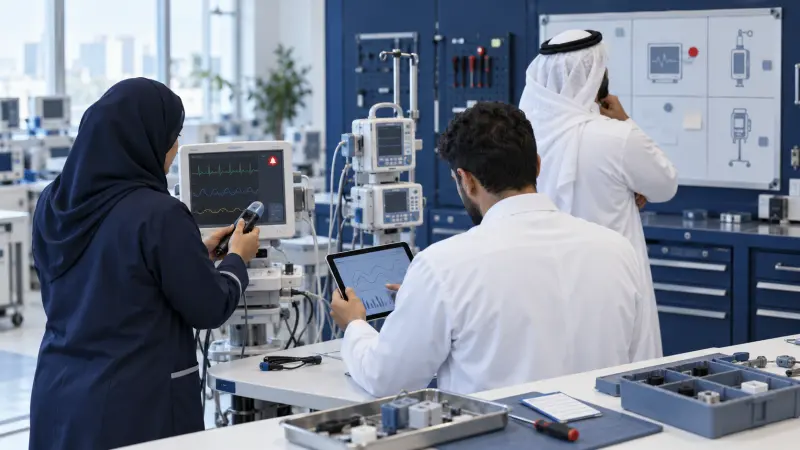
Healthcare Equipment Predictive Maintenance Course is a one-week foundation course for clinical engineering managers, biomedical equipment personnel, healthcare maintenance teams, facilities engineers, asset managers, reliability analysts, and healthcare technology coordinators, who leave with a Healthcare Equipment Predictive Maintenance Plan. Participants connect equipment inventories and criticality with maintenance history, condition data, failure modes, anomaly signals, work orders, spare-parts planning, service continuity, model limits, human validation, dashboards, and escalation. Agile Leaders Training Center provides training in healthcare equipment predictive maintenance.
The course assumes participants contribute to healthcare equipment, maintenance, reliability, assets, or technology management and leaves out clinical diagnosis, imaging interpretation, equipment repair instruction, facilities maintenance, cybersecurity, and technical model development.
The course supports governed predictive maintenance across healthcare technology operations.
By the end of this course, participants will be able to:
The course uses suggested activities that turn equipment and maintenance data into controlled, reviewable maintenance decisions.
Healthcare equipment predictive maintenance training suits personnel responsible for clinical engineering, biomedical equipment, maintenance, assets, reliability, or healthcare technology. It assumes familiarity with equipment records or maintenance work and requires no programming.
Healthcare equipment predictive maintenance focuses on clinical criticality, patient and operator safety, inspections, equipment condition, healthcare service continuity, and accountable technical validation, while generic maintenance training addresses broader industrial assets and methods.
Teams should verify equipment identity, data quality, operating context, maintenance history, condition trend, signal confidence, false-alert risk, manufacturer information, safety requirements, inspection evidence, and qualified technical judgment before authorizing work.
Healthcare teams should compare safety impact, clinical service criticality, failure consequence, condition evidence, degradation rate, backup availability, parts lead time, work duration, and qualified staff availability before setting maintenance priority.
The plan should include inventory, criticality, data sources, maintenance history, condition indicators, failure modes, anomaly reviews, validation, work priorities, evidence, spare parts, continuity, dashboard measures, model limits, escalation, owners, and review cycles.
Participants take back a Healthcare Equipment Predictive Maintenance Plan connecting inventory, criticality, condition data, failure signals, work orders, parts, continuity, controls, and escalation. It changes how teams prepare and validate equipment maintenance decisions. The plan provides a basis for traceable evidence, earlier degradation review, accountable authorization, and protected healthcare service availability.
credits: 5 credit per day
Course Mode: full-time
Provider: Agile Leaders Training Center
Prague 26 – 30 October 2026
Lisbon 26 – 30 October 2026
Dubai 2 – 6 November 2026
Zanzibar 8 – 12 November 2026
Toronto 8 – 12 November 2026
Geneva 22 – 26 November 2026
Athens 23 – 27 November 2026
London 30 November – 4 December 2026
Marbella 6 – 10 December 2026
Tbilisi 14 – 18 December 2026
Cairo 21 – 25 December 2026
Amsterdam 28 December 2026 – 1 January 2027
Rome 11 – 15 January 2027
Abu Dhabi 11 – 15 January 2027
Nairobi 17 – 21 January 2027
Sharm El-Sheikh 8 – 12 February 2027
Casablanca 15 – 19 February 2027
New York 22 – 26 February 2027
Accra 28 February – 4 March 2027
Doha 7 – 11 March 2027
Abu Dhabi 8 – 12 March 2027
Zoom 15 – 19 March 2027
Nice 15 – 19 March 2027
Kuala Lumpur 22 – 26 March 2027
Munich 29 March – 2 April 2027
Vienna 12 – 16 April 2027
Singapore 12 – 16 April 2027
Dubai 19 – 23 April 2027
Cape town 25 – 29 April 2027
Jakarta 3 – 7 May 2027
Berlin 3 – 7 May 2027
Paris 10 – 14 May 2027
Chicago 16 – 20 May 2027
Porto 24 – 28 May 2027
Montreux 31 May – 4 June 2027
Bangkok 6 – 10 June 2027
Tashkent 13 – 17 June 2027
Tokyo 14 – 18 June 2027
Phuket 20 – 24 June 2027
Bali 27 June – 1 July 2027
Seoul 28 June – 2 July 2027
Istanbul 5 – 9 July 2027
Trabzon 18 – 22 July 2027
Milan 26 – 30 July 2027
Lagos 8 – 12 August 2027
Baku 16 – 20 August 2027
Kuwait 22 – 26 August 2027
Langkawi 29 August – 2 September 2027
San Diego 6 – 10 September 2027
London 13 – 17 September 2027
Madrid 20 – 24 September 2027
Amman 26 – 30 September 2027
Frankfurt 27 September – 1 October 2027
Manama 3 – 7 October 2027
Muscat 3 – 7 October 2027
Johannesburg 10 – 14 October 2027
Barcelona 18 – 22 October 2027
| Image | Location | Dates | Duration | Mode | Price | Actions |
|---|---|---|---|---|---|---|

|
Prague |
Week 44, 2026 26 – 30 October 2026 |
1 Week | Onsite | €7,500 | |

|
Lisbon |
Week 44, 2026 26 – 30 October 2026 |
1 Week | Onsite | €6,500 | |

|
Dubai |
Week 45, 2026 2 – 6 November 2026 |
1 Week | Onsite | €6,500 | |

|
Zanzibar |
Week 45, 2026 8 – 12 November 2026 |
1 Week | Onsite | €6,000 | |

|
Toronto |
Week 45, 2026 8 – 12 November 2026 |
1 Week | Onsite | €16,000 | |

|
Geneva |
Week 47, 2026 22 – 26 November 2026 |
1 Week | Onsite | €8,000 | |

|
Athens |
Week 48, 2026 23 – 27 November 2026 |
1 Week | Onsite | €7,500 | |

|
London |
Week 49, 2026 30 November – 4 December 2026 |
1 Week | Onsite | €6,500 | |

|
Marbella |
Week 49, 2026 6 – 10 December 2026 |
1 Week | Onsite | €6,500 | |

|
Tbilisi |
Week 51, 2026 14 – 18 December 2026 |
1 Week | Onsite | €5,700 | |

|
Cairo |
Week 52, 2026 21 – 25 December 2026 |
1 Week | Onsite | €5,200 | |

|
Amsterdam |
Week 53, 2026 28 December 2026 – 1 January 2027 |
1 Week | Onsite | €6,500 | |

|
Rome |
Week 02, 2027 11 – 15 January 2027 |
1 Week | Onsite | €6,500 | |

|
Abu Dhabi |
Week 02, 2027 11 – 15 January 2027 |
1 Week | Onsite | €6,500 | |

|
Nairobi |
Week 02, 2027 17 – 21 January 2027 |
1 Week | Onsite | €6,000 | |

|
Sharm El-Sheikh |
Week 06, 2027 8 – 12 February 2027 |
1 Week | Onsite | €5,200 | |

|
Casablanca |
Week 07, 2027 15 – 19 February 2027 |
1 Week | Onsite | €6,000 | |

|
New York |
Week 08, 2027 22 – 26 February 2027 |
1 Week | Onsite | €16,000 | |

|
Accra |
Week 08, 2027 28 February – 4 March 2027 |
1 Week | Onsite | €6,000 | |

|
Doha |
Week 09, 2027 7 – 11 March 2027 |
1 Week | Onsite | €7,000 |
OverviewHealthcare Equipment Predictive Maintenance Course is a one-week foundation course for clinical engineering managers, biomedical equipment personnel, healthcare maintenance teams, facilities engineers, asset managers, reliability analysts, and healthcare technology coordinators, who leave with a Healthcare Equipment Predictive Maintenance Plan. Pa…
Yes. Available dates and destinations are listed in the course dates section on this page.
Choose an available date on this page and complete the registration form, or send a programme enquiry.
Yes. Use the brochure download link provided on this page.
AI-driven predictive maintenance turns condition data into prioritized decisions instead of guesswork. Here is what the skill actually looks like on a maintenance, reliability or a...