Process Heat Transfer Augmentation Techniques Training Course

Course Details
-
# 1815_236183
-
12 – 16 April 2027 16.Apr.2027
-
New York
-
16000 €
Overview
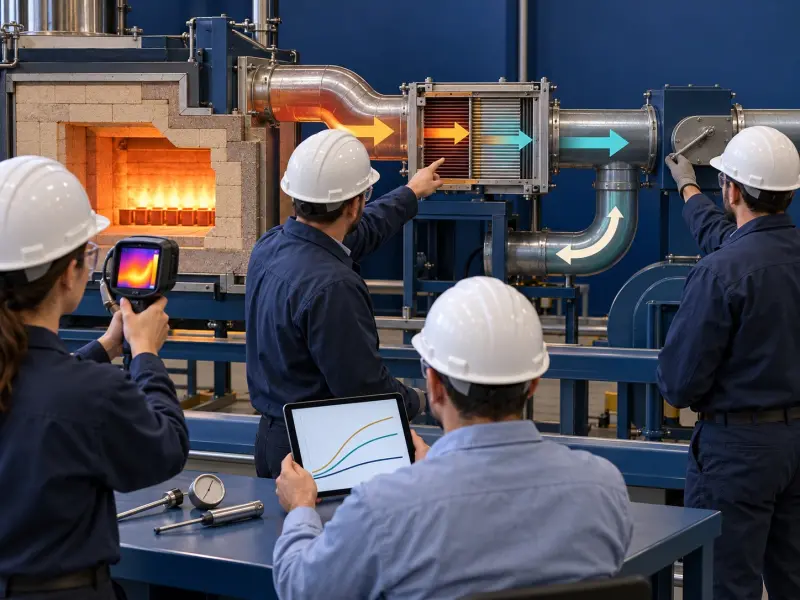
Process Heat Transfer Augmentation Techniques Training Course is a one-week advanced course for process, thermal, operations, and energy engineering teams who leave with a Heat Transfer Augmentation Decision Pack. The course addresses how to raise thermal duty without accepting unexamined pressure drop, fouling, integrity, or operability consequences. Participants use thermal-hydraulic baselines, passive and active enhancement methods, evidence screening, and techno-economic comparison. Agile Leaders Training Center delivers this course on process heat transfer augmentation techniques.
Who Should Attend
- Functions responsible for process heat-transfer performance and thermal duty
- Teams responsible for heat-exchanger troubleshooting, debottlenecking, and retrofit studies
- Functions responsible for operations, energy use, and pumping constraints
- Teams responsible for equipment integrity, fouling control, and maintainability
- Technical project groups responsible for option screening and investment recommendations
The course assumes participants already use heat-transfer calculations, process data, or equipment performance evidence and leaves out introductory thermodynamics, general exchanger design, and inspection-only training.
Departments and Industries
The course supports augmentation decisions across process plants and other thermal systems.
- Process, thermal, mechanical, and energy engineering
- Operations, maintenance, reliability, and asset integrity
- Oil and gas, petrochemicals, chemicals, and refining
- Power generation, utilities, water, and district energy
- Food processing, pharmaceuticals, metals, and manufacturing
Learning Objectives
By the end of this course, participants will be able to:
- Build thermal-hydraulic baselines for augmentation studies.
- Compare passive, active, and compound enhancement methods.
- Analyze boiling, condensation, fouling, and pressure-drop effects.
- Evaluate CFD, test, and operating evidence for candidate options.
- Prioritize retrofit concepts through integrity and operability gates.
- Build a defensible techno-economic augmentation recommendation.
Course Agenda
Day 1: Establish the Performance Baseline
- Heat-Duty, Temperature-Approach, and Overall-Coefficient Baseline Sheet
- Nusselt Number, Reynolds Number, and Prandtl Number Calculation Map
- Friction-Factor, Pressure-Drop, and Pumping-Power Assessment
- Flow-Regime, Boundary-Layer, and Thermal-Resistance Diagnostic
- Fouling-Factor, Material-Compatibility, and Operating-Envelope Register
Day 2: Screen Passive Enhancement Methods
- Extended-Surface and Enhanced-Tube Selection Matrix
- Twisted-Tape, Wire-Coil, and Insert Screening Method
- Rib, Corrugation, and Roughened-Surface Evaluation Grid
- Swirl-Flow Device and Coiled-Tube Application Map
- Passive Enhancement Thermal Performance Factor Comparison
Day 3: Evaluate Active and Phase-Change Methods
- Vibration and Pulsation Enhancement Feasibility Checklist
- Electrohydrodynamic and Field-Assisted Method Screening Gate
- Injection, Suction, and Jet-Impingement Application Assessment
- Boiling Enhancement Critical-Constraint Review
- Condensation Enhancement Surface and Drainage Evaluation
Day 4: Select and Justify an Augmentation Option
- CFD Model Assumption and Validation Evidence Checklist
- Experimental Data Quality and Scale-Up Assessment
- Manufacturability, Installation, and Retrofit Constraint Matrix
- Operability, Integrity, Maintainability, and Fouling Risk Gate
- Energy Impact, Lifecycle Cost, and Techno-Economic Ranking Model
Day 5: Practice Augmentation Decisions
- Exercise: Reconstruct a Thermal-Hydraulic Performance Baseline
- Exercise: Compare Passive Enhancement Candidates
- Exercise: Test Active and Phase-Change Options
- Exercise: Rank Retrofit Concepts through Evidence and Risk Gates
- Capstone Exercise: Build the Heat Transfer Augmentation Decision Pack
Practical Exercises
The course uses suggested activities to connect thermal evidence with executable augmentation choices.
- Suggested activity: diagnose a process exchanger using duty, coefficients, flow regime, pressure drop, and fouling evidence.
- Suggested activity: compare inserts, enhanced surfaces, and swirl devices through thermal performance factor and pumping impact.
- Suggested activity: screen an active or phase-change enhancement against operating and integrity constraints.
- Suggested activity: prepare a retrofit recommendation with evidence, risk, energy, and lifecycle-cost gates.
FAQs
Who suits process heat transfer augmentation training and what does it assume?
Process heat transfer augmentation training suits experienced engineering and operations teams that already work with heat-transfer calculations, process data, exchanger performance, or retrofit studies.
How does heat transfer augmentation training differ from general heat exchanger design?
Heat transfer augmentation training evaluates enhancement methods and retrofit tradeoffs for existing or proposed thermal equipment, while general heat exchanger design focuses on sizing, configuration, and mechanical design fundamentals.
How are pressure drop and pumping power considered in heat transfer augmentation?
Pressure drop and pumping power are evaluated alongside heat-transfer gain because an option that raises the coefficient can still reduce system value through friction, energy demand, or hydraulic limits.
Which passive heat transfer enhancement methods are commonly compared?
Passive heat transfer enhancement commonly compares extended or roughened surfaces, enhanced tubes, inserts, twisted tapes, wire coils, ribs, corrugations, swirl devices, and coiled passages against the applicable flow regime and constraints.
How is CFD evidence used in process heat transfer augmentation?
CFD evidence supports process heat transfer augmentation when assumptions, boundary conditions, mesh behavior, and validation data are documented and compared with experimental or operating evidence.
Conclusion
Participants take back a Heat Transfer Augmentation Decision Pack. The pack connects the performance baseline, enhancement mechanisms, pressure-drop effects, fouling, evidence quality, retrofit constraints, integrity, energy impact, and lifecycle economics. It changes isolated thermal ideas into a traceable basis for selecting, rejecting, or testing an augmentation option.
Maintenance Training and Engineering Training Courses
Process Heat Transfer Augmentation Training Course (1815_236183)
Course Details
# 1815_236183
12 – 16 April 2027
New York
Fees : 16000 €
Process Heat Transfer Augmentation Techniques Training Course runs in New York over 5 days, with 1 upcoming date in New York. The course fee is 16,000 €.
All dates in New York
| Dates | Price | Actions |
|---|---|---|
| 12 – 16 April 2027 | 16,000 € | Register |
Training in New York
Experience our top-notch training course programs in the vibrant city of New York (USA).
All courses in New YorkThis course in other cities
- Abu Dhabi
- Accra
- Addis Ababa
- Amman
- Amsterdam
- Athens
- Baku
- Bali
- Bangkok
- Barcelona
- Berlin
- Cairo
- Cape town
- Casablanca
- Chicago
- Doha
- Dubai
- Frankfurt
- Geneva
- Istanbul
- Jakarta
- Johannesburg
- Kuala Lumpur
- Kuwait
- Lagos
- Langkawi
- Lisbon
- London
- Madrid
- Manama
- Marbella
- Milan
- Montreux
- Munich
- Muscat
- Nairobi
- Nice
- Paris
- Phuket
- Porto
- Prague
- Rome
- San Diego
- Seoul
- Sharm El-Sheikh
- Singapore
- Tashkent
- Tbilisi
- Tokyo
- Toronto
- Trabzon
- Vienna
- Zanzibar
- Zoom