Passenger Elevator Operation, Rescue and Maintenance Training Course

Course Details
-
# 1824_236696
-
31 January – 4 February 2027 04.Feb.2027
-
Doha
-
7000 €
Overview
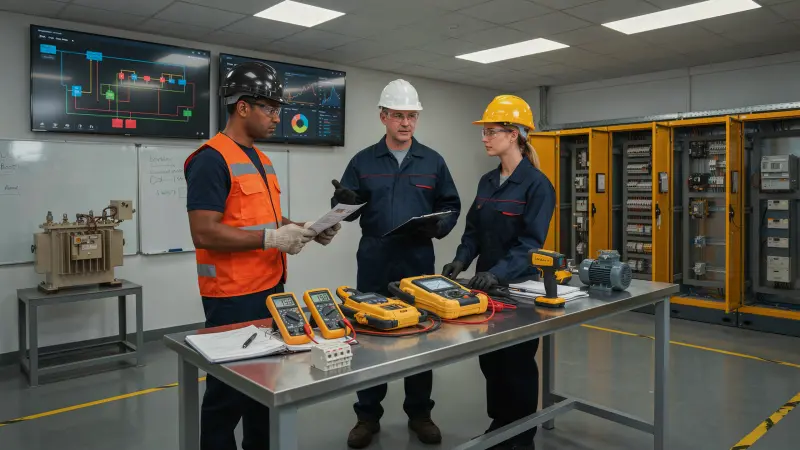
Passenger Elevator Operation, Rescue and Maintenance Training Course is a one-week intermediate course for elevator technicians, facilities teams, building engineers, safety officers, and supervisors who leave with a Passenger Elevator Safety and Response Workbook. The course connects passenger elevator operation, traction and hydraulic elevator systems, elevator emergency rescue, preventive elevator maintenance, and elevator fault diagnosis through controlled procedures, evidence, and escalation boundaries. Agile Leaders Training Center delivers this course on passenger elevator safety and response.
Who Should Attend
- Functions responsible for passenger elevator operation and readiness checks
- Teams responsible for preventive maintenance and service coordination
- Groups responsible for building engineering and vertical transportation assets
- Safety functions responsible for emergency planning and hazardous-energy control
- Supervisors responsible for inspection records, fault response, and contractor oversight
The course assumes participants already support building systems or maintenance activities and leaves out unlicensed internal repair, controller modification, and rescue actions beyond approved site procedures.
Departments and Industries
The course supports departments responsible for passenger movement, equipment reliability, and emergency coordination.
- Facilities management and building engineering
- Commercial property and hospitality operations
- Healthcare and educational campus maintenance
- Industrial site infrastructure and utilities
- Elevator service coordination and technical support
Learning Objectives
By the end of this course, participants will be able to:
- Analyze traction and hydraulic elevator functions.
- Apply operating, inspection, and isolation checks.
- Build a preventive maintenance and records plan.
- Diagnose door, control, and safety-circuit faults.
- Use controlled passenger-release and escalation procedures.
- Evaluate readiness evidence and service-provider reports.
Course Agenda
Day 1: Frame Safe Elevator Operation
- Passenger Elevator System Boundary and Responsibility Map
- Traction, Hydraulic, and Positive-Drive Function Comparison
- Car, Hoistway, Machine Space, and Landing Component Diagram
- Normal Operation, Recall, and Out-of-Service Decision Matrix
- ISO 8100 Safety-Risk and Safeguarded-Person Review
Day 2: Inspect Controls and Safety Functions
- Pre-Operation Readiness and Ride-Quality Checklist
- Door Operator, Interlock, and Reopening-Device Inspection Guide
- Brake, Governor, Buffer, and Suspension Safety Function Map
- Controller, Drive, Positioning, and Communication Signal Diagram
- Inspection Finding, Defect Priority, and Escalation Record
Day 3: Plan Preventive Maintenance
- Asset Register and Equipment-Criticality Classification Method
- Daily, Monthly, and Periodic Maintenance Task Schedule
- Lubrication, Cleaning, Adjustment, and Wear-Control Matrix
- Lockout/Tagout Isolation and Zero-Energy Verification Checklist
- Maintenance History, Parts, and Service-Report Control Log
Day 4: Diagnose Faults and Manage Rescue
- Door, Leveling, Ride, Noise, and Vibration Fault Tree
- Power, Drive, Controller, and Safety-Circuit Cause Matrix
- Entrapment Assessment and Emergency Communication Protocol
- Authorized Passenger Release and Rescue Coordination Sequence
- Post-Incident Isolation, Evidence, and Return-to-Service Gate
Day 5: Practice Elevator Response
- Exercise: Complete an Operating Readiness Inspection
- Exercise: Build a Preventive Maintenance Control Plan
- Exercise: Isolate a Door and Safety-Circuit Fault
- Exercise: Coordinate a Controlled Passenger Release Scenario
- Capstone Exercise: Build the Passenger Elevator Safety and Response Workbook
Practical Exercises
The course uses suggested activities to connect equipment evidence with safe, role-appropriate decisions.
- Suggested activity: trace operating signals and safety functions on a passenger elevator system map.
- Suggested activity: classify inspection findings and assign maintenance, isolation, or escalation actions.
- Suggested activity: apply a fault tree to door, leveling, and communication symptoms.
- Suggested activity: rehearse emergency communication and authorized rescue coordination without bypassing safeguards.
FAQs
Who suits passenger elevator operation and rescue training, and what does it assume?
Passenger elevator operation and rescue training suits personnel who already support facilities, building systems, safety, maintenance, or elevator-service coordination and can work within approved responsibilities.
How does passenger elevator maintenance training differ from elevator installer training?
Passenger elevator maintenance training covers operation, inspection, preventive tasks, fault evidence, rescue coordination, and escalation, while installer training addresses installation engineering, commissioning, and manufacturer-specific construction work.
What should happen when passengers are trapped in an elevator?
Trapped-passenger response begins with communication, location and condition checks, site emergency activation, equipment isolation where required, and coordination with authorized elevator personnel or emergency services under the approved plan.
What causes passenger elevator doors to fail or reopen repeatedly?
Passenger elevator door faults can follow obstruction, dirty or misaligned sensors, worn rollers, interlock problems, operator adjustment, landing-door alignment, wiring, control signals, or a safety-circuit condition.
How is hazardous energy controlled during elevator maintenance?
Hazardous energy is controlled through an equipment-specific shutdown, isolation, lockout/tagout, stored-energy control, verification, protected work area, and authorized restoration sequence.
Conclusion
Participants take back a Passenger Elevator Safety and Response Workbook. The workbook connects operating checks, inspection evidence, preventive tasks, fault diagnosis, isolation controls, rescue coordination, and service records. It changes separate maintenance and emergency actions into a controlled workflow for safe decisions, technical escalation, and documented return to service.
Maintenance Training and Engineering Training Courses
Passenger Elevator Operation and Rescue Course (1824_236696)
Course Details
# 1824_236696
31 January – 4 February 2027
Doha
Fees : 7000 €
Passenger Elevator Operation, Rescue and Maintenance Training Course runs in Doha over 5 days, with 1 upcoming date in Doha. The course fee is 7,000 €.
All dates in Doha
| Dates | Price | Actions |
|---|---|---|
| 31 January – 4 February 2027 | 7,000 € | Register |
Training in Doha
Experience our top-notch training courses programs in the vibrant city of Doha, Qatar. Participate in our professional training courses. Join Today !
All courses in DohaThis course in other cities
- Abu Dhabi
- Accra
- Addis Ababa
- Amman
- Amsterdam
- Athens
- Baku
- Bali
- Bangkok
- Barcelona
- Berlin
- Cairo
- Cape town
- Casablanca
- Chicago
- Dubai
- Frankfurt
- Geneva
- Istanbul
- Jakarta
- Johannesburg
- Kuala Lumpur
- Kuwait
- Lagos
- Langkawi
- Lisbon
- London
- Madrid
- Manama
- Marbella
- Milan
- Montreux
- Munich
- Muscat
- Nairobi
- New York
- Nice
- Paris
- Phuket
- Porto
- Prague
- Rome
- San Diego
- Seoul
- Sharm El-Sheikh
- Singapore
- Tashkent
- Tbilisi
- Tokyo
- Toronto
- Trabzon
- Vienna
- Zanzibar
- Zoom