Pipeline Pigging and In-Line Inspection Training Course

Course Details
-
# 1828_236938
-
21 – 25 March 2027 25.Mar.2027
-
Nairobi
-
6000 €
Overview
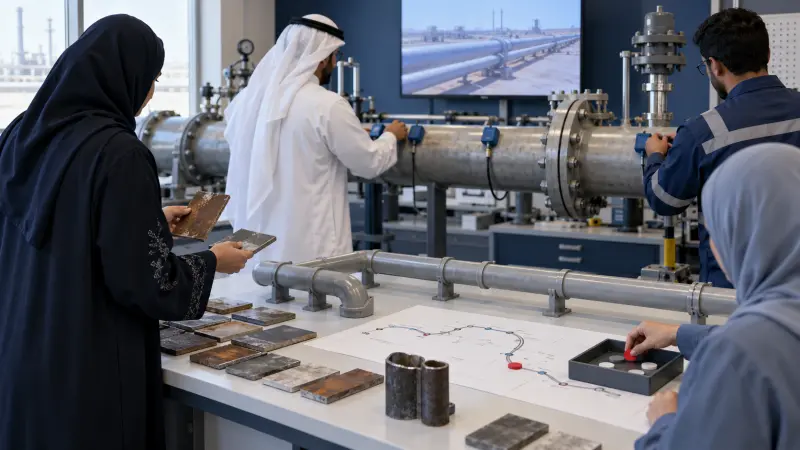
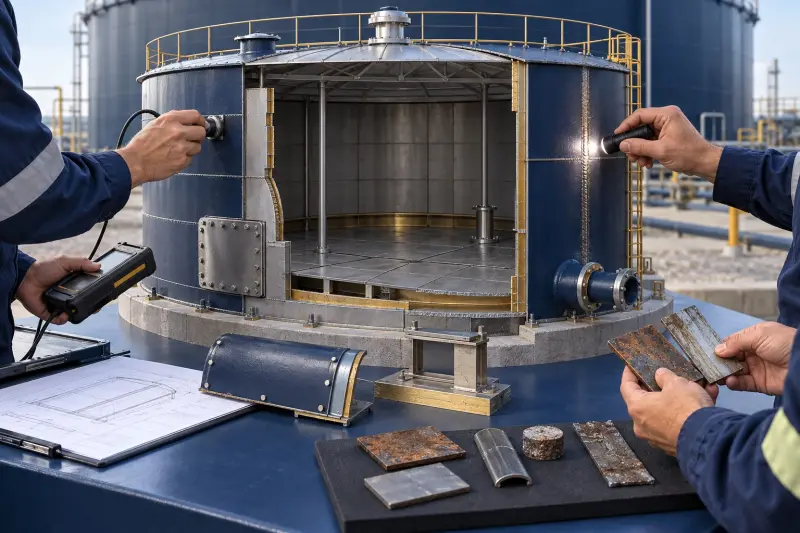
Pipeline Pigging and In-Line Inspection Training Course is a one-week practitioner course for pipeline integrity, inspection, corrosion, maintenance, and operations teams who leave with a Pipeline ILI Campaign Assurance File. The course connects pipeline pigging operations, piggability assessment, ILI tool selection, launch and receive controls, run validation, anomaly evaluation, and repair prioritization in one traceable workflow. Agile Leaders Training Center delivers this course on pipeline pigging and in-line inspection.
Who Should Attend
- Functions responsible for pipeline integrity assessment and inspection strategy
- Teams responsible for pigging campaign preparation and field coordination
- Groups responsible for corrosion threats and anomaly evaluation
- Personnel responsible for pipeline operations, maintenance, and work control
- Functions responsible for inspection data acceptance and repair priorities
The course assumes participants already support pipeline operations or integrity work and leaves out tool manufacture, proprietary data algorithms, engineering fitness-for-service calculations, and authorization for pressure-containing field tasks.
Departments and Industries
The course supports departments that plan, execute, verify, and act on internal pipeline inspection evidence.
- Oil and gas transmission and gathering systems
- Water, utility, and industrial pipeline networks
- Pipeline integrity and corrosion management
- Operations, maintenance, and reliability
- Inspection engineering and technical assurance
Learning Objectives
By the end of this course, participants will be able to:
- Analyze pipeline threats and piggability constraints.
- Compare utility, geometry, magnetic, ultrasonic, and crack-detection tools.
- Build a controlled pigging campaign plan.
- Apply launch, tracking, receiving, and contingency controls.
- Evaluate ILI data quality and anomaly records.
- Prioritize verification, repair, and follow-up actions.
Course Agenda
Day 1: Frame Pigging and Inspection
- Pipeline Threat and Inspection-Objective Matrix
- Utility, Cleaning, Gauging, and Intelligent Pig Selection Map
- Metal-Loss, Crack, Geometry, and Mapping Capability Table
- API 1163 ILI System Qualification Principles
- Operator and Service-Provider Responsibility Chart
Day 2: Establish Piggability and Readiness
- Pipeline Bore, Bend, Valve, and Fitting Compatibility Checklist
- Launcher, Receiver, Isolation, and Pressure-Relief Readiness Review
- Debris, Wax, Scale, and Liquid Management Sequence
- Cleaning and Gauging Run Acceptance Criteria
- ILI Tool Selection and Operating-Envelope Decision Sheet
Day 3: Control the Inspection Run
- Pigging Campaign Method Statement and Hold-Point Plan
- Pre-Launch Configuration and Communication Checklist
- Tool Launch, Passage, Tracking, and Speed-Control Log
- Receiver Approach, Depressurization, and Recovery Control Card
- Stalled, Lost, Damaged, or Bypassed Tool Contingency Matrix
Day 4: Validate Data and Direct Response
- Run Completeness, Coverage, and Sensor-Performance Review
- ILI Feature Matching and Location Alignment Method
- Anomaly Type, Dimension, Confidence, and Severity Register
- Dig Selection and Field-Verification Evidence Pack
- Repair Priority and Reinspection Decision Matrix
Day 5: Practice ILI Campaign Assurance
- Exercise: Match Pipeline Threats to Inspection Technologies
- Exercise: Complete a Piggability and Readiness Review
- Exercise: Resolve a Tool-Run Deviation Scenario
- Exercise: Validate and Classify an ILI Anomaly List
- Capstone Exercise: Build the Pipeline ILI Campaign Assurance File
Practical Exercises
The course uses suggested activities to connect field execution, inspection evidence, and integrity response.
- Suggested activity: compare pipeline geometry, product, flow, threat, and access constraints against candidate pig and ILI technologies.
- Suggested activity: build launch, tracking, receiving, communication, and contingency controls for a planned run.
- Suggested activity: test an inspection deliverable for coverage, location, confidence, and anomaly consistency.
- Suggested activity: convert verified findings into dig, repair, monitoring, and reinspection priorities.
FAQs
Who suits pipeline pigging and in-line inspection training, and what does it assume?
Pipeline pigging and in-line inspection training suits integrity, inspection, corrosion, maintenance, and operations personnel who already work with pipeline assets, operating records, or inspection campaigns within defined competence and work-control boundaries.
How does pipeline pigging training differ from pipeline digital twin training?
Pipeline pigging training concentrates on physical tool selection, piggability, launch and receive operations, run assurance, ILI data validation, and anomaly response; digital twin training concentrates on virtual asset models, data integration, indicators, and scenario-supported decisions.
How is an ILI tool selected for a pipeline inspection?
An ILI tool is selected by matching credible threats, pipe material, diameter, wall thickness, geometry, product, flow, access, required detection capability, sizing performance, and operating envelope to documented inspection objectives.
What makes an in-line inspection run acceptable?
An acceptable in-line inspection run meets defined coverage, tool-performance, speed, sensor, location, data-quality, and reporting criteria, with deviations documented and assessed before findings support integrity decisions.
How should pipeline ILI anomalies be prioritized?
Pipeline ILI anomalies are prioritized using feature type, size, confidence, location, interacting conditions, operating context, consequence, applicable criteria, verification needs, and qualified engineering review.
Conclusion
Participants take back a Pipeline ILI Campaign Assurance File. It connects threat selection, piggability evidence, readiness controls, run records, data acceptance, anomaly classification, and response priorities. It changes separate field and analysis activities into a traceable basis for safer execution, qualified review, and timely integrity action.
Oil & Gas Training and Other Technical Courses
Pipeline Pigging and In-Line Inspection Course (1828_236938)
Course Details
# 1828_236938
21 – 25 March 2027
Nairobi
Fees : 6000 €
Pipeline Pigging and In-Line Inspection Training Course runs in Nairobi over 5 days, with 1 upcoming date in Nairobi. The course fee is 6,000 €.
All dates in Nairobi
| Dates | Price | Actions |
|---|---|---|
| 21 – 25 March 2027 | 6,000 € | Register |
Training in Nairobi
Experience our top-notch training course programs in the vibrant city of Nairobi, Kenya.
All courses in NairobiThis course in other cities
- Abu Dhabi
- Accra
- Addis Ababa
- Amman
- Amsterdam
- Athens
- Baku
- Bali
- Bangkok
- Barcelona
- Berlin
- Cairo
- Cape town
- Casablanca
- Chicago
- Doha
- Dubai
- Frankfurt
- Geneva
- Istanbul
- Jakarta
- Johannesburg
- Kuala Lumpur
- Kuwait
- Lagos
- Langkawi
- Lisbon
- London
- Madrid
- Manama
- Marbella
- Milan
- Montreux
- Munich
- Muscat
- New York
- Nice
- Paris
- Phuket
- Porto
- Prague
- Rome
- San Diego
- Seoul
- Sharm El-Sheikh
- Singapore
- Tashkent
- Tbilisi
- Tokyo
- Toronto
- Trabzon
- Vienna
- Zanzibar
- Zoom