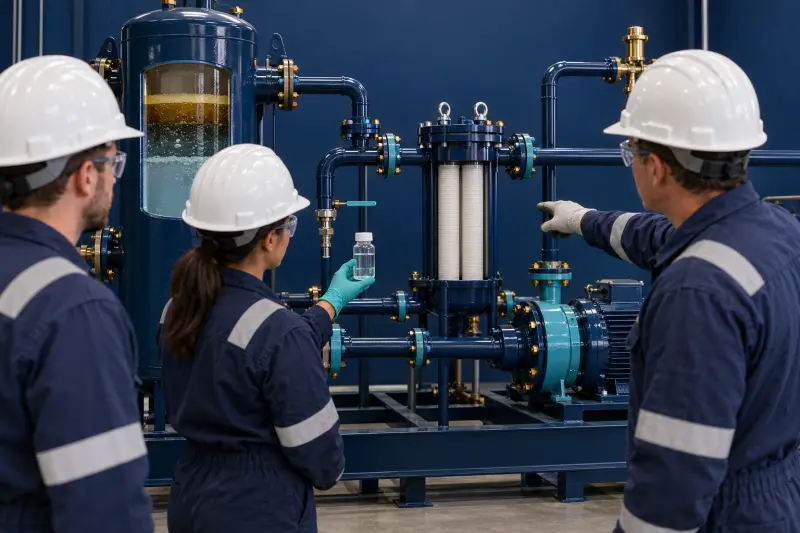
Hydrophobic and Oleophobic Coatings Engineering Training Course

Course Details
-
# 1875_239993
-
25 – 29 January 2027 29.Jan.2027
-
Frankfurt
-
6500 €
Overview
Hydrophobic and Oleophobic Coatings Engineering Training Course is a one-week professional course for coatings engineers, materials specialists, product developers, quality engineers, and laboratory personnel who leave with a Functional Coating Qualification Pack. Participants connect wetting science, surface chemistry, microtexture, formulation, deposition, contact-angle measurement, roll-off behavior, durability, defects, and application decisions. The course turns performance claims into traceable specifications and test evidence. Agile Leaders Training Center presents hydrophobic and oleophobic coatings engineering through standards-informed development and quality control.
Who Should Attend
- Functions responsible for designing functional coating formulations and surface treatments
- Teams responsible for substrate preparation, deposition, curing, and process control
- Laboratories responsible for wettability, contact-angle, and surface-energy measurements
- Quality functions responsible for coating qualification, acceptance, and failure investigation
- Product teams responsible for selecting water- and oil-repellent surface solutions
The course assumes participants can interpret material specifications and basic laboratory data, and it leaves out proprietary formulation recipes, production authorization, and certification.
Departments and Industries
The course supports departments and industries that develop, apply, test, or specify functional surface coatings.
- Coatings, chemicals, polymers, and advanced materials development
- Automotive, aerospace, marine, and transportation manufacturing
- Construction products, glass, textiles, and consumer surfaces
- Product engineering, process engineering, and manufacturing quality
- Research laboratories, testing services, and asset integrity teams
Learning Objectives
By the end of this course, participants will be able to:
- Analyze wetting, surface-energy, roughness, and contact-angle relationships
- Compare coating chemistries and microtexture strategies
- Build substrate preparation and deposition control plans
- Apply static, dynamic, hysteresis, and roll-off measurements
- Evaluate adhesion, abrasion, chemical resistance, and aging evidence
- Diagnose coating defects and prioritize application-specific improvements
Course Agenda
Day 1: Wetting Science and Performance Requirements
- Young, Wenzel, and Cassie-Baxter Wetting Model Comparison
- Surface Free Energy and Liquid Surface Tension Calculation Sheet
- Hydrophobic, Oleophobic, and Superamphiphobic Performance Map
- Contact Angle, Hysteresis, and Roll-Off Requirement Matrix
- Functional Coating Use-Case and Failure-Risk Register
Day 2: Coating Chemistry and Surface Architecture
- Low-Surface-Energy Chemistry Selection Matrix
- Fluorinated and Fluorine-Free Formulation Tradeoff Review
- Micro- and Nanotopography Structure-Property Diagram
- Binder, Particle, Additive, and Solvent Compatibility Screen
- Environmental, Health, and End-of-Life Decision Checklist
Day 3: Substrate Preparation and Coating Application
- Substrate Cleanliness and Pretreatment Control Plan
- Spray, Dip, Spin, Sol-Gel, and PVD Process Selection Matrix
- Film Thickness, Coverage, and Cure Window Worksheet
- Adhesion Interface and Surface Contamination Investigation Map
- Application Parameter and Batch Traceability Record
Day 4: Measurement, Durability, and Diagnosis
- ASTM D7334 Advancing Contact Angle Test Plan
- ISO 19403 Static and Dynamic Wettability Measurement Plan
- Contact Angle Hysteresis and Tilt-Stage Roll-Off Analysis
- Adhesion, Abrasion, Chemical, and Weathering Test Matrix
- Coating Defect Root-Cause and Corrective-Action Sheet
Day 5: Functional Coating Qualification Practice
- Exercise: Convert a Use Case into Performance Requirements
- Exercise: Select Chemistry, Texture, and Deposition Route
- Exercise: Interpret Contact Angle and Roll-Off Data
- Exercise: Diagnose Durability Loss and Coating Defects
- Capstone Exercise: Complete the Functional Coating Qualification Pack
Practical Exercises
The course uses suggested activities based on coating specifications, simulated laboratory results, process records, and failure evidence.
- Suggested activity: calculate surface-energy indicators and compare apparent wetting regimes
- Suggested activity: design a substrate preparation, coating application, and cure control plan
- Suggested activity: analyze static, advancing, receding, hysteresis, and roll-off measurements
- Suggested activity: qualify an industrial coating against performance, durability, safety, and sustainability criteria
FAQs
Who suits hydrophobic and oleophobic coatings engineering training, and what does it assume?
Hydrophobic and oleophobic coatings engineering training suits development, process, laboratory, product, and quality functions. It assumes participants can interpret material specifications and basic test data.
How does hydrophobic and oleophobic coatings training differ from general coatings inspection training?
Hydrophobic and oleophobic coatings training focuses on wetting behavior, surface energy, microtexture, functional chemistry, and repellency measurements. General coatings inspection training emphasizes broader coating application defects, corrosion protection, and inspection practice.
How are hydrophobic and oleophobic coating properties measured?
Hydrophobic and oleophobic coating properties are measured with selected water and organic test liquids using static or dynamic contact angles, advancing and receding angles, hysteresis, and roll-off behavior under controlled surface and test conditions.
Why can a hydrophobic coating lose water repellency?
A hydrophobic coating can lose repellency through abrasion, contamination, chemical attack, ultraviolet exposure, thermal cycling, poor adhesion, incomplete cure, or damage to the microtexture that supports the intended wetting state.
What determines whether an oleophobic coating suits an industrial application?
An oleophobic coating suits an application when its liquid resistance, adhesion, durability, optical or mechanical constraints, cleanability, process compatibility, safety, and lifecycle requirements align with measured acceptance criteria.
Conclusion
Participants take back a Functional Coating Qualification Pack linking use requirements, chemistry, texture, application controls, wettability measurements, durability evidence, and corrective actions. The pack replaces isolated repellency claims with traceable engineering decisions. It supports product development and quality control while approved specifications, test procedures, and site requirements remain governing.
Maintenance Training and Engineering Training Courses
Hydrophobic and Oleophobic Coatings Training Course (1875_239993)
Course Details
# 1875_239993
25 – 29 January 2027
Frankfurt
Fees : 6500 €
Hydrophobic and Oleophobic Coatings Engineering Training Course runs in Frankfurt over 5 days, with 1 upcoming date in Frankfurt. The course fee is 6,500 €.
All dates in Frankfurt
| Dates | Price | Actions |
|---|---|---|
| 25 – 29 January 2027 | 6,500 € | Register |
Training in Frankfurt
Professional training courses in Frankfurt designed to enhance leadership, technical, and business skills. Learn from industry experts and advance your career in a global financial hub.
All courses in FrankfurtThis course in other cities
- Abu Dhabi
- Accra
- Addis Ababa
- Amman
- Amsterdam
- Athens
- Baku
- Bali
- Bangkok
- Barcelona
- Berlin
- Cairo
- Cape town
- Casablanca
- Chicago
- Doha
- Dubai
- Geneva
- Istanbul
- Jakarta
- Johannesburg
- Kuala Lumpur
- Kuwait
- Lagos
- Langkawi
- Lisbon
- London
- Madrid
- Manama
- Marbella
- Milan
- Montreux
- Munich
- Muscat
- Nairobi
- New York
- Nice
- Paris
- Phuket
- Porto
- Prague
- Rome
- San Diego
- Seoul
- Sharm El-Sheikh
- Singapore
- Tashkent
- Tbilisi
- Tokyo
- Toronto
- Trabzon
- Vienna
- Zanzibar
- Zoom