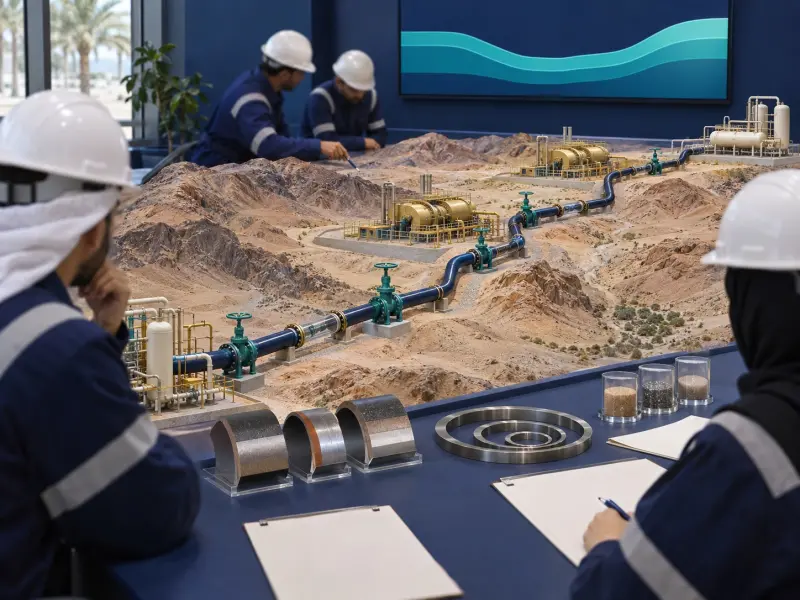
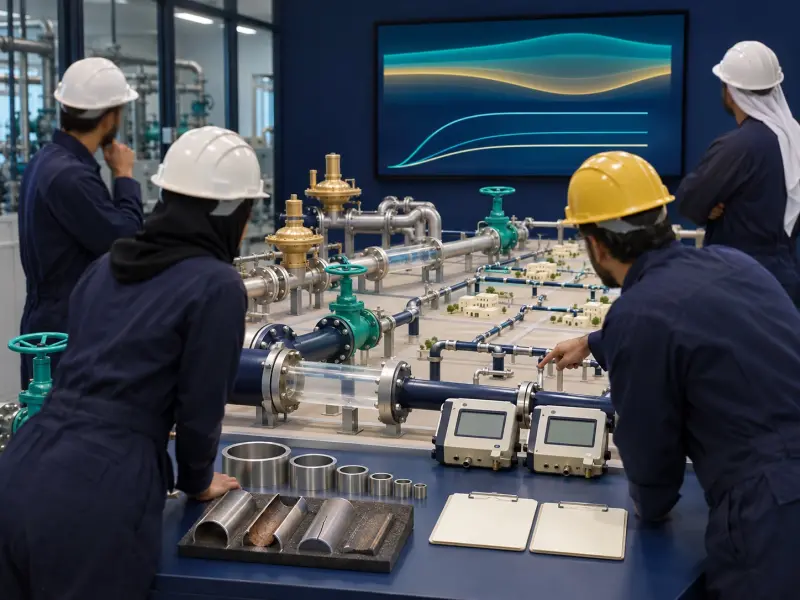
Liquid Petroleum Pipeline Engineering Training Course

Course Details
-
# 1958_245019
-
23 – 27 November 2026 27.Nov.2026
-
Istanbul
-
6000 €
Overview
Liquid Petroleum Pipeline Engineering Training Course is a one-week course for pipeline, hydraulic, project, operations, and integrity professionals who leave with a Liquid Petroleum Pipeline Design Basis and Assurance File. Participants connect fluid properties, pipeline hydraulics, diameter and pressure decisions, pump stations, mechanical design, batching, operability, and integrity-by-design. The course resolves gaps between calculations, interfaces, assumptions, and review evidence. Agile Leaders Training Center presents liquid petroleum pipeline engineering.
Who Should Attend
- Pipeline engineering functions responsible for design basis and system configuration
- Hydraulic analysis functions responsible for flow, pressure, diameter, and pump cases
- Project engineering functions responsible for route, mechanical, station, and package interfaces
- Operations functions responsible for batching, metering, linefill, and operating envelopes
- Integrity functions responsible for design threats, corrosion provisions, and inspection access
- Technical assurance functions responsible for calculations, deliverables, and multidisciplinary reviews
The course assumes participants already use engineering calculations, process data, pipeline terminology, or design deliverables, and it leaves out detailed pump machinery design, specialist surge modeling, construction supervision, digital-twin development, and in-line inspection execution.
Departments and Industries
The course supports departments and industries that develop, operate, review, or assure liquid petroleum pipeline systems.
- Crude oil gathering and transmission
- Refined-product and multiproduct pipeline networks
- Petroleum refining, storage, and distribution
- Engineering, procurement, and construction organizations
- Pipeline operations, integrity, and maintenance
- Technical consulting and design assurance
Learning Objectives
By the end of this course, participants will be able to:
- Build a traceable liquid pipeline design basis
- Analyze steady-state hydraulic and pump-station cases
- Evaluate diameter, pressure, material, and wall-thickness decisions
- Apply batching, metering, isolation, and operability provisions
- Diagnose surge, contamination, corrosion, and interface risks
- Build an integrity-by-design and assurance record
Course Agenda
Day 1: Establish the Design Basis
- Liquid Petroleum Pipeline Boundary and Functional Map
- Crude Oil and Refined-Product Property Input Sheet
- Normal, Peak, Minimum, and Contingency Flow Case Register
- ASME B31.4 Applicability and Requirement Matrix
- Design Pressure, Temperature, Life, and Assurance Basis
Day 2: Analyze Pipeline Hydraulics
- Steady-State Flow and Pressure Profile Method
- Friction Factor, Elevation, and Pressure-Loss Calculation Sheet
- Diameter, Velocity, and Hydraulic Capacity Comparison
- Pump System Curve and Operating-Point Assessment
- Station Spacing, Suction Margin, and Pressure Constraint Review
Day 3: Define Mechanical and Route Decisions
- Route Corridor, Crossing, Geohazard, and Access Register
- API Spec 5L Line-Pipe Grade and Product Selection Matrix
- Wall Thickness, Design Factor, and Corrosion Allowance Check
- Valve Spacing, Isolation, Drain, Vent, and Pigging Provision Map
- API Standard 1104 Welding and Joining Interface Checklist
Day 4: Integrate Operations and Integrity
- Pump Station, Metering, Control, and Utility Interface Diagram
- Batch Sequence, Interface Volume, and Contamination Control Plan
- Linefill, Start-Up, Shutdown, and Operating-Envelope Register
- Surge Scenario Screening and Protection Requirement Sheet
- Integrity Threat, Corrosion Control, and Inspection Access Matrix
Day 5: Practice Pipeline Design Assurance
- Suggested Exercise: Reconcile Fluid Cases with Hydraulic Capacity
- Suggested Exercise: Select Diameter, Pipe Grade, and Wall Thickness
- Suggested Exercise: Resolve Pump, Metering, and Batch Interfaces
- Suggested Exercise: Review Surge, Operability, and Integrity Provisions
- Capstone Exercise: Complete the Liquid Petroleum Pipeline Design Basis and Assurance File
Practical Exercises
The course uses suggested activities to convert pipeline assumptions, calculations, interfaces, and risks into traceable engineering decisions.
- Suggested activity: build normal, peak, minimum, and contingency cases from crude-oil and product-property data.
- Suggested activity: compare candidate diameters and pump arrangements against flow, velocity, pressure, and station constraints.
- Suggested activity: document route, material, wall-thickness, isolation, metering, and batching decisions.
- Suggested activity: conduct a multidisciplinary review of operability, surge screening, integrity threats, and assurance actions.
FAQs
Who suits liquid petroleum pipeline engineering training, and what does it assume?
Liquid petroleum pipeline engineering training suits pipeline, hydraulic, project, operations, integrity, and technical-assurance functions. It assumes familiarity with engineering calculations, fluid data, pipeline terminology, operating records, or design documents.
How does liquid petroleum pipeline engineering differ from gas transmission design training?
Liquid petroleum pipeline engineering addresses liquid properties, steady-state pressure loss, pumps, multiproduct batching, interfaces, contamination, and surge screening. Gas transmission design addresses compressible flow, gas properties, compressor stations, and gas-network behavior.
How is pipeline diameter selected for crude oil and petroleum products?
Pipeline diameter is selected by comparing required flow, fluid properties, velocity, pressure loss, elevation, available pump head, station constraints, operating flexibility, surge exposure, mechanical requirements, and lifecycle considerations within a documented design basis.
How are pump stations integrated into liquid petroleum pipeline hydraulics?
Pump stations are integrated by matching the pipeline system curve with pump operating ranges, suction conditions, discharge limits, station spacing, control philosophy, minimum-flow needs, power availability, and normal and contingency operating cases.
How does multiproduct pipeline engineering control batch interfaces?
Multiproduct pipeline engineering controls interfaces through product sequencing, compatible batch planning, flow stability, interface tracking, meter and density evidence, contamination limits, routing decisions, transmix handling, and coordinated terminal receipt arrangements.
Conclusion
Participants take back a Liquid Petroleum Pipeline Design Basis and Assurance File linking fluid cases, hydraulics, route constraints, materials, stations, operations, integrity provisions, and review actions. The file changes disconnected calculations into one traceable engineering basis. It supports clearer interface decisions, documented assumptions, operability checks, and multidisciplinary design assurance.
Oil & Gas Training and Other Technical Courses
Liquid Petroleum Pipeline Engineering Course (1958_245019)
Course Details
# 1958_245019
23 – 27 November 2026
Istanbul
Fees : 6000 €
Liquid Petroleum Pipeline Engineering Training Course runs in Istanbul over 5 days, with 1 upcoming date in Istanbul. The course fee is 6,000 €.
All dates in Istanbul
| Dates | Price | Actions |
|---|---|---|
| 23 – 27 November 2026 | 6,000 € | Register |
Training in Istanbul
Discover the rich history and culture of Istanbul, Turkey, while benefiting from our professional training courses in turkey istanbul.
All courses in IstanbulThis course in other cities
- Abu Dhabi
- Accra
- Addis Ababa
- Amman
- Amsterdam
- Athens
- Baku
- Bali
- Bangkok
- Barcelona
- Berlin
- Cairo
- Cape town
- Casablanca
- Chicago
- Doha
- Dubai
- Frankfurt
- Geneva
- Jakarta
- Johannesburg
- Kuala Lumpur
- Kuwait
- Lagos
- Langkawi
- Lisbon
- London
- Madrid
- Manama
- Marbella
- Milan
- Montreux
- Munich
- Muscat
- Nairobi
- New York
- Nice
- Paris
- Phuket
- Porto
- Prague
- Rome
- San Diego
- Seoul
- Sharm El-Sheikh
- Singapore
- Tashkent
- Tbilisi
- Tokyo
- Toronto
- Trabzon
- Vienna
- Zanzibar
- Zoom