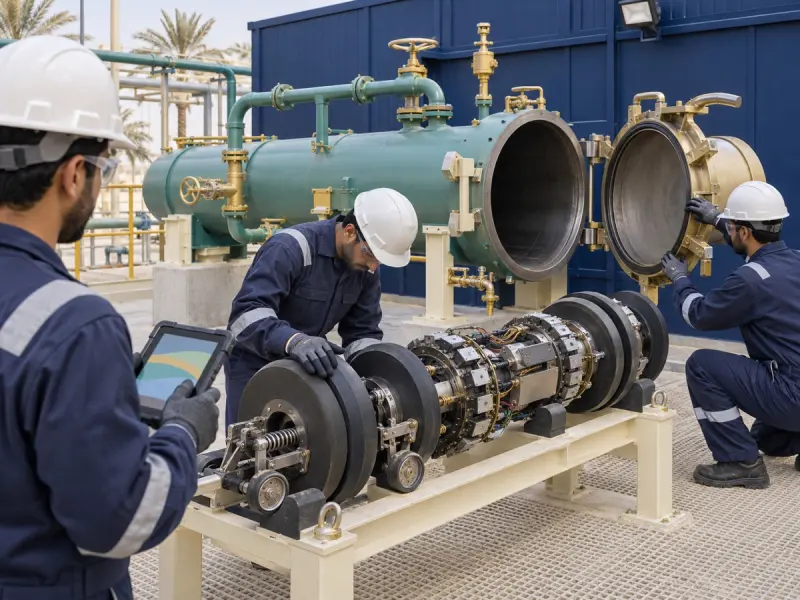
Pipeline Geohazard Assessment and Ground Movement Training Course

Course Details
-
# 2026_249076
-
11 – 15 April 2027 15.Apr.2027
-
Doha
-
7000 €
Overview
Pipeline Geohazard Assessment and Ground Movement Training Course is a one-week advanced course for pipeline integrity, geotechnical, operations, and asset personnel who leave with a Pipeline Geohazard Assessment and Action File. Participants connect pipeline geohazard assessment, ground movement screening, strain-based assessment, geohazard monitoring, and risk mitigation to operational decisions. The course uses ASME B31.8S principles, corridor evidence, trigger levels, and response records. Agile Leaders Training Center presents this course on pipeline geohazard risk.
Who Should Attend
- Teams responsible for pipeline integrity threat assessment and response
- Functions responsible for geotechnical investigation and terrain evaluation
- Personnel responsible for right-of-way surveillance and field monitoring
- Engineering groups responsible for pipe strain and structural decisions
- Operations teams responsible for pressure control and emergency actions
- Asset groups responsible for mitigation funding and risk assurance
The course assumes participants can interpret pipeline route, operating, material, inspection, and geotechnical data; it leaves out detailed finite-element modeling and instrument installation.
Departments and Industries
The course supports departments and industries responsible for linear assets exposed to terrain and ground displacement.
- Oil and gas transmission and gathering organizations
- Water transmission and utility pipeline operators
- Pipeline integrity and asset assurance departments
- Geotechnical, civil, and route engineering functions
- Operations, maintenance, and emergency response teams
- Remote sensing and right-of-way surveillance groups
Learning Objectives
By the end of this course, participants will be able to:
- Apply a pipeline geohazard screening and classification workflow
- Analyze landslide, subsidence, seismic, erosion, and scour evidence
- Evaluate ground displacement demand and pipeline strain response
- Compare field, in-situ, and remote monitoring methods
- Prioritize mitigation, pressure-control, and emergency actions
- Build a traceable geohazard assessment and action file
Course Agenda
Day 1: Frame Geohazard Decisions
- ASME B31.8S Integrity Management Process Map
- Pipeline Geohazard Threat Classification Matrix
- Right-of-Way Corridor Data Register
- Consequence and Exposure Screening Method
- Geohazard Governance and Decision Record
Day 2: Characterize Ground Movement
- Landslide Mechanism and Activity Assessment Sheet
- Subsidence, Settlement, and Collapse Evaluation Map
- Seismic Faulting and Liquefaction Screening Checklist
- River Scour, Erosion, and Channel Migration Review
- Ground Displacement Scenario Definition Table
Day 3: Evaluate Pipeline Response
- Pipe-Soil Interaction Conceptual Model
- Ground Displacement Demand Profile
- Pipeline Strain Demand and Capacity Worksheet
- Girth Weld and Local Buckling Vulnerability Screen
- Uncertainty and Escalation Decision Log
Day 4: Design Monitoring and Mitigation
- Field Reconnaissance and Survey Plan
- In-Situ Instrumentation Selection Matrix
- InSAR and Remote Sensing Monitoring Plan
- Trigger Action Response Plan
- Avoidance, Stabilization, and Pipe Mitigation Options Matrix
Day 5: Practice Geohazard Response
- Suggested Exercise: Screen a Pipeline Corridor
- Suggested Exercise: Build a Ground Movement Scenario
- Suggested Exercise: Evaluate Strain and Uncertainty
- Suggested Exercise: Select Monitoring and Mitigation Actions
- Capstone Exercise: Present a Pipeline Geohazard Assessment and Action File
Practical Exercises
The course uses suggested activities to connect terrain evidence with controlled pipeline decisions.
- Suggested activity: classify corridor hazards from mapping, field observations, hydrology, and operating evidence.
- Suggested activity: define a displacement scenario and screen pipe strain demand against available capacity evidence.
- Suggested activity: select survey, instrumentation, and remote sensing methods with trigger levels and responsibilities.
- Suggested activity: document pressure control, mitigation, emergency response, and reassessment in one action file.
FAQs
Who suits pipeline geohazard assessment training, and what does it assume?
Pipeline integrity, geotechnical, operations, surveillance, and asset personnel suit the training. It assumes participants can interpret route, operating, material, inspection, and geotechnical data.
How does pipeline geohazard assessment differ from general pipeline integrity training?
Pipeline geohazard assessment focuses on terrain processes, imposed ground displacement, pipe response, monitoring, and mitigation. General pipeline integrity training addresses a wider set of corrosion, cracking, equipment, operational, and external threats.
How are ground movement threats ranked for pipelines?
Ground movement threats are ranked by hazard likelihood, displacement characteristics, pipeline vulnerability, consequence, evidence quality, and the effectiveness of existing controls.
How does geohazard monitoring support pipeline decisions?
Geohazard monitoring provides repeatable evidence of terrain movement, pipe response, and changing conditions. Defined trigger levels link observations to surveillance, engineering review, pressure control, mitigation, or emergency action.
What follows a pipeline ground movement event?
A structured response first protects people and the right-of-way, verifies movement and pipe condition, evaluates continued operation, applies interim controls, and records investigation, mitigation, and reassessment decisions.
Conclusion
Participants take a Pipeline Geohazard Assessment and Action File back to their organization. It combines corridor screening, displacement scenarios, strain evaluation, monitoring design, trigger levels, mitigation, and emergency actions. Teams can use the file to connect changing ground conditions with traceable integrity and operating decisions.
Oil & Gas Training and Other Technical Courses
Pipeline Geohazard Assessment Training Course (2026_249076)
Course Details
# 2026_249076
11 – 15 April 2027
Doha
Fees : 7000 €
Pipeline Geohazard Assessment and Ground Movement Training Course runs in Doha over 5 days, with 1 upcoming date in Doha. The course fee is 7,000 €.
All dates in Doha
| Dates | Price | Actions |
|---|---|---|
| 11 – 15 April 2027 | 7,000 € | Register |
Training in Doha
Experience our top-notch training courses programs in the vibrant city of Doha, Qatar. Participate in our professional training courses. Join Today !
All courses in DohaThis course in other cities
- Abu Dhabi
- Accra
- Addis Ababa
- Amman
- Amsterdam
- Athens
- Baku
- Bali
- Bangkok
- Barcelona
- Berlin
- Cairo
- Cape town
- Casablanca
- Chicago
- Dubai
- Frankfurt
- Geneva
- Istanbul
- Jakarta
- Johannesburg
- Kuala Lumpur
- Kuwait
- Lagos
- Langkawi
- Lisbon
- London
- Madrid
- Manama
- Marbella
- Milan
- Montreux
- Munich
- Muscat
- Nairobi
- New York
- Nice
- Paris
- Phuket
- Porto
- Prague
- Rome
- San Diego
- Seoul
- Sharm El-Sheikh
- Singapore
- Tashkent
- Tbilisi
- Tokyo
- Toronto
- Trabzon
- Vienna
- Zanzibar
- Zoom