Advanced Bearing Damage Analysis and Root Cause Training Course

Course Details
-
# 2121_255361
-
16 – 20 May 2027 20.May.2027
-
Cape town
-
6000 €
Overview
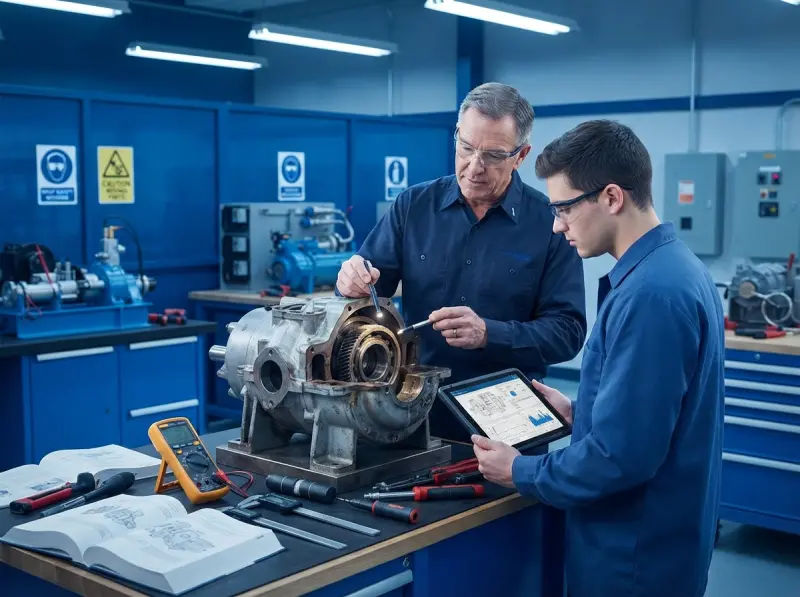
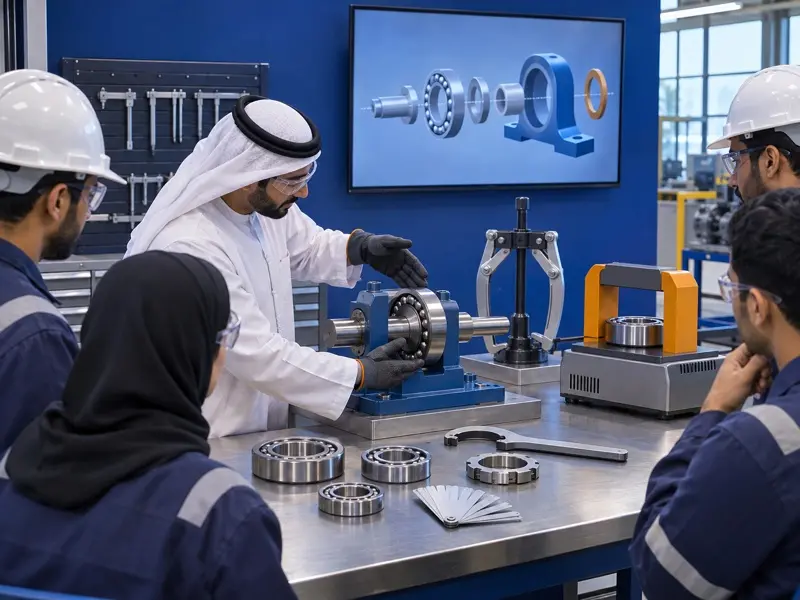
Advanced Bearing Damage Analysis and Root Cause Training Course is a one-week advanced course for reliability, rotating-equipment, maintenance, condition-monitoring, and bearing-service teams who leave with a Bearing Damage Investigation Report. Participants apply ISO 15243 bearing failure classification, bearing damage analysis, load path analysis, lubricant contamination analysis, and rolling bearing root cause analysis to separate primary mechanisms from consequential damage and define corrective actions. Agile Leaders Training Center develops bearing failure investigation capability.
Who Should Attend
- Reliability functions responsible for recurring equipment failures and asset performance
- Rotating-equipment functions responsible for bearing condition and machinery integrity
- Maintenance functions responsible for inspection findings and corrective work
- Condition-monitoring functions responsible for vibration, temperature, and lubricant evidence
- Bearing-service functions responsible for teardown inspection and technical reporting
The course assumes participants already inspect rotating machinery and interpret maintenance evidence, and it leaves bearing selection calculations, mounting practice, and laboratory metallography outside its scope.
Departments and Industries
The course supports departments and industries that investigate bearing damage and prevent recurrence.
- Reliability engineering and asset management
- Mechanical maintenance and rotating equipment
- Condition monitoring and predictive maintenance
- Power generation, utilities, and water operations
- Manufacturing, mining, and process industries
Learning Objectives
By the end of this course, participants will be able to:
- Apply ISO 15243 terminology to visible bearing damage.
- Analyze load paths and operating evidence.
- Diagnose fatigue, wear, corrosion, erosion, deformation, and fracture.
- Compare primary mechanisms with consequential damage.
- Evaluate lubricant, contamination, fit, alignment, and electrical evidence.
- Build a defensible investigation report and corrective-action plan.
Course Agenda
Day 1: Frame the Bearing Investigation
- ISO 15243 Damage Classification Map
- Bearing Evidence Preservation Checklist
- Machine History and Event Timeline
- Normal and Abnormal Load Path Diagram
- Primary and Consequential Damage Logic
Day 2: Classify Surface Damage
- Subsurface and Surface Fatigue Feature Matrix
- Abrasive and Adhesive Wear Comparison
- Moisture and Frictional Corrosion Decision Guide
- False Brinelling and Fretting Evidence Test
- Surface Photograph and Morphology Log
Day 3: Diagnose Electrical and Mechanical Damage
- Electrical Erosion Pattern Assessment
- Overload and Particle Indentation Analysis
- Forced, Fatigue, and Thermal Crack Comparison
- Fit, Alignment, and Housing Condition Review
- Failure-Mode Confidence Rating Scale
Day 4: Integrate Root Cause Evidence
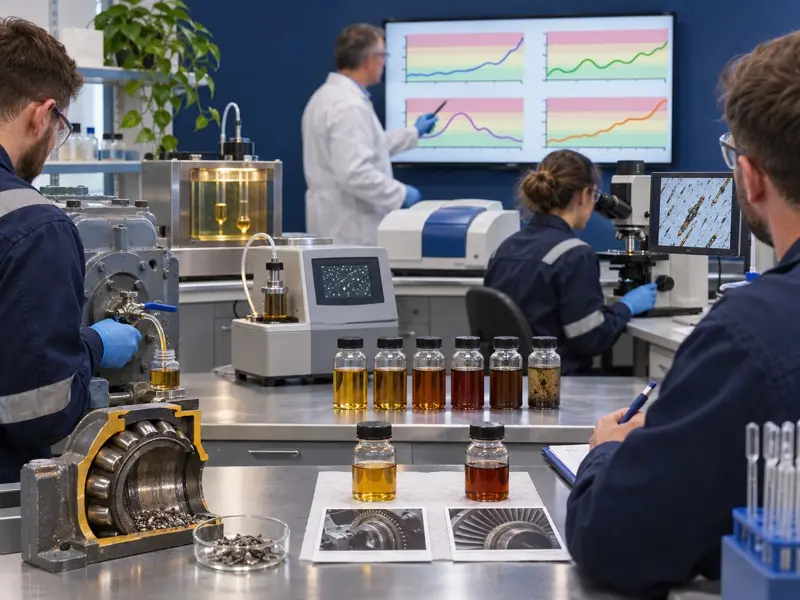
- Lubricant Condition and Contamination Evidence Grid
- Vibration and Temperature Trend Correlation
- Cause-and-Effect Hypothesis Tree
- Evidence Sufficiency and Escalation Criteria
- Corrective Action and Verification Matrix
Day 5: Practice Bearing Damage Investigation
- Suggested Exercise: Classify an ISO 15243 Damage Set
- Suggested Exercise: Reconstruct a Bearing Load Path
- Suggested Exercise: Test Competing Root Cause Hypotheses
- Suggested Exercise: Prioritize Corrective and Verification Actions
- Capstone Exercise: Complete a Bearing Damage Investigation Report
Practical Exercises
The course uses suggested activities based on anonymized pump, motor, gearbox, conveyor, and process-equipment cases.
- Suggested activity: preserve and record visual, dimensional, operating, and lubricant evidence from a damaged bearing case.
- Suggested activity: classify visible features while separating initiating mechanisms from damage created later in service.
- Suggested activity: correlate load path, vibration, temperature, contamination, fit, alignment, and electrical evidence.
- Suggested activity: defend a root-cause conclusion and corrective-action plan against alternative hypotheses.
FAQs
Who suits advanced bearing damage analysis training, and what does it assume?
Advanced bearing damage analysis training suits reliability, rotating-equipment, maintenance, condition-monitoring, and bearing-service teams. It assumes practical experience with rotating machinery inspection and maintenance records.
How does bearing damage analysis differ from bearing mounting training?
Bearing damage analysis investigates in-service evidence, classifies damage mechanisms, tests causes, and defines corrective actions. Bearing mounting training focuses on preparation, tools, fits, handling, installation, removal, and verification.
How does ISO 15243 support rolling bearing root cause analysis?
ISO 15243 supports rolling bearing root cause analysis by providing common terms, visible characteristics, failure-mode classifications, possible causes, and corrective-action examples. Investigators still integrate application and operating evidence before concluding a cause.
Why must bearing failure investigation distinguish primary and consequential damage?
Bearing failure investigation must distinguish primary and consequential damage because later deterioration can obscure the initiating mechanism. Separating the sequence prevents teams from treating a visible end state as the original cause.
Conclusion
Participants take back a Bearing Damage Investigation Report. It combines preserved evidence, ISO 15243 classification, load paths, condition trends, causal hypotheses, confidence ratings, corrective actions, and verification steps. The report changes bearing investigations from appearance-based judgments into traceable engineering decisions that support recurrence prevention.
Maintenance Training and Engineering Training Courses
Bearing Damage Analysis and Root Cause Course (2121_255361)
Course Details
# 2121_255361
16 – 20 May 2027
Cape town
Fees : 6000 €
Advanced Bearing Damage Analysis and Root Cause Training Course runs in Cape town over 5 days, with 1 upcoming date in Cape town. The course fee is 6,000 €.
All dates in Cape town
| Dates | Price | Actions |
|---|---|---|
| 16 – 20 May 2027 | 6,000 € | Register |
Training in Cape town
Aerial view of Cape Town with Table Mountain, Cape Town Stadium, and the coastline under clear blue skies.
All courses in Cape townThis course in other cities
- Abu Dhabi
- Accra
- Addis Ababa
- Amman
- Amsterdam
- Athens
- Baku
- Bali
- Bangkok
- Barcelona
- Berlin
- Cairo
- Casablanca
- Chicago
- Doha
- Dubai
- Frankfurt
- Geneva
- Istanbul
- Jakarta
- Johannesburg
- Kuala Lumpur
- Kuwait
- Lagos
- Langkawi
- Lisbon
- London
- Madrid
- Manama
- Marbella
- Milan
- Montreux
- Munich
- Muscat
- Nairobi
- New York
- Nice
- Paris
- Phuket
- Porto
- Prague
- Rome
- San Diego
- Seoul
- Sharm El-Sheikh
- Singapore
- Tashkent
- Tbilisi
- Tokyo
- Toronto
- Trabzon
- Vienna
- Zanzibar
- Zoom